
 My Inquiry
 My Account


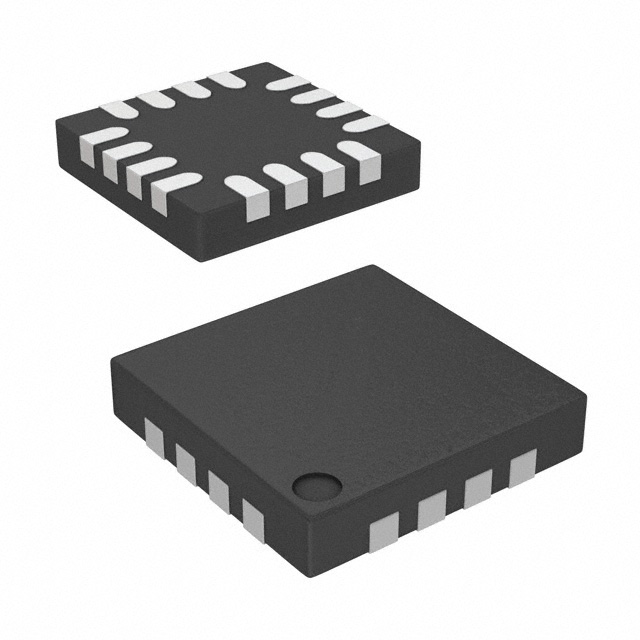
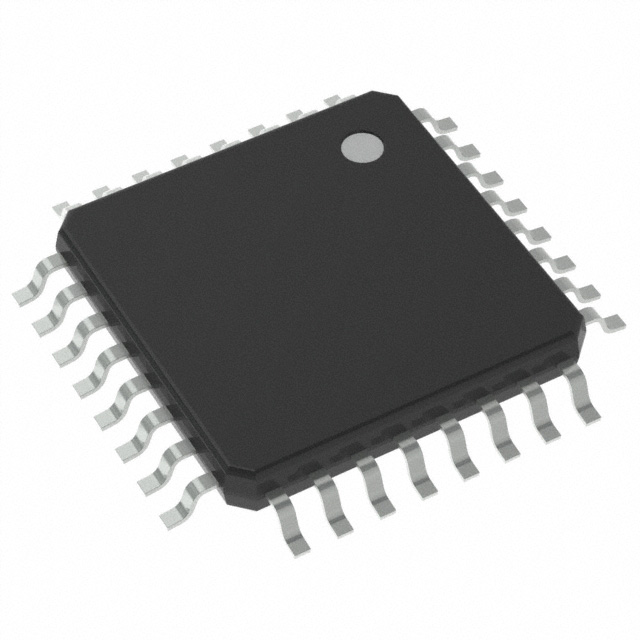
Infineon Technologies CY8C20140-LDX2IT
- Part No.:
- CY8C20140-LDX2IT
- Manufacturer:
- Infineon Technologies
- Category:
- Sensor, Capacitive Touch
- Package:
- 16-UFQFN
- Datasheet:
-
 CY8C20140-LDX2IT.pdf
- Description:
- IC CAPSENSE EXP 4 I/O 16QFN
- Quantity:
- Payment:

- Shipping:

Inventory:2,043
Please send an inquiry. Send us your inquiry, and we will respond immediately.
Product details
Overview
CY8C20140-LDX2IT from Infineon Technologies is a capacitive touch-sensing microcontroller based on the PSoC™ 1 architecture, integrating an 8-bit M8C core, on-chip CapSense® analog front-end, and programmable digital logic. It supports up to 14 self-capacitive or 12 mutual-capacitive sensing channels, operates from 2.4–5.25 V, and features 8 KB flash, 512 B SRAM, and hardware-based CapSense® scanning with <10 µA active current at 1 MHz. It is used in industrial HMI panels, appliance control knobs, and consumer electronics requiring robust, low-power touch interfaces.
For engineers reviewing the CY8C20140-LDX2IT datasheet, CY8C20140-LDX2IT pinout, CY8C20140-LDX2IT application, or CY8C20140-LDX2IT equivalent, key selection criteria include its dedicated CapSense® hardware acceleration, integrated voltage regulator, I²C/SPI/UART interface support, and qualification for extended temperature operation (–40°C to +85°C) in space-constrained embedded designs.
Technical Context
The CY8C20140-LDX2IT implements a fixed-function CapSense® block with configurable scan resolution (8–16 bits), automatic baseline tracking, and noise immunity via spread-spectrum modulation and shield driver capability. Its M8C CPU executes instructions at up to 24 MHz and supports interrupt-driven sensor polling with <50 µs response latency per channel.
It integrates a 10-bit SAR ADC for auxiliary analog sensing, a programmable clock system with internal IMO (4–24 MHz) and external crystal support, and configurable GPIOs with slew-rate control and ESD protection (±2 kV HBM). All CapSense® operations are handled autonomously without CPU intervention during scanning.
Key Specifications
| Parameter | Value and Actual Design Meaning |
|---|---|
| Core | 8-bit M8C CPU, 24 MHz max - enables deterministic real-time touch response with minimal code footprint |
| CapSense® Channels | 14 self-cap or 12 mutual-cap - supports multi-button sliders, proximity wake-up, and gesture-capable UIs in single-chip layout |
| Flash / SRAM | 8 KB / 512 B - sufficient for full CapSense® firmware plus custom application logic and calibration data storage |
| Supply Voltage | 2.4–5.25 V - compatible with single-cell Li-ion, 3.3 V, and 5 V systems without external LDO |
| Active Current | <10 µA @ 1 MHz - allows battery-powered devices to achieve >1-year operation on coin cell with periodic wake-up |
| Operating Temp | –40°C to +85°C - qualified for industrial control panels and automotive cabin interfaces outside powertrain zones |
| I/O Count | 16 GPIO - includes dedicated CapSense® pins with integrated IDACs and shield drivers for noise-resistant layout |
Pinout & Package
Package: 16-pin QFN (3 mm × 3 mm, 0.5 mm pitch), thermally enhanced with exposed pad for improved heat dissipation in sealed enclosures.
| Pin/Terminal | Circuit Role | Design Meaning |
|---|---|---|
| VDD | Power supply input | Primary 2.4–5.25 V supply rail; decoupling capacitor required within 1 cm for stable CapSense® operation |
| GND | Ground reference | Common return for analog/digital domains; must be connected to exposed thermal pad for EMI suppression |
| P0[0]–P0[7] | General-purpose I/O / CapSense® CSD | Configurable as CapSense® sense electrodes or shield drivers; support hardware-accelerated scanning without firmware overhead |
| P1[0]–P1[3] | General-purpose I/O / Analog input | Support 10-bit SAR ADC inputs and digital functions; usable for auxiliary sensors or status LEDs |
| SCL / SDA | I²C interface | Standard-mode (100 kHz) and fast-mode (400 kHz) I²C bus for host MCU communication and configuration updates |
| XTAL_IN / XTAL_OUT | Crystal oscillator terminals | Support 32.768 kHz watch crystal for low-power sleep timing or optional 1–24 MHz crystal for precise clock source |
Key Features
| Feature | Design Value |
|---|---|
| Dedicated CapSense® Hardware Block | Offloads all capacitance measurement, filtering, and baseline update tasks from CPU - reduces firmware complexity and improves scan consistency |
| Programmable IDACs (1–64 µA) | Enables precise current sourcing for mutual-capacitive sensing across varying electrode geometries and overlay thicknesses |
| Shield Driver Output | Drives adjacent traces or metal frames at inverted signal phase - suppresses crosstalk and improves SNR in dense PCB layouts |
| Integrated Regulator (LDO) | Provides clean 3.3 V internal supply from 2.4–5.25 V input - eliminates need for external regulator in cost-sensitive designs |
| Hardware-Based Low-Power Modes | Deep-sleep mode draws <1 µA while retaining CapSense® wake-up capability - ideal for always-on proximity detection |
Applications
| Industrial Control Panel | Home Appliance Interface |
|---|---|
|
Use Scenario: Touch-enabled operator panel on HVAC controllers or PLC HMIs with no mechanical buttons. IC Role / Device Role / Timing Role: Primary capacitive touch controller managing up to 12 buttons and 1 slider, performing real-time scan and debouncing. Use Value: Eliminates membrane switch wear-out and moisture ingress risk; achieves >10M actuations lifetime with IP65-rated overlay. |
Use Scenario: Cooktop or microwave control surface with water- and grease-resistant glass overlay. IC Role / Device Role / Timing Role: Standalone touch processor handling proximity wake-up, button press, and linear slider for power level adjustment. Use Value: Maintains reliable operation under condensation and oil film via adaptive baseline tracking and shield driver compensation. |
| Automotive Cabin Interface | Medical Device Keypad |
|
Use Scenario: Climate control panel in non-safety-critical vehicle cabins (e.g., rear-seat entertainment zone). IC Role / Device Role / Timing Role: Touch sensing node communicating over I²C to main body controller; operates across –40°C to +85°C. Use Value: Meets AEC-Q100 Grade 3 requirements; supports glove-mode operation via adjustable sensitivity thresholds. |
Use Scenario: Disinfectant-resistant keypad on infusion pumps or diagnostic monitors requiring frequent wipe-downs. IC Role / Device Role / Timing Role: Isolated touch interface with ESD-hardened I/O and fail-safe reporting of sensor faults to host MCU. Use Value: Survives repeated exposure to alcohol-based cleaners due to qualified package and conformal coating compatibility. |
Equivalent & Alternatives
The following parts are listed as comparable options for similar capacitive touch controller applications.
| Alternative Part | Technical Difference | Application Difference | Selection Advice |
|---|---|---|---|
| CY8C20240-LDX2IT | Same core and CapSense® engine, but with 24-pin QFN, 20 GPIO, and 16 KB flash | Supports larger touch surfaces (up to 20 self-cap channels) and more complex firmware with dual I²C/SPI interfaces | Select when scaling beyond 14 channels or requiring additional serial peripherals without external bridging |
| MTCH101-I/ST | Standalone CapTouch™ controller (Microchip); no onboard CPU, 8-channel max, I²C-only interface | Requires host MCU for all logic; lacks autonomous scan modes and shield driver capability | Choose for ultra-low-BOM-cost implementations where host MCU handles all state management and timing |
Compared with CY8C20240-LDX2IT, this part offers tighter board space and lower power at reduced channel count; versus MTCH101-I/ST, it delivers full autonomy and higher noise immunity but requires less host coordination and no external firmware stack.
Availability
CY8C20140-LDX2IT is available at Aetrix Electronics and suitable for industrial HMI panels, home appliance interfaces, and medical device keypads requiring stable component supply, long-term lifecycle assurance, and RoHS-compliant packaging.
Supply support for CY8C20140-LDX2IT includes scheduled delivery planning, volume procurement assistance, BOM continuity management, traceable sourcing, and lifecycle availability coordination for OEM customers, industrial embedded developers, connected-device designers, and electronics production programs.
Manufacturer
Infineon Technologies is a German semiconductor manufacturer specializing in power management, automotive ICs, security solutions, and embedded controllers, with global manufacturing and quality certification to ISO 9001 and IATF 16949.
This device belongs to the legacy PSoC™ 1 family, designed specifically for cost-sensitive, low-power capacitive touch applications where integrated analog front-end and minimal external components reduce total system BOM and layout complexity.
FAQ
What is the maximum recommended overlay thickness for reliable operation?
The CY8C20140-LDX2IT supports up to 8 mm acrylic or 4 mm glass overlay thickness when configured with optimal IDAC current (32–64 µA), shield driver enabled, and baseline update rate set to medium. Thicker overlays require empirical tuning using the CapSense® Tuner tool and validation under worst-case environmental conditions including humidity and temperature extremes.
Does this device support mutual capacitance sensing with diagonal electrode routing?
Yes - the hardware-accelerated CapSense® block supports mutual capacitance with dedicated transmit (TX) and receive (RX) pin assignments. Diagonal routing is supported and recommended to minimize crosstalk; the device's shield driver can be assigned to intermediate traces between TX/RX lines to further improve SNR in high-density layouts.
Can the internal LDO power external circuitry such as LEDs or op-amps?
No - the internal LDO is strictly for internal core and analog block regulation. Its output is not accessible externally, and no current-sinking capability is provided. External loads must be powered from the main VDD rail with appropriate current-limiting and decoupling, as the device's absolute maximum I/O sink/source is 25 mA per pin.
Is there factory-programmed unique identification data stored in this part?
No - the CY8C20140-LDX2IT does not include factory-programmed UID, serial number, or cryptographic key storage. Unique identifiers must be implemented in application firmware using flash-based variables or external secure elements if required for traceability or anti-counterfeiting purposes.
CY8C20140-LDX2IT Specifications
- Product attributes
- Attribute value
- Manufacturer:
- Infineon Technologies
- Package/Case:
- 16-UFQFN
- Series:
- CAPSENSE™ Express™
- Packaging:
- Tape & Reel (TR)
- Product Status:
- Obsolete
- Programmable:
- Not Verified
- Type:
- Buttons
- Proximity Detection:
- No
- Number of Inputs:
- Up to 4
- LED Driver Channels:
- Up to 4
- Interface:
- I2C
- Resolution:
- -
- Voltage - Supply:
- 2.4V ~ 5.25V
- Current - Supply:
- 1.5mA
- Operating Temperature:
- -40°C ~ 85°C
- Grade:
- -
- Qualification:
- -
- Mounting Type:
- Surface Mount
- Supplier Device Package:
- 16-QFN (3x3)
CY8C20140-LDX2IT FAQ
1.How can I place an order for CY8C20140-LDX2IT through Aetrix?
Please submit a Request for Quotation (RFQ) for CY8C20140-LDX2IT on Aetrix. Our sales agent will provide a competitive quotation and guide you through the order confirmation once you accept the terms.
2.Are the price and stock information for CY8C20140-LDX2IT reliable?
The price and inventory of CY8C20140-LDX2IT are updated periodically and may fluctuate due to market conditions. Stock and pricing data are typically refreshed every 24 hours. Quotation validity for CY8C20140-LDX2IT is usually 5 days.
3.What payment methods are accepted for CY8C20140-LDX2IT?
We accept Wire Transfer, PayPal, Credit Card, Western Union, MoneyGram, and Escrow for CY8C20140-LDX2IT transactions.
Note: Certain payment methods may incur a processing fee.
4.How is shipping managed for CY8C20140-LDX2IT?
CY8C20140-LDX2IT orders can be shipped via leading logistics carriers, including DHL, UPS, FedEx, TNT, or Registered Mail.
Once your CY8C20140-LDX2IT order is processed, you will receive an email with the shipment details and tracking number.
Note: Tracking information may take up to 24 hours to appear. Express delivery typically takes 3–5 business days.
5.How can I obtain technical support or documentation for CY8C20140-LDX2IT?
For technical support, including CY8C20140-LDX2IT datasheets, pinout diagrams, or application guidance, please contact our engineering support team. They can provide detailed documentation and assistance for your CY8C20140-LDX2IT requirements.
6.How does Aetrix verify that CY8C20140-LDX2IT is sourced from the original manufacturer or authorized distributors?
All CY8C20140-LDX2IT products on Aetrix are procured from qualified distributors and authorized channels. Our dedicated quality assurance team conducts strict verification, including traceability checks and, if necessary, third-party testing. This ensures that CY8C20140-LDX2IT meets industry standards.
7.What is the process for return or replacement of CY8C20140-LDX2IT?
All CY8C20140-LDX2IT units undergo pre-shipment inspection (PSI). If there is an issue with CY8C20140-LDX2IT, returns or replacements are accepted under the following conditions:
1.Quantity discrepancies, incorrect items, or visible external defects (such as breakage or corrosion), acknowledged by Aetrix.
2.The issue is reported within 90 days of delivery.
3.The CY8C20140-LDX2IT part is unused and in its original packaging.
Return procedure for CY8C20140-LDX2IT:
1.Submit a request within 90 days.
2.Obtain a Return Material Authorization (RMA) from Aetrix.
CY8C20140-LDX2IT Tags

-
IQS228B00000000TSR
Azoteq (Pty) Ltd

-
MTCH101T-I/OT
Microchip Technology
-
IQS323001CSR
Azoteq (Pty) Ltd

-
AT42QT1010-TSHR
Microchip Technology
-
AT42QT1012-TSHR
Microchip Technology
-
AT42QT1011-TSHR
Microchip Technology
-
CAP1206-1-SL-TR
Microchip Technology
-
MTCH102T-I/MS
Microchip Technology
-
IQS323001DNR
Azoteq (Pty) Ltd
-
AT42QT1070-SSUR
Microchip Technology
-
CAP1188-1-CP-TR
Microchip Technology
-
AT42QT1110-AUR
Microchip Technology
Tech Hub

An engineering guide to LED driver operation, constant-current and constant-voltage outputs, linear and switching topologies, dimming, IC selection, calculations, replacement compatibility, and fault c…

Operational amplifier guide covering op amp basics, feedback, ideal vs real op amps, common configurations, buffer circuits, offset, bias current, gain-bandwidth, slew rate, rail-to-rail limits and sel…

Jumper cables guide covering safe connection order, red and black clamp placement, final ground connection, cable gauge, length, clamp quality, copper vs CCA cables, jump starter comparison and battery…

LDO regulator guide covering low dropout voltage, power dissipation, thermal design, PSRR, output noise, capacitor stability, adjustable LDO circuits, LDO vs buck converter and datasheet selection chec…

Conditional Access Module guide covering CAM meaning, CI/CI+ interface, smart card authorization, DVB security workflow, TV and set-top box compatibility, internal electronics, ESD protection, connecto…

Guide to electronic component obsolescence covering EOL risk, PCN/PDN notices, last-time buy planning, replacement options, form-fit-function validation, counterfeit risk and BOM lifecycle management.

18650 battery guide covering lithium-ion cell basics, 3.6V/3.7V voltage, 4.2V charging, mAh and Wh capacity, protected cells, chargers, BMS, series-parallel packs, holders, welding and sourcing checks.…

Hall effect sensor guide covering working principle, linear and digital sensors, Arduino circuits, current sensing, speed detection, automotive applications, A3144 examples, signal filtering and datash…

Product Change Notification guide for electronic components, covering PCN meaning, PCN vs PDN/EOL, common change types, risk levels, form-fit-function review, engineering validation, BOM control, LTB/L…

A practical guide to blend door actuators, covering HVAC function, symptoms, location, AC and heater issues, reset and calibration, replacement cost, electrical diagnosis, compatibility checks, and rep…


