
 My Inquiry
 My Account


Infineon Technologies CY8C9560A-24AXI
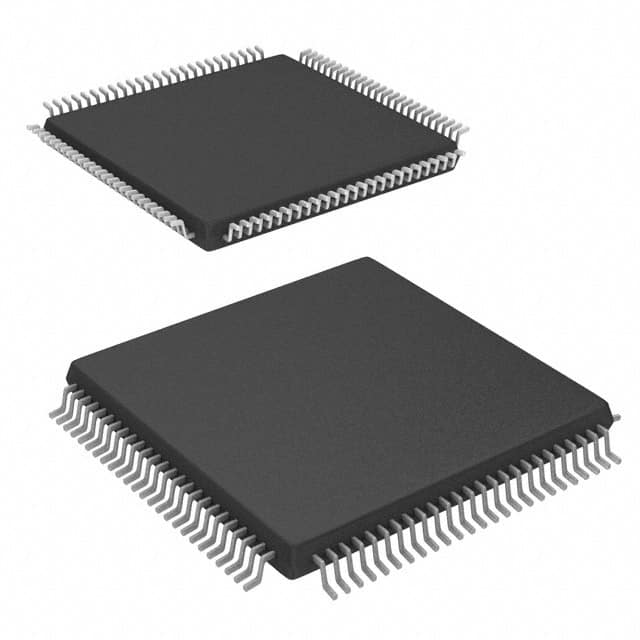
- Part No.:
- CY8C9560A-24AXI
- Manufacturer:
- Infineon Technologies
- Category:
- I/O Expanders
- Package:
- 100-LQFP
- Datasheet:
-
 CY8C9560A-24AXI.pdf
- Description:
- IC XPNDR 100KHZ I2C 100TQFP
- Quantity:
- Payment:

- Shipping:

Inventory:539
Please send an inquiry. Send us your inquiry, and we will respond immediately.
Product details
Overview
CY8C9560A-24AXI from Cypress Semiconductor is a 60-bit I/O expander IC with integrated EEPROM and 16 independently configurable 8-bit PWM outputs, operating as dual I²C slave devices (I/O expander + serial EEPROM) at up to 400 kHz, supporting clock stretching, and featuring interrupt-driven input change detection and user-default restoration from nonvolatile memory. It is used in embedded control systems requiring scalable GPIO expansion with persistent configuration storage.
For engineers reviewing the CY8C9560A-24AXI datasheet, CY8C9560A-24AXI pinout, CY8C9560A-24AXI application, or CY8C9560A-24AXI equivalent, key selection criteria include I²C address flexibility via Extendable Soft Addressing (A0–A6), WD pin-controlled EEPROM write disable, programmable per-pin drive modes (strong drive, open-drain, pull-up/down, high-Z), and power-on restore of port/PWM defaults from EEPROM.
Technical Context
The device implements two independent I²C interfaces on a shared bus: one for register-mapped I/O control (using command-byte addressing), and another for EEPROM access (using 2-byte addressing). Its control unit decodes I²C transactions to route data to port registers, PWM configuration blocks, or EEPROM memory space.
All 60 I/O pins are individually assignable across four functional roles-input, output, quasi-bidirectional I/O, or PWM output-with per-pin drive mode selection (7 modes), inversion, direction, and interrupt masking. The 16 PWMs each support independent clock source selection (six options), period/pulse-width registers, and enable control.
Key Specifications
| Parameter | Value and Actual Design Meaning |
|---|---|
| I/O Count | 60-bit total, distributed across GPort0–GPort7 with flexible allocation (e.g., GPort0: 8-bit fixed, GPort5–GPort7: 8-bit each) |
| PWM Outputs | 16 × 8-bit PWMs (PWM0–PWM15), each selectable from six clock sources including 1.5 MHz, 93.75 kHz, 32 kHz, and 24 MHz |
| EEPROM Size | 27 Kbyte user-accessible space, plus dedicated user-default storage area for port/PWM settings restored at power-on |
| I²C Interface | Standard/fast-mode compatible (≤400 kHz), requires master support for clock stretching; dual-address architecture (010000A0X for I/O, 101000A0X for EEPROM) |
| Drive Modes | 7 per-pin options: strong drive (10 mA source / 25 mA sink), open-drain high/low, pull-up/pull-down, high-impedance |
| Interrupt Logic | Dedicated INT pin signals level changes on any configured input pin or state transitions on any enabled PWM output |
Pinout & Package
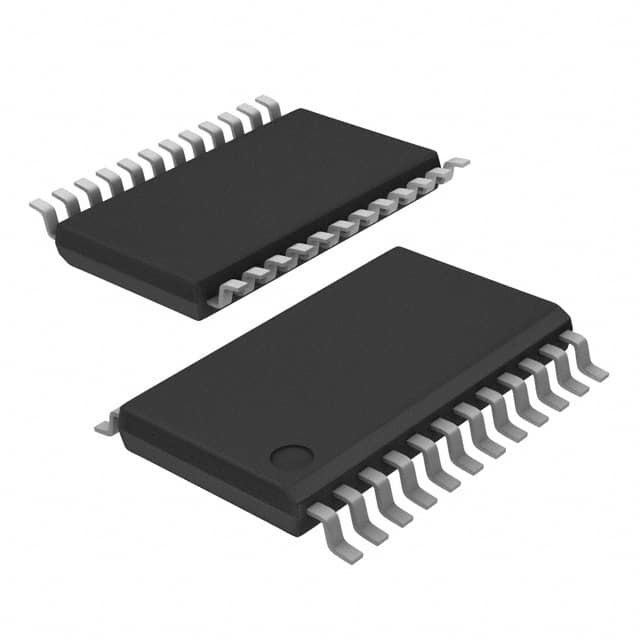
CY8C9560A-24AXI is housed in a 100-pin TQFP package (14 mm × 14 mm, 0.5 mm pitch) with exposed thermal pad. Pin functions include 60 I/O bits, 7 address inputs (A0–A6), SCL/SDA, INT, WD, XRES, VDD, VSS, and internal oscillator connections.
| Pin/Terminal | Circuit Role | Design Meaning |
|---|---|---|
| SCL | I²C Clock Input | Master-generated clock signal; device stretches clock during EEPROM writes or register updates |
| SDA | I²C Data Bidirectional | Open-drain I/O shared with SMBus; supports multi-master arbitration and ACK/NACK signaling |
| INT | Interrupt Output | Active-low open-drain signal asserting on input pin transitions or PWM state changes; requires external pull-up |
| WD | EEPROM Write Disable | Hardware lock: logic-high disables all EEPROM writes regardless of register settings; overrides software disable |
| XRES | External Reset Input | Asynchronous active-low reset that clears port latches and resets internal state machines without affecting EEPROM contents |
| A0–A6 | I²C Address Inputs | Configure up to 128 unique I²C addresses; unused pins default to GPIO function per Extendable Soft Addressing algorithm |
Key Features
| Feature | Design Value |
|---|---|
| Extendable Soft Addressing | Enables dynamic I²C address assignment using 1–7 address pins (A0–A6); unused pins become functional GPIOs |
| User-Default EEPROM Restore | Automatically reloads port direction, drive mode, output state, and PWM configuration from EEPROM at power-on reset |
| Per-Pin Drive Mode Flexibility | Seven selectable modes per I/O pin-including strong drive (10 mA source/25 mA sink), open-drain, pull-up/down, and high-Z-eliminates need for external biasing components |
| Dual I²C Slave Architecture | Separate I²C address spaces for I/O register access and EEPROM read/write operations prevent register/EEPROM contention |
Applications
| Industrial HMI Panel Control | Automotive Body Controller |
|---|---|
Use Scenario: Managing LED indicators, pushbutton inputs, and PWM-dimmed backlighting across multi-zone dashboard displays. IC Role / Device Role / Timing Role: Centralized GPIO expansion hub with synchronized PWM timing for display brightness control and real-time input scanning. Use Value: Reduces MCU GPIO load by 60 pins; EEPROM stores calibrated dimming curves and button debounce parameters for field-upgradable behavior. | Use Scenario: Controlling door lock actuators, mirror position motors, and interior lighting zones in centralized body electronics modules. IC Role / Device Role / Timing Role: High-reliability I/O interface with fault-tolerant interrupt reporting and nonvolatile storage of actuator calibration data. Use Value: Enables fail-safe operation via XRES-triggered recovery and preserves last-known safe states in EEPROM after power loss. |
| Server Rack Management Unit | Medical Diagnostic Equipment |
Use Scenario: Monitoring fan tachometer signals, temperature sensor alerts, and PSU status lines while driving status LEDs and buzzer tones. IC Role / Device Role / Timing Role: System monitor I/O aggregator with interrupt-driven event capture and programmable PWM audio tone generation. Use Value: Eliminates need for discrete timers or microcontrollers for audible alerts; INT pin reduces polling overhead on host processor. | Use Scenario: Interfacing with front-panel controls, status indicators, and motorized stage positioning feedback in imaging systems. IC Role / Device Role / Timing Role: Safety-critical I/O buffer with EEPROM-stored factory calibration offsets and traceable configuration history. Use Value: Supports FDA-required audit trails via write-protected EEPROM sections storing calibration timestamps and operator IDs. |
Equivalent & Alternatives
The following parts are listed as comparable options for similar I/O expander applications.
| Alternative Part | Technical Difference | Application Difference | Selection Advice |
|---|---|---|---|
| TCA6424A | 24-bit I/O, no integrated EEPROM, no PWM, smaller address space (3 pins), no clock stretching requirement | Limited to basic GPIO expansion without persistent config or analog-like control; lacks interrupt granularity per pin | Select when only simple I²C GPIO extension is needed and EEPROM/PWM are unnecessary |
| PCA9555 | 16-bit I/O, no EEPROM, no PWM, fixed 2-pin address, no WD pin or XRES, lower drive strength (10 mA sink only) | Suitable for low-complexity peripheral interfacing but cannot replace CY8C9560A's 60-bit scalability or configuration persistence | Choose for cost-sensitive, low-pin-count designs where EEPROM and PWM are omitted |
Compared with TCA6424A and PCA9555, CY8C9560A-24AXI provides 2.5× more I/O, integrated nonvolatile configuration storage, 16 hardware PWMs, and flexible I²C addressing-making it uniquely suited for complex embedded systems requiring self-contained, field-upgradable I/O behavior without host firmware overhead.
Availability
CY8C9560A-24AXI is available at Aetrix Electronics and suitable for industrial HMI panels, automotive body controllers, server rack management units, and medical diagnostic equipment requiring stable component supply and long-term design-in support.
Supply support for CY8C9560A-24AXI includes scheduled delivery planning, volume procurement assistance, BOM continuity management, traceable sourcing, and lifecycle availability coordination for OEM customers, industrial embedded developers, connected-device designers, and electronics production programs.
Manufacturer
Cypress Semiconductor (now part of Infineon Technologies) designs programmable system-on-chip solutions for embedded control, connectivity, and sensing applications, with emphasis on reliability and integration.
The CY8C95xxA family targets systems needing scalable, intelligent I/O expansion with built-in memory and timing resources-enabling host MCUs to offload GPIO management, retain configuration across power cycles, and simplify board-level interconnect.
FAQ
Does CY8C9560A-24AXI support standard-mode (100 kHz) and fast-mode (400 kHz) I²C?
Yes. The device fully complies with I²C specification v2.1 for both standard and fast modes. It requires the I²C master to support clock stretching during EEPROM writes and register updates, which is mandatory for reliable operation at either speed.
How is the 27 Kbyte EEPROM organized and accessed?
The EEPROM uses 2-byte addressing (AHI/ALO) spanning a 28 Kbyte address space, with 27 Kbyte allocated for user data. Access occurs through a dedicated I²C address (101000A0X); reads/writes use sequential byte addressing, and crossing 64-byte boundaries triggers automatic clock stretching during writes.
Can unused address pins (A1–A6) be repurposed as general-purpose I/O?
Yes. When not used for I²C addressing under the Extendable Soft Addressing scheme, pins A1–A6 function as GPIOs within GPort1 or GPort2, subject to their port-specific bit count limits (e.g., up to 4 bits on GPort2 depending on configuration).
What happens to I/O states during power-on reset?
Upon power-on reset (POR), the device loads factory-default configurations (pull-up bias, input mode) unless user defaults have been stored in EEPROM. If stored, those values-including port direction, drive mode, output state, and PWM setup-are automatically restored before the device becomes operational on the I²C bus.
CY8C9560A-24AXI Specifications
- Product attributes
- Attribute value
- Manufacturer:
- Infineon Technologies
- Series:
- -
- Package/Case:
- 100-LQFP
- Packaging:
- Tray
- Product Status:
- Active
- Programmable:
- Not Verified
- Number of I/O:
- 60
- Interface:
- I2C
- Interrupt Output:
- Yes
- Features:
- EEPROM, POR, PWM, WDT
- Output Type:
- Open Drain
- Current - Output Source/Sink:
- 10mA, 25mA
- Clock Frequency:
- 100 kHz
- Voltage - Supply:
- 3V ~ 5.25V
- Operating Temperature:
- -40°C ~ 85°C
- Grade:
- -
- Qualification:
- -
- Mounting Type:
- Surface Mount
- Supplier Device Package:
- 100-TQFP (14x14)
CY8C9560A-24AXI FAQ
1.How can I place an order for CY8C9560A-24AXI through Aetrix?
Please submit a Request for Quotation (RFQ) for CY8C9560A-24AXI on Aetrix. Our sales agent will provide a competitive quotation and guide you through the order confirmation once you accept the terms.
2.Are the price and stock information for CY8C9560A-24AXI reliable?
The price and inventory of CY8C9560A-24AXI are updated periodically and may fluctuate due to market conditions. Stock and pricing data are typically refreshed every 24 hours. Quotation validity for CY8C9560A-24AXI is usually 5 days.
3.What payment methods are accepted for CY8C9560A-24AXI?
We accept Wire Transfer, PayPal, Credit Card, Western Union, MoneyGram, and Escrow for CY8C9560A-24AXI transactions.
Note: Certain payment methods may incur a processing fee.
4.How is shipping managed for CY8C9560A-24AXI?
CY8C9560A-24AXI orders can be shipped via leading logistics carriers, including DHL, UPS, FedEx, TNT, or Registered Mail.
Once your CY8C9560A-24AXI order is processed, you will receive an email with the shipment details and tracking number.
Note: Tracking information may take up to 24 hours to appear. Express delivery typically takes 3–5 business days.
5.How can I obtain technical support or documentation for CY8C9560A-24AXI?
For technical support, including CY8C9560A-24AXI datasheets, pinout diagrams, or application guidance, please contact our engineering support team. They can provide detailed documentation and assistance for your CY8C9560A-24AXI requirements.
6.How does Aetrix verify that CY8C9560A-24AXI is sourced from the original manufacturer or authorized distributors?
All CY8C9560A-24AXI products on Aetrix are procured from qualified distributors and authorized channels. Our dedicated quality assurance team conducts strict verification, including traceability checks and, if necessary, third-party testing. This ensures that CY8C9560A-24AXI meets industry standards.
7.What is the process for return or replacement of CY8C9560A-24AXI?
All CY8C9560A-24AXI units undergo pre-shipment inspection (PSI). If there is an issue with CY8C9560A-24AXI, returns or replacements are accepted under the following conditions:
1.Quantity discrepancies, incorrect items, or visible external defects (such as breakage or corrosion), acknowledged by Aetrix.
2.The issue is reported within 90 days of delivery.
3.The CY8C9560A-24AXI part is unused and in its original packaging.
Return procedure for CY8C9560A-24AXI:
1.Submit a request within 90 days.
2.Obtain a Return Material Authorization (RMA) from Aetrix.
CY8C9560A-24AXI Tags
-
TCA6408ARSVR
Texas Instruments
-
TCA9535RTWR
Texas Instruments
-
FXL6408UMX
onsemi
-
PCF8574ADWR
Texas Instruments
-
PCF8574APWR
Texas Instruments
-
TCA9555PWR
Texas Instruments
-
TCA9554PWR
Texas Instruments
-
TCA9554APWR
Texas Instruments
-
TCA9539PWR
Texas Instruments
-
TCA9534PWR
Texas Instruments
-
TCA9555RTWR
Texas Instruments
-
TCA9535PWR
Texas Instruments
Tech Hub

Operational amplifier guide covering op amp basics, feedback, ideal vs real op amps, common configurations, buffer circuits, offset, bias current, gain-bandwidth, slew rate, rail-to-rail limits and sel…

Jumper cables guide covering safe connection order, red and black clamp placement, final ground connection, cable gauge, length, clamp quality, copper vs CCA cables, jump starter comparison and battery…

LDO regulator guide covering low dropout voltage, power dissipation, thermal design, PSRR, output noise, capacitor stability, adjustable LDO circuits, LDO vs buck converter and datasheet selection chec…

Conditional Access Module guide covering CAM meaning, CI/CI+ interface, smart card authorization, DVB security workflow, TV and set-top box compatibility, internal electronics, ESD protection, connecto…

Guide to electronic component obsolescence covering EOL risk, PCN/PDN notices, last-time buy planning, replacement options, form-fit-function validation, counterfeit risk and BOM lifecycle management.

18650 battery guide covering lithium-ion cell basics, 3.6V/3.7V voltage, 4.2V charging, mAh and Wh capacity, protected cells, chargers, BMS, series-parallel packs, holders, welding and sourcing checks.…

Hall effect sensor guide covering working principle, linear and digital sensors, Arduino circuits, current sensing, speed detection, automotive applications, A3144 examples, signal filtering and datash…

Product Change Notification guide for electronic components, covering PCN meaning, PCN vs PDN/EOL, common change types, risk levels, form-fit-function review, engineering validation, BOM control, LTB/L…

A practical guide to blend door actuators, covering HVAC function, symptoms, location, AC and heater issues, reset and calibration, replacement cost, electrical diagnosis, compatibility checks, and rep…

Engineering guide to Raspberry Pi alternatives, covering chip-level differences, Orange Pi, ROCK, Jetson, Banana Pi, NanoPi, Compute Module, Pico, GPIO, camera, HAT compatibility, and replacement risks…


