
 My Inquiry
 My Account


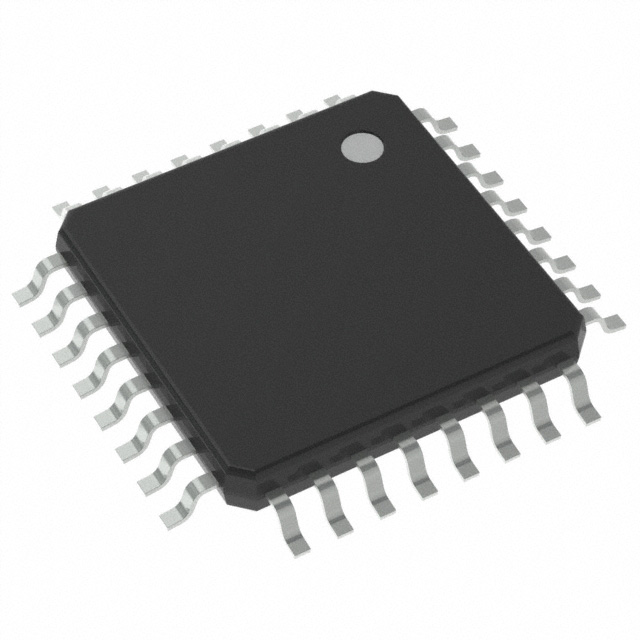
Infineon Technologies CY8CMBR2016-24LQXI
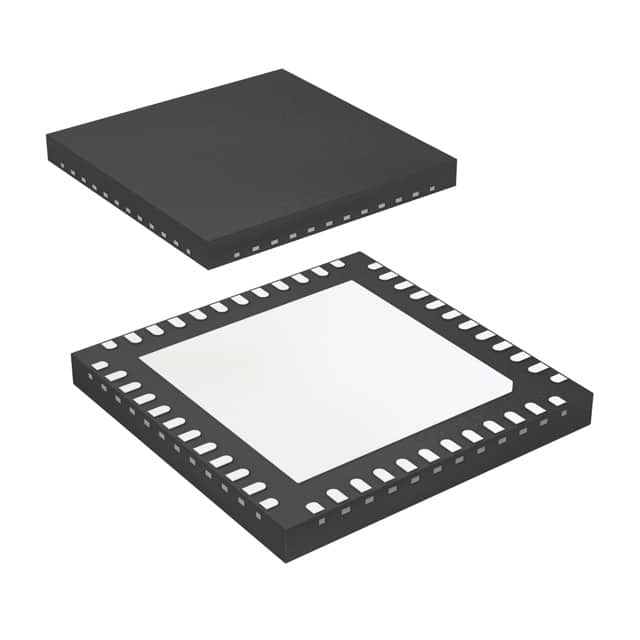
- Part No.:
- CY8CMBR2016-24LQXI
- Manufacturer:
- Infineon Technologies
- Category:
- Sensor, Capacitive Touch
- Package:
- 48-UFQFN Exposed Pad
- Datasheet:
-
 CY8CMBR2016-24LQXI.pdf
- Description:
- IC CAP BUTTON CTRLR 48QFN
- Quantity:
- Payment:

- Shipping:

Inventory:972
Please send an inquiry. Send us your inquiry, and we will respond immediately.
Product details
Overview
CY8CMBR2016-24LQXI from Cypress Semiconductor is a hardware-configurable 16-button capacitive touch matrix controller with SmartSense auto-tuning, supporting 3×4 and 4×4 configurations, 1.71–5.5 V operation, and deep sleep current of 100 nA. It delivers robust button sensing in fire alarm panels, security keypads, and door lock interfaces without firmware programming.
For engineers reviewing the CY8CMBR2016-24LQXI datasheet, CY8CMBR2016-24LQXI pinout, CY8CMBR2016-24LQXI application, or CY8CMBR2016-24LQXI equivalent, key selection factors include matrix configuration flexibility (SCAN/READ vs. Truth Table vs. Encoded GPO), flanking sensor suppression for high-density layouts, system diagnostics (CMOD fault, CP out-of-range), and ultra-low-power deep sleep mode for battery-powered UIs.
Technical Context
The device implements a self-contained CapSense sensing engine with dedicated analog front-end, digital signal processing, and configurable host interface logic-no external MCU or firmware required. Its SmartSense algorithm dynamically adjusts scan parameters (IDAC, resolution, averaging) based on real-time parasitic capacitance (5–40 pF) and environmental noise, eliminating manual tuning across production batches.
Three mutually exclusive host output modes are selected via external resistors on OUT_SEL, SCAN, and SENSITIVITY pins: Key Scan (4 SCAN + 4 READ lines), Truth Table (16-bit encoded parallel output), or Encoded GPO (4-bit active-high output). Each mode defines distinct timing behavior, interrupt assertion logic, and diagnostic reporting scope.
Key Specifications
| Parameter | Value and Actual Design Meaning |
|---|---|
| CapSense Inputs | 16 configurable AI pins (CS0–CS15); grounded pin disables corresponding button |
| Operating Voltage | 1.71–5.5 V; supports direct connection to unregulated Li-ion or alkaline battery rails |
| Deep Sleep Current | 100 nA; enables multi-year battery life in always-on security keypads |
| SmartSense CP Range | 5–40 pF; accommodates wide PCB stackup and overlay thickness variation without rework |
| Host Interface Modes | Key Scan (4×4 matrix emulation), Truth Table (16-bit parallel), Encoded GPO (4-bit active-high) |
| System Diagnostics | Detects CMOD capacitor fault, button short, and CP out-of-range at power-up |
| FSS Support | Enabled via FSS pin; suppresses false triggers when adjacent buttons are pressed within 20 ms |
Pinout & Package
48-pin QFN package (6 × 6 × 0.6 mm, 0.4 mm pitch), thermally enhanced with exposed thermal pad. Pin mapping validated per Document 001-67921 Rev. *F, Page 3.
| Pin/Terminal | Circuit Role | Design Meaning |
|---|---|---|
| CS0–CS15 | CapSense Input | Analog input for individual button electrode; requires 2.2 nF ±10% CMOD capacitor |
| OUT_0–OUT_7 | Configurable I/O | Function varies by mode: SCAN lines (0–3), READ lines (4–7), or encoded GPO outputs |
| INT | Open-drain Output | Active-low interrupt asserts on any button state change; requires external pull-up |
| DEBUG | UART TX (8-bit) | Serial debug data at 9600 bps; provides raw counts and CP values for production test |
| SLEEP | Digital Input | High = normal scan; low = enter deep sleep (100 nA); debounced internally |
| CMOD | Analog Reference | Connects to 2.2 nF modulator capacitor; critical for stable baseline tracking |
Key Features
| Feature | Design Value |
|---|---|
| Hardware Configuration | No firmware or programming tools needed; all features set via external resistor networks on AI pins |
| Flanking Sensor Suppression (FSS) | Prevents misreads when two adjacent buttons are touched simultaneously; essential for compact keypads |
| Buzzer Signal Output | Dedicated BUZZER pin drives DC buzzer directly; eliminates need for external driver transistor |
| Scan Rate Control | SCAN pin selects scan interval (10 ms to 2 s); balances responsiveness vs. power consumption |
| Button Auto Reset | ARST pin configures automatic release after 5 s if button remains pressed; prevents stuck-state failures |
Applications
| Fire Alarm Control Panels | Access Control Keypads |
|---|---|
Use Scenario: Wall-mounted panel with 16 tactile buttons for zone activation, silence, and test functions in high-noise industrial environments. IC Role / Device Role / Timing Role: Standalone CapSense controller replacing mechanical switches; handles all sensing, debouncing, and host communication. Use Value: SmartSense maintains reliable operation despite EMI from HVAC systems and fluorescent lighting; FSS prevents false alarms during rapid multi-button entry. | Use Scenario: Outdoor-rated keypad for office building entry requiring IP65 sealing, battery backup, and vandal resistance. IC Role / Device Role / Timing Role: Primary touch interface controller interfacing to microcontroller via Key Scan protocol for legacy firmware compatibility. Use Value: Deep sleep current of 100 nA extends 2×AA battery life beyond 5 years; system diagnostics flag CMOD failure before field deployment. |
| Industrial HMI Terminals | Medical Device Control Panels |
Use Scenario: Embedded operator terminal with 4×4 button grid for machine start/stop, parameter adjustment, and emergency stop. IC Role / Device Role / Timing Role: Hardware-configured matrix controller using Truth Table output to reduce host GPIO count and simplify firmware. Use Value: Truth Table mode delivers deterministic 16-bit parallel output with <10 µs propagation delay; enables real-time response to safety-critical inputs. | Use Scenario: Sterilizable patient monitor control panel with closely spaced buttons for menu navigation under gloved operation. IC Role / Device Role / Timing Role: Capacitive controller with high-sensitivity mode and FSS enabled to ensure reliable actuation through thick plastic overlays. Use Value: Configurable sensitivity allows optimization for 0.5–2.0 mm overlay thickness; serial debug output validates CP during manufacturing QA. |
Equivalent & Alternatives
The following parts are listed as comparable options for similar capacitive touch matrix controller applications.
| Alternative Part | Technical Difference | Application Difference | Selection Advice |
|---|---|---|---|
| AT42QT2160-MAHR | 16-channel QTouch controller; requires external MCU for configuration; no hardware-only mode | Needs firmware integration; lacks SmartSense auto-tuning and built-in diagnostics | Choose when existing MCU resources allow software-based tuning and debug logging |
| TTP229-BSF | 16-key touch decoder with fixed 4-wire serial output; no matrix reconfiguration or FSS | Supports only basic ON/OFF detection; no CP monitoring or noise immunity tuning | Choose for cost-sensitive, low-feature applications where button density and EMI immunity are not critical |
Compared with AT42QT2160-MAHR and TTP229-BSF, CY8CMBR2016-24LQXI uniquely delivers zero-firmware operation, runtime SmartSense adaptation to parasitic shifts, and production-ready diagnostics-making it optimal for rapid deployment in safety-critical or battery-constrained UIs.
Availability
CY8CMBR2016-24LQXI is available at Aetrix Electronics and suitable for fire alarm control panels, access control keypads, and industrial HMI terminals requiring stable component supply, long-term lifecycle support, and guaranteed traceable sourcing.
Supply support for CY8CMBR2016-24LQXI includes scheduled delivery planning, volume procurement assistance, BOM continuity management, traceable sourcing, and lifecycle availability coordination for OEM customers, industrial embedded developers, connected-device designers, and electronics production programs.
Manufacturer
Cypress Semiconductor (now part of Infineon Technologies) designs programmable system-on-chip solutions for embedded control, connectivity, and human interface applications.
CY8CMBR2016 belongs to the CapSense Express™ family, engineered specifically for rapid deployment of robust, firmware-free capacitive touch interfaces in industrial and security equipment.
FAQ
What host interface protocols does CY8CMBR2016-24LQXI support?
It supports three hardware-selectable modes: Key Scan (4 SCAN + 4 READ lines emulating mechanical matrix), Truth Table (16-bit parallel output), and Encoded GPO (4-bit active-high output). Mode selection is determined by resistor values on OUT_SEL, SCAN, and SENSITIVITY pins-no firmware required. Each mode defines distinct timing, interrupt behavior, and diagnostic reporting scope per the datasheet's configuration tables.
How does SmartSense auto-tuning eliminate manual calibration?
SmartSense continuously monitors baseline capacitance and noise floor, then dynamically adjusts IDAC current, resolution, and averaging settings to maintain optimal SNR across temperature, humidity, and PCB process variation. It operates entirely in hardware, requiring no host intervention or calibration routines-enabling first-pass success across production lots and eliminating yield loss from manual tuning errors.
What is the role of the CMOD pin and its required capacitor value?
The CMOD pin connects to a mandatory 2.2 nF ±10% ceramic capacitor that serves as the modulator reference for the CapSense delta-sigma converter. This capacitor sets the charge transfer rate and directly impacts baseline stability and noise rejection. Using an incorrect value or tolerance causes erratic button response, false triggers, or complete failure to detect touches-as verified in electrical characterization tests on page 23 of the datasheet.
Can CY8CMBR2016-24LQXI drive a buzzer directly?
Yes-the BUZZER pin is a push-pull output capable of sourcing up to 20 mA at VDD, sufficient to drive standard 3–5 V DC magnetic buzzers without external transistors. The buzzer activates synchronously with button press events when enabled via hardware configuration, providing immediate tactile-audio feedback while maintaining full system-level noise immunity.
CY8CMBR2016-24LQXI Specifications
- Product attributes
- Attribute value
- Manufacturer:
- Infineon Technologies
- Package/Case:
- 48-UFQFN Exposed Pad
- Series:
- CAPSENSE™ Express™
- Packaging:
- Tray
- Product Status:
- Active
- Programmable:
- Not Verified
- Type:
- Buttons
- Proximity Detection:
- No
- Number of Inputs:
- Up to 16
- LED Driver Channels:
- Up to 16
- Interface:
- -
- Resolution:
- -
- Voltage - Supply:
- 1.71V ~ 5.5V
- Current - Supply:
- 3.3mA
- Operating Temperature:
- -40°C ~ 85°C
- Grade:
- -
- Qualification:
- -
- Mounting Type:
- Surface Mount
- Supplier Device Package:
- 48-QFN (6x6)
CY8CMBR2016-24LQXI FAQ
1.How can I place an order for CY8CMBR2016-24LQXI through Aetrix?
Please submit a Request for Quotation (RFQ) for CY8CMBR2016-24LQXI on Aetrix. Our sales agent will provide a competitive quotation and guide you through the order confirmation once you accept the terms.
2.Are the price and stock information for CY8CMBR2016-24LQXI reliable?
The price and inventory of CY8CMBR2016-24LQXI are updated periodically and may fluctuate due to market conditions. Stock and pricing data are typically refreshed every 24 hours. Quotation validity for CY8CMBR2016-24LQXI is usually 5 days.
3.What payment methods are accepted for CY8CMBR2016-24LQXI?
We accept Wire Transfer, PayPal, Credit Card, Western Union, MoneyGram, and Escrow for CY8CMBR2016-24LQXI transactions.
Note: Certain payment methods may incur a processing fee.
4.How is shipping managed for CY8CMBR2016-24LQXI?
CY8CMBR2016-24LQXI orders can be shipped via leading logistics carriers, including DHL, UPS, FedEx, TNT, or Registered Mail.
Once your CY8CMBR2016-24LQXI order is processed, you will receive an email with the shipment details and tracking number.
Note: Tracking information may take up to 24 hours to appear. Express delivery typically takes 3–5 business days.
5.How can I obtain technical support or documentation for CY8CMBR2016-24LQXI?
For technical support, including CY8CMBR2016-24LQXI datasheets, pinout diagrams, or application guidance, please contact our engineering support team. They can provide detailed documentation and assistance for your CY8CMBR2016-24LQXI requirements.
6.How does Aetrix verify that CY8CMBR2016-24LQXI is sourced from the original manufacturer or authorized distributors?
All CY8CMBR2016-24LQXI products on Aetrix are procured from qualified distributors and authorized channels. Our dedicated quality assurance team conducts strict verification, including traceability checks and, if necessary, third-party testing. This ensures that CY8CMBR2016-24LQXI meets industry standards.
7.What is the process for return or replacement of CY8CMBR2016-24LQXI?
All CY8CMBR2016-24LQXI units undergo pre-shipment inspection (PSI). If there is an issue with CY8CMBR2016-24LQXI, returns or replacements are accepted under the following conditions:
1.Quantity discrepancies, incorrect items, or visible external defects (such as breakage or corrosion), acknowledged by Aetrix.
2.The issue is reported within 90 days of delivery.
3.The CY8CMBR2016-24LQXI part is unused and in its original packaging.
Return procedure for CY8CMBR2016-24LQXI:
1.Submit a request within 90 days.
2.Obtain a Return Material Authorization (RMA) from Aetrix.
CY8CMBR2016-24LQXI Tags

-
IQS228B00000000TSR
Azoteq (Pty) Ltd

-
MTCH101T-I/OT
Microchip Technology
-
IQS323001CSR
Azoteq (Pty) Ltd

-
AT42QT1010-TSHR
Microchip Technology
-
AT42QT1012-TSHR
Microchip Technology
-
AT42QT1011-TSHR
Microchip Technology
-
CAP1206-1-SL-TR
Microchip Technology
-
MTCH102T-I/MS
Microchip Technology
-
IQS323001DNR
Azoteq (Pty) Ltd
-
AT42QT1070-SSUR
Microchip Technology
-
CAP1188-1-CP-TR
Microchip Technology
-
AT42QT1110-AUR
Microchip Technology
Tech Hub

An engineering guide to LED driver operation, constant-current and constant-voltage outputs, linear and switching topologies, dimming, IC selection, calculations, replacement compatibility, and fault c…

Operational amplifier guide covering op amp basics, feedback, ideal vs real op amps, common configurations, buffer circuits, offset, bias current, gain-bandwidth, slew rate, rail-to-rail limits and sel…

Jumper cables guide covering safe connection order, red and black clamp placement, final ground connection, cable gauge, length, clamp quality, copper vs CCA cables, jump starter comparison and battery…

LDO regulator guide covering low dropout voltage, power dissipation, thermal design, PSRR, output noise, capacitor stability, adjustable LDO circuits, LDO vs buck converter and datasheet selection chec…

Conditional Access Module guide covering CAM meaning, CI/CI+ interface, smart card authorization, DVB security workflow, TV and set-top box compatibility, internal electronics, ESD protection, connecto…

Guide to electronic component obsolescence covering EOL risk, PCN/PDN notices, last-time buy planning, replacement options, form-fit-function validation, counterfeit risk and BOM lifecycle management.

18650 battery guide covering lithium-ion cell basics, 3.6V/3.7V voltage, 4.2V charging, mAh and Wh capacity, protected cells, chargers, BMS, series-parallel packs, holders, welding and sourcing checks.…

Hall effect sensor guide covering working principle, linear and digital sensors, Arduino circuits, current sensing, speed detection, automotive applications, A3144 examples, signal filtering and datash…

Product Change Notification guide for electronic components, covering PCN meaning, PCN vs PDN/EOL, common change types, risk levels, form-fit-function review, engineering validation, BOM control, LTB/L…

A practical guide to blend door actuators, covering HVAC function, symptoms, location, AC and heater issues, reset and calibration, replacement cost, electrical diagnosis, compatibility checks, and rep…


