
 My Inquiry
 My Account


Infineon Technologies CYAT817AZA72-3BFBA

- Part No.:
- CYAT817AZA72-3BFBA
- Manufacturer:
- Infineon Technologies
- Category:
- Touch Screen Controllers
- Package:
- 100-LQFP
- Datasheet:
-
 CYAT817AZA72-3BFBA.pdf
- Description:
- PSOC BASED - TRUETOUCH
- Quantity:
- Payment:

- Shipping:

Inventory:3,117
Please send an inquiry. Send us your inquiry, and we will respond immediately.
Product details
Overview
CYAT817AZA72-3BFBA from Infineon is an AEC-Q100 qualified automotive-grade capacitive touchscreen controller featuring a 32-bit Arm® Cortex® CPU, 72 configurable sense pins, support for 10-finger multitouch, hover sensing up to 35 mm, force touch (0.5–10 N), and low-power wake-on-touch (< 50 µA). It enables robust touch performance in automotive infotainment displays with water rejection, glove operation (≤5 mm), and dual-sense wet-finger tracking.
For engineers reviewing the CYAT817AZA72-3BFBA datasheet, CYAT817AZA72-3BFBA pinout, CYAT817AZA72-3BFBA application, or CYAT817AZA72-3BFBA equivalent, key selection criteria include its 100LD TQFP package, CAN interface capability, split-screen and free-form shape support, 250 Hz refresh rate, and integrated DSP for noise filtering in high-EMI vehicle environments.
Technical Context
This device implements a register-configurable CAPSENSE™ architecture with dual-sense capability for simultaneous TX/RX scanning, enabling water rejection and wet-finger tracking. Its 64 dedicated RX channels each integrate an ADC, supporting single-pass long-side scanning and high-frequency TX hopping (up to 300 kHz) for optimal EMI immunity.
The controller integrates a cryptographic engine for secure host communication and supports secondary I2C/SPI as master/slave (firmware-enabled) plus a dedicated CAN interface for safety-critical automotive subsystems. Force sensing uses five parallel RX channels with 0.1 N resolution and 100 µm/10 N displacement sensitivity.
Key Specifications
| Parameter | Value and Actual Design Meaning |
|---|---|
| Sense Pins | 72 fully configurable TX/RX pins for flexible sensor layout on automotive touchscreens |
| Fingers Supported | Up to 10 simultaneous touches with small-finger detection down to 5 mm diameter |
| Hover Range | Up to 35 mm air gap detection for proximity-aware UI activation |
| Force Sensing | 0.5–10 N range with 0.1 N resolution using five dedicated parallel RX channels |
| Refresh Rate | Configurable up to 250 Hz for responsive touch response in dynamic infotainment interfaces |
| Power (Active) | 30 mW typical average power at full operation, enabling thermal management in sealed enclosures |
| Deep Sleep Power | 30 µW typical, enabling always-on wake-on-touch without battery drain in parked vehicles |
| Operating Temp | –40°C to +85°C (Automotive-A grade), validated for dashboard-mounted display modules |
Pinout & Package
Package: 100-lead TQFP, 14 mm × 14 mm × 1.4 mm body, 0.5 mm pitch, RoHS-compliant, lead-free.
| Pin/Terminal | Circuit Role | Design Meaning |
|---|---|---|
| VDDIO | Digital I/O supply | 1.71–1.95 V or 3.0–5.5 V logic rail; powers GPIOs and digital peripherals |
| VDDA | Analog supply | 3.0–5.5 V analog domain supply for ADCs, CAPSENSE™ front-end, and reference circuits |
| VCCTX | Capacitive TX drive voltage | 5 V supply enabling effective 20 V multi-phase TX drive for improved SNR in noisy cabins |
| SCL/SDA | I²C interface | Standard-mode (100 kbps), fast-mode (400 kbps), and fast-mode+ (1 Mbps) slave interface to host MCU |
| CSN/SCLK/MOSI/MISO | SPI interface | Full-duplex SPI slave up to 8 Mbps for high-throughput touch data streaming |
| CANH/CANL | CAN physical layer | Dedicated differential CAN transceiver pins compliant with ISO 11898-2 for safety-critical diagnostics or system coordination |
| WAKE | Wake-on-touch input | Low-power interrupt pin asserting on touch event during Deep Sleep (IDD < 50 µA) |
| RESET | Hardware reset | Active-low asynchronous reset for deterministic initialization after power-up or fault recovery |
Key Features
| Feature | Design Value |
|---|---|
| Auto Armor Technology | Integrated hardware-based EMI mitigation that simultaneously reduces emissions and improves immunity without firmware overhead |
| Dual-Sense Capability | Independent TX/RX channel pairing enabling concurrent water rejection and wet-finger tracking on same sensor stackup |
| Glove Support | Automatic mode switching between thin-glove (≤1 mm) and thick-glove (≤5 mm) operation without user intervention |
| Split-Screen & Free-Form Shapes | Runtime-configurable touch zones allowing independent gesture handling across segmented displays or non-rectangular UI regions |
| Runtime Diagnostics | On-chip self-test of CAPSENSE™ electrodes, analog front-end, and memory integrity for ASIL-B compliance support |
| Field Upgrades | Secure bootloader enabling OTA firmware updates via I²C/SPI with cryptographic signature verification |
Applications
| Automotive Infotainment Display | Center Console Touch Interface |
|---|---|
Use Scenario: 12–15-inch LCD/AMOLED display in vehicle center stack with ambient light, vibration, and EMI challenges. IC Role / Device Role / Timing Role: Primary touchscreen controller managing all capacitive sensing, gesture processing, and CAN-based system coordination. Use Value: Dual-sense wet-finger tracking ensures reliable operation during rain exposure; 35 mm hover enables pre-touch UI preview without contact. | Use Scenario: Haptic-enabled center console with slider controls, force-sensitive buttons, and proximity wake-up. IC Role / Device Role / Timing Role: Multifunction controller executing slider gestures, force-tap detection, and IR proximity-triggered wake-up. Use Value: Five parallel RX channels enable simultaneous touch/force scan at 100 Hz, delivering tactile feedback latency under 15 ms. |
| Driver Information Cluster (DIC) | Passenger Seat Control Panel |
Use Scenario: Compact 7–10-inch digital instrument cluster requiring ASIL-B-aligned diagnostics and low-power operation. IC Role / Device Role / Timing Role: Safety-augmented touch controller providing runtime electrode self-test and secure boot for critical driver alerts. Use Value: 30 µW Deep Sleep power allows persistent wake-on-touch while meeting automotive battery drain limits (< 100 µA total). | Use Scenario: Rear-seat entertainment control panel with glove operation, split-screen video controls, and acoustic haptics. IC Role / Device Role / Timing Role: Touch coordinator managing free-form button layouts, audio feedback triggers, and CAN-linked seat position sync. Use Value: Free-form shape support enables custom UI zones for media playback, climate, and seat adjustment-each independently calibrated. |
Equivalent & Alternatives
The following parts are listed as comparable options for similar automotive multitouch controller applications.
| Alternative Part | Technical Difference | Application Difference | Selection Advice |
|---|---|---|---|
| CYAT817AZS72-3BFBA | Same 72-pin configuration and feature set but lacks CAN interface and haptic output support | Targeted at non-safety-critical infotainment systems without CAN diagnostics or acoustic feedback requirements | Select when CAN integration and haptic actuation are unnecessary to reduce BOM cost and firmware complexity |
| CYAT817AZA77-5BFBA | 128LD TQFP package with 77 sense pins, extended temperature range (–40°C to +105°C), identical feature set | Required for under-hood or high-ambient-temperature applications such as HVAC control panels near engine bays | Choose for designs needing higher thermal margin or additional sense channels for larger displays or complex sensor topologies |
Compared with CYAT817AZS72-3BFBA, this part adds CAN and haptic support for safety-critical coordination and tactile feedback; versus CYAT817AZA77-5BFBA, it trades thermal margin and pin count for smaller footprint and lower cost in cabin-mounted displays.
Availability
CYAT817AZA72-3BFBA is available at Aetrix Electronics and suitable for automotive infotainment displays, center console interfaces, and driver information clusters requiring stable component supply, AEC-Q100 qualification, and long-term lifecycle support.
Supply support for CYAT817AZA72-3BFBA includes scheduled delivery planning, volume procurement assistance, BOM continuity management, traceable sourcing, and lifecycle availability coordination for OEM customers, industrial embedded developers, connected-device designers, and electronics production programs.
Manufacturer
Infineon Technologies AG is a German semiconductor manufacturer specializing in power management, automotive microcontrollers, and sensing solutions, with global R&D and manufacturing infrastructure.
This device belongs to the PSoC™ Automotive Multitouch Generation 7XL product line, designed specifically for high-reliability, EMI-resilient capacitive touch interfaces in modern vehicle cockpits and ADAS-adjacent human-machine interaction systems.
FAQ
Does CYAT817AZA72-3BFBA support both I²C and SPI host interfaces simultaneously?
Yes, it supports concurrent I²C and SPI slave operation, allowing host systems to use either interface for touch data transfer while reserving the other for firmware updates or diagnostics. Both operate independently with configurable address spaces and clock domains, and neither requires shared resources or arbitration logic.
What is the maximum electrode pitch supported for reliable 10-finger tracking?
The device supports up to 5.3 mm electrode pitch while maintaining stable 10-finger tracking and small-finger (5 mm) detection. This is validated across Manhattan and diamond sensor layouts with standard ITO patterns on glass and PET substrates, per Infineon's Gen7XL design guidelines.
Is CAN interface functionality enabled by default or firmware-configured?
The CAN interface is hardware-integrated but requires custom firmware to initialize and configure its registers, message buffers, and error-handling behavior. The datasheet confirms it is not active out-of-reset and must be explicitly enabled via the device's configuration registers before use.
How does the device handle water contamination on the touchscreen surface?
It uses dual-sense capability to acquire two independent capacitance measurements per electrode pair-one optimized for finger detection and one for water layer discrimination-enabling real-time rejection of false touches caused by moisture while preserving wet-finger tracking accuracy.
CYAT817AZA72-3BFBA Specifications
- Product attributes
- Attribute value
- Manufacturer:
- Infineon Technologies
- Package/Case:
- 100-LQFP
- Touchscreen:
- 2 Wire Capacitive
- Resolution (Bits):
- -
- Interface:
- I2C, SPI
- Voltage Reference:
- -
- Voltage - Supply:
- 1.71V ~ 1.95V, 3V ~ 5.5V
- Current - Supply:
- -
- Operating Temperature:
- -40°C ~ 85°C (TA)
- Mounting Type:
- Surface Mount
- Grade:
- Automotive
- Qualification:
- AEC-Q100
- Supplier Device Package:
- 100-TQFP (14x14)
CYAT817AZA72-3BFBA FAQ
1.How can I place an order for CYAT817AZA72-3BFBA through Aetrix?
Please submit a Request for Quotation (RFQ) for CYAT817AZA72-3BFBA on Aetrix. Our sales agent will provide a competitive quotation and guide you through the order confirmation once you accept the terms.
2.Are the price and stock information for CYAT817AZA72-3BFBA reliable?
The price and inventory of CYAT817AZA72-3BFBA are updated periodically and may fluctuate due to market conditions. Stock and pricing data are typically refreshed every 24 hours. Quotation validity for CYAT817AZA72-3BFBA is usually 5 days.
3.What payment methods are accepted for CYAT817AZA72-3BFBA?
We accept Wire Transfer, PayPal, Credit Card, Western Union, MoneyGram, and Escrow for CYAT817AZA72-3BFBA transactions.
Note: Certain payment methods may incur a processing fee.
4.How is shipping managed for CYAT817AZA72-3BFBA?
CYAT817AZA72-3BFBA orders can be shipped via leading logistics carriers, including DHL, UPS, FedEx, TNT, or Registered Mail.
Once your CYAT817AZA72-3BFBA order is processed, you will receive an email with the shipment details and tracking number.
Note: Tracking information may take up to 24 hours to appear. Express delivery typically takes 3–5 business days.
5.How can I obtain technical support or documentation for CYAT817AZA72-3BFBA?
For technical support, including CYAT817AZA72-3BFBA datasheets, pinout diagrams, or application guidance, please contact our engineering support team. They can provide detailed documentation and assistance for your CYAT817AZA72-3BFBA requirements.
6.How does Aetrix verify that CYAT817AZA72-3BFBA is sourced from the original manufacturer or authorized distributors?
All CYAT817AZA72-3BFBA products on Aetrix are procured from qualified distributors and authorized channels. Our dedicated quality assurance team conducts strict verification, including traceability checks and, if necessary, third-party testing. This ensures that CYAT817AZA72-3BFBA meets industry standards.
7.What is the process for return or replacement of CYAT817AZA72-3BFBA?
All CYAT817AZA72-3BFBA units undergo pre-shipment inspection (PSI). If there is an issue with CYAT817AZA72-3BFBA, returns or replacements are accepted under the following conditions:
1.Quantity discrepancies, incorrect items, or visible external defects (such as breakage or corrosion), acknowledged by Aetrix.
2.The issue is reported within 90 days of delivery.
3.The CYAT817AZA72-3BFBA part is unused and in its original packaging.
Return procedure for CYAT817AZA72-3BFBA:
1.Submit a request within 90 days.
2.Obtain a Return Material Authorization (RMA) from Aetrix.
CYAT817AZA72-3BFBA Tags
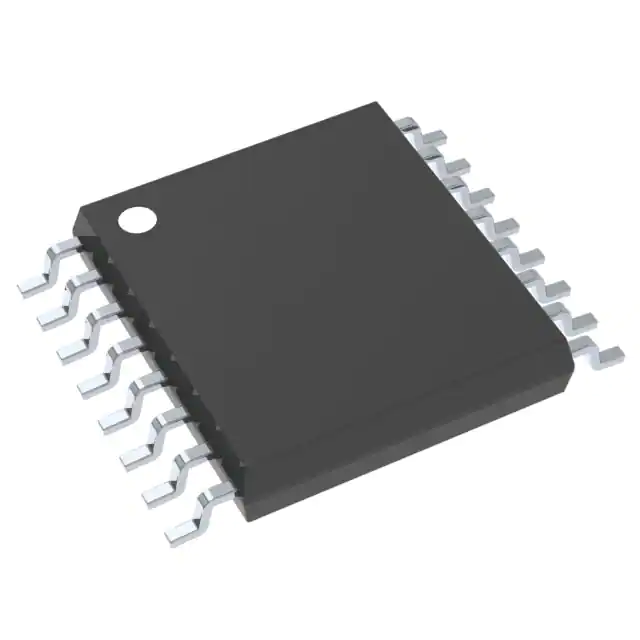
-
TSC2046IPWR
Texas Instruments
-
TSC2007IPWR
Texas Instruments
-
TSC2046EIPWR
Texas Instruments
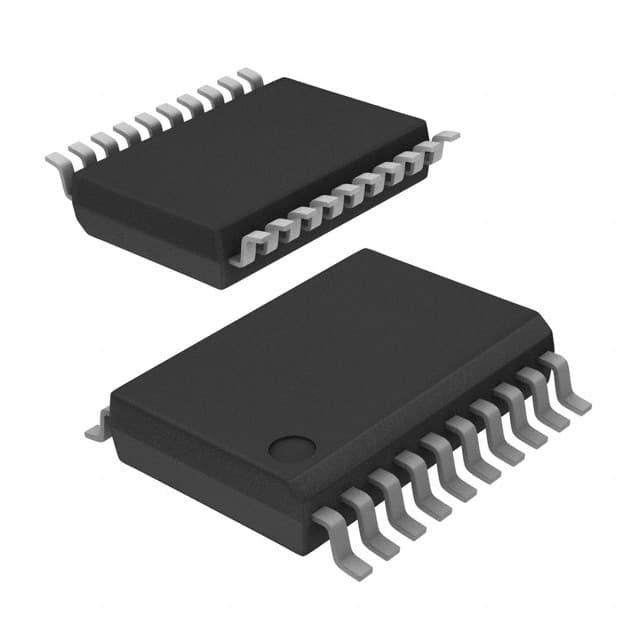
-
AR1021-I/SS
Microchip Technology
-
AR1020-I/SS
Microchip Technology
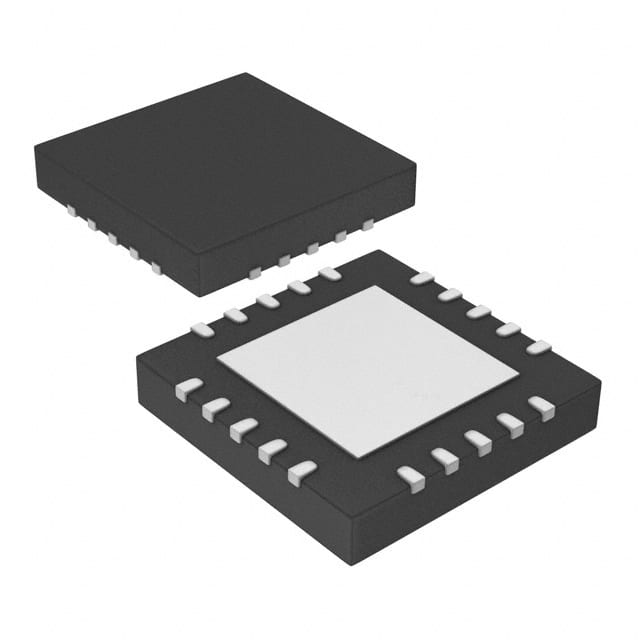
-
AR1100-I/MQ
Microchip Technology
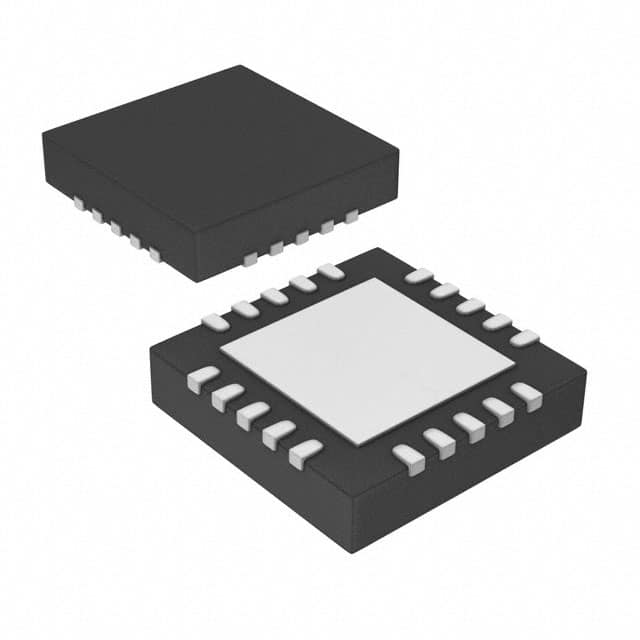
-
AR1021T-I/ML
Microchip Technology
-
AR1100T-I/SS
Microchip Technology
-
TSC2003IPWR
Texas Instruments
-
TSC2004IRTJR
Texas Instruments
-
AR1100BRD
Microchip Technology
.jpg)
-
TSC2046IRGVR
Texas Instruments
Tech Hub

Operational amplifier guide covering op amp basics, feedback, ideal vs real op amps, common configurations, buffer circuits, offset, bias current, gain-bandwidth, slew rate, rail-to-rail limits and sel…

Jumper cables guide covering safe connection order, red and black clamp placement, final ground connection, cable gauge, length, clamp quality, copper vs CCA cables, jump starter comparison and battery…

LDO regulator guide covering low dropout voltage, power dissipation, thermal design, PSRR, output noise, capacitor stability, adjustable LDO circuits, LDO vs buck converter and datasheet selection chec…

Conditional Access Module guide covering CAM meaning, CI/CI+ interface, smart card authorization, DVB security workflow, TV and set-top box compatibility, internal electronics, ESD protection, connecto…

Guide to electronic component obsolescence covering EOL risk, PCN/PDN notices, last-time buy planning, replacement options, form-fit-function validation, counterfeit risk and BOM lifecycle management.

18650 battery guide covering lithium-ion cell basics, 3.6V/3.7V voltage, 4.2V charging, mAh and Wh capacity, protected cells, chargers, BMS, series-parallel packs, holders, welding and sourcing checks.…

Hall effect sensor guide covering working principle, linear and digital sensors, Arduino circuits, current sensing, speed detection, automotive applications, A3144 examples, signal filtering and datash…

Product Change Notification guide for electronic components, covering PCN meaning, PCN vs PDN/EOL, common change types, risk levels, form-fit-function review, engineering validation, BOM control, LTB/L…

A practical guide to blend door actuators, covering HVAC function, symptoms, location, AC and heater issues, reset and calibration, replacement cost, electrical diagnosis, compatibility checks, and rep…

Engineering guide to Raspberry Pi alternatives, covering chip-level differences, Orange Pi, ROCK, Jetson, Banana Pi, NanoPi, Compute Module, Pico, GPIO, camera, HAT compatibility, and replacement risks…


