
 My Inquiry
 My Account


Infineon Technologies CYAT837AZA77-42002

- Part No.:
- CYAT837AZA77-42002
- Manufacturer:
- Infineon Technologies
- Category:
- Touch Screen Controllers
- Package:
- 128-LQFP
- Datasheet:
-
 CYAT837AZA77-42002.pdf
- Description:
- PSOC BASED - TRUETOUCH
- Quantity:
- Payment:

- Shipping:

Inventory:2,990
Please send an inquiry. Send us your inquiry, and we will respond immediately.
Product details
Overview
CYAT837AZA77-42002 from Infineon is an AEC-Q100 qualified automotive-grade multitouch capacitive touchscreen controller featuring a 32-bit Arm® Cortex® CPU, 77 sense I/Os, 128-pin TQFP package, -40°C to 85°C operating range, and support for wet-finger tracking, glove operation (≤5 mm), and 10-finger reporting - deployed in infotainment displays up to 35-inch diagonal.
For engineers reviewing the CYAT837AZA77-42002 datasheet, CYAT837AZA77-42002 pinout, CYAT837AZA77-42002 application, or CYAT837AZA77-42002 equivalent, key selection criteria include sense channel count (77), glove/water rejection capability, I²C host interface (up to 1 Mbps), multi-phase TX architecture (150 kHz max), and automotive temperature grade (A).
Technical Context
This device operates as the master chip in a multichip PSoC™ Automotive Generation 7XL touchscreen system, integrating register-configurable touch sensing with DualSense technology for simultaneous self-capacitance and mutual-capacitance measurement. It implements AutoArmor for EMI suppression and DisplayArmor for display noise immunity.
The controller supports single-pass long-side scanning via 192 dedicated ADC channels, enabling up to 120 Hz refresh rate and 296 total sense pins across multi-chip configurations. Its 5-V TX drive with 17-phase multi-phase capability delivers effective 20-V signal swing for enhanced SNR in noisy automotive environments.
Key Specifications
| Parameter | Value and Actual Design Meaning |
|---|---|
| Sense I/O Count | 77 dedicated sense pins - defines maximum electrode count and sensor resolution for medium-size automotive displays |
| Operating Temp Range | -40°C to +85°C (Automotive-A grade) - validated for cabin-mounted infotainment systems without active cooling |
| Host Interface | I²C slave at 100/400 kbps and 1 Mbps - enables low-latency communication with MCU or SoC without requiring additional protocol translation |
| TX Frequency Max | 150 kHz - allows optimized scan timing and noise separation from display switching harmonics |
| Power Supply | 1.71–1.95 V core / 3.0–5.5 V I/O & analog - supports dual-rail power domain isolation for noise-sensitive analog front-end |
| Refresh Rate | Up to 120 Hz - meets real-time responsiveness requirements for gesture-driven UI in automotive HMI |
| Touch Reporting | Up to 10 fingers with 5-mm glove support - enables reliable input under winter driving conditions with thick gloves |
Pinout & Package
Package: 128-pin TQFP (14 × 20 × 1.4 mm, 0.5-mm pitch), RoHS-compliant, lead-free, moisture sensitivity level 3.
| Pin/Terminal | Circuit Role | Design Meaning |
|---|---|---|
| VDDIO | Digital I/O supply | 3.0–5.5 V rail powering GPIOs, I²C interface, and internal logic - must be decoupled locally per Infineon layout guidelines |
| VDDA | Analog supply | 3.0–5.5 V dedicated rail for ADCs and analog front-end - requires separate filtering from digital supplies to maintain SNR |
| VDDCORE | Core logic supply | 1.71–1.95 V supply for Arm Cortex-M CPU and digital subsystem - sensitive to ripple; needs low-ESR ceramic capacitor |
| SCL / SDA | I²C host interface | Open-drain bidirectional lines supporting standard/fast/high-speed modes - require external pull-ups to VDDIO |
| SENSE[0:76] | Capsense electrode inputs | 77 configurable analog inputs for mutual/self-capacitance sensing - routed to internal 192-channel ADC array with per-channel gain control |
| TX[0:16] | Multiphase transmit outputs | 17 dedicated TX drivers supporting high-order phase-shifted waveforms - enables 20-V effective drive for improved SNR in EMI-heavy cabins |
| RESETn | Active-low reset | Asynchronous hardware reset input - asserted low for ≥10 µs to initialize firmware and clear touch state machine |
Key Features
| Feature | Design Value |
|---|---|
| DualSense technology | Simultaneous self- and mutual-capacitance measurement on same electrodes - enables robust wet-finger tracking and large-object rejection without sensor redesign |
| AutoArmor EMI mitigation | Integrated hardware-based emission and immunity enhancement - reduces need for external shielding and board-level filtering in head unit PCBs |
| Water rejection algorithm | Real-time capacitance baseline adaptation during liquid presence - maintains touch functionality during rain-splashed or condensation-affected operation |
| Glove mode auto-switching | Automatic detection of glove thickness (≤1 mm thin / ≤5 mm thick) and dynamic parameter reconfiguration - eliminates manual UI mode selection |
| Field-upgradable firmware | Secure bootloader supporting signed OTA updates over I²C - enables post-deployment feature enhancements and calibration corrections |
Applications
| Infotainment Display Control | Driver Information System (DIS) |
|---|---|
Use Scenario: 12–15-inch central touchscreen in premium vehicle infotainment units with AMOLED display and metal-mesh sensor stack. IC Role / Device Role / Timing Role: Master multitouch controller managing all capacitive sensing, gesture processing, and I²C reporting to application processor. Use Value: 77-sense-pin capacity supports 16:10 aspect ratio at 6-mm electrode pitch; 120 Hz refresh ensures lag-free swipe/gesture response. | Use Scenario: Digital instrument cluster with integrated touch controls for menu navigation and driver-assist settings. IC Role / Device Role / Timing Role: Dedicated touch controller offloading gesture processing from main cluster MCU to reduce latency and thermal load. Use Value: Wet-finger and glove tracking ensure usability in all weather; AEC-Q100 qualification guarantees reliability over 15-year vehicle lifecycle. |
| Passenger Seat Entertainment | Head-Up Display (HUD) Touch Overlay |
Use Scenario: Rear-seat 10-inch touchscreen with PET substrate and LCD display, used for media control and climate adjustment. IC Role / Device Role / Timing Role: Multichip master coordinating with slave controllers to extend sensing area beyond single-chip limits. Use Value: 192-channel ADC architecture enables single-pass scanning - cuts frame time by ~40% vs. legacy sequential scanning. | Use Scenario: Transparent capacitive overlay mounted on HUD combiner glass for driver-accessible touch interaction without obstructing optical path. IC Role / Device Role / Timing Role: Low-noise, high-SNR controller compensating for optical coating interference and ambient light-induced capacitance drift. Use Value: 20-V effective TX drive and DisplayArmor suppress display switching noise - maintains >99% touch accuracy during HUD brightness modulation. |
Equivalent & Alternatives
The following parts are listed as comparable options for similar multitouch controller applications.
| Alternative Part | Technical Difference | Application Difference | Selection Advice |
|---|---|---|---|
| CYAT837AZS77-42002 | Same silicon, extended temperature range (-40°C to +105°C) | Required for engine bay–adjacent or sun-exposed mounting locations | Select when ambient operating temperature exceeds 85°C |
| CYAT847AZA77-42002 | Slave configuration in multichip topology; no master firmware or boot ROM | Used only as secondary controller in systems with ≥2 chips; cannot operate standalone | Select only when expanding sense channel count beyond 77 using multichip daisy-chain |
Compared with CYAT837AZA77-42002, the S-grade variant offers higher thermal margin but identical functionality, while the CYAT847AZA77-42002 provides scalable channel expansion at the cost of standalone operation - choice depends strictly on thermal environment and system architecture.
Availability
CYAT837AZA77-42002 is available at Aetrix Electronics and suitable for automotive infotainment systems, digital instrument clusters, and passenger entertainment modules requiring stable component supply, AEC-Q100 compliance, and long-term production continuity.
Supply support for CYAT837AZA77-42002 includes scheduled delivery planning, volume procurement assistance, BOM continuity management, traceable sourcing, and lifecycle availability coordination for OEM customers, industrial embedded developers, connected-device designers, and electronics production programs.
Manufacturer
Infineon Technologies AG is a German semiconductor manufacturer specializing in power management, automotive ICs, and security solutions, with global R&D and manufacturing infrastructure.
CYAT837X belongs to the PSoC™ Automotive Multitouch Generation 7XL product line, engineered specifically for high-reliability, noise-immune capacitive touch interfaces in automotive human-machine interaction systems.
FAQ
What is the difference between CYAT837AZA77-42002 and CYAT837AZS77-42002?
The CYAT837AZA77-42002 is rated for -40°C to +85°C (Automotive-A grade), while the CYAT837AZS77-42002 extends to -40°C to +105°C (Automotive-S grade). Both share identical pinout, firmware, and electrical specifications - only thermal qualification differs. The S-grade version is required for under-hood or dashboard locations exposed to peak solar loading.
Does CYAT837AZA77-42002 support Android natively?
Yes - Infineon provides certified Android touch drivers compatible with Android 9 through 13, including HAL integration, gesture mapping, and power-aware suspend/resume handling. Driver source code and integration guides are available via MyICP after registration and NDA completion.
Can CYAT837AZA77-42002 operate as a standalone controller without slave chips?
Yes - it is the master controller in the Generation 7XL multichip architecture and includes full firmware, boot ROM, and host interface logic. It supports up to 77 sense I/Os independently; slave chips (e.g., CYAT847X) extend channel count but are optional for designs within its native capacity.
What is the minimum electrode pitch supported with this device?
The device supports 6-mm electrode pitch as validated in reference designs with Manhattan and diamond sensor layouts. Finer pitches down to 4 mm are feasible with layout optimization and noise mitigation, but require custom tuning of TX frequency, gain, and baseline tracking parameters - not guaranteed across all sensor stackups.
CYAT837AZA77-42002 Specifications
- Product attributes
- Attribute value
- Manufacturer:
- Infineon Technologies
- Package/Case:
- 128-LQFP
- Touchscreen:
- 2 Wire Capacitive
- Resolution (Bits):
- -
- Interface:
- I2C
- Voltage Reference:
- -
- Voltage - Supply:
- 1.71V ~ 1.95V, 3V ~ 5.5V
- Current - Supply:
- -
- Operating Temperature:
- -40°C ~ 85°C (TA)
- Mounting Type:
- Surface Mount
- Grade:
- Automotive
- Qualification:
- AEC-Q100
- Supplier Device Package:
- 128-TQFP (14x20)
CYAT837AZA77-42002 FAQ
1.How can I place an order for CYAT837AZA77-42002 through Aetrix?
Please submit a Request for Quotation (RFQ) for CYAT837AZA77-42002 on Aetrix. Our sales agent will provide a competitive quotation and guide you through the order confirmation once you accept the terms.
2.Are the price and stock information for CYAT837AZA77-42002 reliable?
The price and inventory of CYAT837AZA77-42002 are updated periodically and may fluctuate due to market conditions. Stock and pricing data are typically refreshed every 24 hours. Quotation validity for CYAT837AZA77-42002 is usually 5 days.
3.What payment methods are accepted for CYAT837AZA77-42002?
We accept Wire Transfer, PayPal, Credit Card, Western Union, MoneyGram, and Escrow for CYAT837AZA77-42002 transactions.
Note: Certain payment methods may incur a processing fee.
4.How is shipping managed for CYAT837AZA77-42002?
CYAT837AZA77-42002 orders can be shipped via leading logistics carriers, including DHL, UPS, FedEx, TNT, or Registered Mail.
Once your CYAT837AZA77-42002 order is processed, you will receive an email with the shipment details and tracking number.
Note: Tracking information may take up to 24 hours to appear. Express delivery typically takes 3–5 business days.
5.How can I obtain technical support or documentation for CYAT837AZA77-42002?
For technical support, including CYAT837AZA77-42002 datasheets, pinout diagrams, or application guidance, please contact our engineering support team. They can provide detailed documentation and assistance for your CYAT837AZA77-42002 requirements.
6.How does Aetrix verify that CYAT837AZA77-42002 is sourced from the original manufacturer or authorized distributors?
All CYAT837AZA77-42002 products on Aetrix are procured from qualified distributors and authorized channels. Our dedicated quality assurance team conducts strict verification, including traceability checks and, if necessary, third-party testing. This ensures that CYAT837AZA77-42002 meets industry standards.
7.What is the process for return or replacement of CYAT837AZA77-42002?
All CYAT837AZA77-42002 units undergo pre-shipment inspection (PSI). If there is an issue with CYAT837AZA77-42002, returns or replacements are accepted under the following conditions:
1.Quantity discrepancies, incorrect items, or visible external defects (such as breakage or corrosion), acknowledged by Aetrix.
2.The issue is reported within 90 days of delivery.
3.The CYAT837AZA77-42002 part is unused and in its original packaging.
Return procedure for CYAT837AZA77-42002:
1.Submit a request within 90 days.
2.Obtain a Return Material Authorization (RMA) from Aetrix.
CYAT837AZA77-42002 Tags

-
TSC2046IPWR
Texas Instruments
-
TSC2007IPWR
Texas Instruments
-
TSC2046EIPWR
Texas Instruments
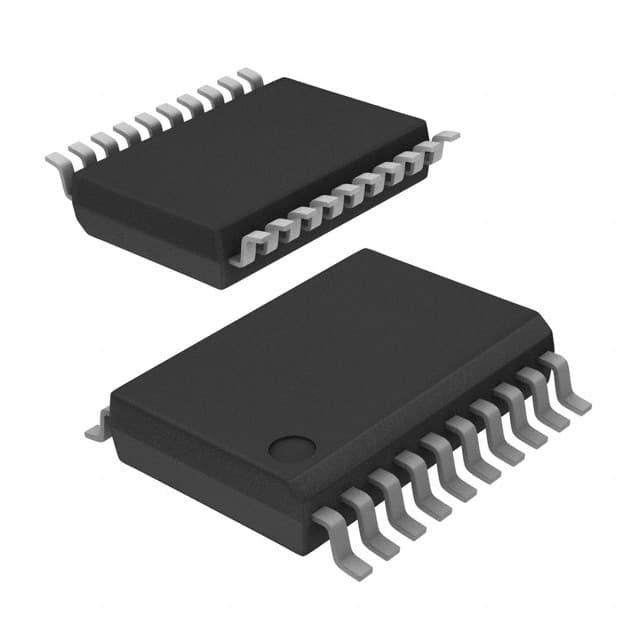
-
AR1021-I/SS
Microchip Technology
-
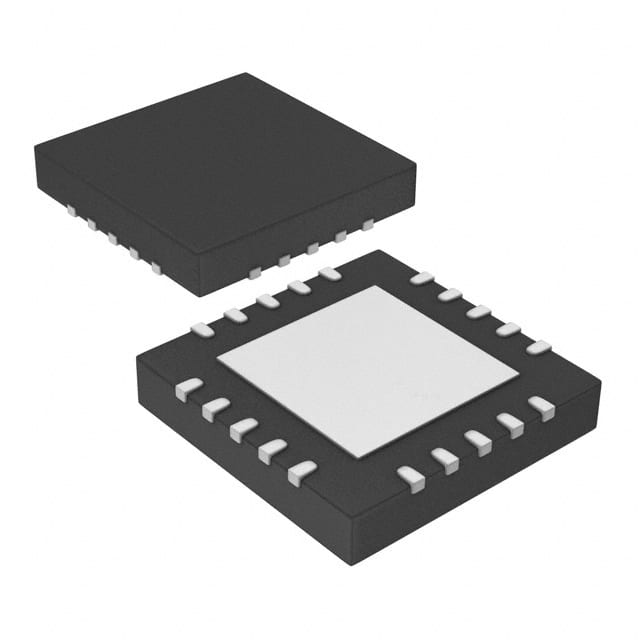
AR1020-I/SS
Microchip Technology
-
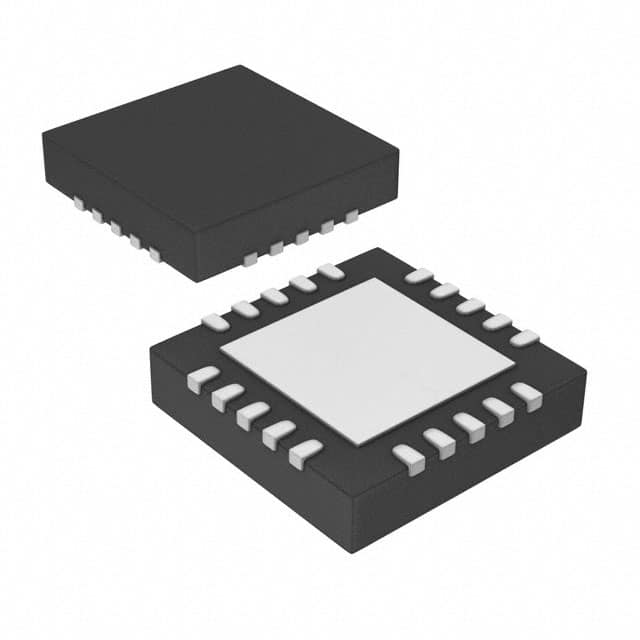
AR1100-I/MQ
Microchip Technology
-
AR1021T-I/ML
Microchip Technology
-
AR1100T-I/SS
Microchip Technology
-
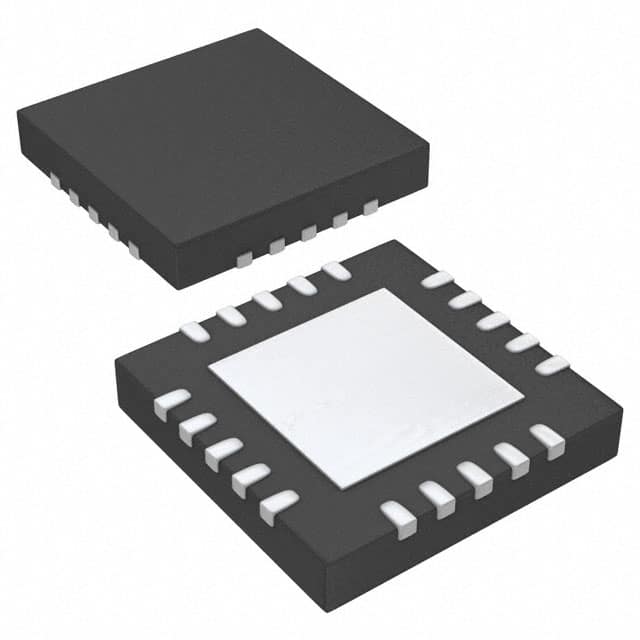
TSC2003IPWR
Texas Instruments
-
TSC2004IRTJR
Texas Instruments
-
AR1100BRD
Microchip Technology
.jpg)
-
TSC2046IRGVR
Texas Instruments
Tech Hub

Operational amplifier guide covering op amp basics, feedback, ideal vs real op amps, common configurations, buffer circuits, offset, bias current, gain-bandwidth, slew rate, rail-to-rail limits and sel…

Jumper cables guide covering safe connection order, red and black clamp placement, final ground connection, cable gauge, length, clamp quality, copper vs CCA cables, jump starter comparison and battery…

LDO regulator guide covering low dropout voltage, power dissipation, thermal design, PSRR, output noise, capacitor stability, adjustable LDO circuits, LDO vs buck converter and datasheet selection chec…

Conditional Access Module guide covering CAM meaning, CI/CI+ interface, smart card authorization, DVB security workflow, TV and set-top box compatibility, internal electronics, ESD protection, connecto…

Guide to electronic component obsolescence covering EOL risk, PCN/PDN notices, last-time buy planning, replacement options, form-fit-function validation, counterfeit risk and BOM lifecycle management.

18650 battery guide covering lithium-ion cell basics, 3.6V/3.7V voltage, 4.2V charging, mAh and Wh capacity, protected cells, chargers, BMS, series-parallel packs, holders, welding and sourcing checks.…

Hall effect sensor guide covering working principle, linear and digital sensors, Arduino circuits, current sensing, speed detection, automotive applications, A3144 examples, signal filtering and datash…

Product Change Notification guide for electronic components, covering PCN meaning, PCN vs PDN/EOL, common change types, risk levels, form-fit-function review, engineering validation, BOM control, LTB/L…

A practical guide to blend door actuators, covering HVAC function, symptoms, location, AC and heater issues, reset and calibration, replacement cost, electrical diagnosis, compatibility checks, and rep…

Engineering guide to Raspberry Pi alternatives, covering chip-level differences, Orange Pi, ROCK, Jetson, Banana Pi, NanoPi, Compute Module, Pico, GPIO, camera, HAT compatibility, and replacement risks…


