
 My Inquiry
 My Account


Infineon Technologies CYK001M16SCAU-70BAXI
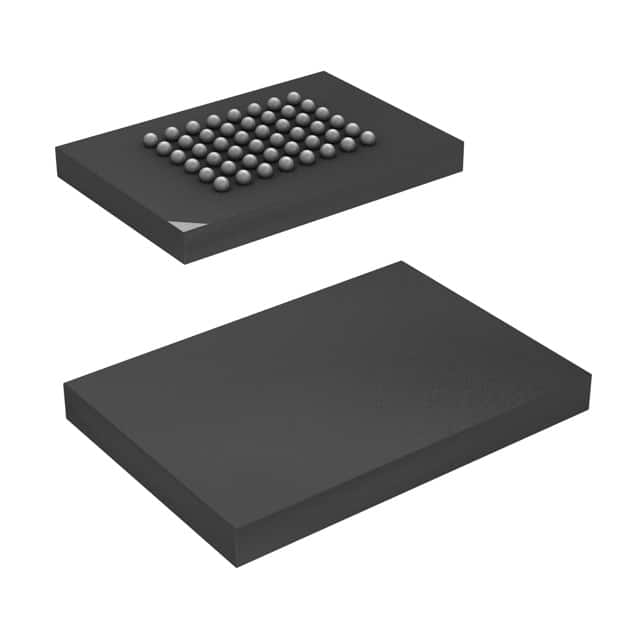
- Part No.:
- CYK001M16SCAU-70BAXI
- Manufacturer:
- Infineon Technologies
- Category:
- Memory
- Package:
- 48-TFBGA
- Datasheet:
-
 CYK001M16SCAU-70BAXI.pdf
- Description:
- IC PSRAM 16MBIT PARALLEL 48FBGA
- Quantity:
- Payment:

- Shipping:

Inventory:3,927
Please send an inquiry. Send us your inquiry, and we will respond immediately.
Product details
Overview
CYK001M16SCAU-70BAXI from Cypress Semiconductor is a 16-Mbit pseudo-static RAM (PSRAM) organized as 1M × 16, supporting asynchronous memory interface with 70 ns read cycle time, 2.7–3.3 V supply, and MoBL® low-power architecture. It delivers 13 mA typical active current at fMAX, 80 µA typical standby current (ISB2), and operates across −25°C to +85°C for industrial portable applications including cellular handsets and battery-powered embedded systems.
For engineers reviewing the CYK001M16SCAU-70BAXI datasheet, CYK001M16SCAU-70BAXI pinout, CYK001M16SCAU-70BAXI application, or CYK001M16SCAU-70BAXI equivalent, this PSRAM provides verified byte-selectable I/O (BHE/ BLE), automatic CE-controlled power-down, high-impedance tri-state outputs during deselect/write, and FBGA-48 packaging compatible with space-constrained mobile PCB layouts.
Technical Context
The CYK001M16SCAU-70BAXI implements a CMOS-based pseudo-SRAM architecture with integrated refresh logic, eliminating external DRAM controller complexity while retaining SRAM-like interface simplicity. Its dual chip enable (CE1/CE2) and byte-enable (BHE/ BLE) scheme enables flexible 8-bit or 16-bit data access without external glue logic.
It supports three distinct power states: active (CE1=L, CE2=H, WE=H, OE=L), output-disabled (OE=H), and automatic standby (CE1=H or CE2=L), with ISB2 ≤ 150 µA at 3.3 V. Timing is defined by tRC = 70 ns, tACE = 70 ns, and tDOE = 35 ns - all guaranteed over full industrial temperature and voltage range.
Key Specifications
| Parameter | Value and Actual Design Meaning |
|---|---|
| Memory Density | 16 Mbit (1M × 16) - supports 16-bit wide data bus without multiplexing or external address latching |
| Access Time | 70 ns max tRC - ensures compatibility with 14 MHz bus clocks in legacy microcontroller interfaces |
| Supply Voltage | 2.7 V to 3.3 V - matches modern low-voltage SoC I/O domains and eliminates level-shifting requirements |
| Active Current | 13 mA typ @ fMAX - enables >100 hours runtime on single-cell Li-ion in always-on memory buffers |
| Standby Current | 80 µA typ ISB2 - reduces quiescent drain to <1 µW in sleep mode for ultra-low-power wake-on-event designs |
| Operating Temp | −25°C to +85°C - qualified for industrial-grade handhelds, telematics modules, and medical portables |
| Package | 48-ball FBGA (6.0 × 8.0 × 1.2 mm) - enables high-density routing and thermal performance via exposed die pad |
Pinout & Package
Package: 48-ball Fine-Pitch BGA (BA48K), Pb-free, 0.5 mm pitch, 6.0 mm × 8.0 mm footprint, 1.2 mm height, with thermal pad exposed on bottom side.
| Pin/Terminal | Circuit Role | Design Meaning |
|---|---|---|
| A0–A19 | Address Inputs | 20-bit address bus supporting full 1M-word addressing; A17–A19 are unused in 16-Mbit config but reserved for density scaling |
| I/O0–I/O15 | Bidirectional Data Bus | 16-bit parallel I/O with automatic high-Z control during deselect, write, or OE deassertion |
| CE1, CE2 | Chip Enable Inputs | Complementary enables: CE1=L & CE2=H required for access; either high disables device and triggers auto-standby |
| OE | Output Enable | Controls output drivers only; OE=H forces I/O into high-Z regardless of CE/WE state |
| WE | Write Enable | Active-Low write strobe; concurrent with CE enables byte-selectable writes to upper/lower 8-bit lanes |
| BHE, BLE | Byte Enable Controls | Independent gating of I/O8–I/O15 (BHE) and I/O0–I/O7 (BLE); both L enables full 16-bit transfer |
| VCC, VSS | Power & Ground | Dual VCC pins (Balls D1, H1) and multiple VSS balls (A1, A2, B1, C1, G1, H2) ensure low-noise power delivery |
| NC, DNU | No-Connect / Do-Not-Use | Ball H6 is address expansion pin (DNU for 16-Mbit); NC pins (e.g., Ball F1) must float or tie to VSS per layout guidelines |
Key Features
| Feature | Design Value |
|---|---|
| MoBL® Low-Power Architecture | Reduces active current by >60% vs. standard SRAM at same speed, enabling extended battery life in portable memory buffers |
| Asynchronous Interface with Byte Enables | Eliminates need for external address latches or bus transceivers in 8/16-bit microcontroller designs |
| Automatic Power-Down on Deselect | Enters sub-100 µA standby without software intervention when CE1=H or CE2=L - critical for event-driven wake-up systems |
| Tri-State Output Control | I/O pins enter high-Z on CE/OE/WE transitions, preventing bus contention during multi-device memory sharing |
| Pb-Free FBGA Packaging | RoHS-compliant 48-ball BGA meets IPC/JEDEC J-STD-020D reflow profiles and supports automated optical inspection (AOI) |
Applications
| Cellular Baseband Memory | Portable Medical Monitor Buffer |
|---|---|
Use Scenario: Stores real-time voice codec buffers and protocol stack variables in GSM/UMTS handsets with tight power budgets. IC Role / Device Role / Timing Role: Asynchronous PSRAM providing SRAM-compatible interface to baseband processor, replacing slower NOR flash + SRAM combos. Use Value: 70 ns access and 13 mA active current allow continuous 32-kHz audio buffering with <5 mW average power draw. | Use Scenario: Holds ECG waveform samples and alarm-trigger history in handheld patient monitors operating 24/7 on rechargeable Li-ion. IC Role / Device Role / Timing Role: Non-volatile-capable buffer memory interfacing directly to ARM Cortex-M4 ADC DMA engine. Use Value: 80 µA ISB2 and automatic CE power-down extend battery life to >72 hours between charges under intermittent sampling. |
| Industrial Telematics Logger | Smart Meter Firmware Cache |
Use Scenario: Captures GPS position bursts and CAN bus diagnostics in vehicle black-box recorders deployed in harsh thermal environments. IC Role / Device Role / Timing Role: Industrial-temp PSRAM serving as write-through cache between MCU and SPI flash storage. Use Value: −25°C to +85°C rating and 55°C/W θJA ensure reliable operation inside sealed automotive enclosures without forced cooling. | Use Scenario: Accelerates firmware execution in Class 0.5S electricity meters by caching boot code and calibration tables. IC Role / Device Role / Timing Role: High-reliability memory mapped into XIP (execute-in-place) region of meter SoC with byte-selectable updates. Use Value: BHE/ BLE support allows atomic 8-bit patch writes to calibration constants without disturbing adjacent firmware sectors. |
Equivalent & Alternatives
The following parts are listed as comparable options for similar pseudo-static RAM applications.
| Alternative Part | Technical Difference | Application Difference | Selection Advice |
|---|---|---|---|
| ISSI IS61WV102416BLL-70TLI | 70 ns access, 2.5–3.6 V supply, 18 mA ICC @ fMAX, 100 µA ISB | Higher active current; wider VCC range supports mixed-voltage systems | Select when system uses 2.5 V core rails or requires broader voltage margin than Cypress part |
| Winbond W9812G6JH-75 | 75 ns access, 3.0–3.6 V supply, 25 mA ICC @ fMAX, no automatic CE power-down | Requires explicit software-controlled power management; higher standby leakage | Choose only if cost sensitivity outweighs power efficiency and industrial temp compliance |
Compared with IS61WV102416BLL-70TLI and W9812G6JH-75, the CYK001M16SCAU-70BAXI offers superior low-power performance (80 µA ISB2 vs. ≥100 µA), tighter voltage tolerance (2.7–3.3 V), and hardware-automated standby - making it optimal for battery-critical portable designs where thermal headroom and energy budget are constrained.
Availability
CYK001M16SCAU-70BAXI is available at Aetrix Electronics and suitable for cellular handset memory buffers, portable medical data loggers, industrial telematics recorders, and smart meter firmware caches requiring stable component supply across extended product lifecycles.
Supply support for CYK001M16SCAU-70BAXI includes scheduled delivery planning, volume procurement assistance, BOM continuity management, traceable sourcing, and lifecycle availability coordination for OEM customers, industrial embedded developers, connected-device designers, and electronics production programs.
Manufacturer
Cypress Semiconductor (now part of Infineon Technologies) is a U.S.-based semiconductor company specializing in programmable system-on-chip (PSoC), memory, and USB solutions for embedded applications.
The MoBL® PSRAM product line was designed specifically for battery-constrained portable electronics, integrating self-refresh DRAM cells with SRAM-compatible control logic to reduce system-level power and board area.
FAQ
What is the minimum VCC required for reliable operation of CYK001M16SCAU-70BAXI?
The absolute minimum VCC is 2.7 V across the full industrial temperature range (−25°C to +85°C). Operation below 2.7 V risks timing violations, increased bit errors, and failure to enter or exit standby mode correctly. Cypress specifies all AC/DC parameters only within 2.7–3.3 V, and no characterization data exists below 2.7 V.
Does CYK001M16SCAU-70BAXI require an external clock or refresh signal?
No. This is a pseudo-static RAM with fully integrated self-refresh circuitry. It operates asynchronously using only CE, OE, WE, BHE, and BLE control signals - no external clock, RAS/CAS, or refresh controller is needed. The internal refresh is transparent and automatically triggered during idle cycles.
Can CYK001M16SCAU-70BAXI be used in a 32-bit data bus configuration?
No. It is strictly a 16-bit-wide device (1M × 16 organization) with dedicated I/O0–I/O15 pins. To implement 32-bit access, two devices must be used in parallel with shared address/control lines and separate byte-enable coordination - no native 32-bit mode or address mirroring is supported.
Is the 48-ball FBGA package of CYK001M16SCAU-70BAXI compatible with standard reflow profiles?
Yes. The Pb-free BA48K package complies with IPC/JEDEC J-STD-020D Level 3 moisture sensitivity and supports peak reflow temperatures up to 260°C. Recommended profile includes ramp-to-spike ≤3°C/s, time above 217°C of 60–150 s, and peak temperature of 235–245°C for optimal solder joint integrity and die attach reliability.
CYK001M16SCAU-70BAXI Specifications
- Product attributes
- Attribute value
- Manufacturer:
- Infineon Technologies
- Series:
- -
- Package/Case:
- 48-TFBGA
- Packaging:
- Tray
- Product Status:
- Obsolete
- Programmable:
- Not Verified
- Memory Type:
- Volatile
- Memory Format:
- PSRAM
- Technology:
- PSRAM (Pseudo SRAM)
- Memory Size:
- 16Mbit
- Memory Organization:
- 1M x 16
- Memory Interface:
- Parallel
- Clock Frequency:
- -
- Write Cycle Time - Word, Page:
- 70ns
- Access Time:
- 70 ns
- Voltage - Supply:
- 2.7V ~ 3.3V
- Operating Temperature:
- -40°C ~ 85°C (TA)
- Grade:
- -
- Qualification:
- -
- Mounting Type:
- Surface Mount
- Supplier Device Package:
- 48-FBGA (6x8)
CYK001M16SCAU-70BAXI FAQ
1.How can I place an order for CYK001M16SCAU-70BAXI through Aetrix?
Please submit a Request for Quotation (RFQ) for CYK001M16SCAU-70BAXI on Aetrix. Our sales agent will provide a competitive quotation and guide you through the order confirmation once you accept the terms.
2.Are the price and stock information for CYK001M16SCAU-70BAXI reliable?
The price and inventory of CYK001M16SCAU-70BAXI are updated periodically and may fluctuate due to market conditions. Stock and pricing data are typically refreshed every 24 hours. Quotation validity for CYK001M16SCAU-70BAXI is usually 5 days.
3.What payment methods are accepted for CYK001M16SCAU-70BAXI?
We accept Wire Transfer, PayPal, Credit Card, Western Union, MoneyGram, and Escrow for CYK001M16SCAU-70BAXI transactions.
Note: Certain payment methods may incur a processing fee.
4.How is shipping managed for CYK001M16SCAU-70BAXI?
CYK001M16SCAU-70BAXI orders can be shipped via leading logistics carriers, including DHL, UPS, FedEx, TNT, or Registered Mail.
Once your CYK001M16SCAU-70BAXI order is processed, you will receive an email with the shipment details and tracking number.
Note: Tracking information may take up to 24 hours to appear. Express delivery typically takes 3–5 business days.
5.How can I obtain technical support or documentation for CYK001M16SCAU-70BAXI?
For technical support, including CYK001M16SCAU-70BAXI datasheets, pinout diagrams, or application guidance, please contact our engineering support team. They can provide detailed documentation and assistance for your CYK001M16SCAU-70BAXI requirements.
6.How does Aetrix verify that CYK001M16SCAU-70BAXI is sourced from the original manufacturer or authorized distributors?
All CYK001M16SCAU-70BAXI products on Aetrix are procured from qualified distributors and authorized channels. Our dedicated quality assurance team conducts strict verification, including traceability checks and, if necessary, third-party testing. This ensures that CYK001M16SCAU-70BAXI meets industry standards.
7.What is the process for return or replacement of CYK001M16SCAU-70BAXI?
All CYK001M16SCAU-70BAXI units undergo pre-shipment inspection (PSI). If there is an issue with CYK001M16SCAU-70BAXI, returns or replacements are accepted under the following conditions:
1.Quantity discrepancies, incorrect items, or visible external defects (such as breakage or corrosion), acknowledged by Aetrix.
2.The issue is reported within 90 days of delivery.
3.The CYK001M16SCAU-70BAXI part is unused and in its original packaging.
Return procedure for CYK001M16SCAU-70BAXI:
1.Submit a request within 90 days.
2.Obtain a Return Material Authorization (RMA) from Aetrix.
CYK001M16SCAU-70BAXI Tags

-
M24C02-WMN6TP
STMicroelectronics
-
AT24C02C-XHM-T
Microchip Technology
-
AT21CS01-STUM10-T
Microchip Technology

-
AT24C02C-SSHM-T
Microchip Technology
-
24LC01BT-I/OT
Microchip Technology
-
M24C02-FMC6TG
STMicroelectronics
-
AT24CS02-SSHM-T
Microchip Technology

-
93LC46BT-I/OT
Microchip Technology
-
AT24C04C-SSHM-T
Microchip Technology

-
24LC01BT-I/SN
Microchip Technology
-
24AA02UIDT-I/OT
Microchip Technology
-
AT24C08C-STUM-T
Microchip Technology
Tech Hub

A practical engineering guide to 3.3V and 5V logic compatibility, input thresholds, resistor dividers, translator ICs, MOSFET level shifting, I2C pull-ups, timing limits and power-sequencing risks.

The 74HC595 uses push-pull logic outputs, while the TPIC6B595 uses 50 V open-drain DMOS sinks for higher-power loads. This guide compares timing, current limits, 3.3 V interfacing, load wiring, thermal…

The 74HC595 converts serial data into eight stable parallel outputs. This guide covers pin functions, shift and storage timing, OE and MR behavior, drive-current limits, cascading, voltage compatibilit…

A technical comparison of level-sensitive latches and edge-triggered flip-flops, covering timing windows, setup and hold limits, master–slave operation, time borrowing, race-through, HDL inference and…

A D latch stores one bit while Enable controls when data can pass. This reference covers gate-level operation, truth tables, transparency, setup and hold timing, LE versus OE, common ICs and practical …

An SR latch stores one bit through cross-coupled feedback. This engineering reference covers NOR and NAND implementations, truth tables, forbidden-state recovery, gated operation, switch debouncing, fa…

Latch circuits retain one bit through feedback. This technical reference covers SR and D latches, truth tables, transparency, timing limits, latch-versus-flip-flop behavior, applications and common log…

An engineering guide to LED driver operation, constant-current and constant-voltage outputs, linear and switching topologies, dimming, IC selection, calculations, replacement compatibility, and fault c…

Operational amplifier guide covering op amp basics, feedback, ideal vs real op amps, common configurations, buffer circuits, offset, bias current, gain-bandwidth, slew rate, rail-to-rail limits and sel…

Jumper cables guide covering safe connection order, red and black clamp placement, final ground connection, cable gauge, length, clamp quality, copper vs CCA cables, jump starter comparison and battery…


