
 My Inquiry
 My Account


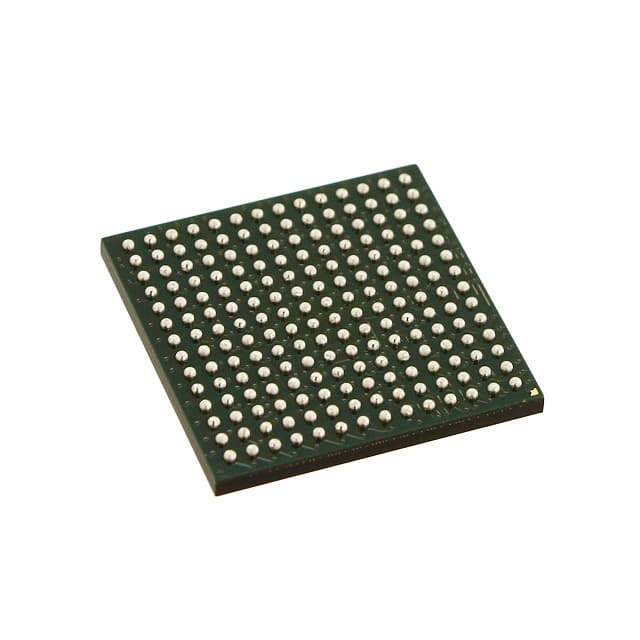
Infineon Technologies CYP15G0201DXB-BBI
- Part No.:
- CYP15G0201DXB-BBI
- Manufacturer:
- Infineon Technologies
- Category:
- Telecom
- Package:
- 196-LBGA
- Datasheet:
-
 CYP15G0201DXB-BBI.pdf
- Description:
- IC TELECOM INTERFACE 196FBGA
- Quantity:
- Payment:

- Shipping:

Inventory:3,365
Please send an inquiry. Send us your inquiry, and we will respond immediately.
Product details
Overview
CYP15G0201DXB from Cypress Semiconductor Corporation is a dual-channel HOTLink II™ transceiver IC for high-speed serial point-to-point interconnects, supporting 195–1500 MBaud per channel with 8B/10B encoding or unencoded 10-bit data, synchronous LVTTL parallel interface, and internal PLLs-used in video transmission systems, base station backplanes, and Gigabit Ethernet infrastructure.
For engineers reviewing the CYP15G0201DXB datasheet, CYP15G0201DXB pinout, CYP15G0201DXB application, or CYP15G0201DXB equivalent, key selection criteria include serial data rate range (195–1500 MBaud), dual-channel bonding capability, SMPTE/OBSAI/CPRI compliance variants, PECL-compatible differential I/O, and built-in BIST for at-speed link validation.
Technical Context
The CYP15G0201DXB implements two independent byte-wide transceiver channels, each with configurable 8B/10B encoder/decoder, phase-align buffer (TX), elasticity buffer (RX), and MultiFrame™ framer supporting comma detection and byte alignment. It operates with selectable input/output clocking modes including REFCLK, TXCLKA/B, and recovered RX clocks.
Each channel features dual PECL-compatible differential inputs/outputs with internal DC restoration, source-matched 50Ω drivers, and per-channel Link Quality Indicators (analog/digital signal detect). The device supports JTAG boundary scan and BIST pattern generation/checking across both transmit and receive paths at full operational speed.
Key Specifications
| Parameter | Value and Actual Design Meaning |
|---|---|
| Serial Data Rate | 195–1500 MBaud per channel; enables flexible deployment across ESCON, DVB-ASI, Fibre Channel, and Gigabit Ethernet physical layers. |
| Aggregate Throughput | 6 Gbits/sec; achieved via dual-channel operation at maximum rate, supporting wide-bus transport over long distances. |
| Encoding Mode | 8B/10B encoded or 10-bit unencoded; allows compatibility with legacy systems requiring external encoding or scrambling. |
| Supply Voltage | Single 3.3 V supply; simplifies power delivery and eliminates need for multiple rail regulators in high-density designs. |
| Power Dissipation | 1.8 W typical at 3.3 V; optimized for thermal management in compact telecom and broadcast equipment enclosures. |
| Package | 196-ball BGA; provides high I/O density and signal integrity for multi-gigabit serial routing on dense PCBs. |
| Technology Node | 0.25 µm BiCMOS; balances speed, power, and integration for reliable high-frequency operation up to 1.5 GHz. |
Pinout & Package
Package: 196-ball fine-pitch BGA (14 × 14 mm, 0.8 mm pitch), Pb-free option available. Pinout validated per Cypress Document No. 38-02058 Rev. *J (Pages 4–7).
| Pin/Terminal | Circuit Role | Design Meaning |
|---|---|---|
| INA1±, INA2±, INB1±, INB2± | Differential Serial Input (Channel A/B) | PECL-compatible inputs with internal DC restoration; accept high-speed serial streams from fiber modules or copper traces. |
| OUTA1±, OUTA2±, OUTB1±, OUTB2± | Differential Serial Output (Channel A/B) | Source-matched 50Ω PECL outputs; drive optical transceivers or backplane traces without external bias resistors. |
| TXDA[7:0], TXDB[7:0] | Parallel Transmit Data Input | Synchronous LVTTL inputs sampled by TXCLKA/B or REFCLK; feed 8-bit characters to encoder or shifter. |
| RXDA[7:0], RXDB[7:0] | Parallel Receive Data Output | LVTTL outputs presenting decoded 8-bit characters from deserialized stream; aligned and error-checked before delivery. |
| TXCTA[1:0], TXCTB[1:0] | Transmit Control Input | Define character type (data/special) when encoder enabled; bypassed as data bits when encoder disabled. |
| RXSTA[2:0], RXSTB[2:0] | Receive Status Output | Indicate framing status (bit/byte lock, comma detect, error flags); enable real-time link health monitoring. |
Key Features
| Feature | Design Value |
|---|---|
| Dual-channel bonding | Enables 16-bit synchronous data path across channels, eliminating skew concerns in wide-bus transport over backplanes. |
| MultiFrame™ Receive Framer | Supports single/multi-byte alignment and K28.5 comma detection with low-latency mode for time-critical video applications. |
| Phase-Align Buffer (TX) | Compensates for clock domain mismatches between parallel interface and serial output; prevents metastability during clock crossing. |
| Elasticity Buffer (RX) | Absorbs jitter and phase variation in recovered clock domain; ensures stable parallel output timing despite serial link instability. |
| Built-In Self-Test (BIST) | Generates and verifies PRBS patterns at full line rate per channel; validates link integrity without external test equipment. |
Applications
| Broadcast Video Transport | Wireless Base Station Backplane |
|---|---|
|
Use Scenario: High-reliability serial transport of uncompressed SD/HD-SDI video signals between camera control units and processing racks. IC Role / Device Role / Timing Role: Dual-channel transceiver performing 8B/10B encoding/decoding, clock recovery, and skew-aligned parallel-to-serial conversion. Use Value: Meets SMPTE 259M/292M pathological test requirements (EG34-1999), ensuring zero-frame-loss operation under worst-case bit patterns. |
Use Scenario: Interconnecting RF front-end modules and baseband processors across multi-layer backplanes in 3G/4G LTE base stations. IC Role / Device Role / Timing Role: HOTLink II transceiver providing deterministic latency, jitter-tolerant clock recovery, and CPRI-compliant serial links. Use Value: Supports CPRI Option 3 (1536 Mbps) and OBSAI RP3 rates with per-channel link quality indicators for field-deployable diagnostics. |
| Gigabit Ethernet Switch Fabric | Data Center Optical Interconnect |
|
Use Scenario: Replacing parallel bus interfaces between switch ASICs and PHY devices in 10G Ethernet line cards. IC Role / Device Role / Timing Role: Dual-channel serializer/deserializer with synchronous LVTTL interface and internal PLLs eliminating external clock synthesis components. Use Value: Achieves IEEE 802.3z compliance at 1.25 Gbps per channel while reducing board area and EMI compared to parallel buses. |
Use Scenario: Bridging FPGA-based packet processors to SFP+ optical modules in high-performance computing clusters. IC Role / Device Role / Timing Role: Transceiver enabling direct connection to fiber-optic modules via PECL-compatible differential I/O with no external termination. Use Value: Delivers 6 Gbps aggregate throughput with built-in BIST for automated production testing and field maintenance verification. |
Equivalent & Alternatives
The following parts are listed as comparable options for similar high-speed serial transceiver applications.
| Alternative Part | Technical Difference | Application Difference | Selection Advice |
|---|---|---|---|
| MAX3875 | Single-channel 3.2 Gbps transceiver; no internal 8B/10B encoder; requires external clock synthesis. | Limited to point-to-point links without bonding; lacks MultiFrame framer and BIST support. | Select when higher per-channel bandwidth is required and system-level encoding is already implemented. |
| TLK2711 | Single-channel 3.125 Gbps transceiver; integrated 8B/10B codec; supports only 1.25/2.5/3.125 Gbps fixed rates. | No SMPTE/CPRI/OBSAI compliance; lacks per-channel link quality indicators and skew alignment support. | Prefer for cost-sensitive Gigabit Ethernet-only designs where standard rates suffice and diagnostic features are secondary. |
Compared with MAX3875 and TLK2711, the CYP15G0201DXB uniquely delivers dual-channel flexibility, programmable data rates (195–1500 MBaud), SMPTE/CPRI/OBSAI compliance variants, and comprehensive built-in diagnostics-making it optimal for broadcast, wireless infrastructure, and multi-standard serial interconnects.
Availability
CYP15G0201DXB is available at Aetrix Electronics and suitable for broadcast video transport, wireless base station backplanes, and Gigabit Ethernet switch fabric requiring stable component supply, long-term lifecycle support, and traceable sourcing.
Supply support for CYP15G0201DXB includes scheduled delivery planning, volume procurement assistance, BOM continuity management, traceable sourcing, and lifecycle availability coordination for OEM customers, industrial embedded developers, connected-device designers, and electronics production programs.
Manufacturer
Cypress Semiconductor Corporation, now part of Infineon Technologies, designs high-performance mixed-signal ICs for connectivity, memory, and programmable solutions.
The CYP15G0201DXB belongs to the HOTLink II transceiver product line, engineered specifically for replacing parallel buses with robust, standards-compliant serial links in telecom, broadcast, and datacom infrastructure.
FAQ
What standards does the CYP15G0201DXB support?
The CYP15G0201DXB supports ESCON, DVB-ASI, Fibre Channel, and IEEE 802.3z Gigabit Ethernet natively. Variant versions are compliant with CPRI, OBSAI-RP3 (CYW15G0201DXB), and SMPTE 259M/292M (CYV15G0201DXB). The base CYP15G0201DXB meets all core HOTLink II protocol requirements but excludes pathological test certification unless specified in variant suffix.
Does the device require external PLL components?
No. The CYP15G0201DXB integrates fully self-contained PLLs for both transmit and receive clock synchronization. Its internal PLL Clock Synchronizer recovers timing from incoming serial data without external loop filters, VCXOs, or passive components-reducing bill-of-materials count and layout complexity.
How is dual-channel bonding configured?
Dual-channel bonding is enabled via configuration pins TXMODE[1:0] and RXMODE[1:0], along with SPDSEL and PARCTL settings. When activated, the two channels operate synchronously to deliver a 16-bit wide parallel interface with hardware-managed skew alignment across byte lanes-verified in functional testing per datasheet Figure 1 and Table 1.
What is the role of the Elasticity Buffer in the receive path?
The Elasticity Buffer absorbs phase variations between the recovered serial clock and local system clock domains. It dynamically adjusts read/write pointers to maintain data integrity during clock drift or jitter, enabling stable parallel output timing even with ±100 ppm frequency mismatch-critical for video frame synchronization and deterministic latency in baseband processing.
CYP15G0201DXB-BBI Specifications
- Product attributes
- Attribute value
- Manufacturer:
- Infineon Technologies
- Series:
- HOTlink II™
- Package/Case:
- 196-LBGA
- Packaging:
- Tray
- Product Status:
- Obsolete
- Function:
- Transceiver
- Interface:
- LVTTL
- Number of Circuits:
- 2
- Voltage - Supply:
- 3.135V ~ 3.465V
- Current - Supply:
- 570mA
- Power (Watts):
- -
- Operating Temperature:
- -40°C ~ 85°C
- Grade:
- -
- Qualification:
- -
- Mounting Type:
- Surface Mount
- Supplier Device Package:
- 196-FBGA (15x15)
CYP15G0201DXB-BBI FAQ
1.How can I place an order for CYP15G0201DXB-BBI through Aetrix?
Please submit a Request for Quotation (RFQ) for CYP15G0201DXB-BBI on Aetrix. Our sales agent will provide a competitive quotation and guide you through the order confirmation once you accept the terms.
2.Are the price and stock information for CYP15G0201DXB-BBI reliable?
The price and inventory of CYP15G0201DXB-BBI are updated periodically and may fluctuate due to market conditions. Stock and pricing data are typically refreshed every 24 hours. Quotation validity for CYP15G0201DXB-BBI is usually 5 days.
3.What payment methods are accepted for CYP15G0201DXB-BBI?
We accept Wire Transfer, PayPal, Credit Card, Western Union, MoneyGram, and Escrow for CYP15G0201DXB-BBI transactions.
Note: Certain payment methods may incur a processing fee.
4.How is shipping managed for CYP15G0201DXB-BBI?
CYP15G0201DXB-BBI orders can be shipped via leading logistics carriers, including DHL, UPS, FedEx, TNT, or Registered Mail.
Once your CYP15G0201DXB-BBI order is processed, you will receive an email with the shipment details and tracking number.
Note: Tracking information may take up to 24 hours to appear. Express delivery typically takes 3–5 business days.
5.How can I obtain technical support or documentation for CYP15G0201DXB-BBI?
For technical support, including CYP15G0201DXB-BBI datasheets, pinout diagrams, or application guidance, please contact our engineering support team. They can provide detailed documentation and assistance for your CYP15G0201DXB-BBI requirements.
6.How does Aetrix verify that CYP15G0201DXB-BBI is sourced from the original manufacturer or authorized distributors?
All CYP15G0201DXB-BBI products on Aetrix are procured from qualified distributors and authorized channels. Our dedicated quality assurance team conducts strict verification, including traceability checks and, if necessary, third-party testing. This ensures that CYP15G0201DXB-BBI meets industry standards.
7.What is the process for return or replacement of CYP15G0201DXB-BBI?
All CYP15G0201DXB-BBI units undergo pre-shipment inspection (PSI). If there is an issue with CYP15G0201DXB-BBI, returns or replacements are accepted under the following conditions:
1.Quantity discrepancies, incorrect items, or visible external defects (such as breakage or corrosion), acknowledged by Aetrix.
2.The issue is reported within 90 days of delivery.
3.The CYP15G0201DXB-BBI part is unused and in its original packaging.
Return procedure for CYP15G0201DXB-BBI:
1.Submit a request within 90 days.
2.Obtain a Return Material Authorization (RMA) from Aetrix.
CYP15G0201DXB-BBI Tags

-
LMC567CMX/NOPB
Texas Instruments
-
LM567CMX/NOPB
Texas Instruments
-
LM567CM/NOPB
Texas Instruments
-
VSC8531XMW-02
Microchip Technology
-
VSC8531XMW-05
Microchip Technology

-
GPY115C0VI
MaxLinear, Inc.
-
SI32185-A-FMR
Skyworks Solutions Inc.
-
VSC8541XMV-05
Microchip Technology
-
SI32178-B-FM1R
Skyworks Solutions Inc.
-
GPY215C0VI
MaxLinear, Inc.
-
CPC7514ZTR
Littelfuse Inc.
-
VSC8502XML-03
Microchip Technology
Tech Hub

An engineering guide to LED driver operation, constant-current and constant-voltage outputs, linear and switching topologies, dimming, IC selection, calculations, replacement compatibility, and fault c…

Operational amplifier guide covering op amp basics, feedback, ideal vs real op amps, common configurations, buffer circuits, offset, bias current, gain-bandwidth, slew rate, rail-to-rail limits and sel…

Jumper cables guide covering safe connection order, red and black clamp placement, final ground connection, cable gauge, length, clamp quality, copper vs CCA cables, jump starter comparison and battery…

LDO regulator guide covering low dropout voltage, power dissipation, thermal design, PSRR, output noise, capacitor stability, adjustable LDO circuits, LDO vs buck converter and datasheet selection chec…

Conditional Access Module guide covering CAM meaning, CI/CI+ interface, smart card authorization, DVB security workflow, TV and set-top box compatibility, internal electronics, ESD protection, connecto…

Guide to electronic component obsolescence covering EOL risk, PCN/PDN notices, last-time buy planning, replacement options, form-fit-function validation, counterfeit risk and BOM lifecycle management.

18650 battery guide covering lithium-ion cell basics, 3.6V/3.7V voltage, 4.2V charging, mAh and Wh capacity, protected cells, chargers, BMS, series-parallel packs, holders, welding and sourcing checks.…

Hall effect sensor guide covering working principle, linear and digital sensors, Arduino circuits, current sensing, speed detection, automotive applications, A3144 examples, signal filtering and datash…

Product Change Notification guide for electronic components, covering PCN meaning, PCN vs PDN/EOL, common change types, risk levels, form-fit-function review, engineering validation, BOM control, LTB/L…

A practical guide to blend door actuators, covering HVAC function, symptoms, location, AC and heater issues, reset and calibration, replacement cost, electrical diagnosis, compatibility checks, and rep…


