
 My Inquiry
 My Account


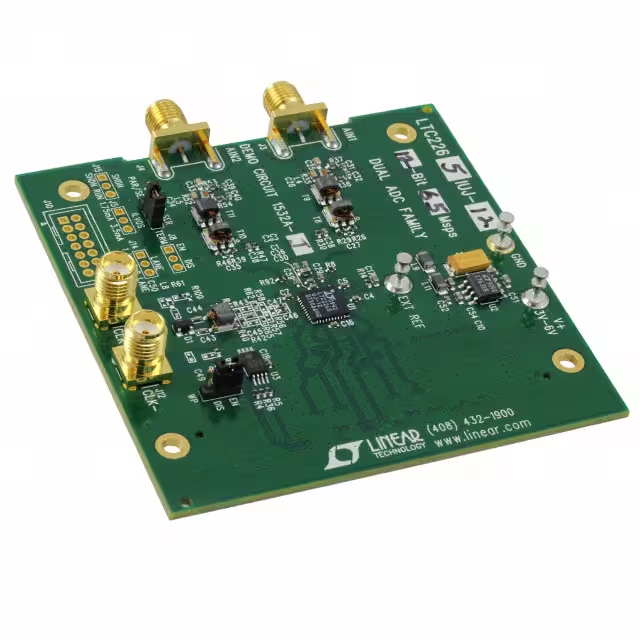
Analog Devices Inc. DC1532A-J
- Part No.:
- DC1532A-J
- Manufacturer:
- Analog Devices Inc.
- Package:
- Datasheet:
-
 DC1532A-J.pdf
- Description:
- BOARD DEMO 65MSPS LTC2265-12
- Quantity:
- Payment:

- Shipping:

Inventory:4,235
Please send an inquiry. Send us your inquiry, and we will respond immediately.
Product details
Overview
DC1532A-J from Analog Devices (formerly Linear Technology) is an evaluation board designed to demonstrate the LTC2265-12, a 12-bit, 65 Msps dual-channel simultaneous-sampling analog-to-digital converter. It features LVDS serial output, 71 dB SNR, 90 dB SFDR, 0.15 psRMS jitter, and operates from a single 1.8 V supply - optimized for high-performance communications signal digitization in software-defined radios and cellular base stations.
For engineers reviewing the DC1532A-J datasheet, DC1532A-J pinout, DC1532A-J application, or DC1532A-J equivalent, this page provides verified hardware configuration details, supported ADC operating modes (1-/2-lane LVDS, internal/external reference), clock interface options (differential/single-ended ENC), power sequencing guidance, and layout-critical grounding practices for RF-sensitive ADC evaluation.
Technical Context
The DC1532A-J implements the full signal chain for the LTC2265-12: differential analog input conditioning with 800 MHz S/H bandwidth, programmable input range (1–2 VP-P), on-board 1.8 V LDOs for VDD/OVDD, and configurable LVDS serialization (12-/14-/16-bit, 1-/2-lane). Clock distribution includes transformer-coupled differential ENC+/- inputs and optional crystal oscillator support.
It integrates SPI-based configuration via onboard microcontroller or external host, supports shutdown/nap modes, and provides access to all critical ADC pins (AIN1±, AIN2±, REFH/REFL, VCM1/VCM2, SDO, PAR/SER) for probing and custom interfacing - enabling validation of timing margins, noise floor, and dynamic performance per JEDEC JESD204B-compatible LVDS signaling standards.
Key Specifications
| Parameter | Value and Actual Design Meaning |
|---|---|
| Evaluated Device | LTC2265-12: 12-bit, 65 Msps dual-channel ADC with simultaneous sampling |
| Analog Input Bandwidth | 800 MHz full-power – enables direct IF sampling up to 350 MHz (Nyquist) |
| Digital Interface | LVDS serial output (1- or 2-lane); 100 Ω on-chip termination; adjustable 1.75/3.5 mA drive |
| Dynamic Performance | 71 dB SNR @ 70 MHz input; 90 dB SFDR @ 70 MHz – validated per typical application circuit |
| Power Supply | Single 5 V input; onboard regulators deliver clean 1.8 V for analog (VDD) and digital (OVDD) domains |
| Reference Options | Internal 1.25 V reference (SENSE = VDD or GND) or external 0.625–1.3 V reference via SENSE pin |
| Operating Modes | Full-speed 65 Msps operation; Nap mode (60 mW); Sleep mode (1 mW); SPI-configurable serialization |
Availability
DC1532A-J is available at Aetrix Electronics and suitable for RF test equipment, SDR prototyping, medical ultrasound front-ends, and multichannel data acquisition systems requiring stable component supply, traceable evaluation hardware, and documented high-speed ADC characterization.
Supply support for DC1532A-J includes scheduled delivery planning, volume procurement assistance, BOM continuity management, traceable sourcing, and lifecycle availability coordination for OEM customers, industrial embedded developers, connected-device designers, and electronics production programs.
Manufacturer
Analog Devices, Inc. (acquired Linear Technology in 2017) is a global leader in high-performance analog, mixed-signal, and digital signal processing technologies for precision instrumentation, communications, and industrial applications.
The DC1532A-J belongs to Analog Devices' LTC evaluation board family, engineered specifically to accelerate design-in of high-speed ADCs by providing production-grade layout, calibrated signal paths, and comprehensive documentation aligned with datasheet test conditions.
FAQ
What is the primary function of the DC1532A-J evaluation board?
The DC1532A-J evaluation board is a fully assembled and tested platform for evaluating the LTC2265-12 12-bit, 65 Msps dual-channel ADC. It provides all necessary power regulation, clock conditioning, analog input interfaces, and LVDS output routing to validate dynamic performance (SNR, SFDR), timing behavior, and system integration - without requiring custom PCB development. The board directly supports the DC1532A-J's intended use case: rapid prototyping of high-fidelity digitization in communications and instrumentation.
Does the DC1532A-J support both internal and external voltage references for the LTC2265-12?
Yes, the DC1532A-J supports both reference configurations. The SENSE pin of the LTC2265-12 is accessible and routed to a jumper option: connecting SENSE to VDD selects the internal 1.25 V reference with ±1 V input range; connecting to GND selects ±0.5 V range; applying 0.625–1.3 V externally to SENSE enables precise user-defined reference scaling. This flexibility allows the DC1532A-J to validate input range trade-offs and noise contribution across reference topologies per the LTC2265-12 datasheet specifications.
How is clock input handled on the DC1532A-J, and what encoding modes does it support?
The DC1532A-J accepts differential clock signals via transformer-coupled SMA inputs to ENC+/ENC–, supporting both differential and single-ended encode modes as defined in the LTC2265-12 datasheet. An onboard crystal oscillator (optional) and clock buffer provide low-jitter alternatives. The board preserves the LTC2265-12's duty cycle stabilizer functionality - critical for maintaining 71 dB SNR at full 65 Msps sampling - and routes all clock control pins (ENC+, ENC–, CS, SCK) for external synchronization or SPI reconfiguration.
Can the DC1532A-J be used to evaluate LVDS output timing and signal integrity?
Yes, the DC1532A-J provides direct access to all LVDS output pairs (OUT1A±, OUT1B±, OUT2A±, OUT2B±), DCO±, and FR±, with 100 Ω on-board termination enabled via SDO pin control. It supports both 1-lane and 2-lane serialization modes at 12-/14-/16-bit word lengths, allowing measurement of tSER, tFRAME, tDATA, and DCO jitter per the LTC2265-12 timing diagrams. Layout follows controlled-impedance routing (100 Ω differential) to ensure accurate signal integrity assessment matching production requirements.
Is the DC1532A-J compatible with other members of the LTC226x-12 family?
The DC1532A-J is specifically designed for the LTC2265-12 (65 Msps), but its hardware architecture - including pin-compatible QFN-40 footprint, identical power delivery, and shared register map - allows functional evaluation of the pin-compatible LTC2264-12 (40 Msps) and LTC2263-12 (25 Msps) with no PCB modifications. All three devices share identical analog input structure, LVDS serialization engine, and SPI interface, making the DC1532A-J a scalable evaluation platform across the LTC226x-12 speed grades.
DC1532A-J Specifications
- Product attributes
- Attribute value
- Manufacturer:
- Analog Devices Inc.
- Series:
- -
- Packaging:
- Bulk
- Product Status:
- Active
- Number of A/D Converters:
- 2
- Number of Bits:
- 12
- Sampling Rate (Per Second):
- 65M
- Data Interface:
- Serial LVDS
- Input Range:
- 1 ~ 2Vpp
- Power (Typ) @ Conditions:
- 198mW @ 65MSPS
- Utilized IC / Part:
- LTC2265-12
- Contents:
- Board(s)
DC1532A-J FAQ
1.How can I place an order for DC1532A-J through Aetrix?
Please submit a Request for Quotation (RFQ) for DC1532A-J on Aetrix. Our sales agent will provide a competitive quotation and guide you through the order confirmation once you accept the terms.
2.Are the price and stock information for DC1532A-J reliable?
The price and inventory of DC1532A-J are updated periodically and may fluctuate due to market conditions. Stock and pricing data are typically refreshed every 24 hours. Quotation validity for DC1532A-J is usually 5 days.
3.What payment methods are accepted for DC1532A-J?
We accept Wire Transfer, PayPal, Credit Card, Western Union, MoneyGram, and Escrow for DC1532A-J transactions.
Note: Certain payment methods may incur a processing fee.
4.How is shipping managed for DC1532A-J?
DC1532A-J orders can be shipped via leading logistics carriers, including DHL, UPS, FedEx, TNT, or Registered Mail.
Once your DC1532A-J order is processed, you will receive an email with the shipment details and tracking number.
Note: Tracking information may take up to 24 hours to appear. Express delivery typically takes 3–5 business days.
5.How can I obtain technical support or documentation for DC1532A-J?
For technical support, including DC1532A-J datasheets, pinout diagrams, or application guidance, please contact our engineering support team. They can provide detailed documentation and assistance for your DC1532A-J requirements.
6.How does Aetrix verify that DC1532A-J is sourced from the original manufacturer or authorized distributors?
All DC1532A-J products on Aetrix are procured from qualified distributors and authorized channels. Our dedicated quality assurance team conducts strict verification, including traceability checks and, if necessary, third-party testing. This ensures that DC1532A-J meets industry standards.
7.What is the process for return or replacement of DC1532A-J?
All DC1532A-J units undergo pre-shipment inspection (PSI). If there is an issue with DC1532A-J, returns or replacements are accepted under the following conditions:
1.Quantity discrepancies, incorrect items, or visible external defects (such as breakage or corrosion), acknowledged by Aetrix.
2.The issue is reported within 90 days of delivery.
3.The DC1532A-J part is unused and in its original packaging.
Return procedure for DC1532A-J:
1.Submit a request within 90 days.
2.Obtain a Return Material Authorization (RMA) from Aetrix.
DC1532A-J Tags
-
1083
Adafruit Industries LLC
-
1085
Adafruit Industries LLC
-
ADS7038Q1EVM-PDK
Texas Instruments
-
ADS8688EVM-PDK
Texas Instruments
-
EVAL-AD7606C18FMCZ
Analog Devices Inc.
-
ADS1232REF
Texas Instruments
-
EVAL-AD4134FMCZ
Analog Devices Inc.
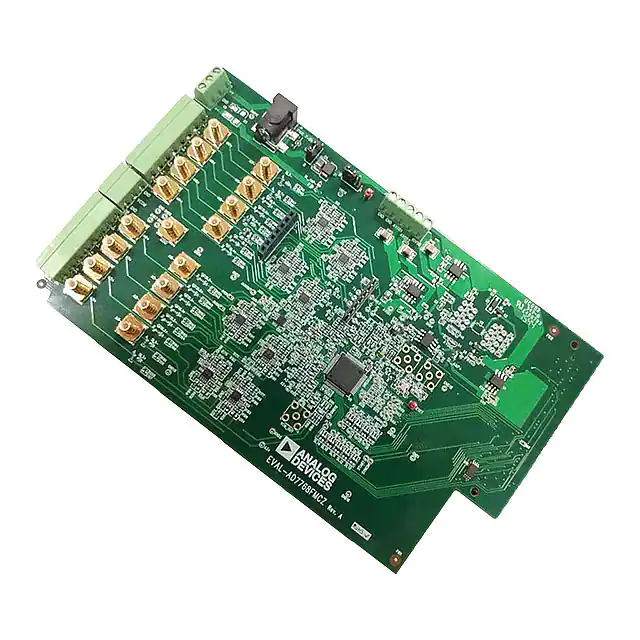
-
EVAL-AD7768FMCZ
Analog Devices Inc.
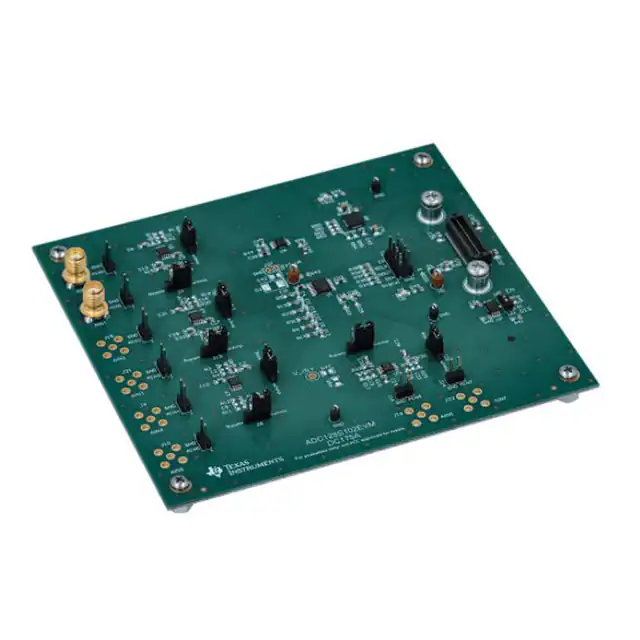
-
ADC128S102EVM
Texas Instruments
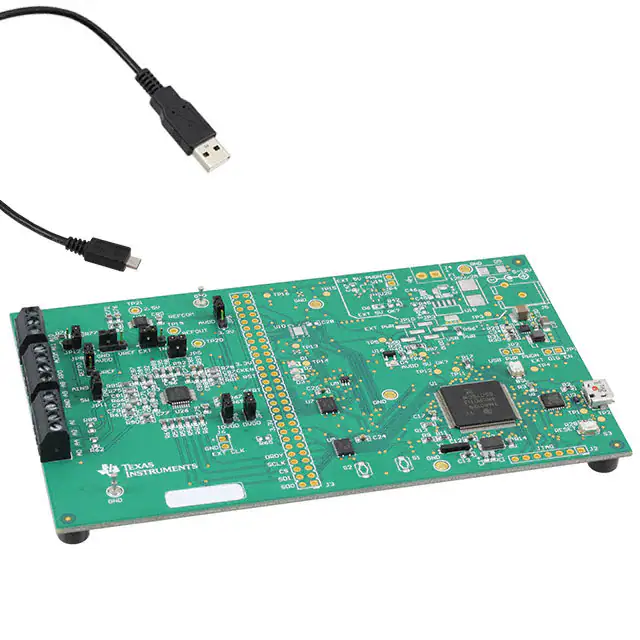
-
ADS124S08EVM
Texas Instruments
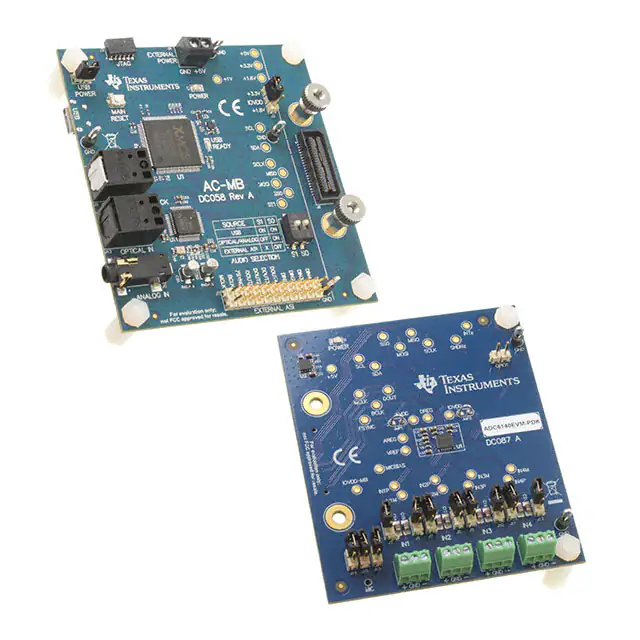
-
ADC6140EVM-PDK
Texas Instruments
-
ADS7066EVM-PDK
Texas Instruments
Tech Hub

A practical engineering guide to 3.3V and 5V logic compatibility, input thresholds, resistor dividers, translator ICs, MOSFET level shifting, I2C pull-ups, timing limits and power-sequencing risks.

The 74HC595 uses push-pull logic outputs, while the TPIC6B595 uses 50 V open-drain DMOS sinks for higher-power loads. This guide compares timing, current limits, 3.3 V interfacing, load wiring, thermal…

The 74HC595 converts serial data into eight stable parallel outputs. This guide covers pin functions, shift and storage timing, OE and MR behavior, drive-current limits, cascading, voltage compatibilit…

A technical comparison of level-sensitive latches and edge-triggered flip-flops, covering timing windows, setup and hold limits, master–slave operation, time borrowing, race-through, HDL inference and…

A D latch stores one bit while Enable controls when data can pass. This reference covers gate-level operation, truth tables, transparency, setup and hold timing, LE versus OE, common ICs and practical …

An SR latch stores one bit through cross-coupled feedback. This engineering reference covers NOR and NAND implementations, truth tables, forbidden-state recovery, gated operation, switch debouncing, fa…

Latch circuits retain one bit through feedback. This technical reference covers SR and D latches, truth tables, transparency, timing limits, latch-versus-flip-flop behavior, applications and common log…

An engineering guide to LED driver operation, constant-current and constant-voltage outputs, linear and switching topologies, dimming, IC selection, calculations, replacement compatibility, and fault c…

Operational amplifier guide covering op amp basics, feedback, ideal vs real op amps, common configurations, buffer circuits, offset, bias current, gain-bandwidth, slew rate, rail-to-rail limits and sel…

Jumper cables guide covering safe connection order, red and black clamp placement, final ground connection, cable gauge, length, clamp quality, copper vs CCA cables, jump starter comparison and battery…


