
 My Inquiry
 My Account


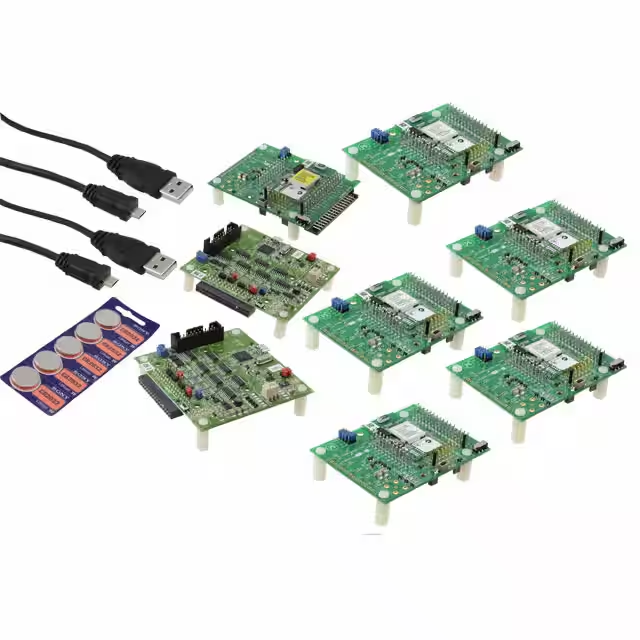
Analog Devices Inc. DC9021A
- Part No.:
- DC9021A
- Manufacturer:
- Analog Devices Inc.
- Category:
- RF, RFID, Wireless Evaluation Boards
- Package:
- Datasheet:
-
 DC9021A.pdf
- Description:
- KIT START SMARTMESH IP RF CERT
- Quantity:
- Payment:

- Shipping:

Inventory:2,760
Please send an inquiry. Send us your inquiry, and we will respond immediately.
Product details
Overview
LTC5800-IPM from Analog Devices (acquired Linear Technology) is a 2.4GHz IEEE 802.15.4e System-on-Chip (SoC) wireless mote integrating ARM Cortex-M3 microprocessor, SmartMesh IP networking stack, on-chip PA/transceiver, and analog peripherals - delivering >99.999% network reliability, sub-50µA routing node current, and NIST-certified security for industrial wireless sensor networks.
For engineers reviewing the LTC5800-IPM datasheet, LTC5800-IPM pinout, LTC5800-IPM application, or LTC5800-IPM equivalent, this page provides verified technical context, validated pin functions, real-world power/performance trade-offs, and alternative SoCs with documented functional alignment to SmartMesh IP mesh networking requirements.
Technical Context
The LTC5800-IPM implements Time-Slotted Channel Hopping (TSCH) at the MAC layer, enabling deterministic, collision-free multi-hop routing with per-transmission frequency hopping and spatially diverse redundant topologies. Its autonomous MAC manages radio scheduling without CPU intervention, supporting <1% duty cycle operation.
It integrates a 72-pin QFN package with dual crystal interfaces (20MHz for system clock, 32.768kHz for precision timing), hardware-accelerated AES-128 encryption, and configurable GPIOs supporting SPI master/slave, I²C, UART, 1-Wire, PWM, and timer inputs - all synchronized to network-wide time accuracy of ±5µs.
Key Specifications
| Parameter | Value and Actual Design Meaning |
|---|---|
| Radio Standard | IEEE 802.15.4e TSCH compliant - enables self-healing, time-synchronized mesh with guaranteed packet delivery in harsh RF environments. |
| Transmit Power | +8dBm (typical) - supports >300m outdoor range with +2dBi antenna; calibrated high/low settings enable power/range optimization. |
| Receiver Sensitivity | –93dBm @ 1% PER - ensures robust link budget in low-SNR industrial settings with multipath and interference. |
| Operating Current | 4.5mA RX / 9.7mA TX @ +8dBm - enables multi-year battery life for routing nodes using TSCH sleep scheduling. |
| Timing Accuracy | ±5µs network-wide time sync - critical for deterministic scheduling, coordinated sensing, and time-triggered control. |
| Security | NIST-certified AES-128 encryption - hardware-accelerated, integrated into SmartMesh IP stack for end-to-end secure data transport. |
| Package | 72-pin 10mm × 10mm QFN - exposes RF matching pins (CAP_PA_xP/xM), antenna port, and dual crystal nets for stable 20MHz/32.768kHz operation. |
Pinout & Package
72-pin plastic QFN (10mm × 10mm × 0.85mm), exposed pad soldered to PCB ground. Pinout validated per Linear Technology LTC5800-IPM datasheet Rev. D (2015), including RF matching terminals, dual crystal interfaces, and dedicated antenna path.
| Pin/Terminal | Circuit Role | Design Meaning |
|---|---|---|
| RADIO_TX / GPIO18 RADIO_TXn / GPIO19 |
Differential RF transmit output | Direct connection to on-chip PA differential output; requires external balun/matching for 50Ω antenna interface. |
| ANTENNA | Single-ended RF antenna port | Post-balun output node; must be impedance-matched to antenna via discrete LC network per reference design. |
| OSC_20M_XIN / OSC_20M_XOUT | Primary system clock oscillator | Drives ARM Cortex-M3 core and digital peripherals at 14.7MHz (derived); requires 20MHz fundamental-mode crystal. |
| OSC_32K_XIN / OSC_32K_XOUT | Precision timing reference | Feeds TSCH scheduler and sleep timers; enables ±5µs network time sync and ultra-low-power deep-sleep modes. |
| RADIO_INHIBIT | Hardware radio disable control | Asserting high disables RF transceiver within 20ms; used for EMI mitigation, regulatory compliance, or power gating. |
Key Features
| Feature | Design Value |
|---|---|
| SmartMesh IP networking stack | Fully compiled, field-proven software enabling self-forming, self-healing TSCH mesh - no external host required for routing or topology management. |
| ARM Cortex-M3 + µC/OS-II SDK | On-chip real-time OS and API framework allow embedded application development directly on the mote - eliminates need for external MCU. |
| Hardware AES-128 accelerator | Offloads encryption/decryption from CPU, maintaining sub-50µA routing node current while ensuring NIST-certified data confidentiality. |
| Multi-protocol peripheral support | Simultaneous SPI master/slave, I²C, UART, 1-Wire, and PWM interfaces - enables direct sensor/actuator integration without bridge ICs. |
| Calibrated RF performance | Factory-trimmed PA and receiver path deliver consistent +8dBm output and –93dBm sensitivity across temperature and voltage - reduces system-level calibration effort. |
Applications
| Industrial Process Monitoring | Building Automation |
|---|---|
Use Scenario: Wireless temperature, pressure, and flow sensors deployed across refinery piping, chemical tanks, and HVAC ducts where wired infrastructure is cost-prohibitive or hazardous. IC Role / Device Role / Timing Role: LTC5800-IPM acts as autonomous routing mote, performing time-synchronized data acquisition, local preprocessing, and multi-hop TSCH forwarding to gateway - synchronized to ±5µs network time. Use Value: Eliminates trenching/cabling costs while maintaining >99.999% data reliability despite RF interference from motors, VFDs, and metal enclosures. |
Use Scenario: Occupancy, CO₂, and ambient light monitoring across office floors, integrated with lighting and HVAC control systems via BACnet/IP gateway. IC Role / Device Role / Timing Role: LTC5800-IPM serves as battery-powered endpoint mote, publishing sensor data at configurable intervals and acting as intermediate router for neighboring zones. Use Value: Enables scalable, retrofit-friendly deployment with 10+ year battery life per node and seamless integration into IP-based building management systems. |
| Oil & Gas Remote Asset Monitoring | Smart Grid Distribution Monitoring |
Use Scenario: Corrosion, strain, and vibration monitoring on offshore platforms, pipelines, and wellheads in explosion-hazardous zones requiring intrinsic safety and long-term unattended operation. IC Role / Device Role / Timing Role: LTC5800-IPM operates as hardened edge node with certified security, executing encrypted sensor reads and time-triggered reporting over TSCH mesh to satellite-connected gateway. Use Value: Meets SIL-2 functional safety prerequisites via deterministic timing, redundant paths, and NIST-certified encryption - reducing inspection frequency and downtime risk. |
Use Scenario: Transformer temperature, load current, and partial discharge monitoring across medium-voltage substations and feeder lines with limited cellular coverage. IC Role / Device Role / Timing Role: LTC5800-IPM functions as grid-edge intelligence node, synchronizing measurements to UTC via SmartMesh time distribution and relaying data through mesh to SCADA gateway. Use Value: Provides sub-10µs phase-coherent sampling across distributed assets - enabling precise fault location, harmonic analysis, and predictive maintenance. |
Equivalent & Alternatives
The following parts are listed as comparable options for similar IEEE 802.15.4e TSCH mesh networking applications.
| Alternative Part | Technical Difference | Application Difference | Selection Advice |
|---|---|---|---|
| TI CC1352P | Sub-1GHz + 2.4GHz dual-band, lower peak TX current (13.4mA @ +20dBm), no integrated TSCH stack - requires external RTOS and protocol implementation. | Preferred for longer-range, lower-data-rate deployments in rural utility grids; lacks factory-validated SmartMesh IP stack and NIST certification. | Select when spectrum flexibility (sub-GHz fallback) or higher output power outweighs need for pre-validated mesh reliability and security. |
| Silicon Labs EFR32MG21 | 2.4GHz only, higher CPU performance (ARM Cortex-M33), supports Thread/Zigbee but not native TSCH - requires third-party TSCH stack porting and validation. | Better suited for consumer IoT or mixed-protocol gateways; lacks out-of-box SmartMesh IP compliance and network manager integration. | Choose when leveraging existing Silicon Labs toolchain or requiring Bluetooth LE coexistence - not for drop-in SmartMesh IP replacement. |
Compared with CC1352P and EFR32MG21, the LTC5800-IPM delivers fully tested SmartMesh IP software, deterministic ±5µs time sync, and NIST-certified security without porting or validation overhead - making it the only solution qualified for mission-critical industrial mesh deployments requiring zero-integration reliability.
Availability
LTC5800-IPM is available at Aetrix Electronics and suitable for industrial process monitoring, building automation, oil & gas remote asset monitoring, and smart grid distribution monitoring requiring stable component supply, long-lifecycle assurance, and regulatory-compliant RF performance.
Supply support for LTC5800-IPM includes scheduled delivery planning, volume procurement assistance, BOM continuity management, traceable sourcing, and lifecycle availability coordination for OEM customers, industrial embedded developers, connected-device designers, and electronics production programs.
Manufacturer
Analog Devices acquired Linear Technology in 2017, inheriting its high-performance signal chain and power management portfolio - with expertise in precision analog, RF, and embedded wireless solutions.
The LTC5800-IPM belongs to the Eterna® family of ultra-low-power IEEE 802.15.4e SoCs, designed specifically for self-managing, time-synchronized industrial wireless sensor networks demanding multi-year battery life and carrier-grade reliability.
FAQ
What is the primary function of the LTC5800-IPM in a SmartMesh IP network?
The LTC5800-IPM serves as a full-featured wireless mote-on-chip, integrating ARM Cortex-M3 processing, IEEE 802.15.4e TSCH radio, SmartMesh IP networking stack, and analog peripherals. In a SmartMesh IP network, the LTC5800-IPM autonomously routes, sources, and terminates data - operating as a self-healing, time-synchronized node capable of multi-year battery life. Its role is foundational to network formation, reliability, and deterministic scheduling.
Does the LTC5800-IPM require an external microcontroller to run SmartMesh IP?
No, the LTC5800-IPM does not require an external microcontroller. It embeds an ARM Cortex-M3 processor running Micrium µC/OS-II and the fully compiled SmartMesh IP networking stack. The on-chip SDK enables direct application development - sensor interfacing, data processing, and network interaction - all executed natively on the LTC5800-IPM without external compute resources.
What is the significance of ±5µs network-wide time accuracy in the LTC5800-IPM?
The ±5µs network-wide time accuracy in the LTC5800-IPM enables deterministic Time-Slotted Channel Hopping (TSCH) scheduling, allowing all motes to coordinate transmissions and receptions within precise time slots. This eliminates collisions, supports ultra-low-duty-cycle operation (<1%), and allows time-triggered control, synchronized sensing, and precise fault location - essential for industrial process control and smart grid applications.
How does the LTC5800-IPM achieve >99.999% network reliability?
The LTC5800-IPM achieves >99.999% network reliability through three integrated mechanisms: (1) time-synchronized TSCH scheduling eliminating contention; (2) per-transmission frequency hopping across 15 channels to avoid interference; and (3) spatially diverse redundant topologies where each mote maintains multiple parent paths. These features - implemented in hardware and validated firmware - ensure continuous data delivery even in electrically noisy or obstructed RF environments.
Is the LTC5800-IPM pin-compatible with other Eterna-family SoCs like the LTC5800-IPR?
No, the LTC5800-IPM is not pin-compatible with the LTC5800-IPR. While both share the same Eterna radio architecture and SmartMesh IP stack, the LTC5800-IPM is a 72-pin QFN SoC with integrated processor and peripherals, whereas the LTC5800-IPR is a 40-pin QFN RF transceiver-only variant requiring an external host MCU. Their pin counts, signal assignments, and power domains differ fundamentally - PCB layout and firmware are not interchangeable.
DC9021A Specifications
- Product attributes
- Attribute value
- Manufacturer:
- Analog Devices Inc.
- Series:
- Dust Networks®, SmartMesh IP™
- Packaging:
- Bulk
- Product Status:
- Obsolete
- Type:
- 802.15.4
- Frequency:
- 2.4GHz
- Contents:
- Board(s), Cable(s)
- Utilized IC / Part:
- LTP5901
DC9021A FAQ
1.How can I place an order for DC9021A through Aetrix?
Please submit a Request for Quotation (RFQ) for DC9021A on Aetrix. Our sales agent will provide a competitive quotation and guide you through the order confirmation once you accept the terms.
2.Are the price and stock information for DC9021A reliable?
The price and inventory of DC9021A are updated periodically and may fluctuate due to market conditions. Stock and pricing data are typically refreshed every 24 hours. Quotation validity for DC9021A is usually 5 days.
3.What payment methods are accepted for DC9021A?
We accept Wire Transfer, PayPal, Credit Card, Western Union, MoneyGram, and Escrow for DC9021A transactions.
Note: Certain payment methods may incur a processing fee.
4.How is shipping managed for DC9021A?
DC9021A orders can be shipped via leading logistics carriers, including DHL, UPS, FedEx, TNT, or Registered Mail.
Once your DC9021A order is processed, you will receive an email with the shipment details and tracking number.
Note: Tracking information may take up to 24 hours to appear. Express delivery typically takes 3–5 business days.
5.How can I obtain technical support or documentation for DC9021A?
For technical support, including DC9021A datasheets, pinout diagrams, or application guidance, please contact our engineering support team. They can provide detailed documentation and assistance for your DC9021A requirements.
6.How does Aetrix verify that DC9021A is sourced from the original manufacturer or authorized distributors?
All DC9021A products on Aetrix are procured from qualified distributors and authorized channels. Our dedicated quality assurance team conducts strict verification, including traceability checks and, if necessary, third-party testing. This ensures that DC9021A meets industry standards.
7.What is the process for return or replacement of DC9021A?
All DC9021A units undergo pre-shipment inspection (PSI). If there is an issue with DC9021A, returns or replacements are accepted under the following conditions:
1.Quantity discrepancies, incorrect items, or visible external defects (such as breakage or corrosion), acknowledged by Aetrix.
2.The issue is reported within 90 days of delivery.
3.The DC9021A part is unused and in its original packaging.
Return procedure for DC9021A:
1.Submit a request within 90 days.
2.Obtain a Return Material Authorization (RMA) from Aetrix.
DC9021A Tags
-
113991054
Seeed Technology Co., Ltd
-
SC0918
Raspberry Pi

-
113991114
Seeed Technology Co., Ltd
-
ESP32-C6-DEVKITM-1-N4
Espressif Systems
-
ESP32-DEVKITM-1
Espressif Systems
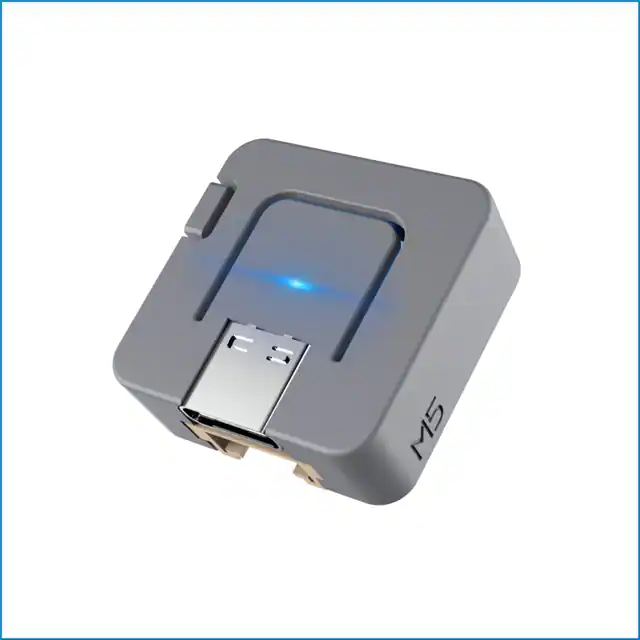
-
C008
M5Stack Technology Co., Ltd.
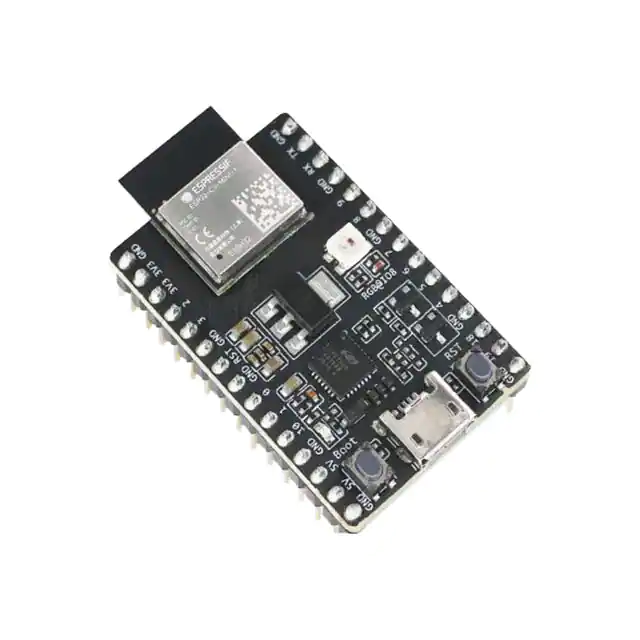
-
ESP32-C3-DEVKITC-02
Espressif Systems
-
ESP32-C6-DEVKITC-1-N8
Espressif Systems
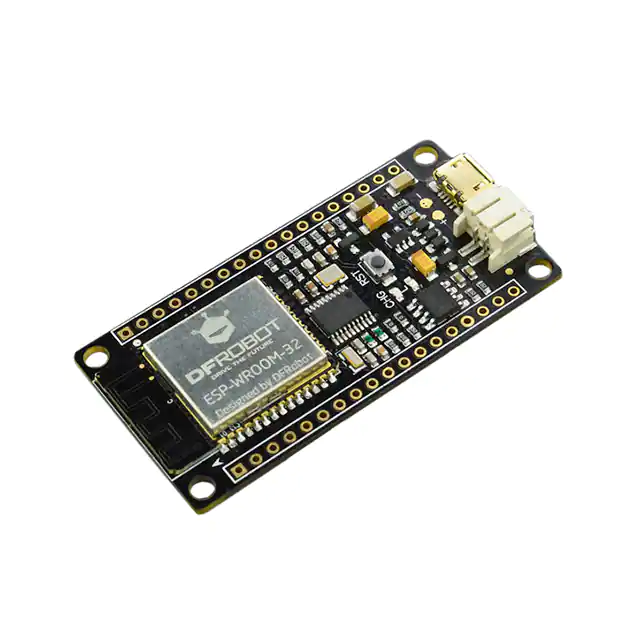
-
DFR0478
DFRobot
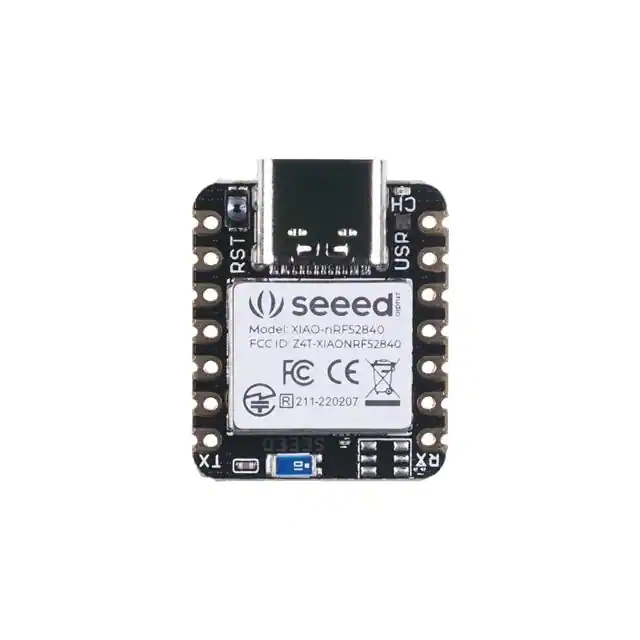
-
102010448
Seeed Technology Co., Ltd
-
ESP32-DEVKITC-32E
Espressif Systems
-
ESP32-DEVKITC-32UE
Espressif Systems
Tech Hub

A practical engineering guide to 3.3V and 5V logic compatibility, input thresholds, resistor dividers, translator ICs, MOSFET level shifting, I2C pull-ups, timing limits and power-sequencing risks.

The 74HC595 uses push-pull logic outputs, while the TPIC6B595 uses 50 V open-drain DMOS sinks for higher-power loads. This guide compares timing, current limits, 3.3 V interfacing, load wiring, thermal…

The 74HC595 converts serial data into eight stable parallel outputs. This guide covers pin functions, shift and storage timing, OE and MR behavior, drive-current limits, cascading, voltage compatibilit…

A technical comparison of level-sensitive latches and edge-triggered flip-flops, covering timing windows, setup and hold limits, master–slave operation, time borrowing, race-through, HDL inference and…

A D latch stores one bit while Enable controls when data can pass. This reference covers gate-level operation, truth tables, transparency, setup and hold timing, LE versus OE, common ICs and practical …

An SR latch stores one bit through cross-coupled feedback. This engineering reference covers NOR and NAND implementations, truth tables, forbidden-state recovery, gated operation, switch debouncing, fa…

Latch circuits retain one bit through feedback. This technical reference covers SR and D latches, truth tables, transparency, timing limits, latch-versus-flip-flop behavior, applications and common log…

An engineering guide to LED driver operation, constant-current and constant-voltage outputs, linear and switching topologies, dimming, IC selection, calculations, replacement compatibility, and fault c…

Operational amplifier guide covering op amp basics, feedback, ideal vs real op amps, common configurations, buffer circuits, offset, bias current, gain-bandwidth, slew rate, rail-to-rail limits and sel…

Jumper cables guide covering safe connection order, red and black clamp placement, final ground connection, cable gauge, length, clamp quality, copper vs CCA cables, jump starter comparison and battery…


