
 My Inquiry
 My Account


STMicroelectronics DEMOTS488S
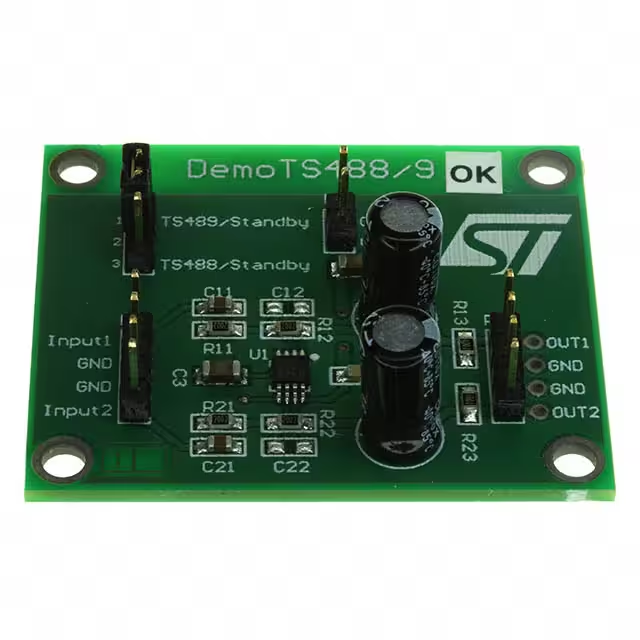
- Part No.:
- DEMOTS488S
- Manufacturer:
- STMicroelectronics
- Category:
- Audio Amplifier Evaluation Boards
- Package:
- Datasheet:
-
 DEMOTS488S.pdf
- Description:
- EVAL BOARD FOR TS488
- Quantity:
- Payment:

- Shipping:

Inventory:2,043
Please send an inquiry. Send us your inquiry, and we will respond immediately.
Product details
Overview
DEMOTS488S from STMicroelectronics is a dual-channel, pop-and-click-noise-suppressed stereo headphone amplifier IC designed for low-voltage portable audio systems. It delivers up to 120 mW per channel into 16 Ω at 5 V (0.1% THD+N), operates from 2.2 V to 5.5 V, features active-low standby mode with 10 nA typical current, and uses external gain-setting resistors for unity-gain stability. It targets space-constrained mobile and embedded audio interfaces requiring high SNR and crosstalk immunity.
For engineers reviewing the DEMOTS488S datasheet, DEMOTS488S pinout, DEMOTS488S application, or DEMOTS488S equivalent, this page provides verified functional identity, DFN8 package mapping, confirmed electrical specs (including PSRR = 70 dB @ 1 kHz, SNR = 105 dB A-weighted, crosstalk = –102 dB), thermal derating curves, and real-world design context for headset driver implementation.
Technical Context
The TS488 is a dual, single-ended output Class-AB audio power amplifier with rail-to-rail output swing, internally compensated for unity-gain stability, and configured via external feedback and inverting input resistors (AV = –Rfeed/Rin). Its pop/click suppression circuitry eliminates turn-on/turn-off transients without requiring external mute sequencing.
It integrates short-circuit protection and thermal shutdown, supports load impedances ≥16 Ω, and achieves ultra-low standby current (10 nA typ.) via an active-low STDBY pin that disables bias current paths while preserving internal node states. PSRR of 70 dB (1 kHz) and 62–68 dB (217 kHz) enables robust operation in noisy DC-DC supply environments.
Key Specifications
| Parameter | Value and Actual Design Meaning |
|---|---|
| Supply voltage range | 2.2 V to 5.5 V - Enables direct integration with Li-ion, USB, or LDO-powered portable systems without level-shifting. |
| Output power (16 Ω) | 120 mW @ 5 V, 0.1% THD+N - Sufficient for loud, distortion-free playback on standard stereo headsets. |
| Standby current | 10 nA typical - Extends battery life in always-on audio subsystems (e.g., voice assistant wake-up circuits). |
| PSRR @ 1 kHz | 70 dB typical - Rejects ripple from switching regulators, reducing need for additional LC filtering. |
| SNR (A-weighted) | 105 dB @ 5 V, RL = 32 Ω - Ensures high-fidelity audio reproduction with minimal background noise floor. |
| Crosstalk | –102 dB @ 1 kHz - Prevents audible channel bleed in stereo headphone applications. |
| THD+N | 0.3% max. across 20 Hz–20 kHz bandwidth - Meets consumer audio fidelity requirements for portable devices. |
Pinout & Package
DEMOTS488S is housed in a thermally enhanced DFN8 (2 mm × 2 mm, 0.5 mm pitch) package with exposed thermal pad (EP) on underside for PCB heat dissipation. Pin 1 is marked by laser etch or dot; orientation follows JEDEC MO-229 standard.
| Pin/Terminal | Circuit Role | Design Meaning |
|---|---|---|
| 1 (STDBY) | Active-low standby control | Pull low to enter ultra-low-power mode (10 nA); high-impedance input with 0.4 V logic threshold. |
| 2 (IN1–) | Inverting input, Channel 1 | Accepts differential or single-ended audio; gain set jointly with Rfeed1 and Rin1. |
| 3 (OUT1) | Single-ended output, Channel 1 | Drives 16–100 Ω loads directly; rail-to-rail swing (0.23–4.72 V @ 5 V, RL = 32 Ω). |
| 4 (GND) | Analog/digital ground | Common reference for all signals; must be connected to low-impedance PCB ground plane. |
| 5 (VCC) | Positive supply | Accepts 2.2–5.5 V; requires 1 µF bypass capacitor (Cb) to half-supply node for PSRR optimization. |
| 6 (OUT2) | Single-ended output, Channel 2 | Independent channel with identical performance; matched gain and phase response to OUT1. |
| 7 (IN2–) | Inverting input, Channel 2 | Functionally identical to IN1–; supports independent gain configuration per channel. |
| 8 (EP) | Exposed thermal pad | Internally connected to GND; must be soldered to large copper pour for thermal resistance ≤40 °C/W. |
Key Features
| Feature | Design Value |
|---|---|
| Pop-and-click noise suppression | Eliminates turn-on/turn-off transients without external mute control, enabling direct connection to audio codecs. |
| Ultra-low standby current | 10 nA typical ensures >1-year battery life in always-listening wearable audio devices powered by coin cells. |
| High PSRR (70 dB @ 1 kHz) | Reduces sensitivity to supply ripple, allowing use with compact DC-DC converters instead of bulky LDOs. |
| Unity-gain stable architecture | Supports flexible closed-loop gain (–1 to –100) using only two external resistors per channel-no compensation network needed. |
| Thermal shutdown + short-circuit protection | Prevents latch-up or destruction during accidental output shorts or sustained high-power operation on small PCBs. |
Applications
| Headphone Amplifier | Mobile Audio Interface |
|---|---|
Use Scenario: Driving stereo 16–32 Ω headphones in smartphones and tablets with shared VCC rails and limited board area. IC Role / Device Role / Timing Role: Dual-channel analog output stage amplifying DAC outputs before coupling capacitors; handles both left/right channels independently. Use Value: Delivers 120 mW/channel at 5 V with <0.1% THD+N and 105 dB SNR-enabling loud, clean playback without audible hiss or distortion. |
Use Scenario: Audio subsystem in handheld PDAs or industrial HMIs where low quiescent current and fast wake-up (<100 ms) are critical. IC Role / Device Role / Timing Role: Final-stage headphone driver activated by system-level standby signal; maintains state integrity during sleep cycles. Use Value: 10 nA standby current extends battery runtime; 100 ms wake-up time meets UX requirements for instant audio response after button press. |
| Computer Motherboard Audio | Portable Media Player |
Use Scenario: Integrated audio jack solution on mini-ITX or embedded PC motherboards sharing noisy 3.3 V CPU rail. IC Role / Device Role / Timing Role: Low-noise buffer between codec line-out and 3.5 mm jack; rejects supply noise via 70 dB PSRR. Use Value: 102 dB crosstalk isolation prevents left/right channel leakage; A-weighted SNR >102 dB ensures studio-grade headphone monitoring. |
Use Scenario: High-end portable audio players supporting lossless formats and sensitive IEMs requiring clean, dynamic output. IC Role / Device Role / Timing Role: Power-efficient stereo amplifier operating from 2.5 V LiPo cell; supports variable gain for different earphone sensitivities. Use Value: Delivers 31 mW/channel @ 2.5 V into 16 Ω with 0.1% THD+N-maintaining fidelity even at lowest battery voltage. |
Equivalent & Alternatives
The following parts are listed as comparable options for similar dual-channel headphone amplifier applications.
| Alternative Part | Technical Difference | Application Difference | Selection Advice |
|---|---|---|---|
| MAX98304EWC+T | Class D topology; higher efficiency (90%) but requires output LC filter; THD+N = 0.01% @ 1 kHz, 32 Ω. | Better suited for battery-constrained devices needing >20-hour playback; less ideal for ultra-low-noise analog signal chains. | Select when efficiency > SNR is priority and board space allows filter components. |
| TAS5707PAG | Integrated digital audio interface (I²S); 2.5 W Class D; no analog inputs; requires external DAC or DSP. | Targets systems with digital audio sources (e.g., SoC I²S output); not drop-in compatible for analog line-in designs. | Choose when migrating to digital audio architecture and seeking integrated processing + amplification. |
Compared with DEMOTS488S, MAX98304 offers superior power efficiency but adds EMI-sensitive filtering complexity, while TAS5707 shifts system architecture toward digital domain integration-neither replicates the TS488's analog simplicity, ultra-low standby current, or seamless pop-free analog interface.
Availability
DEMOTS488S is available at Aetrix Electronics and suitable for mobile phone audio subsystems, portable media player designs, and computer motherboard headphone jacks requiring stable component supply, long-lifecycle support, and guaranteed traceable sourcing.
Supply support for DEMOTS488S includes scheduled delivery planning, volume procurement assistance, BOM continuity management, traceable sourcing, and lifecycle availability coordination for OEM customers, industrial embedded developers, connected-device designers, and electronics production programs.
Manufacturer
STMicroelectronics is a global semiconductor leader headquartered in Geneva, specializing in analog, power, microcontrollers, and sensors for automotive, industrial, and consumer markets.
The TS488 belongs to ST's low-power audio amplifier product line, engineered specifically for portable and battery-operated devices demanding high audio fidelity, minimal power consumption, and robust transient immunity in compact form factors.
FAQ
What is the minimum recommended supply voltage for reliable operation?
The DEMOTS488S is fully specified down to 2.2 V, with guaranteed performance including 31 mW/channel into 16 Ω at 2.5 V (0.1% THD+N). Operation below 2.2 V risks degraded PSRR, increased THD+N, and potential instability due to insufficient headroom for internal biasing-ST does not characterize or guarantee functionality below this limit.
How is pop-and-click suppression implemented without external components?
The TS488 integrates internal soft-start circuitry that sequences bias current activation and output stage ramp-up/down during STDBY transitions. This eliminates voltage transients at the output pins, removing the need for external mute switches or timed GPIO control-verified across –40°C to +85°C operating range.
Can the DEMOTS488S drive 600 Ω professional headphones?
No-the TS488 is optimized for 16–100 Ω loads. At 600 Ω, output power drops to ~1.6 VRMS (≈4.3 mW) with rising THD+N above 1% at mid-frequencies. Its output stage lacks the voltage swing and current capability required for high-impedance headphones; dedicated line drivers or op-amps are recommended instead.
What PCB layout practices maximize thermal performance in DFN8 package?
Maximize thermal performance by soldering the exposed pad (Pin 8) to a ≥25 mm² internal or bottom-layer copper pour connected via ≥4 thermal vias (0.3 mm diameter) to inner ground planes. Maintain ≥0.2 mm clearance around the pad edge and avoid silkscreen over the EP. ST specifies RthJA = 40 °C/W on 4-layer boards with this layout.
DEMOTS488S Specifications
- Product attributes
- Attribute value
- Manufacturer:
- STMicroelectronics
- Series:
- -
- Packaging:
- Bulk
- Product Status:
- Obsolete
- Amplifier Type:
- Class AB
- Output Type:
- Headphones, 2-Channel (Stereo)
- Max Output Power x Channels @ Load:
- 130mW x 2 @ 16Ohm
- Voltage - Supply:
- 2.2V ~ 5.5V
- Utilized IC / Part:
- TS488
- Contents:
- Board(s)
DEMOTS488S FAQ
1.How can I place an order for DEMOTS488S through Aetrix?
Please submit a Request for Quotation (RFQ) for DEMOTS488S on Aetrix. Our sales agent will provide a competitive quotation and guide you through the order confirmation once you accept the terms.
2.Are the price and stock information for DEMOTS488S reliable?
The price and inventory of DEMOTS488S are updated periodically and may fluctuate due to market conditions. Stock and pricing data are typically refreshed every 24 hours. Quotation validity for DEMOTS488S is usually 5 days.
3.What payment methods are accepted for DEMOTS488S?
We accept Wire Transfer, PayPal, Credit Card, Western Union, MoneyGram, and Escrow for DEMOTS488S transactions.
Note: Certain payment methods may incur a processing fee.
4.How is shipping managed for DEMOTS488S?
DEMOTS488S orders can be shipped via leading logistics carriers, including DHL, UPS, FedEx, TNT, or Registered Mail.
Once your DEMOTS488S order is processed, you will receive an email with the shipment details and tracking number.
Note: Tracking information may take up to 24 hours to appear. Express delivery typically takes 3–5 business days.
5.How can I obtain technical support or documentation for DEMOTS488S?
For technical support, including DEMOTS488S datasheets, pinout diagrams, or application guidance, please contact our engineering support team. They can provide detailed documentation and assistance for your DEMOTS488S requirements.
6.How does Aetrix verify that DEMOTS488S is sourced from the original manufacturer or authorized distributors?
All DEMOTS488S products on Aetrix are procured from qualified distributors and authorized channels. Our dedicated quality assurance team conducts strict verification, including traceability checks and, if necessary, third-party testing. This ensures that DEMOTS488S meets industry standards.
7.What is the process for return or replacement of DEMOTS488S?
All DEMOTS488S units undergo pre-shipment inspection (PSI). If there is an issue with DEMOTS488S, returns or replacements are accepted under the following conditions:
1.Quantity discrepancies, incorrect items, or visible external defects (such as breakage or corrosion), acknowledged by Aetrix.
2.The issue is reported within 90 days of delivery.
3.The DEMOTS488S part is unused and in its original packaging.
Return procedure for DEMOTS488S:
1.Submit a request within 90 days.
2.Obtain a Return Material Authorization (RMA) from Aetrix.
DEMOTS488S Tags

-
2130
Adafruit Industries LLC
-
3006
Adafruit Industries LLC
-
XPCB-12BT
Soberton Inc.
-
AMP2X15
PUI Audio, Inc.
-
EPC9192KIT
EPC
-
987
Adafruit Industries LLC
-
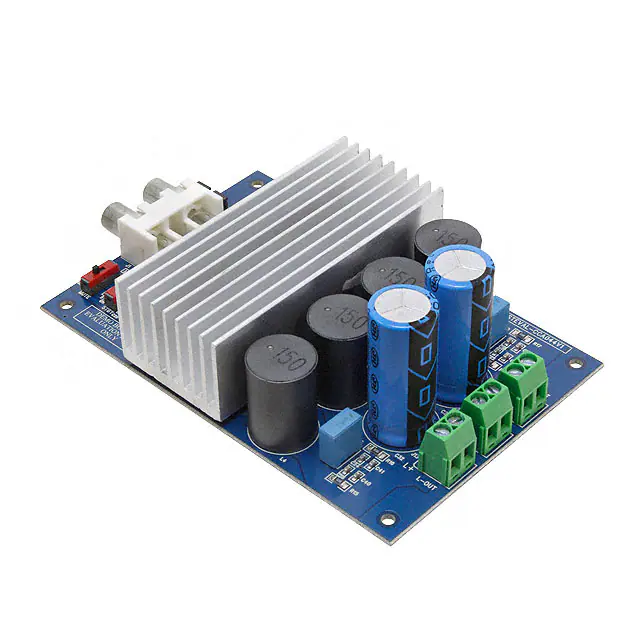
STEVAL-CCA044V1
STMicroelectronics
-
93105
MISCO
-
93103
MISCO
-
1752
Adafruit Industries LLC
-
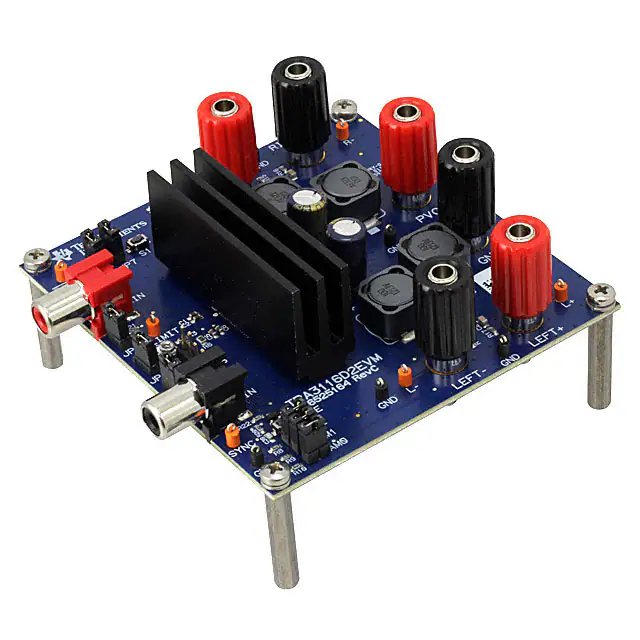
TPA3116D2EVM
Texas Instruments
-
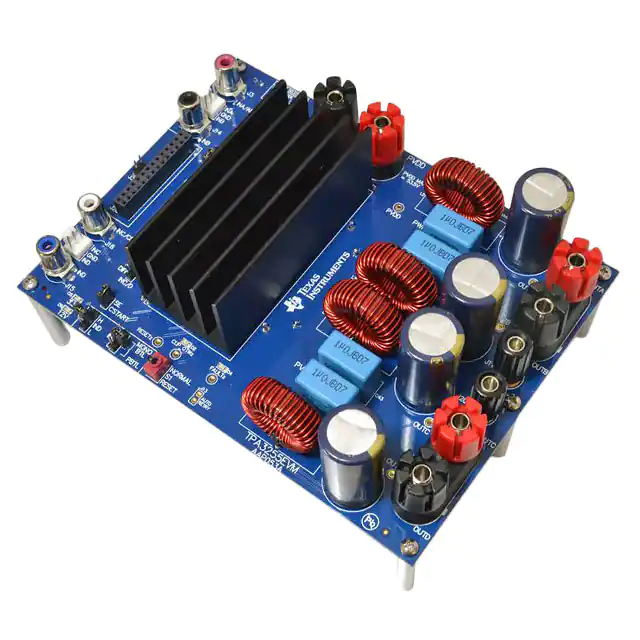
TPA3255EVM
Texas Instruments
Tech Hub

Jumper cables guide covering safe connection order, red and black clamp placement, final ground connection, cable gauge, length, clamp quality, copper vs CCA cables, jump starter comparison and battery…

LDO regulator guide covering low dropout voltage, power dissipation, thermal design, PSRR, output noise, capacitor stability, adjustable LDO circuits, LDO vs buck converter and datasheet selection chec…

Conditional Access Module guide covering CAM meaning, CI/CI+ interface, smart card authorization, DVB security workflow, TV and set-top box compatibility, internal electronics, ESD protection, connecto…

Guide to electronic component obsolescence covering EOL risk, PCN/PDN notices, last-time buy planning, replacement options, form-fit-function validation, counterfeit risk and BOM lifecycle management.

18650 battery guide covering lithium-ion cell basics, 3.6V/3.7V voltage, 4.2V charging, mAh and Wh capacity, protected cells, chargers, BMS, series-parallel packs, holders, welding and sourcing checks.…

Hall effect sensor guide covering working principle, linear and digital sensors, Arduino circuits, current sensing, speed detection, automotive applications, A3144 examples, signal filtering and datash…

Product Change Notification guide for electronic components, covering PCN meaning, PCN vs PDN/EOL, common change types, risk levels, form-fit-function review, engineering validation, BOM control, LTB/L…

A practical guide to blend door actuators, covering HVAC function, symptoms, location, AC and heater issues, reset and calibration, replacement cost, electrical diagnosis, compatibility checks, and rep…

Engineering guide to Raspberry Pi alternatives, covering chip-level differences, Orange Pi, ROCK, Jetson, Banana Pi, NanoPi, Compute Module, Pico, GPIO, camera, HAT compatibility, and replacement risks…
Engineering guide to dynamic load response testing for high-current buck converters, covering load step setup, slew rate, Vcore undershoot, overshoot, recovery time, probe location, output capacitors a…


