
 My Inquiry
 My Account


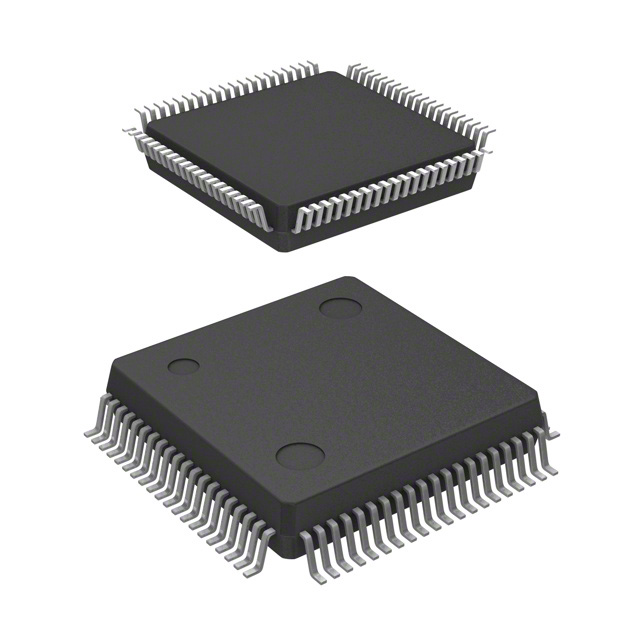
Renesas DF38076RH10V
- Part No.:
- DF38076RH10V
- Manufacturer:
- Renesas
- Category:
- Microcontrollers
- Package:
- 80-BQFP
- Datasheet:
-
 DF38076RH10V.pdf
- Description:
- IC MCU 16BIT 52KB FLASH 80QFP
- Quantity:
- Payment:

- Shipping:

Inventory:3,004
Please send an inquiry. Send us your inquiry, and we will respond immediately.
Product details
Overview
DF38076RH10V from Renesas Electronics is a 16-bit single-chip microcomputer in the H8/38076R Group, featuring the H8/300H CPU core, 52 KB on-chip ROM, 4 KB RAM, and integrated peripherals including 16-bit timer pulse unit (TPU), SCI serial interfaces, and RTC. It operates at up to 20 MHz, supports multiple low-power modes (subactive, subsleep, standby), and targets embedded control applications requiring deterministic real-time response and power efficiency.
For engineers reviewing the DF38076RH10V datasheet, DF38076RH10V pinout, DF38076RH10V application, or DF38076RH10V equivalent, key selection criteria include its TQFP-80 package, 3.3 V operation, flash memory version compatibility, interrupt mask level control via IPR registers, and subclock generator support for 32.768 kHz crystal timing.
Technical Context
The DF38076RH10V implements the H8/300H CPU architecture with instruction set compatibility to H8/300, enabling legacy code reuse. Its system clock generator supports external crystal (e.g., 4.19 MHz HC-491U-S) or on-chip oscillator, while the subclock generator accepts 32.768 kHz or 38.4 kHz crystals for RTC operation with RS ≤ 35 kΩ.
Interrupt handling uses a programmable priority scheme with three mask levels per interrupt source (excluding NMI and address break), controlled by five 8-bit Interrupt Priority Registers (IPRA–IPRE). The device features dedicated TPU channels (TIOCA1/TIOCB1 through TIOCA4/TIOCB4) supporting input capture, output compare, and PWM generation with precise timing control.
Key Specifications
| Parameter | Value and Actual Design Meaning |
|---|---|
| CPU Core | H8/300H 16-bit RISC core, instruction-compatible with H8/300 for migration support |
| Memory | 52 KB on-chip ROM (mask ROM version), 4 KB RAM - sufficient for standalone firmware without external memory |
| Max Clock Frequency | 20 MHz - enables real-time control loops with sub-50 ns instruction cycle time |
| Supply Voltage | 3.3 V ±0.3 V - compatible with modern low-voltage logic and reduces power dissipation |
| Operating Modes | Active (high/medium-speed), subactive, subsleep, standby - configurable power states for battery-sensitive designs |
| RTC Support | Subclock generator with 32.768 kHz crystal interface - enables calendar/timekeeping with <1 μA standby current |
| Interrupt System | 25 internal + 8 external interrupts, 3-level mask control per source via IPRA–IPRE - prioritized, nested exception handling |
Pinout & Package
TQFP-80 package (12 × 12 mm, 0.5 mm pitch), RoHS-compliant, surface-mount. Pin count and layout conform to PTQP0080KC-A footprint.
| Pin/Terminal | Circuit Role | Design Meaning |
|---|---|---|
| VCC, VSS | Power supply and ground | Dual 3.3 V supply pins (VCC) and dedicated ground (VSS) ensure stable core/peripheral voltage distribution |
| OSC1, OSC2 | System clock input | Connects to 4.19 MHz crystal (HC-491U-S) or external clock source for main system timing |
| XT1, XT2 | Subclock input | Accepts 32.768 kHz crystal for RTC; requires C1/C2 = 7 pF and RS ≤ 35 kΩ |
| P16, P36, P37 | Debug-reserved I/O | Reserved for on-chip debugging emulator (E7); unavailable for user I/O unless external hardware bypass is implemented |
| TIOCA1–TIOCB4 | Timer pulse unit I/O | Eight dedicated TPU pins supporting input capture, output compare, and PWM - enable motor control and signal measurement |
| SCI3_RXD / SCI3_TXD (P41/P42) | Serial communication | Full-duplex UART interface used for on-board programming/erasing in boot mode |
Key Features
| Feature | Design Value |
|---|---|
| Low-power operation modes | Subactive/subsleep modes reduce current to ~100 μA while retaining RAM and RTC - extends battery life in portable devices |
| Programmable interrupt priority | Five IPR registers (IPRA–IPRE) assign independent 2-bit mask levels (0–2) per interrupt source - eliminates priority conflicts in multi-peripheral systems |
| On-chip debugging support | Integrated on-chip debugging emulator (E7) enables real-time trace without external JTAG pod - accelerates firmware validation |
| RTC with crystal interface | Hardware RTC driven by 32.768 kHz crystal with built-in oscillator circuit - provides accurate timekeeping without external oscillator IC |
| TPU with PWM capability | Four 16-bit TPU channels deliver simultaneous input capture and PWM outputs - supports brushless DC motor commutation and LED dimming |
Applications
| Industrial Sensor Node | Smart Metering Terminal |
|---|---|
Use Scenario: Remote environmental monitoring node collecting temperature, humidity, and motion data at 10-second intervals. IC Role / Device Role / Timing Role: DF38076RH10V serves as main controller, managing sensor polling, data logging to internal RAM, and scheduled wireless transmission using SCI3. Use Value: Subsleep mode draws <100 μA between readings, extending 2-AA battery life beyond 5 years; RTC ensures precise wake-up scheduling. | Use Scenario: Electricity meter with tamper detection, pulse counting, and time-of-use tariff calculation. IC Role / Device Role / Timing Role: DF38076RH10V executes metrology algorithms, maintains calendar/time via 32.768 kHz RTC, and communicates via SCI2 to PLC modem. Use Value: Hardware RTC retains time across power loss; 52 KB ROM stores tariff tables and firmware updates; TPU captures utility pulses with microsecond resolution. |
| Home Appliance Control | Building Automation Controller |
Use Scenario: Washing machine main board controlling motor drive, water valves, and user interface. IC Role / Device Role / Timing Role: DF38076RH10V coordinates PWM-driven triac firing for heater control, TPU-based tachometer feedback for drum speed, and SCI1 for display panel communication. Use Value: TIOCA1/TIOCB1 provide synchronized PWM and capture on same timer channel - eliminates phase drift in closed-loop motor control. | Use Scenario: HVAC zone controller regulating damper position, fan speed, and temperature setpoints. IC Role / Device Role / Timing Role: DF38076RH10V reads analog sensors via on-chip ADC (implied by family spec), drives actuators via TPU PWM, and logs events using RTC timestamping. Use Value: Subactive mode maintains RTC and RAM while disabling CPU - enables instant wake-on-schedule without boot delay; 4 KB RAM buffers sensor history during network outages. |
Equivalent & Alternatives
The following parts are listed as comparable options for similar 16-bit microcontroller applications.
| Alternative Part | Technical Difference | Application Difference | Selection Advice |
|---|---|---|---|
| HD64F38076R | Flash memory version of same H8/38076R Group; identical pinout, register map, and peripheral set but field-programmable | Supports firmware updates in-system; unsuitable for high-volume cost-sensitive production where mask ROM suffices | Select HD64F38076R when prototyping or requiring post-deployment firmware revision capability |
| H8/38075R | Same family, reduced memory: 32 KB ROM, 2 KB RAM; identical CPU, TPU, and clock architecture | Lower-cost option for simpler control tasks; insufficient RAM for complex data buffering or protocol stacks | Choose H8/38075R only if application fits within 2 KB RAM and does not require RTC retention during deep sleep |
Compared with HD64F38076R, DF38076RH10V offers lower unit cost and guaranteed firmware immutability but lacks field reprogrammability; versus H8/38075R, it delivers 2× RAM and 1.6× ROM headroom for feature-rich firmware, justifying the BOM premium in mid-tier industrial controllers.
Availability
DF38076RH10V is available at Aetrix Electronics and suitable for industrial sensor nodes, smart metering terminals, home appliance control, building automation controllers, and embedded instrumentation requiring stable component supply over extended product lifecycles.
Supply support for DF38076RH10V includes scheduled delivery planning, volume procurement assistance, BOM continuity management, traceable sourcing, and lifecycle availability coordination for OEM customers, industrial embedded developers, connected-device designers, and electronics production programs.
Manufacturer
Renesas Electronics Corporation is a global semiconductor leader specializing in microcontrollers, analog, power, and SoC solutions for automotive, industrial, and IoT markets.
The H8 Family/H8/300H Super Low Power Series - including DF38076RH10V - was designed for cost-sensitive, battery-operated embedded control applications demanding deterministic real-time performance and ultra-low standby current.
FAQ
What is the package type and pin count of DF38076RH10V?
DF38076RH10V uses a TQFP-80 package (12 × 12 mm, 0.5 mm pitch) with 80 pins. This footprint matches the PTQP0080KC-A mechanical specification and is compatible with standard reflow soldering processes. Pin functions are fully documented in the H8/38076R Group Hardware Manual Rev.4.00, including reserved pins (P16, P36, P37) for on-chip debugging.
Does DF38076RH10V support in-system programming?
No, DF38076RH10V is a mask ROM version and does not support in-system programming. Firmware is permanently programmed during manufacturing. For field-upgradable designs, Renesas offers the flash-based HD64F38076R variant, which shares identical pinout and peripheral functionality but replaces mask ROM with 52 KB flash memory.
What crystal frequencies are supported by DF38076RH10V for real-time clock operation?
DF38076RH10V supports 32.768 kHz and 38.4 kHz crystals on the XT1/XT2 pins for subclock generation. The hardware RTC requires a 32.768 kHz crystal (e.g., Epson Toyocom C-001R) with 7 pF load capacitance and ≤35 kΩ equivalent series resistance to ensure reliable oscillation and low-power timekeeping.
How many interrupt priority levels does DF38076RH10V support?
DF38076RH10V supports three programmable interrupt mask levels (0–2) per interrupt source via five 8-bit Interrupt Priority Registers (IPRA–IPRE). Level 0 accepts all interrupts; level 1 masks level-0 sources; level 2 masks both level-0 and level-1 sources - enabling hierarchical, deterministic exception handling in multi-interrupt systems.
Can DF38076RH10V operate from a 3.3 V supply only?
Yes, DF38076RH10V is specified for single 3.3 V ±0.3 V operation. It does not support 5 V or dual-supply configurations. All I/O pins are 3.3 V tolerant, and internal regulators derive core voltage from VCC. External decoupling (e.g., 100 nF ceramic near VCC pins) is required per Renesas recommendations to maintain stability under dynamic load.
DF38076RH10V Specifications
- Product attributes
- Attribute value
- Manufacturer:
- Renesas
- Package/Case:
- 80-BQFP
- Series:
- H8® H8/300H SLP
- Packaging:
- Tray
- Product Status:
- Last Time Buy
- Programmable:
- Not Verified
- Core Processor:
- H8/300H
- Core Size:
- 16-Bit
- Speed:
- 10MHz
- Connectivity:
- I2C, IrDA, SCI
- Peripherals:
- LCD, POR, PWM, WDT
- Number of I/O:
- 55
- Program Memory Size:
- 52KB (52K x 8)
- Program Memory Type:
- FLASH
- EEPROM Size:
- -
- RAM Size:
- 2K x 8
- Voltage - Supply (Vcc/Vdd):
- 2.7V ~ 3.6V
- Data Converters:
- A/D 8x10b
- Oscillator Type:
- Internal
- Operating Temperature:
- -20°C ~ 75°C (TA)
- Grade:
- -
- Qualification:
- -
- Mounting Type:
- Surface Mount
- Supplier Device Package:
DF38076RH10V FAQ
1.How can I place an order for DF38076RH10V through Aetrix?
Please submit a Request for Quotation (RFQ) for DF38076RH10V on Aetrix. Our sales agent will provide a competitive quotation and guide you through the order confirmation once you accept the terms.
2.Are the price and stock information for DF38076RH10V reliable?
The price and inventory of DF38076RH10V are updated periodically and may fluctuate due to market conditions. Stock and pricing data are typically refreshed every 24 hours. Quotation validity for DF38076RH10V is usually 5 days.
3.What payment methods are accepted for DF38076RH10V?
We accept Wire Transfer, PayPal, Credit Card, Western Union, MoneyGram, and Escrow for DF38076RH10V transactions.
Note: Certain payment methods may incur a processing fee.
4.How is shipping managed for DF38076RH10V?
DF38076RH10V orders can be shipped via leading logistics carriers, including DHL, UPS, FedEx, TNT, or Registered Mail.
Once your DF38076RH10V order is processed, you will receive an email with the shipment details and tracking number.
Note: Tracking information may take up to 24 hours to appear. Express delivery typically takes 3–5 business days.
5.How can I obtain technical support or documentation for DF38076RH10V?
For technical support, including DF38076RH10V datasheets, pinout diagrams, or application guidance, please contact our engineering support team. They can provide detailed documentation and assistance for your DF38076RH10V requirements.
6.How does Aetrix verify that DF38076RH10V is sourced from the original manufacturer or authorized distributors?
All DF38076RH10V products on Aetrix are procured from qualified distributors and authorized channels. Our dedicated quality assurance team conducts strict verification, including traceability checks and, if necessary, third-party testing. This ensures that DF38076RH10V meets industry standards.
7.What is the process for return or replacement of DF38076RH10V?
All DF38076RH10V units undergo pre-shipment inspection (PSI). If there is an issue with DF38076RH10V, returns or replacements are accepted under the following conditions:
1.Quantity discrepancies, incorrect items, or visible external defects (such as breakage or corrosion), acknowledged by Aetrix.
2.The issue is reported within 90 days of delivery.
3.The DF38076RH10V part is unused and in its original packaging.
Return procedure for DF38076RH10V:
1.Submit a request within 90 days.
2.Obtain a Return Material Authorization (RMA) from Aetrix.
DF38076RH10V Tags

-
ATTINY4-TSHR
Microchip Technology
-
ATTINY10-TSHR
Microchip Technology
-
ATTINY10-TS8R
Microchip Technology

-
ATTINY202-SSNR
Microchip Technology
-
ATTINY202-SSFR
Microchip Technology
-
ATTINY402-SSNR
Microchip Technology
-
PIC16F15213T-I/MF
Microchip Technology
-
PIC16F15213-E/MF
Microchip Technology

-
PIC10F200T-I/OT
Microchip Technology
-
ATTINY412-SSNR
Microchip Technology
-
PIC10F202T-I/OT
Microchip Technology
-
ATTINY404-SSNR
Microchip Technology
Tech Hub

TTL and CMOS logic families differ in thresholds, loading, output drive, power and timing. This engineering guide compares 74HC and 74HCT, calculates noise margins and checks 3.3 V/5 V compatibility.

A practical engineering guide to 3.3V and 5V logic compatibility, input thresholds, resistor dividers, translator ICs, MOSFET level shifting, I2C pull-ups, timing limits and power-sequencing risks.

The 74HC595 uses push-pull logic outputs, while the TPIC6B595 uses 50 V open-drain DMOS sinks for higher-power loads. This guide compares timing, current limits, 3.3 V interfacing, load wiring, thermal…

The 74HC595 converts serial data into eight stable parallel outputs. This guide covers pin functions, shift and storage timing, OE and MR behavior, drive-current limits, cascading, voltage compatibilit…

A technical comparison of level-sensitive latches and edge-triggered flip-flops, covering timing windows, setup and hold limits, master–slave operation, time borrowing, race-through, HDL inference and…

A D latch stores one bit while Enable controls when data can pass. This reference covers gate-level operation, truth tables, transparency, setup and hold timing, LE versus OE, common ICs and practical …

An SR latch stores one bit through cross-coupled feedback. This engineering reference covers NOR and NAND implementations, truth tables, forbidden-state recovery, gated operation, switch debouncing, fa…

Latch circuits retain one bit through feedback. This technical reference covers SR and D latches, truth tables, transparency, timing limits, latch-versus-flip-flop behavior, applications and common log…

An engineering guide to LED driver operation, constant-current and constant-voltage outputs, linear and switching topologies, dimming, IC selection, calculations, replacement compatibility, and fault c…

Operational amplifier guide covering op amp basics, feedback, ideal vs real op amps, common configurations, buffer circuits, offset, bias current, gain-bandwidth, slew rate, rail-to-rail limits and sel…


