Vishay Siliconix DG459DJ-E3
- Part No.:
- DG459DJ-E3
- Manufacturer:
- Vishay Siliconix
- Package:
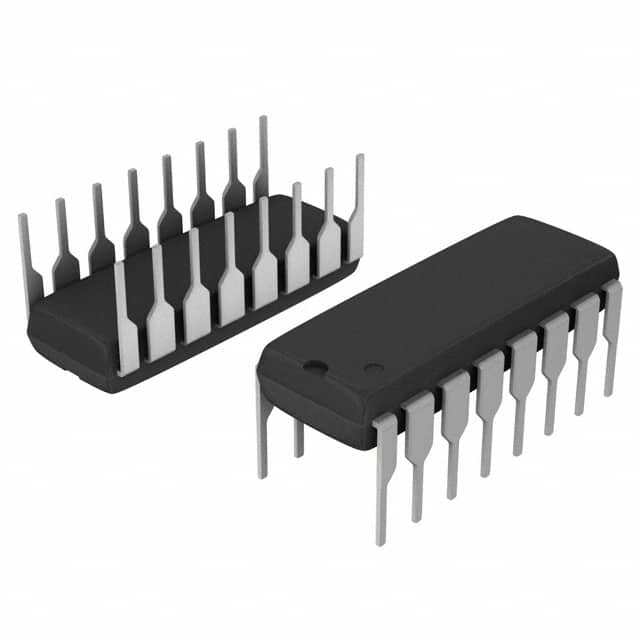
- 16-DIP (0.300", 7.62mm)
- Datasheet:
-
DG459DJ-E3.pdf
- Description:
- IC SWITCH SP4T X 2 1.5KOHM 16DIP
- Quantity:
- Payment:

- Shipping:

Inventory:4,341
Please send an inquiry. Send us your inquiry, and we will respond immediately.
Product details
Overview
DG459DJ-E3 from Vishay Siliconix is a fault-protected differential 4-channel analog multiplexer with ±35 V continuous overvoltage tolerance, 180 Ω typical on-resistance at ±5 V supplies, 200 ns transition time, and break-before-make switching. It operates across –40 °C to +85 °C in a 16-pin plastic DIP package and is used in avionics test equipment for high-reliability signal routing under fault conditions.
For engineers reviewing the DG459DJ-E3 datasheet, DG459DJ-E3 pinout, DG459DJ-E3 application, or DG459DJ-E3 equivalent, key selection criteria include its fault-protected architecture, differential channel configuration, TTL/CMOS-compatible control inputs, and guaranteed off-isolation of 90 dB at 100 kHz - all critical for ruggedized data acquisition and telemetry systems.
Technical Context
The DG459DJ-E3 implements a triple-series n-p-n MOSFET switch structure per channel, enabling intrinsic overvoltage protection even with power supplies off. Its analog signal range is guaranteed ±10 V under normal operation, and it maintains sub-nanoampere leakage (≤0.5 nA) when subjected to ±33 V overvoltage with power applied.
Control logic uses TTL/CMOS-compatible thresholds (VIL ≤ 0.8 V, VIH ≥ 2.4 V), and enable-driven operation ensures all channels remain off during power loss. Break-before-make timing is specified at 45 ns minimum, preventing channel-to-channel crosstalk during switching transitions.
Key Specifications
| Parameter | Value and Actual Design Meaning |
|---|---|
| Analog Channels | Differential 4-channel - routes paired analog signals with matched path integrity |
| On-Resistance | 180 Ω typ. at ±5 V - enables <1 LSB error in 12-bit systems with 1 kΩ source impedance |
| Transition Time | 200 ns max - supports multiplexed sampling rates up to ~2 MHz with settling margin |
| Fault Tolerance | ±35 V continuous input overvoltage - protects sensors and downstream circuitry without external clamping |
| Off-Isolation | 90 dB at 100 kHz - suppresses crosstalk between active and inactive differential pairs |
| Supply Range | ±4.5 V to ±18 V - supports dual-rail operation in industrial and aerospace signal chains |
| Leakage Current | ≤0.5 nA at ±10 V - preserves accuracy in high-impedance sensor interfaces (e.g., thermocouples) |
Pinout & Package
Package: 16-pin plastic DIP (Dual-In-Line), RoHS-compliant (E3 suffix), body dimensions 19.05 mm × 7.62 mm × 3.18 mm (L × W × H), lead pitch 2.54 mm.
| Pin/Terminal | Circuit Role | Design Meaning |
|---|---|---|
| 1, 2, 3, 4, 5, 6, 7, 9 | S1a–S4a, S1b–S4b | Differential analog inputs - each pair (e.g., S1a/S1b) forms one fully isolated channel |
| 8 | EN | Enable input - active-high; forces all switches open when low, regardless of address state |
| 10, 11 | A0, A1 | Channel select address lines - binary-coded selection of one of four differential channels |
| 12 | GND | Analog/digital ground reference - common return for supplies and logic |
| 13 | V− | Negative supply rail - powers internal level shifters and switch bias networks |
| 14 | V+ | Positive supply rail - establishes analog signal range and switch conduction capability |
| 15, 16 | Da, Db | Differential analog outputs - deliver selected channel's balanced signal to ADC or instrumentation amp |
Key Features
| Feature | Design Value |
|---|---|
| Fault-protected architecture | Triple-series MOSFET per channel blocks >±33 V faults with <0.02 nA output leakage - eliminates need for external TVS or series resistors |
| Power-loss immunity | All channels auto-disable when V+ or V− drops below operating threshold - prevents backfeeding into powered-off subsystems |
| Break-before-make switching | 45 ns minimum inter-channel isolation gap - avoids momentary shorting between differential pairs during reconfiguration |
| Latchup-proof design | Junction-isolated CMOS process withstands >100 mA transient current without latchup - suitable for noisy industrial environments |
| TTL/CMOS compatibility | Logic thresholds fixed at 0.8 V / 2.4 V independent of supply rails - simplifies interface with microcontrollers and FPGAs |
Applications
| Avionics Test Equipment | Industrial Process Control |
|---|---|
Use Scenario: Multiplexing multiple RTD and thermocouple inputs in airborne environmental monitoring units where EMI and power interruption are frequent. IC Role / Device Role / Timing Role: Fault-tolerant differential analog switch routing sensor signals to a shared 16-bit SAR ADC under ±35 V transients. Use Value: Maintains measurement continuity during voltage sags and prevents damage to precision front-end amplifiers during lightning-induced surges. | Use Scenario: Routing 4–20 mA loop signals from distributed pressure and flow transmitters to a central PLC analog input module in oil refinery control cabinets. IC Role / Device Role / Timing Role: Differential channel selector isolating field-side signals from controller-side circuitry while rejecting common-mode noise. Use Value: Enables single-board consolidation of four independent 4–20 mA channels with <0.5 nA off-leakage, preserving loop accuracy over decades of operation. |
| Telemetry Systems | High-Reliability Data Acquisition |
Use Scenario: Signal conditioning stage in satellite payload telemetry units handling vibration, temperature, and radiation sensor outputs across wide thermal ranges. IC Role / Device Role / Timing Role: Overvoltage-hardened analog multiplexer feeding isolated sigma-delta ADCs in radiation-tolerant data loggers. Use Value: Survives launch-induced power glitches and maintains channel integrity during deep-space thermal cycling without recalibration. | Use Scenario: Front-end multiplexer in medical-grade patient monitoring devices acquiring ECG, respiration, and SpO₂ signals with strict leakage limits. IC Role / Device Role / Timing Role: Low-leakage differential switch ensuring <100 pA input bias current compliance for biopotential amplifiers. Use Value: Meets IEC 60601-1 creepage/clearance requirements via inherent power-off isolation, eliminating need for mechanical relays. |
Equivalent & Alternatives
The following parts are listed as comparable options for similar differential analog multiplexer applications.
| Alternative Part | Technical Difference | Application Difference | Selection Advice |
|---|---|---|---|
| MAX359CPN+ | Same pinout, identical truth table, but higher RDS(on) (300 Ω typ.) and lower fault tolerance (±20 V) | Limited to benign industrial environments; unsuitable for avionics surge testing | Select when cost sensitivity outweighs overvoltage margin and on-resistance performance |
| HI-509ACJ | Pin-compatible, same ±35 V rating, but wider temp range (–55 °C to +125 °C) and higher power dissipation (1000 mW) | Required for extended temperature military/aerospace deployments beyond DG459DJ-E3's –40 °C to +85 °C range | Choose when operating in extreme ambient conditions or requiring higher thermal headroom |
Compared with MAX359CPN+ and HI-509ACJ, the DG459DJ-E3 delivers optimal balance of fault robustness, low on-resistance, and commercial-temperature reliability - making it preferred for cost-constrained avionics and industrial telemetry where full military spec is unnecessary.
Availability
DG459DJ-E3 is available at Aetrix Electronics and suitable for avionics test equipment, industrial process control systems, and telemetry applications requiring stable component supply, long-term lifecycle support, and RoHS-compliant packaging.
Supply support for DG459DJ-E3 includes scheduled delivery planning, volume procurement assistance, BOM continuity management, traceable sourcing, and lifecycle availability coordination for OEM customers, industrial embedded developers, connected-device designers, and electronics production programs.
Manufacturer
Vishay Siliconix is a global semiconductor manufacturer specializing in discrete components and analog ICs, with leadership in high-reliability switching, protection, and sensing technologies.
The DG459DJ-E3 belongs to Vishay's fault-protected analog switch product line, engineered specifically for mission-critical signal routing in harsh environments where power instability, voltage transients, and long-term reliability are primary design constraints.
FAQ
What is the maximum continuous overvoltage rating for DG459DJ-E3 with power supplies off?
The DG459DJ-E3 sustains ±35 V continuous analog input overvoltage even when V+ and V− are unpowered. Under this condition, input leakage remains ≤2 nA, and the device presents an open-circuit impedance to protect upstream sensors. This behavior is confirmed in the Absolute Maximum Ratings table and Figure 5 of the DG458/DG459 datasheet (Document Number: 70064, Rev. H).
Does DG459DJ-E3 support break-before-make switching, and what is its minimum interval?
Yes, DG459DJ-E3 guarantees break-before-make operation with a minimum tOPEN of 45 ns, measured between turn-off of the previously selected channel and turn-on of the newly selected channel. This prevents momentary shorting in differential configurations and is validated under room-temperature conditions with ±15 V supplies, as specified in the Dynamic Characteristics table.
What is the on-resistance specification for DG459DJ-E3, and how does it vary with supply voltage?
DG459DJ-E3 has a typical on-resistance of 180 Ω at ±5 V supplies and ±9.5 V analog signal levels, rising to 400 Ω at ±5 V with ±5 V signal swing. The RDS(on) increases nonlinearly near supply rails due to MOSFET pinch-off; full characterization is provided in Figure 5 of the datasheet, showing 700 Ω max at ±20 V supplies with ±10 V signals.
Can DG459DJ-E3 be used with single-supply operation, and what are the limitations?
No, DG459DJ-E3 requires dual symmetric supplies (e.g., ±5 V, ±12 V, ±15 V) to maintain its specified ±10 V analog signal range and fault protection. Single-supply operation violates the Absolute Maximum Rating for V− to GND (–25 V min), risks latchup, and degrades RDS(on) matching. The device is not characterized for unipolar use.
How does the fault protection in DG459DJ-E3 differ from standard analog multiplexers like the CD4051?
DG459DJ-E3 integrates three-series MOSFETs per channel that intrinsically cut off under overvoltage, limiting leakage to <0.02 nA at ±33 V. In contrast, CD4051 lacks such architecture and fails catastrophically above its supply rails, requiring external protection diodes and current-limiting resistors - increasing board area, cost, and signal path error.
DG459DJ-E3 Specifications
- Product attributes
- Attribute value
- Manufacturer:
- Vishay Siliconix
- Series:
- -
- Packaging:
- Bulk
- Product Status:
- Obsolete
- Switch Circuit:
- SP4T
- Multiplexer/Demultiplexer Circuit:
- 4:1
- Number of Circuits:
- 2
- On-State Resistance (Max):
- 1.5kOhm
- Channel-to-Channel Matching (ΔRon):
- 90Ohm
- Voltage - Supply, Single (V+):
- -
- Voltage - Supply, Dual (V±):
- ±4.5V ~ 18V
- Switch Time (Ton, Toff) (Max):
- 250ns, 250ns
- -3db Bandwidth:
- -
- Charge Injection:
- -
- Channel Capacitance (CS(off), CD(off)):
- 5pF, 10pF
- Current - Leakage (IS(off)) (Max):
- 1nA
- Crosstalk:
- -
- Operating Temperature:
- -40°C ~ 85°C (TA)
- Grade:
- -
- Qualification:
- -
- Mounting Type:
- Through Hole
- Supplier Device Package:
- 16-PDIP
DG459DJ-E3 FAQ
1.How can I place an order for DG459DJ-E3 through Aetrix?
Please submit a Request for Quotation (RFQ) for DG459DJ-E3 on Aetrix. Our sales agent will provide a competitive quotation and guide you through the order confirmation once you accept the terms.
2.Are the price and stock information for DG459DJ-E3 reliable?
The price and inventory of DG459DJ-E3 are updated periodically and may fluctuate due to market conditions. Stock and pricing data are typically refreshed every 24 hours. Quotation validity for DG459DJ-E3 is usually 5 days.
3.What payment methods are accepted for DG459DJ-E3?
We accept Wire Transfer, PayPal, Credit Card, Western Union, MoneyGram, and Escrow for DG459DJ-E3 transactions.
Note: Certain payment methods may incur a processing fee.
4.How is shipping managed for DG459DJ-E3?
DG459DJ-E3 orders can be shipped via leading logistics carriers, including DHL, UPS, FedEx, TNT, or Registered Mail.
Once your DG459DJ-E3 order is processed, you will receive an email with the shipment details and tracking number.
Note: Tracking information may take up to 24 hours to appear. Express delivery typically takes 3–5 business days.
5.How can I obtain technical support or documentation for DG459DJ-E3?
For technical support, including DG459DJ-E3 datasheets, pinout diagrams, or application guidance, please contact our engineering support team. They can provide detailed documentation and assistance for your DG459DJ-E3 requirements.
6.How does Aetrix verify that DG459DJ-E3 is sourced from the original manufacturer or authorized distributors?
All DG459DJ-E3 products on Aetrix are procured from qualified distributors and authorized channels. Our dedicated quality assurance team conducts strict verification, including traceability checks and, if necessary, third-party testing. This ensures that DG459DJ-E3 meets industry standards.
7.What is the process for return or replacement of DG459DJ-E3?
All DG459DJ-E3 units undergo pre-shipment inspection (PSI). If there is an issue with DG459DJ-E3, returns or replacements are accepted under the following conditions:
1.Quantity discrepancies, incorrect items, or visible external defects (such as breakage or corrosion), acknowledged by Aetrix.
2.The issue is reported within 90 days of delivery.
3.The DG459DJ-E3 part is unused and in its original packaging.
Return procedure for DG459DJ-E3:
1.Submit a request within 90 days.
2.Obtain a Return Material Authorization (RMA) from Aetrix.
DG459DJ-E3 Tags

-
SN74LVC1G3157DBVR
Texas Instruments

-
SN74LVC1G66DBVR
Texas Instruments
-
SN74LVC1G66DCKR
Texas Instruments
-
SN74LVC1G3157DSFR
Texas Instruments
-
1P1G3157QDCKRQ1
Texas Instruments
-
SN74LVC2G66DCUR
Texas Instruments

-
SN74LV4052APWR
Texas Instruments
-
74HC4051D,653
Nexperia USA Inc.
-
SN74LV4051APWR
Texas Instruments
-
CD74HC4052PWR
Texas Instruments
-
CD74HC4051PWR
Texas Instruments
-
TS5A3166DBVR
Texas Instruments
Tech Hub
Schmitt triggers use separate rising and falling thresholds to stabilize slow or noisy signals. This guide covers hysteresis, 74HC14 and 74HCT14 selection, comparator calculations, RC oscillators and p…
Counterfeit components can hide behind convincing markings and passing basic function tests. This engineering reference covers source traceability, external inspection, X-ray, XRF, electrical testing, …
A practical engineering and sourcing framework covering lifecycle verification, lifetime-buy calculations, replacement qualification, supplier checks and counterfeit-risk controls.
TTL and CMOS logic families differ in thresholds, loading, output drive, power and timing. This engineering guide compares 74HC and 74HCT, calculates noise margins and checks 3.3 V/5 V compatibility.
A practical engineering guide to 3.3V and 5V logic compatibility, input thresholds, resistor dividers, translator ICs, MOSFET level shifting, I2C pull-ups, timing limits and power-sequencing risks.
The 74HC595 uses push-pull logic outputs, while the TPIC6B595 uses 50 V open-drain DMOS sinks for higher-power loads. This guide compares timing, current limits, 3.3 V interfacing, load wiring, thermal…
The 74HC595 converts serial data into eight stable parallel outputs. This guide covers pin functions, shift and storage timing, OE and MR behavior, drive-current limits, cascading, voltage compatibilit…
A technical comparison of level-sensitive latches and edge-triggered flip-flops, covering timing windows, setup and hold limits, master–slave operation, time borrowing, race-through, HDL inference and…
A D latch stores one bit while Enable controls when data can pass. This reference covers gate-level operation, truth tables, transparency, setup and hold timing, LE versus OE, common ICs and practical …
An SR latch stores one bit through cross-coupled feedback. This engineering reference covers NOR and NAND implementations, truth tables, forbidden-state recovery, gated operation, switch debouncing, fa…