
 My Inquiry
 My Account


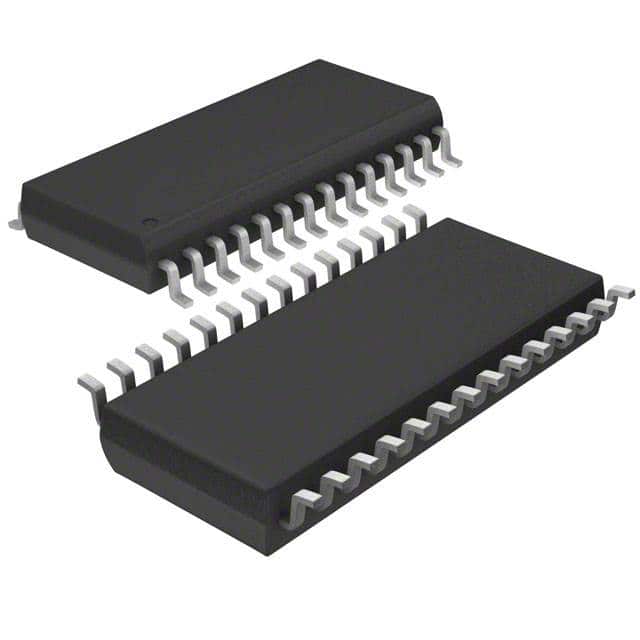
Texas Instruments DIT4096IPW
- Part No.:
- DIT4096IPW
- Manufacturer:
- Texas Instruments
- Category:
- Audio Special Purpose
- Package:
- 28-TSSOP (0.173", 4.40mm Width)
- Datasheet:
-
 DIT4096IPW.pdf
- Description:
- IC LINE DRIVER 28TSSOP
- Quantity:
- Payment:

- Shipping:

Inventory:2,845
Please send an inquiry. Send us your inquiry, and we will respond immediately.
Product details
Overview
DIT4096IPW from Texas Instruments is a digital audio transmitter IC compliant with AES-3, IEC-60958, and EIAJ CP1201 standards, supporting up to 96kHz sampling rates, on-chip differential line driver (TX+/TX–), flexible serial audio interface (I²S/Left-/Right-justified), and dual-mode operation (software/hardware control). It serves as the AES-3 encoder and physical layer driver in professional audio digital interconnects.
For engineers reviewing the DIT4096IPW datasheet, DIT4096IPW pinout, DIT4096IPW application, or DIT4096IPW equivalent, key selection considerations include master clock rate support (256fS/384fS/512fS), dual-mode configuration flexibility, differential output compliance, channel status/user data handling, and TSSOP-28 package compatibility with industrial temperature range (–40°C to +85°C).
Technical Context
The DIT4096IPW integrates an AES-3 encoder, Bi-Phase Mark modulator, and balanced line driver. It accepts linear PCM audio via 3-wire serial port (SDATA/SYNC/SCLK) and multiplexes it with channel status, user (U), and validity (V) data into a standardized 192-frame AES-3 stream.
It operates in two mutually exclusive modes: Software mode uses a 4-wire serial control port (CS/CCLK/CDIN/CDOUT) to access 8-bit registers and 24-byte channel status buffer; Hardware mode configures functionality via dedicated pins (FMT0/FMT1/MODE/CLK0/CLK1), eliminating microcontroller dependency for fixed-function applications.
Key Specifications
| Parameter | Value and Actual Design Meaning |
|---|---|
| AES-3 Compliance | Fully compliant with AES-3, IEC-60958, and EIAJ CP1201 - ensures interoperability with professional and consumer digital audio receivers. |
| Max Sampling Rate | 96kHz - supports high-resolution audio formats including DVD-Audio and studio-grade recording workflows. |
| Master Clock Input | 256fS, 384fS, or 512fS - enables precise timing alignment with common audio system clocks (e.g., 24.576MHz at 96kHz). |
| Line Driver Output | Differential TX+/TX– with ±30mA drive capability - meets AES-3 electrical requirements for twisted-pair cable transmission up to 10m. |
| Supply Voltages | VDD = +4.5V to +5.5V (nominal +5V); VIO = +2.7V to VDD - supports mixed-voltage system integration with 3.3V or 5V logic domains. |
| Operating Temperature | –40°C to +85°C - qualified for industrial and broadcast equipment environments without derating. |
| Dynamic Current | 22mA IDD at 96kHz - enables accurate power budgeting for real-time audio transmission subsystems. |
Pinout & Package
TSSOP-28 package (PW suffix), 4.4mm × 9.7mm body, 0.65mm pitch, exposed thermal pad not electrically connected.
| Pin/Terminal | Circuit Role | Design Meaning |
|---|---|---|
| 17, 18 | TX–, TX+ | Differential AES-3 output pair - drives transformer-coupled or direct-connected balanced transmission lines per AES-3 spec. |
| 11, 12, 13 | SCLK, SYNC, SDATA | Audio serial port interface - accepts I²S/Left-/Right-justified PCM data with frame sync and bit clock. |
| 2, 3, 4, 5 | CDOUT, CCLK, CDIN, CS | Serial control port (Software mode only) - enables register read/write and channel status buffer access via SPI-like protocol. |
| 28 | MODE | Mode selection input - logic low = Software mode; logic high = Hardware mode; determines pin function mapping and configuration method. |
| 6 | MCLK | Master clock input - provides timing reference for internal AES-3 encoding, SCLK generation, and sample rate derivation. |
| 15 | RST | Active-low hardware reset - forces internal registers to default state and holds TX+/TX– at ground until SYNC edge detection. |
| 7, 19 | VIO, VDD | Separate I/O and core supplies - allows interfacing with 3.3V controllers while maintaining +5V core logic integrity. |
Key Features
| Feature | Design Value |
|---|---|
| Dual Control Architecture | Hardware mode eliminates MCU dependency using dedicated pins (FMT0/FMT1/CLK0/CLK1); Software mode enables full configurability via serial control port. |
| Flexible Audio Format Support | I²S, Left-Justified, Right-Justified (16/18/20/24-bit) - accommodates diverse DSP, ADC, and decoder outputs without external format conversion. |
| On-Chip AES-3 Encoder | Generates full 192-frame channel status block with programmable PRO/COPY/AUDIO/EMPH bits - satisfies professional and consumer metadata requirements. |
| Integrated Differential Driver | Meets AES-3 output voltage swing (±2.5V into 110Ω) and common-mode rejection specs - reduces need for external line drivers or transformers. |
| Channel Status Handling | 24-byte buffer (Software mode) or dedicated pin inputs (CSS/COPY/L/AUDIO/EMPH in Hardware mode) - supports both dynamic and static status configuration. |
| Low-Power Operation | 2μA quiescent current in power-down mode - enables energy-efficient standby states in battery-backed or always-on audio systems. |
Applications
| Digital Mixing Consoles | Digital Audio Workstations |
|---|---|
Use Scenario: Transmitting multi-channel PCM from FPGA-based mixing engine to AES-3-equipped stage boxes or monitor controllers. IC Role / Device Role / Timing Role: AES-3 encoder and physical layer transmitter - converts parallel audio data into compliant serial stream with embedded channel status and user metadata. Use Value: Eliminates need for discrete encoder + line driver ICs; supports 96kHz operation required for high-fidelity live sound processing. |
Use Scenario: Connecting audio interface ASIC to external digital recorder or monitoring system via AES-3 coaxial or optical link. IC Role / Device Role / Timing Role: Digital audio transmitter - provides bit-accurate, low-jitter AES-3 output synchronized to host MCLK and frame timing. Use Value: Ensures interoperability with Pro Tools, Nuendo, and other DAWs requiring strict IEC-60958 compliance and 24-bit/96kHz capability. |
| Broadcast Studio Equipment | A/V Receivers |
Use Scenario: Embedding audio from video processing pipeline into AES-3 stream for routing over SDI-embedded or dedicated digital audio infrastructure. IC Role / Device Role / Timing Role: Professional digital audio transmitter - generates CRC-protected AES-3 frames with PRO flag enabled and accurate sample rate locking. Use Value: Meets SMPTE 276M and EBU R68-2000 broadcast timing and metadata requirements without external logic. |
Use Scenario: Receiving decoded Dolby Digital or DTS bitstream from HDMI receiver and retransmitting as AES-3 to external DAC or powered speakers. IC Role / Device Role / Timing Role: Consumer digital audio transmitter - encodes PCM output with consumer-mode channel status (COPY=0, PRO=0) and pre-emphasis control. Use Value: Enables seamless integration with legacy AV receivers lacking native HDMI audio passthrough, preserving 5.1/7.1 channel integrity. |
Equivalent & Alternatives
The following parts are listed as comparable options for similar digital audio transmitter applications.
| Alternative Part | Technical Difference | Application Difference | Selection Advice |
|---|---|---|---|
| CS8406-DZZ | Single 3.3V supply (VDD = VIO = 3.3V); no hardware mode; supports S/PDIF only (not AES-3 differential) | Limited to consumer S/PDIF coaxial/optical output; lacks professional AES-3 compliance and differential drive | Select when cost-sensitive consumer audio design requires only S/PDIF and 3.3V operation. |
| AK4117VT | Supports 192kHz max sampling rate; includes jitter reduction PLL; requires external line driver for AES-3 | Higher sample rate capability but adds BOM complexity and board space due to external driver requirement | Select when ultra-high-resolution audio (192kHz) is mandatory and system-level jitter tolerance is tight. |
Compared with CS8406-DZZ and AK4117VT, the DIT4096IPW uniquely delivers full AES-3 differential compliance in a single TSSOP-28 package with dual-mode configurability - enabling both MCU-based flexibility and MCU-free simplicity without sacrificing professional interface fidelity.
Availability
DIT4096IPW is available at Aetrix Electronics and suitable for digital mixing consoles, broadcast studio equipment, and A/V receivers requiring stable component supply across extended production lifecycles.
Supply support for DIT4096IPW includes scheduled delivery planning, volume procurement assistance, BOM continuity management, traceable sourcing, and lifecycle availability coordination for OEM customers, industrial embedded developers, connected-device designers, and electronics production programs.
Manufacturer
Texas Instruments is a global semiconductor leader specializing in analog, embedded processing, and digital signal technologies, with decades of leadership in precision audio and industrial interface solutions.
The DIT4096IPW belongs to TI's professional audio interface product line, designed specifically to simplify AES-3 implementation in broadcast, studio, and high-end consumer equipment where standard compliance and signal integrity are critical.
FAQ
What is the maximum sampling frequency supported by the DIT4096IPW?
The DIT4096IPW supports a maximum sampling frequency of 96kHz, as confirmed in the device's Electrical Characteristics table and General Description section. This enables compatibility with high-resolution audio formats used in DVD-Audio, studio recording, and professional broadcast applications. The DIT4096IPW maintains full AES-3 and IEC-60958 compliance at this rate, and its master clock input accepts 256fS, 384fS, or 512fS configurations - for example, 24.576MHz at 96kHz. Operation beyond 96kHz is not supported.
Does the DIT4096IPW require an external line driver for AES-3 output?
No, the DIT4096IPW does not require an external line driver for AES-3 output. It integrates a fully compliant differential line driver on pins TX+ (18) and TX– (17), capable of delivering ±30mA into a 110Ω load with proper common-mode voltage and rise/fall time per AES-3 specifications. The datasheet explicitly states "ON-CHIP DIFFERENTIAL LINE DRIVER" as a key feature and confirms output voltage swing (VDD – 0.7V to VDD) under 30mA load. External transformers remain optional for isolation but are not required for basic compliance.
Can the DIT4096IPW operate without a microcontroller?
Yes, the DIT4096IPW can operate without a microcontroller when configured in Hardware mode (MODE = 1). In this mode, all configuration - including audio format (via FMT0/FMT1), master clock rate (CLK0/CLK1), mono/stereo (MONO/MDAT), and channel status inputs (CSS/COPY/L/AUDIO/EMPH) - is handled through dedicated logic-level pins. The datasheet states "HARDWARE MODE ALLOWS OPERATION WITHOUT A MICROCONTROLLER" as a core feature, and pin descriptions confirm direct control of AES-3 encoding parameters without serial programming.
What audio data formats does the DIT4096IPW support?
The DIT4096IPW supports Philips I²S, Left-Justified, and Right-Justified audio data formats, with word lengths configurable from 16 to 24 bits. In Software mode, format selection is programmable via Control Register 03H (JUS, DELAY, ISCLK, ISYNC bits); in Hardware mode, FMT0/FMT1 pins select among 24-bit Left-Justified, 24-bit I²S, 24-bit Right-Justified, or 16-bit Right-Justified. The datasheet's Table IV and Table V explicitly list these formats, and Figure 4 illustrates timing for all three major justification types - confirming native support without external translation logic.
Is the DIT4096IPW pin-compatible with other TI digital audio transmitters like the DIT4095?
No, the DIT4096IPW is not pin-compatible with the DIT4095 or other TI audio transmitters. The DIT4095 uses a 24-pin SOIC package and lacks several pins present on the DIT4096IPW - including dedicated hardware mode controls (FMT0/FMT1, CSS, COPY, L), mono-mode inputs (MONO, MDAT), and expanded channel status/user data pins (U, V, BLS). Pin count (28 vs. 24), pin functions (e.g., INT, BLSM, EMPH), and package type (TSSOP-28 vs. SOIC-24) differ fundamentally. The datasheets show no shared pinout mapping, and TI does not document drop-in replacement between these devices.
DIT4096IPW Specifications
- Product attributes
- Attribute value
- Manufacturer:
- Texas Instruments
- Series:
- -
- Package/Case:
- 28-TSSOP (0.173", 4.40mm Width)
- Packaging:
- Tube
- Product Status:
- Active
- Function:
- Line Driver
- Applications:
- Pre-Amplifier, Professional Audio
- Number of Channels:
- 1
- Interface:
- SPI
- Voltage - Supply:
- 4.5V ~ 5.5V
- Operating Temperature:
- -40°C ~ 85°C (TA)
- Specifications:
- Differential Output
- Mounting Type:
- Surface Mount
- Grade:
- -
DIT4096IPW FAQ
1.How can I place an order for DIT4096IPW through Aetrix?
Please submit a Request for Quotation (RFQ) for DIT4096IPW on Aetrix. Our sales agent will provide a competitive quotation and guide you through the order confirmation once you accept the terms.
2.Are the price and stock information for DIT4096IPW reliable?
The price and inventory of DIT4096IPW are updated periodically and may fluctuate due to market conditions. Stock and pricing data are typically refreshed every 24 hours. Quotation validity for DIT4096IPW is usually 5 days.
3.What payment methods are accepted for DIT4096IPW?
We accept Wire Transfer, PayPal, Credit Card, Western Union, MoneyGram, and Escrow for DIT4096IPW transactions.
Note: Certain payment methods may incur a processing fee.
4.How is shipping managed for DIT4096IPW?
DIT4096IPW orders can be shipped via leading logistics carriers, including DHL, UPS, FedEx, TNT, or Registered Mail.
Once your DIT4096IPW order is processed, you will receive an email with the shipment details and tracking number.
Note: Tracking information may take up to 24 hours to appear. Express delivery typically takes 3–5 business days.
5.How can I obtain technical support or documentation for DIT4096IPW?
For technical support, including DIT4096IPW datasheets, pinout diagrams, or application guidance, please contact our engineering support team. They can provide detailed documentation and assistance for your DIT4096IPW requirements.
6.How does Aetrix verify that DIT4096IPW is sourced from the original manufacturer or authorized distributors?
All DIT4096IPW products on Aetrix are procured from qualified distributors and authorized channels. Our dedicated quality assurance team conducts strict verification, including traceability checks and, if necessary, third-party testing. This ensures that DIT4096IPW meets industry standards.
7.What is the process for return or replacement of DIT4096IPW?
All DIT4096IPW units undergo pre-shipment inspection (PSI). If there is an issue with DIT4096IPW, returns or replacements are accepted under the following conditions:
1.Quantity discrepancies, incorrect items, or visible external defects (such as breakage or corrosion), acknowledged by Aetrix.
2.The issue is reported within 90 days of delivery.
3.The DIT4096IPW part is unused and in its original packaging.
Return procedure for DIT4096IPW:
1.Submit a request within 90 days.
2.Obtain a Return Material Authorization (RMA) from Aetrix.
DIT4096IPW Tags
-
SA571DR2G
onsemi
-
ADAU7002ACBZ-R7
Analog Devices Inc.

-
DRV135UA/2K5
Texas Instruments
-
DRV134UA/1K
Texas Instruments
-
DRV134PA
Texas Instruments
-
DRV134UA
Texas Instruments
-
DRV135UA
Texas Instruments
-
SA572DR2G
onsemi
-
PGA2311U/1K
Texas Instruments
-
SI8244BB-D-IS1R
Skyworks Solutions Inc.

-
CS8416K-CZZR
Cirrus Logic Inc.
-
SRC4392IPFBR
Texas Instruments
Tech Hub

A practical engineering guide to 3.3V and 5V logic compatibility, input thresholds, resistor dividers, translator ICs, MOSFET level shifting, I2C pull-ups, timing limits and power-sequencing risks.

The 74HC595 uses push-pull logic outputs, while the TPIC6B595 uses 50 V open-drain DMOS sinks for higher-power loads. This guide compares timing, current limits, 3.3 V interfacing, load wiring, thermal…

The 74HC595 converts serial data into eight stable parallel outputs. This guide covers pin functions, shift and storage timing, OE and MR behavior, drive-current limits, cascading, voltage compatibilit…

A technical comparison of level-sensitive latches and edge-triggered flip-flops, covering timing windows, setup and hold limits, master–slave operation, time borrowing, race-through, HDL inference and…

A D latch stores one bit while Enable controls when data can pass. This reference covers gate-level operation, truth tables, transparency, setup and hold timing, LE versus OE, common ICs and practical …

An SR latch stores one bit through cross-coupled feedback. This engineering reference covers NOR and NAND implementations, truth tables, forbidden-state recovery, gated operation, switch debouncing, fa…

Latch circuits retain one bit through feedback. This technical reference covers SR and D latches, truth tables, transparency, timing limits, latch-versus-flip-flop behavior, applications and common log…

An engineering guide to LED driver operation, constant-current and constant-voltage outputs, linear and switching topologies, dimming, IC selection, calculations, replacement compatibility, and fault c…

Operational amplifier guide covering op amp basics, feedback, ideal vs real op amps, common configurations, buffer circuits, offset, bias current, gain-bandwidth, slew rate, rail-to-rail limits and sel…

Jumper cables guide covering safe connection order, red and black clamp placement, final ground connection, cable gauge, length, clamp quality, copper vs CCA cables, jump starter comparison and battery…


