
 My Inquiry
 My Account


Texas Instruments DLP2010NIRFQJ
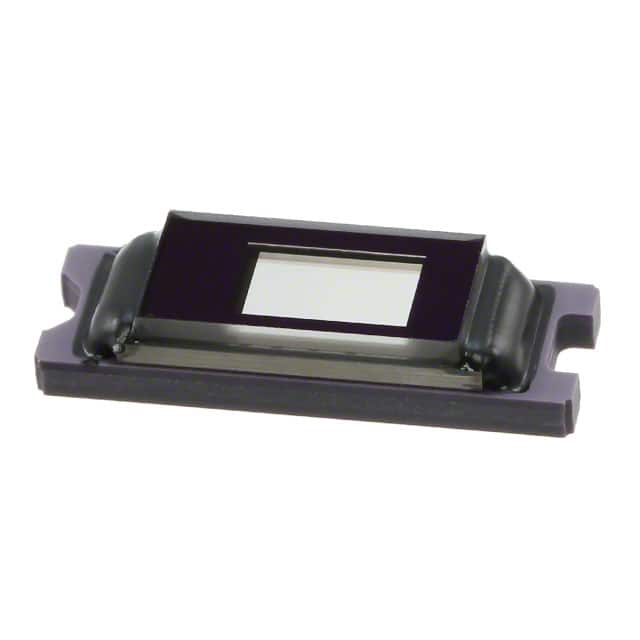
- Part No.:
- DLP2010NIRFQJ
- Manufacturer:
- Texas Instruments
- Category:
- Specialized ICs
- Package:
- 40-BFCLGA
- Datasheet:
-
 DLP2010NIRFQJ.pdf
- Description:
- IC DIG MICROMIRROR DEV 40CLGA
- Quantity:
- Payment:

- Shipping:

Inventory:2,329
Please send an inquiry. Send us your inquiry, and we will respond immediately.
Product details
Overview
DLP2010NIRFQJ from Texas Instruments is a near-infrared (NIR) digital micromirror device (DMD) functioning as a spatial light modulator in spectroscopic and biometric optical engines. It features an 854 × 480 aluminum micromirror array with ±17° tilt, 5.4-µm pitch, and side illumination architecture optimized for NIR steering efficiency. Designed for portable spectrometers and 3D biometrics, it operates with DLPC150/DLPC3470 controllers and DLPA2000/DLPA2005 PMICs.
For engineers reviewing the DLP2010NIRFQJ datasheet, DLP2010NIRFQJ pinout, DLP2010NIRFQJ application, or DLP2010NIRFQJ equivalent, key selection considerations include its 0.2-inch diagonal form factor, SubLVDS DDR interface at up to 600 MHz, LPSDR control interface, six-rail power architecture (VDD/VDDI/VOFFSET/VBIAS/VRESET/VSS), and NIR-specific optical performance (96% window transmission from 700–2000 nm).
Technical Context
The DLP2010NIRFQJ implements a high-speed electrostatic actuation architecture where each of the 409,920 micromirrors (854 × 480) is individually addressable via binary pattern sequencing. Its dual-interface design separates high-bandwidth image data (600-MHz SubLVDS DDR, 4 differential data pairs + clock) from low-speed configuration and status (120-MHz LPSDR SDR, 3-pin serial bus).
Thermal management is defined by package-level thermal resistance (7.9°C/W from active array to TP1), strict voltage delta limits (e.g., |VBIAS – VRESET| ≤ 33 V), and derated array temperature limits dependent on landed-duty cycle - requiring precise coordination between optical illumination profile, electrical biasing, and heatsinking in NIR instrumentation.
Key Specifications
| Parameter | Value and Actual Design Meaning |
|---|---|
| Array resolution | 854 × 480 aluminum micromirrors - enables WVGA-class NIR pattern projection with sub-5.4-µm pixel pitch for high spectral fidelity in compact optics. |
| Optical wavelength range | 700–2500 nm - supports broad NIR chemical analysis; 96% nominal window transmission (700–2000 nm), 90% (2000–2500 nm). |
| High-speed interface | 600-MHz SubLVDS DDR - delivers up to 2880 binary patterns/sec using 4 differential data lanes and differential clock for noise-immune data streaming. |
| Control interface | 120-MHz LPSDR SDR - provides bidirectional configuration, status readback (LS_RDATA), and asynchronous reset (DMD_DEN_ARSTZ) per JEDEC JESD209B. |
| Power supply rails | Six independent supplies: VDD (1.8 V LVCMOS), VDDI (1.8 V SubLVDS), VOFFSET (10 V HVCMOS), VBIAS (+18 V mirror bias), VRESET (–14 V mirror reset), VSS (ground). |
| Package | FQJ - 40-pin ceramic land grid array (CLGA), 15.9 mm × 5.3 mm × 4.0 mm body size optimized for portable NIR instrument integration. |
| Max operational array temp | 40–70°C (derated by landed duty cycle) - requires thermal modeling using TP1 measurement and 7.9°C/W θJA to avoid mirror reliability degradation. |
Pinout & Package
FQJ is a 40-pin ceramic land grid array (CLGA) package with bottom-surface contact pads. The device requires precise mechanical mounting to maintain optical alignment and thermal path integrity in NIR optical engines.
| Pin/Terminal | Circuit Role | Design Meaning |
|---|---|---|
| D_P(0)–D_P(3), D_N(0)–D_N(3) | SubLVDS DDR data inputs | Four differential data lanes carrying high-speed pattern data; require matched 100-Ω differential PCB traces and internal 100-Ω termination. |
| DCLK_P / DCLK_N | SubLVDS DDR clock input | Differential 600-MHz clock reference; timing-critical for setup/hold compliance (3 ns window) and high-speed training scan alignment. |
| LS_CLK, LS_WDATA, LS_RDATA | LPSDR control interface | Single-ended 120-MHz serial bus: LS_CLK clocks writes, LS_WDATA carries commands, LS_RDATA returns status or register reads. |
| DMD_DEN_ARSTZ | Asynchronous reset input | Active-low signal that forces all micromirrors into reset state; must be held high for normal operation and synchronized with controller boot sequence. |
| VDD, VDDI, VOFFSET, VBIAS, VRESET, VSS | Power and ground terminals | Six isolated supply domains - VDD/VDDI for logic, VOFFSET for HVCMOS core, VBIAS/VRESET for mirror electrode biasing, VSS common return. |
Key Features
| Feature | Design Value |
|---|---|
| Side-illumination architecture | Enables compact optical engine design by allowing collimated NIR light to enter perpendicular to micromirror plane - reduces system footprint vs. front-illuminated alternatives. |
| Polarization-independent aluminum mirrors | Eliminates polarization sensitivity in NIR spectral analysis, ensuring consistent modulation efficiency regardless of incident light polarization state. |
| Programmable spectrum generation | Supports compressive sensing and wavelength-selective illumination via per-mirror binary pattern sequencing - replaces costly InGaAs linear arrays in portable spectrometers. |
| Optimized for portable instruments | 15.9 mm × 5.3 mm × 4.0 mm FQJ CLGA package with thermal resistance of 7.9°C/W - enables battery-powered NIR analyzers with <140 mW total power dissipation. |
| Dedicated chipset co-design | Guaranteed interoperability with TI's DLPC150/DLPC3470 controllers and DLPA2000/DLPA2005 PMICs - ensures correct power sequencing, timing margins, and bias voltage regulation. |
Applications
| Portable NIR Spectrometers | 3D Facial Biometrics |
|---|---|
|
Use Scenario: Handheld chemical analyzer performing real-time material identification via diffuse reflectance NIR spectroscopy. IC Role / Device Role / Timing Role: DLP2010NIRFQJ acts as programmable spectral filter - sequentially illuminating sample with discrete NIR wavelengths and directing reflected light to single-element detector. Use Value: Replaces expensive InGaAs linear arrays with cost-effective single-pixel detection while maintaining >200 cm⁻¹ spectral resolution and enabling field-deployable battery life. |
Use Scenario: Mobile device depth-sensing module for secure facial authentication under variable ambient lighting. IC Role / Device Role / Timing Role: DLP2010NIRFQJ projects structured NIR dot patterns onto face; time-of-flight or triangulation calculates 3D geometry from camera-captured distortion. Use Value: Enables sub-mm depth accuracy at <1 W optical power using side-illuminated, polarization-insensitive mirrors - critical for low-power consumer electronics. |
| Infrared Scene Projection | Optical Choppers for Laser Systems |
|
Use Scenario: Laboratory-grade infrared scene projector simulating thermal signatures for IR camera calibration and missile seeker testing. IC Role / Device Role / Timing Role: DLP2010NIRFQJ modulates broadband NIR radiation from blackbody source to generate dynamic, high-frame-rate thermal scenes. Use Value: Delivers >2880 Hz binary pattern rate and 96% window transmission across 700–2000 nm - enabling realistic simulation of fast-moving targets with high radiometric fidelity. |
Use Scenario: Precision laser modulation in analytical instrumentation requiring stable, jitter-free NIR beam interruption. IC Role / Device Role / Timing Role: DLP2010NIRFQJ functions as solid-state optical chopper - rapidly toggling NIR laser path via mirror tilt synchronization with external trigger. Use Value: Achieves <15 ns output propagation delay (LS_CLK to LS_RDATA) and ±17° mirror tilt with nanosecond-level repeatability - eliminating mechanical wear and vibration in metrology systems. |
Equivalent & Alternatives
The following parts are listed as comparable options for similar spatial light modulation applications.
| Alternative Part | Technical Difference | Application Difference | Selection Advice |
|---|---|---|---|
| DLP2010QVGA | Visible-light-optimized variant (400–700 nm); lower NIR transmission (≤85% at 700 nm); identical 854 × 480 array and FQJ package. | Designed for visible-light projectors and machine vision - unsuitable for NIR spectroscopy due to reduced quantum efficiency beyond 700 nm. | Select DLP2010QVGA only when operating exclusively in visible spectrum; DLP2010NIRFQJ is mandatory for 700–2500 nm applications. |
| DLP3010NIR | Larger 0.3-inch array (1280 × 720), higher resolution; same NIR-optimized window and bias architecture; uses FQK (48-pin) package. | Targets high-resolution NIR imaging and larger-field spectroscopy - requires redesigned optics, PCB layout, and thermal interface due to larger footprint and higher power. | Choose DLP3010NIR for enhanced spectral resolution or larger FOV; retain DLP2010NIRFQJ for space-constrained portable designs where 0.2-inch form factor is critical. |
Compared with DLP2010QVGA and DLP3010NIR, the DLP2010NIRFQJ uniquely balances NIR-optimized optical efficiency, WVGA resolution, and ultra-compact FQJ packaging - making it the sole TI DMD qualified for battery-powered, handheld NIR analyzers requiring <15.9 mm width and full 700–2500 nm coverage.
Availability
DLP2010NIRFQJ is available at Aetrix Electronics and suitable for portable NIR spectrometers, 3D biometric sensors, and infrared scene projection systems requiring stable component supply, long-term lifecycle support, and traceable sourcing for medical and industrial certification.
Supply support for DLP2010NIRFQJ includes scheduled delivery planning, volume procurement assistance, BOM continuity management, traceable sourcing, and lifecycle availability coordination for OEM customers, industrial embedded developers, connected-device designers, and electronics production programs.
Manufacturer
Texas Instruments is a global semiconductor company specializing in analog, embedded processing, and digital light processing technologies with over 50 years of leadership in precision analog and optoelectronic solutions.
The DLP2010NIRFQJ belongs to TI's Digital Light Processing™ (DLP) NIR product line, engineered specifically for compact, high-efficiency near-infrared spatial light modulation in portable analytical and biometric instrumentation.
FAQ
What is the primary optical function of the DLP2010NIRFQJ in an NIR spectroscopy system?
The DLP2010NIRFQJ serves as a programmable spectral filter in NIR spectroscopy systems. It steers near-infrared light (700–2500 nm) using its 854 × 480 aluminum micromirror array to sequentially illuminate samples with discrete wavelengths, enabling single-pixel detection architectures that replace costly InGaAs linear arrays. Its 96% window transmission in the 700–2000 nm band directly contributes to signal-to-noise ratio and measurement speed in the DLP2010NIRFQJ-based optical engine.
Which controller ICs are explicitly validated to operate with the DLP2010NIRFQJ?
The DLP2010NIRFQJ is explicitly validated for use with TI's DLPC150 and DLPC3470 display controllers, as documented in the DLPS119 datasheet. These controllers provide guaranteed timing compliance for both the 600-MHz SubLVDS DDR interface and the 120-MHz LPSDR control interface, including proper power-up sequencing, pattern buffer management, and reset coordination. Using non-TI controllers requires full electrical and timing validation of the DLP2010NIRFQJ's six-rail power architecture and dual-interface timing windows.
What are the absolute maximum voltage limits between power rails for reliable DLP2010NIRFQJ operation?
The DLP2010NIRFQJ imposes strict inter-rail voltage limits to prevent excessive current draw and device damage: |VDDI – VDD| ≤ 0.3 V, |VBIAS – VOFFSET| ≤ 11 V, and |VBIAS – VRESET| ≤ 34 V. These limits are specified in Section 6.1 of the DLPS119 datasheet and must be enforced during power supply design and sequencing. Exceeding any of these deltas risks permanent damage to internal bias circuitry - a critical constraint not present in general-purpose logic ICs and unique to the DLP2010NIRFQJ's HVCMOS architecture.
How does the DLP2010NIRFQJ's thermal design differ from standard ICs, and what is the key thermal metric?
Unlike conventional ICs rated by junction-to-ambient θJA, the DLP2010NIRFQJ's thermal performance is defined by "active area to test point TP1" thermal resistance of 7.9°C/W (Section 6.5). This reflects heat conduction from the micromirror array through the ceramic substrate to the mounting surface - requiring mechanical integration with a heatsink or cold plate. The DLP2010NIRFQJ's array temperature must be calculated analytically using TP1 measurements, not measured directly, and derated based on landed-duty cycle per Figure 1 in the datasheet.
Can the DLP2010NIRFQJ be used in visible-light applications, and what is the optical trade-off?
The DLP2010NIRFQJ is optimized for near-infrared operation (700–2500 nm) and is not recommended for visible-light applications. While its aluminum micromirrors are polarization-independent, its window coating and anti-reflection design prioritize NIR transmission - resulting in significantly lower efficiency below 700 nm. For visible-light use, TI specifies the DLP2010QVGA variant, which has different window characteristics and is characterized for 400–700 nm. Using DLP2010NIRFQJ in visible systems sacrifices optical throughput and may violate spectral calibration requirements.
DLP2010NIRFQJ Specifications
- Product attributes
- Attribute value
- Manufacturer:
- Texas Instruments
- Series:
- -
- Package/Case:
- 40-BFCLGA
- Packaging:
- Tray
- Product Status:
- Obsolete
- Programmable:
- Not Verified
- Type:
- Digital Micromirror Device (DMD)
- Applications:
- -
- Mounting Type:
- Surface Mount
- Supplier Device Package:
- 40-CLGA (15.9x5.3)
- Grade:
- -
- Qualification:
- -
DLP2010NIRFQJ FAQ
1.How can I place an order for DLP2010NIRFQJ through Aetrix?
Please submit a Request for Quotation (RFQ) for DLP2010NIRFQJ on Aetrix. Our sales agent will provide a competitive quotation and guide you through the order confirmation once you accept the terms.
2.Are the price and stock information for DLP2010NIRFQJ reliable?
The price and inventory of DLP2010NIRFQJ are updated periodically and may fluctuate due to market conditions. Stock and pricing data are typically refreshed every 24 hours. Quotation validity for DLP2010NIRFQJ is usually 5 days.
3.What payment methods are accepted for DLP2010NIRFQJ?
We accept Wire Transfer, PayPal, Credit Card, Western Union, MoneyGram, and Escrow for DLP2010NIRFQJ transactions.
Note: Certain payment methods may incur a processing fee.
4.How is shipping managed for DLP2010NIRFQJ?
DLP2010NIRFQJ orders can be shipped via leading logistics carriers, including DHL, UPS, FedEx, TNT, or Registered Mail.
Once your DLP2010NIRFQJ order is processed, you will receive an email with the shipment details and tracking number.
Note: Tracking information may take up to 24 hours to appear. Express delivery typically takes 3–5 business days.
5.How can I obtain technical support or documentation for DLP2010NIRFQJ?
For technical support, including DLP2010NIRFQJ datasheets, pinout diagrams, or application guidance, please contact our engineering support team. They can provide detailed documentation and assistance for your DLP2010NIRFQJ requirements.
6.How does Aetrix verify that DLP2010NIRFQJ is sourced from the original manufacturer or authorized distributors?
All DLP2010NIRFQJ products on Aetrix are procured from qualified distributors and authorized channels. Our dedicated quality assurance team conducts strict verification, including traceability checks and, if necessary, third-party testing. This ensures that DLP2010NIRFQJ meets industry standards.
7.What is the process for return or replacement of DLP2010NIRFQJ?
All DLP2010NIRFQJ units undergo pre-shipment inspection (PSI). If there is an issue with DLP2010NIRFQJ, returns or replacements are accepted under the following conditions:
1.Quantity discrepancies, incorrect items, or visible external defects (such as breakage or corrosion), acknowledged by Aetrix.
2.The issue is reported within 90 days of delivery.
3.The DLP2010NIRFQJ part is unused and in its original packaging.
Return procedure for DLP2010NIRFQJ:
1.Submit a request within 90 days.
2.Obtain a Return Material Authorization (RMA) from Aetrix.
DLP2010NIRFQJ Tags
-
CAP200DG-TL
Power Integrations
-
ATSHA204A-MAHDA-T
Microchip Technology

-
ATSHA204A-SSHDA-T
Microchip Technology
-
ATSHA204A-STUCZ-T
Microchip Technology
-
ATECC608B-MAHDA-T
Microchip Technology
-
ATECC608B-MAHCZ-S
Microchip Technology

-
ATECC608B-SSHDA-T
Microchip Technology
-
ATECC608B-MAHDA-S
Microchip Technology
-
ATECC608A-MAHDA-S
Microchip Technology
-
ATECC608B-MAVDA-T
Microchip Technology

-
ATECC608A-SSHDA-T
Microchip Technology
-
ATECC508A-MAHDA-T
Microchip Technology
Tech Hub

A practical engineering guide to 3.3V and 5V logic compatibility, input thresholds, resistor dividers, translator ICs, MOSFET level shifting, I2C pull-ups, timing limits and power-sequencing risks.

The 74HC595 uses push-pull logic outputs, while the TPIC6B595 uses 50 V open-drain DMOS sinks for higher-power loads. This guide compares timing, current limits, 3.3 V interfacing, load wiring, thermal…

The 74HC595 converts serial data into eight stable parallel outputs. This guide covers pin functions, shift and storage timing, OE and MR behavior, drive-current limits, cascading, voltage compatibilit…

A technical comparison of level-sensitive latches and edge-triggered flip-flops, covering timing windows, setup and hold limits, master–slave operation, time borrowing, race-through, HDL inference and…

A D latch stores one bit while Enable controls when data can pass. This reference covers gate-level operation, truth tables, transparency, setup and hold timing, LE versus OE, common ICs and practical …

An SR latch stores one bit through cross-coupled feedback. This engineering reference covers NOR and NAND implementations, truth tables, forbidden-state recovery, gated operation, switch debouncing, fa…

Latch circuits retain one bit through feedback. This technical reference covers SR and D latches, truth tables, transparency, timing limits, latch-versus-flip-flop behavior, applications and common log…

An engineering guide to LED driver operation, constant-current and constant-voltage outputs, linear and switching topologies, dimming, IC selection, calculations, replacement compatibility, and fault c…

Operational amplifier guide covering op amp basics, feedback, ideal vs real op amps, common configurations, buffer circuits, offset, bias current, gain-bandwidth, slew rate, rail-to-rail limits and sel…

Jumper cables guide covering safe connection order, red and black clamp placement, final ground connection, cable gauge, length, clamp quality, copper vs CCA cables, jump starter comparison and battery…


