
 My Inquiry
 My Account


Texas Instruments DLPC3434CZVB
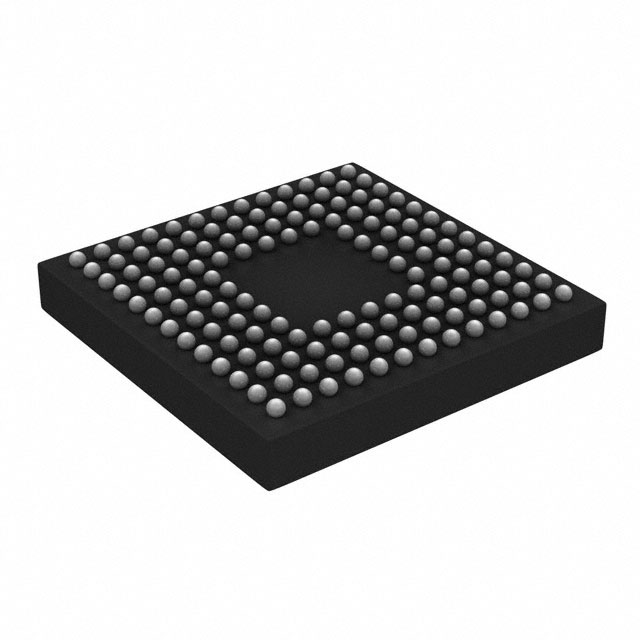
- Part No.:
- DLPC3434CZVB
- Manufacturer:
- Texas Instruments
- Category:
- Display Drivers
- Package:
- 176-VFBGA
- Datasheet:
-
 DLPC3434CZVB.pdf
- Description:
- IC DRVR DISPLAY CNTLR 176NFBGA
- Quantity:
- Payment:

- Shipping:

Inventory:258
Please send an inquiry. Send us your inquiry, and we will respond immediately.
Product details
Overview
DLPC3434CZVB from Texas Instruments is a digital display controller IC designed specifically for the DLP230KP (.23 HD) digital micromirror device (DMD), supporting input resolutions up to 720p at frame rates up to 120 Hz (60 Hz at 720p), with embedded eDRAM, IntelliBright™ image processing, and sub-LVDS DMD interface - deployed in mobile projectors and AR glasses.
For engineers reviewing the DLPC3434CZVB datasheet, DLPC3434CZVB pinout, DLPC3434CZVB application, or DLPC3434CZVB equivalent, key selection criteria include parallel pixel interface timing (PCLK ≤ 155 MHz), DMD sub-LVDS electrical compliance, CAIC/ LABB illumination control capability, and compatibility with DLPA2000/DLPA2005/DLPA3000 PMICs.
Technical Context
The DLPC3434CZVB implements a dedicated DMD interface with dual-speed signaling: low-speed (LS) serial control for configuration and bias management, and high-speed (HS) sub-LVDS differential data lanes for pixel streaming. It integrates programmable degamma, 4:2:2 to 4:4:4 chroma interpolation, and 1D keystone correction within its pixel processing pipeline.
Its system-level integration includes I²C-controlled LED current regulation, GPIO-driven actuator interfaces, SPI flash boot support, and one-frame latency operation. Power sequencing requires coordination with DLPA-series PMICs via RESETZ and PARKZ signals to ensure safe DMD parking and bias shutdown.
Key Specifications
| Parameter | Value and Actual Design Meaning |
|---|---|
| Input Resolution | Up to 1280×720 (720p); defines maximum native video source compatibility without scaling artifacts. |
| Max Frame Rate | 120 Hz at lower resolutions; enables smooth motion rendering in AR and mobile projection applications. |
| Pixel Clock | Up to 155 MHz; sets upper limit on parallel RGB888 bandwidth (24-bit @ 155 MHz = ~3.72 Gbps). |
| DMD Interface | Sub-LVDS HS + LS serial; ensures reliable high-speed pixel data transfer and precise DMD bias control. |
| eDRAM Capacity | Embedded frame memory; eliminates need for external frame buffer, reducing BOM and PCB area. |
| Illumination Control | Content Adaptive Illumination Control (CAIC) + Local Area Brightness Boost (LABB); dynamically adjusts LED drive per scene region. |
| Processing Latency | One frame; critical for real-time interactive displays like AR glasses and gesture-controlled projectors. |
Pinout & Package
DLPC3434CZVB is housed in a 176-pin NFBGA package with 7.00 mm × 7.00 mm body size and 0.5 mm pitch. The package supports fine-pitch routing for high-speed DMD sub-LVDS lanes and parallel RGB data buses.
| Pin/Terminal | Circuit Role | Design Meaning |
|---|---|---|
| PDATA_0–PDATA_23 | Parallel RGB888 input data bus | 24-bit pixel data path; supports configurable bit mapping for YUV/RGB formats and 3D frame interleaving. |
| PCLK, HSYNC_CS, VSYNC_WE | Timing synchronization inputs | Defines active video window; polarity programmable in firmware to match host video source timing. |
| DMD_HS_WDATA_A–H_P/N | DMD sub-LVDS pixel data lanes | Differential high-speed write data; lane count and assignment determined by software configuration per Table 7-8. |
| DMD_HS_CLK_P/N | DMD sub-LVDS clock pair | Source-synchronous clock for HS data capture; requires matched trace length to DMD_HS_WDATA lanes. |
| RESETZ, PARKZ | System control inputs | Active-low reset and fast DMD park triggers; must be synchronized with DLPA-series PMIC outputs for safe power sequencing. |
| HOST_IRQ | Interrupt output | Signals host processor on event completion (e.g., frame sync, error, or command execution finish). |
| IIC0_SDA/IIC0_SCL | I²C control interface | Configures display parameters, LED current, splash screen, and rotation; operates at standard/fast-mode speeds. |
Key Features
| Feature | Design Value |
|---|---|
| IntelliBright™ Image Processing | Real-time pixel-level luminance optimization using local histogram analysis and dynamic contrast enhancement. |
| CAIC + LABB Illumination Control | Reduces average LED power by >30% while preserving perceived brightness in high-dynamic-range scenes. |
| 1D Keystone Correction | Compensates trapezoidal distortion from off-axis projection without external optics or GPU load. |
| Embedded eDRAM Frame Buffer | Enables single-chip display subsystem design; eliminates external SDRAM and associated signal integrity challenges. |
| Auto DMD Parking at Power Down | Ensures micromirrors settle into safe mechanical state before power removal, extending DMD lifetime beyond 100k cycles. |
Applications
| Mobile Projector | Augmented Reality Glasses |
|---|---|
Use Scenario: Pocket-sized pico projector integrated into smartphones or standalone units for on-the-go presentations and entertainment. IC Role / Device Role / Timing Role: Primary display controller managing DMD timing, pixel data conversion, and LED illumination synchronization. Use Value: Enables 720p resolution at <1W system power via CAIC/LABB and one-frame latency, meeting portable thermal and battery constraints. |
Use Scenario: Near-eye display in lightweight AR eyewear requiring low-latency, high-brightness micro-projection onto waveguides. IC Role / Device Role / Timing Role: Real-time image processor and DMD driver with sub-millisecond response for head-tracking alignment. Use Value: One-frame latency and 1D keystone correction eliminate motion-to-photon delay and optical misalignment artifacts. |
| Smart Display | Industrial Display |
Use Scenario: Embedded display module in smart home hubs, kiosks, or automotive infotainment with compact optical engine requirements. IC Role / Device Role / Timing Role: Central display controller interfacing HDMI/FPGA video sources to DLP230KP DMD and DLPA PMIC. Use Value: Programmable splash screens, LED current control, and display rotation simplify UI customization across product variants. |
Use Scenario: Ruggedized human-machine interface (HMI) in factory automation or medical equipment needing high reliability and ambient-light readability. IC Role / Device Role / Timing Role: Robust display controller with embedded frame memory and thermal-aware illumination control. Use Value: CAIC maintains consistent brightness under varying ambient light; eDRAM ensures glitch-free operation during CPU interrupts. |
Equivalent & Alternatives
The following parts are listed as comparable options for similar display controller applications.
| Alternative Part | Technical Difference | Application Difference | Selection Advice |
|---|---|---|---|
| DLPC3430CZVB | Supports DLP230NP DMD only; lacks CAIC, LABB, and 1D keystone; max PCLK = 125 MHz. | Targeted at cost-sensitive, non-AR mobile projectors with static content and fixed projection geometry. | Select DLPC3430CZVB only if DLP230NP DMD is used and advanced illumination/image processing is unnecessary. |
| DLPC3436CZVB | Supports DLP230KP DMD with identical feature set but adds FPD-Link III input interface and enhanced thermal management. | Suitable for automotive HUDs and industrial systems requiring EMI-robust serialized video input and extended temperature operation. | Choose DLPC3436CZVB when FPD-Link III connectivity or AEC-Q200 qualification is required; otherwise DLPC3434CZVB suffices. |
Compared with DLPC3430CZVB, DLPC3434CZVB delivers higher resolution support, advanced illumination control, and keystone correction - essential for AR and adaptive projection. Compared with DLPC3436CZVB, it omits FPD-Link III and extended temp support, offering optimal cost/performance balance for consumer mobile and smart display use cases.
Availability
DLPC3434CZVB is available at Aetrix Electronics and suitable for mobile projector, augmented reality glasses, and smart display applications requiring stable component supply, long-term lifecycle assurance, and TI-authorized traceability.
Supply support for DLPC3434CZVB includes scheduled delivery planning, volume procurement assistance, BOM continuity management, traceable sourcing, and lifecycle availability coordination for OEM customers, industrial embedded developers, connected-device designers, and electronics production programs.
Manufacturer
Texas Instruments is a global semiconductor company specializing in analog, embedded processing, and digital signal processing technologies, with leadership in DLP® display solutions since 1996.
The DLPC3434CZVB belongs to TI's DLP® Pico™ display controller product line, engineered for ultra-compact, low-power HD projection systems targeting mobile, wearable, and embedded visual interfaces.
FAQ
What is the primary function of the DLPC3434CZVB in a DLP230KP-based display system?
The DLPC3434CZVB serves as the core digital display controller for the DLP230KP DMD, handling pixel data reception (via parallel RGB interface), real-time image processing (including IntelliBright™, CAIC, LABB, and keystone correction), DMD timing generation, and LED illumination control. It directly manages the DMD's sub-LVDS and low-speed interfaces, enabling full HD projection in compact form factors. DLPC3434CZVB is not a standalone video processor - it requires pairing with a DLPA-series PMIC for power and LED drive.
Does the DLPC3434CZVB support HDMI or MIPI DSI input natively?
No, the DLPC3434CZVB does not include native HDMI or MIPI DSI receivers. Its primary video input is a 24-bit parallel RGB interface with PCLK up to 155 MHz. To accept HDMI or DSI sources, an external FPGA or bridge IC (e.g., TI TFP410 for HDMI or Synopsys DSI-to-parallel converters) must convert the signal to the DLPC3434CZVB's parallel format. The datasheet explicitly reserves DSI-related pins (DD0P/N through DD3P/N) as "disconnected".
What is the role of the PARKZ pin on the DLPC3434CZVB, and how must it be driven?
The PARKZ pin (C13) is an active-low input that initiates fast DMD parking when imminent power loss is detected. It must be driven low by the DLPA-series PMIC's interrupt output (e.g., DLPA2005 INTZ) to trigger immediate mirror settling before power collapse. TI specifies PARKZ assertion time ≤ 20 ms and warns that repeated fast park operations reduce DMD lifetime versus normal park sequences. DLPC3434CZVB does not generate PARKZ - it only responds to it.
Can the DLPC3434CZVB operate without external flash memory?
No - external SPI flash is mandatory for DLPC3434CZVB operation. The controller boots from external flash containing firmware, display configuration tables, gamma curves, and calibration data. The device lacks internal non-volatile program storage. TI specifies support for standard SPI NOR flash devices with clock frequencies up to 50 MHz, and the flash interface pins (SPI0_CLK, SPI0_DIN, SPI0_DOUT, SPI0_CSZ0/1) are dedicated and non-multiplexed.
How does the DLPC3434CZVB achieve one-frame latency, and why is this critical?
The DLPC3434CZVB achieves one-frame latency through tightly coupled hardware pipelines: parallel pixel data is processed in-line (not buffered across frames) by the eDRAM-based image engine, with no intermediate frame stores. This enables output synchronization within a single video frame period - essential for AR glasses where motion-to-photon delay causes nausea and misalignment. DLPC3434CZVB's architecture avoids software-rendered overlays or GPU-dependent compositing, delivering deterministic timing for real-time interaction.
DLPC3434CZVB Specifications
- Product attributes
- Attribute value
- Manufacturer:
- Texas Instruments
- Series:
- -
- Package/Case:
- 176-VFBGA
- Packaging:
- Tray
- Product Status:
- Active
- Display Type:
- DLP
- Configuration:
- -
- Interface:
- I2C, Parallel
- Digits or Characters:
- -
- Current - Supply:
- -
- Voltage - Supply:
- -
- Operating Temperature:
- -
- Grade:
- -
- Qualification:
- -
- Mounting Type:
- Surface Mount
- Supplier Device Package:
- 176-NFBGA (7x7)
DLPC3434CZVB FAQ
1.How can I place an order for DLPC3434CZVB through Aetrix?
Please submit a Request for Quotation (RFQ) for DLPC3434CZVB on Aetrix. Our sales agent will provide a competitive quotation and guide you through the order confirmation once you accept the terms.
2.Are the price and stock information for DLPC3434CZVB reliable?
The price and inventory of DLPC3434CZVB are updated periodically and may fluctuate due to market conditions. Stock and pricing data are typically refreshed every 24 hours. Quotation validity for DLPC3434CZVB is usually 5 days.
3.What payment methods are accepted for DLPC3434CZVB?
We accept Wire Transfer, PayPal, Credit Card, Western Union, MoneyGram, and Escrow for DLPC3434CZVB transactions.
Note: Certain payment methods may incur a processing fee.
4.How is shipping managed for DLPC3434CZVB?
DLPC3434CZVB orders can be shipped via leading logistics carriers, including DHL, UPS, FedEx, TNT, or Registered Mail.
Once your DLPC3434CZVB order is processed, you will receive an email with the shipment details and tracking number.
Note: Tracking information may take up to 24 hours to appear. Express delivery typically takes 3–5 business days.
5.How can I obtain technical support or documentation for DLPC3434CZVB?
For technical support, including DLPC3434CZVB datasheets, pinout diagrams, or application guidance, please contact our engineering support team. They can provide detailed documentation and assistance for your DLPC3434CZVB requirements.
6.How does Aetrix verify that DLPC3434CZVB is sourced from the original manufacturer or authorized distributors?
All DLPC3434CZVB products on Aetrix are procured from qualified distributors and authorized channels. Our dedicated quality assurance team conducts strict verification, including traceability checks and, if necessary, third-party testing. This ensures that DLPC3434CZVB meets industry standards.
7.What is the process for return or replacement of DLPC3434CZVB?
All DLPC3434CZVB units undergo pre-shipment inspection (PSI). If there is an issue with DLPC3434CZVB, returns or replacements are accepted under the following conditions:
1.Quantity discrepancies, incorrect items, or visible external defects (such as breakage or corrosion), acknowledged by Aetrix.
2.The issue is reported within 90 days of delivery.
3.The DLPC3434CZVB part is unused and in its original packaging.
Return procedure for DLPC3434CZVB:
1.Submit a request within 90 days.
2.Obtain a Return Material Authorization (RMA) from Aetrix.
DLPC3434CZVB Tags
-
PCA8561AHN/AY
NXP Semiconductors
-
SN74LS47N
Texas Instruments

-
PCF85176T/1Y
NXP Semiconductors
-
PCF85176H/1,518
NXP Semiconductors
-
BU9796AMUV-E2
Rohm Semiconductor
-
PCA85176H/Q900/1,5
NXP Semiconductors
-
PCF8537AH/1,518
NXP Semiconductors
-
LM3914VX/NOPB
Texas Instruments
-
PCF85134HL/1,118
NXP Semiconductors
-
AS1115-BSST
ams-OSRAM USA INC.
-
PCA8534AH/Q900/1,5
NXP Semiconductors
-
LM3914V/NOPB
Texas Instruments
Tech Hub

A practical engineering guide to 3.3V and 5V logic compatibility, input thresholds, resistor dividers, translator ICs, MOSFET level shifting, I2C pull-ups, timing limits and power-sequencing risks.

The 74HC595 uses push-pull logic outputs, while the TPIC6B595 uses 50 V open-drain DMOS sinks for higher-power loads. This guide compares timing, current limits, 3.3 V interfacing, load wiring, thermal…

The 74HC595 converts serial data into eight stable parallel outputs. This guide covers pin functions, shift and storage timing, OE and MR behavior, drive-current limits, cascading, voltage compatibilit…

A technical comparison of level-sensitive latches and edge-triggered flip-flops, covering timing windows, setup and hold limits, master–slave operation, time borrowing, race-through, HDL inference and…

A D latch stores one bit while Enable controls when data can pass. This reference covers gate-level operation, truth tables, transparency, setup and hold timing, LE versus OE, common ICs and practical …

An SR latch stores one bit through cross-coupled feedback. This engineering reference covers NOR and NAND implementations, truth tables, forbidden-state recovery, gated operation, switch debouncing, fa…

Latch circuits retain one bit through feedback. This technical reference covers SR and D latches, truth tables, transparency, timing limits, latch-versus-flip-flop behavior, applications and common log…

An engineering guide to LED driver operation, constant-current and constant-voltage outputs, linear and switching topologies, dimming, IC selection, calculations, replacement compatibility, and fault c…

Operational amplifier guide covering op amp basics, feedback, ideal vs real op amps, common configurations, buffer circuits, offset, bias current, gain-bandwidth, slew rate, rail-to-rail limits and sel…

Jumper cables guide covering safe connection order, red and black clamp placement, final ground connection, cable gauge, length, clamp quality, copper vs CCA cables, jump starter comparison and battery…


