
 My Inquiry
 My Account


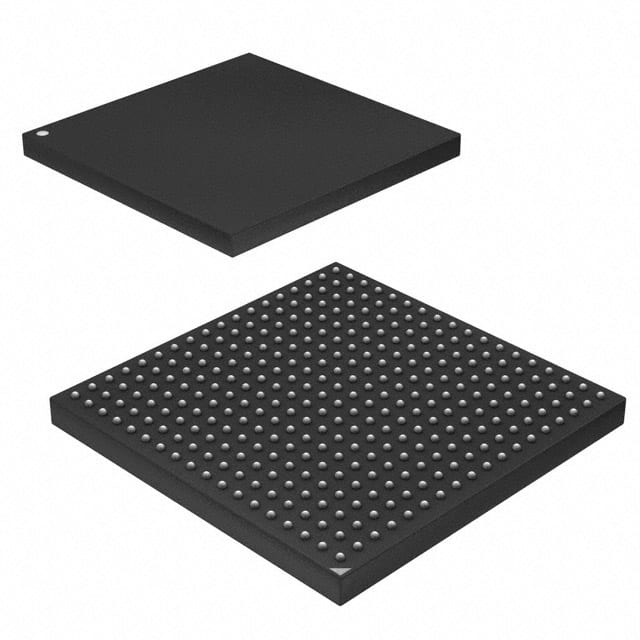
Microchip Technology DM870-TE

- Part No.:
- DM870-TE
- Manufacturer:
- Microchip Technology
- Category:
- Microprocessors
- Package:
- 292-LFBGA
- Datasheet:
-
 DM870-TE.pdf
- Description:
- IC MPU 240MHZ 292LFBGA
- Quantity:
- Payment:

- Shipping:

Inventory:1,828
Please send an inquiry. Send us your inquiry, and we will respond immediately.
Product details
Overview
DM870 from BridgeCo AG is a triple-core networked media processor integrating a 240MHz ARM926EJ system controller, a dedicated 160MHz secure co-processor for DRM enforcement, and a real-time Audio Engine delivering >600 MIPS computational power. It supports Wi-Fi 802.11a/b/g MAC/baseband, Ethernet 10/100, USB 2.0 OTG, SPDIF/I²S/I⁸S audio I/O, CCIR 656 video I/O, and integrated TFT/STN/DSTN LCD control - enabling full-featured networked music stations.
For engineers reviewing the DM870 datasheet, DM870 pinout, DM870 application, or DM870 equivalent, key selection considerations include its multi-core architecture partitioning real-time audio processing, hardware-accelerated DRM execution, and integrated networking peripherals - all in a single 292-ball mBGA package optimized for CE appliance design.
Technical Context
The DM870 implements functional partitioning across three dedicated processing domains: the ARM926EJ handles Linux-based system control and UPnP/DLNA middleware; the proprietary Audio Engine executes SIMD-parallelized real-time decoding (e.g., WMA-Lossless) and audio enhancement; the Secure Processor runs cryptographic primitives (AES, RSA, DTCP-5C) in isolated, tamper-resistant execution space. All cores share a unified memory map via a 16-bit SDRAM/SRAM controller with 256MB SDRAM addressing.
Hardware I/O acceleration includes on-chip Ethernet MAC with MII/RMII PHY interface and 25MHz PHY clock output, dual-role USB 2.0 OTG with 8 endpoints, integrated Wi-Fi baseband requiring only external RF transceiver, and low-jitter DCO-based digital clock recovery eliminating external VCOs for SPDIF and audio sampling.
Key Specifications
| Parameter | Value and Actual Design Meaning |
|---|---|
| CPU Core | ARM926EJ at 240MHz with 16KB instruction + 16KB data cache - enables Linux 2.6 kernel execution and UPnP/DLNA stack without external memory bottleneck. |
| Audio Engine | 160MHz 32-bit RISC + programmable filter bank delivering >600 MIPS - offloads real-time WMA-Lossless decode and audio mixing from main CPU. |
| Secure Processor | 160MHz dedicated core supporting AES, 3DES, RSA, Diffie-Hellman, DTCP-5C - enforces content protection without compromising main CPU performance. |
| Memory Interface | 16-bit SDRAM controller up to 160MHz (256MB address space) + SRAM/NOR/PCMCIA/CompactFlash support - eliminates need for external memory controllers in reference designs. |
| Networking | Ethernet MAC (10/100, MII/RMII), USB 2.0 OTG (480Mbps), integrated 802.11a/b/g MAC/baseband - enables wired/wireless streaming without companion PHY or Wi-Fi chip. |
| Audio I/O | 4× I²S/I⁸S ports (up to 192kHz), 4× SPDIF ports, stereo PWM-DAC with H-bridge mode - supports multi-zone audio output and subwoofer amplification without external DACs. |
| Video & Display | CCIR 656 DVB-SPI interface (8-bit), integrated TFT/STN/DSTN LCD controller (up to 1024×768) - enables direct connection to video encoders and color LCD panels. |
Pinout & Package
292-ball fine-pitch mBGA package (20×20 array, 0.8mm pitch, 17×17mm body size), lead-free, commercial temperature range (0°C to +70°C).
| Pin/Terminal | Circuit Role | Design Meaning |
|---|---|---|
| MII_RXD[3:0] | Ethernet PHY receive data | 4-bit parallel RMII/MII interface - connects directly to external PHY without level-shifting or glue logic. |
| USB_DP / USB_DM | USB 2.0 differential pair | Full-speed/High-speed OTG signaling - supports host/peripheral mode switching via ID pin detection. |
| I2S_SCLK / I2S_WS / I2S_SD | Primary I²S interface signals | Master clock, word select, serial data - supports 192kHz stereo audio with configurable bit depth and format. |
| SPDIF_OUT_A / SPDIF_OUT_B | Dual SPDIF outputs | Two independent S/PDIF streams - enables simultaneous output to main and zone speakers or recording paths. |
| LCD_DATA[17:0] | RGB parallel display bus | 18-bit RGB interface - drives TFT panels up to 1024×768 at 60Hz without external timing controller. |
| SDIO_CMD / SDIO_CLK / SDIO_D[3:0] | SD/SDIO/MMC interface | 4-bit wide SD card interface - supports high-speed SDHC cards for local media storage and firmware updates. |
Key Features
| Feature | Design Value |
|---|---|
| Triple-core architecture | Hardware-isolated execution domains prevent audio latency spikes during DRM authentication or network stack activity. |
| Integrated Wi-Fi baseband | Eliminates need for discrete Wi-Fi SoC - reduces BOM count and PCB area while maintaining IEEE 802.11a/b/g compliance. |
| On-chip DCO for clock recovery | Removes external VCO and loop filter components from SPDIF and audio clock paths - improves jitter performance and simplifies layout. |
| Native NAND flash interface | Direct connection to NAND devices without translation layer - accelerates boot time and reduces firmware update complexity. |
| Real-time Audio Engine SIMD unit | Executes four parallel instruction streams for MP3/WMA/AAC decode - achieves deterministic <10ms audio frame latency under full load. |
Applications
| Internet Radio & Alarm Clock | Networked Music Station |
|---|---|
Use Scenario: Wired or wireless internet radio with FM/AM tuner, alarm functions, and iPod docking. IC Role / Device Role / Timing Role: Central media processor handling UPnP/DLNA streaming, DRM-protected service access (Pandora, Rhapsody), real-time audio decode, and LCD/LED user interface rendering. Use Value: Integrates Wi-Fi, Ethernet, USB OTG, and audio I/O in one IC - reduces system component count by ≥7 compared to discrete MCU + codec + Wi-Fi solutions. |
Use Scenario: Standalone living-room music station delivering PC-originated streaming services without host dependency. IC Role / Device Role / Timing Role: System-on-chip platform executing Linux, UPnP AV control point, audio DSP, secure DRM, and LCD/video output - synchronizing playback, UI, and network timing via on-chip RTC and DCO. Use Value: Enables full DLNA-certified playback with WMA-Lossless decode and DTCP-5C copy protection - meeting premium audio service requirements without external security co-processors. |
| AV Receiver Integration | iPod Docking System |
Use Scenario: Network-enabled AV receiver adding streaming capability to legacy analog/digital inputs. IC Role / Device Role / Timing Role: Media processing coprocessor handling network audio transport, sample rate conversion between SPDIF sources and internal DACs, and UPnP renderer functionality. Use Value: Provides SPDIF input/output, I²S bridging, and real-time SRC - allows seamless integration of streaming audio into multi-source AV signal paths without added latency. |
Use Scenario: High-fidelity iPod dock supporting AirPlay-like streaming, local playback, and synchronized LCD display. IC Role / Device Role / Timing Role: Host processor managing USB OTG enumeration as device (iPod connection) and host (storage access), plus real-time audio decode and PWM-DAC output to headphone/subwoofer amplifier. Use Value: USB 2.0 OTG dual-role support enables bidirectional communication with iPod - allowing both charging and high-bandwidth media transfer without separate USB switch ICs. |
Equivalent & Alternatives
The following parts are listed as comparable options for similar networked media processor applications.
| Alternative Part | Technical Difference | Application Difference | Selection Advice |
|---|---|---|---|
| Marvell 88AP510 | Single-core ARM9 @ 600MHz; no integrated Wi-Fi baseband; requires external Wi-Fi chip; lacks dedicated secure co-processor. | Targeted at higher-performance embedded Linux systems where Wi-Fi is implemented separately; no native DRM acceleration. | Select when higher CPU throughput is required and security/crypto is handled externally or via software-only methods. |
| NXP i.MX31 | ARM11 @ 532MHz; integrated LCD controller and camera interface; no built-in Wi-Fi or secure crypto engine; relies on software-based DRM. | Optimized for multimedia terminals with camera input; lacks hardware-accelerated audio DSP and dedicated security block. | Select for video-centric applications requiring camera support and where Wi-Fi and DRM are implemented via add-on modules. |
Compared with Marvell 88AP510 and NXP i.MX31, the DM870 uniquely integrates Wi-Fi baseband, secure co-processor, and real-time Audio Engine - enabling complete networked music station functionality in a single IC without external security or audio acceleration components.
Availability
DM870 is available at Aetrix Electronics and suitable for Internet Radio & Alarm Clock, Networked Music Stations, and AV Receiver Integration requiring stable component supply, long-term lifecycle support, and consistent sourcing for production programs.
Supply support for DM870 includes scheduled delivery planning, volume procurement assistance, BOM continuity management, traceable sourcing, and lifecycle availability coordination for OEM customers, industrial embedded developers, connected-device designers, and electronics production programs.
Manufacturer
BridgeCo AG is a Swiss semiconductor company specializing in high-integration audio and networked media processors for consumer electronics.
The DM870 belongs to BridgeCo's Networked Media Processor product line, designed specifically to consolidate streaming, DRM, real-time audio processing, and connectivity into a single SoC for CE appliances - reducing system cost and time-to-market for music-centric devices.
FAQ
What is the primary function of the DM870 in a networked music station?
The DM870 serves as the central system-on-chip in a networked music station, integrating ARM926EJ system control, real-time Audio Engine for WMA-Lossless and MP3 decode, dedicated Secure Processor for DTCP-5C and AES decryption, and hardware-accelerated networking (Wi-Fi, Ethernet, USB OTG). The DM870 eliminates the need for multiple discrete ICs by consolidating these functions - enabling full DLNA/UPnP streaming, DRM enforcement, and multi-format audio playback in a single 292-ball mBGA package.
Does the DM870 include an integrated Wi-Fi solution?
Yes, the DM870 includes a fully integrated IEEE 802.11a/b/g Wi-Fi MAC and baseband subsystem. It requires only an external RF transceiver IC to achieve full wireless connectivity - no external Wi-Fi SoC or companion chip is needed. This integration reduces bill-of-materials count, PCB area, and RF design complexity while maintaining full protocol compliance and supporting concurrent operation with Ethernet and USB interfaces on the DM870.
What audio interfaces does the DM870 support for high-resolution playback?
The DM870 supports four I²S/I⁸S ports and four SPDIF interfaces, all operating at sample rates up to 192kHz. It also includes a stereo PWM-DAC with differential 3-level output capable of driving headphones or subwoofers directly in digital amplifier mode using an external H-bridge. These interfaces enable multi-zone audio distribution, high-resolution streaming, and flexible analog/digital output routing - all without requiring external audio codecs or interface bridges in the DM870-based design.
How does the DM870 handle Digital Rights Management (DRM)?
The DM870 incorporates a dedicated 160MHz Secure Processor that executes cryptographic operations for DTCP-5C, AES, 3DES, RSA, and Diffie-Hellman in hardware-isolated memory space. This prevents code/data spoofing and ensures robust enforcement of licensed content protection schemes - unlike software-only DRM implementations. The DM870's secure co-processor works in tandem with the Audio Engine and ARM926EJ to deliver end-to-end protected playback of premium music services such as Pandora and Rhapsody without compromising real-time audio performance.
Is the DM870 pin-compatible with other BridgeCo processors like the DM860 or DM865?
No, the DM870 is not pin-compatible with the DM860 or DM865. Although they share architectural similarities, the DM870 features 292 balls in a 20×20 mBGA array, whereas the DM860 uses a different ball count and layout. Pin assignments for Wi-Fi baseband, additional audio I/O, and enhanced LCD controller differ significantly. Migration between these devices requires PCB redesign. Reference designs and evaluation boards for the DM870 are specific to its package and signal mapping - confirming no mechanical or electrical interchangeability with earlier BridgeCo media processors.
DM870-TE Specifications
- Product attributes
- Attribute value
- Manufacturer:
- Microchip Technology
- Package/Case:
- 292-LFBGA
- Series:
- -
- Packaging:
- Tray
- Product Status:
- Obsolete
- Core Processor:
- ARM926EJ
- Number of Cores/Bus Width:
- 1 Core, 32-Bit
- Speed:
- 240MHz
- Co-Processors/DSP:
- Multimedia: Audio Engine, Security; Real Time Secure
- RAM Controllers:
- SDRAM, SRAM
- Graphics Acceleration:
- Yes
- Display & Interface Controllers:
- LCD
- Ethernet:
- 10/100Mbps
- SATA:
- -
- USB:
- USB 2.0 OTG (1)
- Voltage - I/O:
- -
- Operating Temperature:
- -
- Grade:
- -
- Qualification:
- -
- Security Features:
- -
- Mounting Type:
- Surface Mount
- Supplier Device Package:
- 292-LFBGA (17x17)
- Additional Interfaces:
- GPIO, MMC/SD/SDIO, PCMCIA, SPI, UART
DM870-TE FAQ
1.How can I place an order for DM870-TE through Aetrix?
Please submit a Request for Quotation (RFQ) for DM870-TE on Aetrix. Our sales agent will provide a competitive quotation and guide you through the order confirmation once you accept the terms.
2.Are the price and stock information for DM870-TE reliable?
The price and inventory of DM870-TE are updated periodically and may fluctuate due to market conditions. Stock and pricing data are typically refreshed every 24 hours. Quotation validity for DM870-TE is usually 5 days.
3.What payment methods are accepted for DM870-TE?
We accept Wire Transfer, PayPal, Credit Card, Western Union, MoneyGram, and Escrow for DM870-TE transactions.
Note: Certain payment methods may incur a processing fee.
4.How is shipping managed for DM870-TE?
DM870-TE orders can be shipped via leading logistics carriers, including DHL, UPS, FedEx, TNT, or Registered Mail.
Once your DM870-TE order is processed, you will receive an email with the shipment details and tracking number.
Note: Tracking information may take up to 24 hours to appear. Express delivery typically takes 3–5 business days.
5.How can I obtain technical support or documentation for DM870-TE?
For technical support, including DM870-TE datasheets, pinout diagrams, or application guidance, please contact our engineering support team. They can provide detailed documentation and assistance for your DM870-TE requirements.
6.How does Aetrix verify that DM870-TE is sourced from the original manufacturer or authorized distributors?
All DM870-TE products on Aetrix are procured from qualified distributors and authorized channels. Our dedicated quality assurance team conducts strict verification, including traceability checks and, if necessary, third-party testing. This ensures that DM870-TE meets industry standards.
7.What is the process for return or replacement of DM870-TE?
All DM870-TE units undergo pre-shipment inspection (PSI). If there is an issue with DM870-TE, returns or replacements are accepted under the following conditions:
1.Quantity discrepancies, incorrect items, or visible external defects (such as breakage or corrosion), acknowledged by Aetrix.
2.The issue is reported within 90 days of delivery.
3.The DM870-TE part is unused and in its original packaging.
Return procedure for DM870-TE:
1.Submit a request within 90 days.
2.Obtain a Return Material Authorization (RMA) from Aetrix.
DM870-TE Tags
-
AT91SAM9260B-CU-999
Microchip Technology
-
AT91SAM9G25-CU
Microchip Technology
-
ATSAMA5D27C-CU
Microchip Technology
-
AT91SAM9X35-CU
Microchip Technology
-
AT91SAM9X25-CU
Microchip Technology
-
MCIMX6Y2CVM08AB
NXP Semiconductors
.JPG)
-
AM3352BZCZ100
Texas Instruments
-
AT91SAM9260B-CU
Microchip Technology
-
AT91SAM9260B-QU
Microchip Technology
-
ATSAMA5D31A-CU
Microchip Technology
-
AT91SAM9G20B-CU-999
Microchip Technology
-
MCIMX6Y2CVM05AB
NXP Semiconductors
Tech Hub

TTL and CMOS logic families differ in thresholds, loading, output drive, power and timing. This engineering guide compares 74HC and 74HCT, calculates noise margins and checks 3.3 V/5 V compatibility.

A practical engineering guide to 3.3V and 5V logic compatibility, input thresholds, resistor dividers, translator ICs, MOSFET level shifting, I2C pull-ups, timing limits and power-sequencing risks.

The 74HC595 uses push-pull logic outputs, while the TPIC6B595 uses 50 V open-drain DMOS sinks for higher-power loads. This guide compares timing, current limits, 3.3 V interfacing, load wiring, thermal…

The 74HC595 converts serial data into eight stable parallel outputs. This guide covers pin functions, shift and storage timing, OE and MR behavior, drive-current limits, cascading, voltage compatibilit…

A technical comparison of level-sensitive latches and edge-triggered flip-flops, covering timing windows, setup and hold limits, master–slave operation, time borrowing, race-through, HDL inference and…

A D latch stores one bit while Enable controls when data can pass. This reference covers gate-level operation, truth tables, transparency, setup and hold timing, LE versus OE, common ICs and practical …

An SR latch stores one bit through cross-coupled feedback. This engineering reference covers NOR and NAND implementations, truth tables, forbidden-state recovery, gated operation, switch debouncing, fa…

Latch circuits retain one bit through feedback. This technical reference covers SR and D latches, truth tables, transparency, timing limits, latch-versus-flip-flop behavior, applications and common log…

An engineering guide to LED driver operation, constant-current and constant-voltage outputs, linear and switching topologies, dimming, IC selection, calculations, replacement compatibility, and fault c…

Operational amplifier guide covering op amp basics, feedback, ideal vs real op amps, common configurations, buffer circuits, offset, bias current, gain-bandwidth, slew rate, rail-to-rail limits and sel…


