
 My Inquiry
 My Account


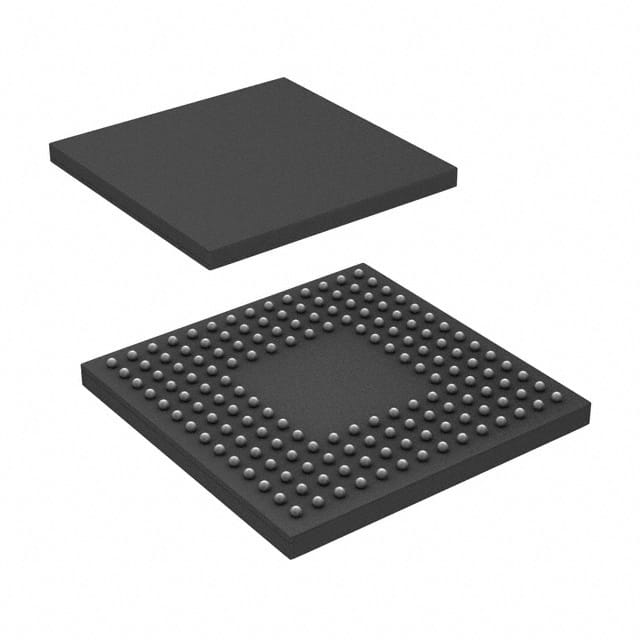
Texas Instruments DP83815DUJB/NOPB
- Part No.:
- DP83815DUJB/NOPB
- Manufacturer:
- Texas Instruments
- Category:
- Controllers
- Package:
- 160-LBGA
- Datasheet:
-
 DP83815DUJB/NOPB.pdf
- Description:
- IC MEDIA ACCESS CONTROL 160-LBGA
- Quantity:
- Payment:

- Shipping:

Inventory:121
Please send an inquiry. Send us your inquiry, and we will respond immediately.
Product details
Overview
DP83815DUJB/NOPB from Texas Instruments (formerly National Semiconductor) is a single-chip 10/100 Mb/s PCI Ethernet MAC and integrated physical layer (PHY), implementing IEEE 802.3/802.3u standards with full-duplex support, 2 KB Tx/Rx FIFOs, and Wake-on-LAN capability for embedded PC motherboards and adapter cards.
For engineers reviewing the DP83815DUJB/NOPB datasheet, DP83815DUJB/NOPB pinout, DP83815DUJB/NOPB application, or DP83815DUJB/NOPB equivalent, key selection criteria include PCI V2.2 compliance, integrated 3.3V PHY with auto-negotiation, MII interface for external PHY extension, low-power WOL mode (380 mW), and LBGA-160 package compatibility with legacy PC designs.
Technical Context
The DP83815DUJB/NOPB integrates a PCI MAC/BIU compliant with PC 97/98/99 and ACPI v1.0, supporting bus-mastering transfers up to 128 dwords (512 bytes) and power management states D0–D3cold. Its internal PHY implements ANSI X3.263-compliant TP-PMD with adaptive equalization and baseline wander compensation for 100BASE-TX.
It supports IEEE 802.3x flow control, VLAN tagging, deep packet pattern matching (4 unique patterns), and RFC 1213/RFC 1398 MIB-II statistics collection. The device uses a single 25 MHz reference clock and provides configurable EEPROM auto-load for boot configuration and remote boot via Flash/PROM interface.
Key Specifications
| Parameter | Value and Actual Design Meaning |
|---|---|
| Data Rate | 10/100 Mb/s full/half-duplex operation per IEEE 802.3u; enables cost-effective migration from 10BASE-T to Fast Ethernet without external PHY. |
| PCI Interface | V2.2 33 MHz bus master; reduces host CPU overhead via descriptor-based DMA and burst transfers up to 512 bytes. |
| Integrated PHY | 3.3V CMOS 10BASE-T + 100BASE-TX transceiver with auto-negotiation, TP-PMD compliance, and adaptive signal conditioning. |
| Power Modes | D0–D3cold support; WOL mode draws 380 mW, sleep mode 33 mW - critical for energy-sensitive embedded systems. |
| FIFO Size | 2 KB transmit + 2 KB receive buffers; absorbs packet bursts and decouples MAC/PHY timing mismatches. |
| Management Interface | MII (MDIO/MDC) with register access to internal PHY; allows software control of link status, speed, duplex, and diagnostics. |
| Wake Events | Supports Magic Packet™, directed packets, ARP, VLAN, pattern match, and PHY status change - meets PC98/PC99 OnNow requirements. |
Pinout & Package
The DP83815DUJB/NOPB is packaged in a 160-pin LBGA (UJB160A), optimized for high-density PCB layouts and thermal performance in space-constrained embedded applications.
| Pin/Terminal | Circuit Role | Design Meaning |
|---|---|---|
| AD[31:0] | PCI Address/Data Bus | Multiplexed 32-bit address/data lines; enables direct memory-mapped I/O and bus-mastering DMA transfers. |
| CBEN[3:0] | PCI Command/Byte Enable | Defines transaction type during address phase; selects active byte lanes (0–3) during data phase in Little Endian mode. |
| PCICLK | PCI System Clock | 33 MHz input clock; rising edge synchronizes all PCI bus phases - requires stable, low-jitter source. |
| INTA# | PCI Interrupt Request | Active-low shared interrupt output; asserts on status events (e.g., Rx complete, Tx error, WOL trigger). |
| MDC / MDIO | MII Management Interface | 2.5 MHz serial clock and bidirectional data bus for reading/writing internal PHY registers (e.g., BMSR, ANAR). |
| RXCLK / RXD[3:0] / RXDV / RXER | MII Receive Interface | Recovery-clock-synchronous nibble-aligned data path; used only when CFG:EXT_PHY = 1 - otherwise internal PHY drives MAC directly. |
| TXCLK / TXD[3:0] / TXEN / CRS / COL | MII Transmit Interface | Drives external PMD; TXEN enables transmission, CRS indicates carrier presence, COL signals collision detection. |
| PMEN#/CLKRUN# | Power Management Event/Clock Run | Dual-function pin: signals WOL events or controls dynamic clock gating to reduce idle power in mobile designs. |
Key Features
| Feature | Design Value |
|---|---|
| IEEE 802.3/802.3u Compliance | Fully implements MAC and PHY layers for interoperable 10/100BASE-T operation - eliminates need for discrete PHY ICs. |
| Flexible Packet Filtering | Single-address perfect filter + 512-entry multicast/unicast hash table + 4-pattern deep packet match - enables precise traffic steering in firewall or IDS applications. |
| On-chip Statistics Engine | Gathers RFC 1213 MIB-II and IEEE 802.3 LME counters (e.g., Rx/Tx octets, collisions, errors); offloads SNMP agent processing from host CPU. |
| EEPROM Auto-Load | Loads configuration (MAC address, PHY settings, WOL filters) at power-on from external 93C46-compatible serial EEPROM - simplifies board bring-up and field updates. |
| Flash/PROM Boot Support | Direct interface to BIOS ROM or network boot PROM - enables PXE boot and remote firmware recovery in headless systems. |
Applications
| Desktop PC Motherboard Integration | Industrial Ethernet Adapter Card |
|---|---|
Use Scenario: Integrated LAN controller on budget-oriented ATX motherboards targeting OEM volume production. IC Role / Device Role / Timing Role: Primary PCI Ethernet MAC+PHY handling full-stack frame assembly, CRC generation, PHY signaling, and interrupt-driven driver interaction. Use Value: Eliminates discrete MAC and PHY components, reducing BOM cost by ~35% and PCB area by >40% versus two-chip solutions. | Use Scenario: Low-profile PCIe-to-PCI bridge adapter adding 10/100 Ethernet to legacy industrial controllers. IC Role / Device Role / Timing Role: Standalone PCI endpoint providing deterministic latency for real-time EtherNet/IP or Modbus TCP communication. Use Value: Supports WOL and hardware-accelerated packet filtering to enable remote diagnostics and secure device wake-up over untrusted networks. |
| Embedded Network Appliance | Network-Attached Storage (NAS) Controller |
Use Scenario: Firewall or UTM appliance requiring dual-NIC isolation with independent traffic classification. IC Role / Device Role / Timing Role: Secondary NIC controller managing DMZ-facing traffic with dedicated Rx filter rules and VLAN tagging. Use Value: Deep packet pattern matching enables signature-based threat detection at line rate without CPU intervention. | Use Scenario: Entry-level NAS platform where cost and thermal envelope constrain component count. IC Role / Device Role / Timing Role: Host-side Ethernet interface bridging SATA storage to SMB/CIFS clients via integrated TCP/IP stack. Use Value: Internal 2 KB FIFOs absorb bursty file transfer traffic, preventing packet loss during disk seek latency spikes. |
Equivalent & Alternatives
The following parts are listed as comparable options for similar Ethernet MAC+PHY applications.
| Alternative Part | Technical Difference | Application Difference | Selection Advice |
|---|---|---|---|
| RTL8139D-GR | PCI 10/100 MAC+PHY with 8 KB Tx/Rx buffer; lacks MII interface and advanced WOL packet filtering. | Targeted at consumer PC add-in cards; no RFC 1213 MIB support or VLAN acceleration. | Choose for lowest-cost implementation where deep packet inspection and standards-compliant management are not required. |
| KSZ8041NL | Standalone 10/100 PHY only (no MAC); requires external MAC (e.g., SoC Ethernet controller); supports RGMII/MII. | Used in ARM-based embedded systems with integrated MAC; enables PHY-level customization and lower power in active mode (120 mW). | Choose when system architecture mandates separation of MAC and PHY or demands modern low-power PHY features like EEE. |
Compared with RTL8139D-GR, DP83815DUJB/NOPB offers superior standards compliance (PC99/ACPI), richer WOL event support, and integrated MIB counters - making it preferable for certified commercial platforms. Against KSZ8041NL, it trades PHY flexibility for integration simplicity and legacy PCI compatibility.
Availability
DP83815DUJB/NOPB is available at Aetrix Electronics and suitable for desktop motherboard integration, industrial Ethernet adapter cards, embedded network appliances, and network-attached storage controllers requiring stable component supply and long-term obsolescence management.
Supply support for DP83815DUJB/NOPB includes scheduled delivery planning, volume procurement assistance, BOM continuity management, traceable sourcing, and lifecycle availability coordination for OEM customers, industrial embedded developers, connected-device designers, and electronics production programs.
Manufacturer
Texas Instruments acquired National Semiconductor in 2011 and maintains legacy product support, including datasheets, errata, and cross-reference design resources for industrial and embedded customers.
The DP83815DUJB/NOPB belongs to TI's legacy Ethernet connectivity portfolio, designed specifically for cost-sensitive, high-volume PCI-based systems requiring integrated MAC+PHY functionality with robust power management.
FAQ
What is the primary function of the DP83815DUJB/NOPB in a system architecture?
The DP83815DUJB/NOPB serves as a fully integrated 10/100 Mb/s PCI Ethernet controller combining MAC and PHY functions. It handles frame assembly/disassembly, CRC calculation, auto-negotiation, physical signaling over twisted-pair media, and bus-mastering DMA transfers - eliminating the need for separate MAC and PHY ICs in legacy PC and embedded designs.
Does the DP83815DUJB/NOPB support connection to an external PHY?
Yes, the DP83815DUJB/NOPB supports external PHY connection via the Media Independent Interface (MII). When CFG:EXT_PHY is enabled, the internal PHY is disabled and MII signals (RXD[3:0], TXD[3:0], MDC, MDIO, etc.) become active - allowing use with third-party PHYs for specialized media or regulatory compliance.
What power management features does the DP83815DUJB/NOPB provide?
The DP83815DUJB/NOPB supports PCI Power Management Specification v1.1 with D0–D3cold states, Clkrun functionality, and Wake-on-LAN (WOL). In WOL mode, it consumes 380 mW and detects Magic Packet™, directed frames, ARP requests, VLAN tags, and PHY status changes - meeting PC98/PC99 OnNow requirements.
How is configuration data loaded into the DP83815DUJB/NOPB at startup?
Configuration data (MAC address, PHY settings, WOL filters) is auto-loaded from an external 93C46-compatible serial EEPROM via the MA3/EEDI, MA4/EECLK, and MD4/EEDO pins at power-on reset. This eliminates manual programming and enables field-updatable configurations without modifying firmware.
What package type is used for the DP83815DUJB/NOPB, and what are its key mechanical characteristics?
The DP83815DUJB/NOPB uses a 160-pin LBGA (UJB160A) package with 1.0 mm ball pitch and 13.0 mm × 13.0 mm body size. It features exposed thermal pad for enhanced heat dissipation and is RoHS-compliant with lead-free solder finish - suitable for automated SMT assembly in high-reliability industrial environments.
DP83815DUJB/NOPB Specifications
- Product attributes
- Attribute value
- Manufacturer:
- Texas Instruments
- Package/Case:
- 160-LBGA
- Programmable:
- Not Verified
- Protocol:
- Ethernet
- Function:
- Controller
- Interface:
- PCI
- Standards:
- 10/100 Base-T/TX PHY
- Voltage - Supply:
- 3.3V
- Current - Supply:
- 170mA
- Operating Temperature:
- 0°C ~ 70°C
- Supplier Device Package:
- 160-LBGA (15x15)
- Grade:
- -
- Qualification:
- -
DP83815DUJB/NOPB FAQ
1.How can I place an order for DP83815DUJB/NOPB through Aetrix?
Please submit a Request for Quotation (RFQ) for DP83815DUJB/NOPB on Aetrix. Our sales agent will provide a competitive quotation and guide you through the order confirmation once you accept the terms.
2.Are the price and stock information for DP83815DUJB/NOPB reliable?
The price and inventory of DP83815DUJB/NOPB are updated periodically and may fluctuate due to market conditions. Stock and pricing data are typically refreshed every 24 hours. Quotation validity for DP83815DUJB/NOPB is usually 5 days.
3.What payment methods are accepted for DP83815DUJB/NOPB?
We accept Wire Transfer, PayPal, Credit Card, Western Union, MoneyGram, and Escrow for DP83815DUJB/NOPB transactions.
Note: Certain payment methods may incur a processing fee.
4.How is shipping managed for DP83815DUJB/NOPB?
DP83815DUJB/NOPB orders can be shipped via leading logistics carriers, including DHL, UPS, FedEx, TNT, or Registered Mail.
Once your DP83815DUJB/NOPB order is processed, you will receive an email with the shipment details and tracking number.
Note: Tracking information may take up to 24 hours to appear. Express delivery typically takes 3–5 business days.
5.How can I obtain technical support or documentation for DP83815DUJB/NOPB?
For technical support, including DP83815DUJB/NOPB datasheets, pinout diagrams, or application guidance, please contact our engineering support team. They can provide detailed documentation and assistance for your DP83815DUJB/NOPB requirements.
6.How does Aetrix verify that DP83815DUJB/NOPB is sourced from the original manufacturer or authorized distributors?
All DP83815DUJB/NOPB products on Aetrix are procured from qualified distributors and authorized channels. Our dedicated quality assurance team conducts strict verification, including traceability checks and, if necessary, third-party testing. This ensures that DP83815DUJB/NOPB meets industry standards.
7.What is the process for return or replacement of DP83815DUJB/NOPB?
All DP83815DUJB/NOPB units undergo pre-shipment inspection (PSI). If there is an issue with DP83815DUJB/NOPB, returns or replacements are accepted under the following conditions:
1.Quantity discrepancies, incorrect items, or visible external defects (such as breakage or corrosion), acknowledged by Aetrix.
2.The issue is reported within 90 days of delivery.
3.The DP83815DUJB/NOPB part is unused and in its original packaging.
Return procedure for DP83815DUJB/NOPB:
1.Submit a request within 90 days.
2.Obtain a Return Material Authorization (RMA) from Aetrix.
DP83815DUJB/NOPB Tags
-
PTN5150AHXMP
NXP Semiconductors
-
USB3740B-AI9-TR
Microchip Technology
-
USB3740B-AI2-TR
Microchip Technology
-
USB3300-EZK-TR
Microchip Technology
-
USB3300-EZK
Microchip Technology
-
FUSB340TMX
onsemi
-
FUSB302BMPX
onsemi
-
DP83826IRHBR
Texas Instruments
-
MCP2518FDT-E/QBB
Microchip Technology
-
FUSB302MPX
onsemi
-
MCP2518FDT-E/SL
Microchip Technology
-
FT260Q-R
FTDI, Future Technology Devices International Ltd
Tech Hub

A practical engineering guide to 3.3V and 5V logic compatibility, input thresholds, resistor dividers, translator ICs, MOSFET level shifting, I2C pull-ups, timing limits and power-sequencing risks.

The 74HC595 uses push-pull logic outputs, while the TPIC6B595 uses 50 V open-drain DMOS sinks for higher-power loads. This guide compares timing, current limits, 3.3 V interfacing, load wiring, thermal…

The 74HC595 converts serial data into eight stable parallel outputs. This guide covers pin functions, shift and storage timing, OE and MR behavior, drive-current limits, cascading, voltage compatibilit…

A technical comparison of level-sensitive latches and edge-triggered flip-flops, covering timing windows, setup and hold limits, master–slave operation, time borrowing, race-through, HDL inference and…

A D latch stores one bit while Enable controls when data can pass. This reference covers gate-level operation, truth tables, transparency, setup and hold timing, LE versus OE, common ICs and practical …

An SR latch stores one bit through cross-coupled feedback. This engineering reference covers NOR and NAND implementations, truth tables, forbidden-state recovery, gated operation, switch debouncing, fa…

Latch circuits retain one bit through feedback. This technical reference covers SR and D latches, truth tables, transparency, timing limits, latch-versus-flip-flop behavior, applications and common log…

An engineering guide to LED driver operation, constant-current and constant-voltage outputs, linear and switching topologies, dimming, IC selection, calculations, replacement compatibility, and fault c…

Operational amplifier guide covering op amp basics, feedback, ideal vs real op amps, common configurations, buffer circuits, offset, bias current, gain-bandwidth, slew rate, rail-to-rail limits and sel…

Jumper cables guide covering safe connection order, red and black clamp placement, final ground connection, cable gauge, length, clamp quality, copper vs CCA cables, jump starter comparison and battery…


