
 My Inquiry
 My Account


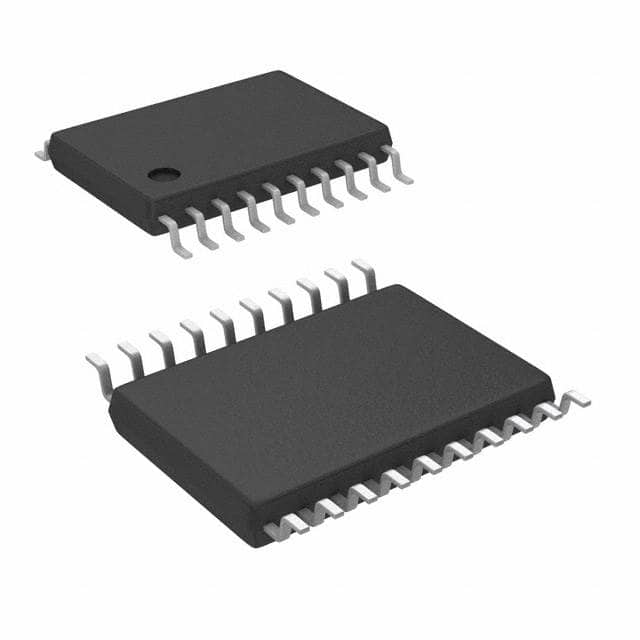
Texas Instruments DP83822HFRHBR
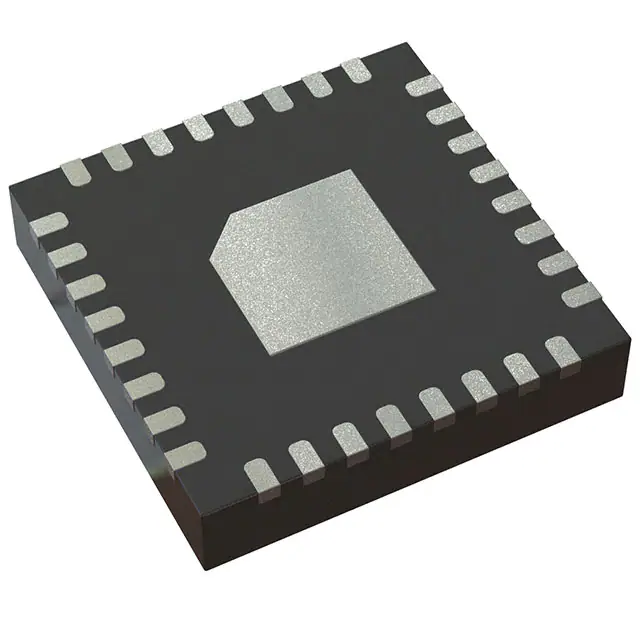
- Part No.:
- DP83822HFRHBR
- Manufacturer:
- Texas Instruments
- Category:
- Specialized
- Package:
- 32-VFQFN Exposed Pad
- Datasheet:
-
 DP83822HFRHBR.pdf
- Description:
- IC INTERFACE SPECIALIZED 32VQFN
- Quantity:
- Payment:

- Shipping:

Inventory:1,598
Please send an inquiry. Send us your inquiry, and we will respond immediately.
Product details
Overview
DP83822HFRHBR from Texas Instruments is a robust, low-power 10/100Mbps Ethernet physical layer transceiver designed for industrial environments. It supports IEEE 802.3u (100BASE-TX/100BASE-FX/10BASE-Te), operates from –40°C to 125°C, delivers <120mW at 1.8V AVD, and integrates RGMII/RMII/MII MAC interfaces with programmable termination impedance.
For engineers reviewing the DP83822HFRHBR datasheet, DP83822HFRHBR pinout, DP83822HFRHBR application, or DP83822HFRHBR equivalent, this page provides verified technical context, exact pin functions, industrial-grade ESD/EFT immunity specs, cable diagnostics, and pin-to-pin upgrade path from TLK105/TLK106 series PHYs.
Technical Context
The DP83822HFRHBR implements a full IEEE 802.3u-compliant PHY layer with automatic media detection for 10BASE-Te, 100BASE-TX, and 100BASE-FX signaling over differential TD_P/TD_M and RD_P/RD_M pairs. Its analog front-end includes integrated bias resistor (RBIAS) interface and supports both crystal (XI/XO) and CMOS oscillator clock sources.
It features three configurable MAC interface modes-MII, RMII, and RGMII-with independent clocking, programmable I/O voltage support (1.8V/2.5V/3.3V), and hardware-configurable strapping pins for reset behavior, LED function, and PHY address. Energy-saving modes include IEEE 802.3az EEE, WoL with magic packet detection, and rapid link-down reporting for real-time industrial protocols.
Key Specifications
| Parameter | Value and Actual Design Meaning |
|---|---|
| Data Rate | 10/100Mbps - Supports auto-negotiation and forced mode operation on twisted-pair or fiber media. |
| Operating Temperature | –40°C to +125°C - Qualified for extended industrial ambient range per DP83822HF variant. |
| Power Consumption | <120mW at 1.8V AVD - Enables thermally constrained designs in motor drives and fieldbus nodes. |
| ESD Immunity | ±8kV contact discharge (IEC 61000-4-2) - Robust against handling and system-level ESD events. |
| EMI Compliance | CISPR 22 Class B conducted & radiated emissions - Meets industrial EMC requirements without external filtering. |
| MAC Interface | RGMII/RMII/MII - Flexible host connectivity with programmable termination impedance per interface type. |
| 100BASE-FX Support | Yes - Enables direct connection to external fiber optic transceivers via RD_P/RD_M and TD_P/TD_M. |
Pinout & Package
DP83822HFRHBR is housed in a 32-pin 5.00mm × 5.00mm VQFN (RHB) package with exposed thermal pad. Pin functions are validated per TI SNLS505H Rev. H datasheet Section 5.
| Pin/Terminal | Circuit Role | Design Meaning |
|---|---|---|
| TD_P / TD_M | Differential Transmit Output | 100BASE-TX/100BASE-FX/10BASE-Te PMD output pair; supports auto-mode selection or forced signaling. |
| RD_P / RD_M | Differential Receive Input | 100BASE-TX/100BASE-FX/10BASE-Te PMD input pair; accepts configurable input swing (0.22–1.8Vpk-pk). |
| TX_CLK / RX_CLK | MAC Interface Clock | MII: 25MHz (100Mbps) or 2.5MHz (10Mbps); RGMII: sourced from MAC; RMII: derived from XI or internal leader clock. |
| TX_EN / TX_D[3:0] / RX_DV / RX_D[3:0] | MII Data Control & Bus | Standard 4-bit nibble interface; RX_D3 doubles as GPIO3; all data lines support 1.8V/2.5V/3.3V I/O levels. |
| MDIO / MDC | Serial Management Interface | IEEE 802.3 clause 22 compliant; up to 25MHz clock; MDIO requires 2.2kΩ pull-up; open-drain INT/PWDN_N supports power-down or interrupt. |
| RBIAS | Analog Bias Reference | Connects 4.87kΩ ±1% resistor to GND to set internal current reference for PMD circuitry. |
Key Features
| Feature | Design Value |
|---|---|
| Ultra-Robust ESD/EFT | ±8kV contact ESD (IEC 61000-4-2), Class A 4kV EFT (IEC 61000-4-4) - Reduces need for external protection in harsh factory environments. |
| Flexible Power Architecture | Separate 1.8V/3.3V AVD and 1.8V/2.5V/3.3V VDDIO supplies - Enables mixed-voltage SoC integration and low-power operation. |
| Integrated Diagnostics | Cable diagnostics, BIST, loopback, and rapid link-down detection - Accelerates field commissioning and reduces maintenance downtime. |
| IEEE 1588 Start-of-Frame Detect | Hardware timestamp trigger on first valid octet - Enables precise time synchronization in Profinet and other real-time industrial Ethernet protocols. |
| Auto-MDIX in Forced Modes | Automatic polarity correction even when speed/duplex is manually configured - Eliminates manual crossover cable dependency in fixed-link deployments. |
Applications
| Motor Drives | Factory Automation |
|---|---|
Use Scenario: High-noise variable-frequency drive (VFD) control cabinet with embedded PLC and motion controller. IC Role / Device Role / Timing Role: PHY layer interface between ARM-based motion controller and industrial Ethernet backbone. Use Value: –40°C to 125°C operation ensures reliability near heat-generating IGBT modules; ±8kV ESD withstand prevents lockups during maintenance. |
Use Scenario: Distributed I/O node in robotic cell with real-time Profinet communication. IC Role / Device Role / Timing Role: Deterministic 100Mbps PHY enabling sub-1ms cycle times and IEEE 1588 timestamping for synchronized axis control. Use Value: Rapid link-down detection (<10ms) triggers immediate safety shutdown; RGMII interface minimizes PCB routing complexity. |
| Grid Infrastructure | Building Automation |
Use Scenario: Substation RTU connecting legacy SCADA systems to modern Ethernet backhaul. IC Role / Device Role / Timing Role: Interfacing serial-to-Ethernet gateway with hardened copper/fiber uplink. Use Value: 100BASE-FX support enables noise-immune fiber extension over 2km; CISPR 22 Class B compliance avoids interference with protection relays. |
Use Scenario: Smart HVAC controller integrating BACnet/IP over shared building LAN infrastructure. IC Role / Device Role / Timing Role: Low-power Ethernet endpoint supporting Wake-on-LAN for remote firmware updates. Use Value: Energy Efficient Ethernet (802.3az) reduces standby power by >50%; dual LED outputs simplify status indication without external drivers. |
Equivalent & Alternatives
The following parts are listed as comparable options for similar 10/100Mbps Ethernet PHY applications.
| Alternative Part | Technical Difference | Application Difference | Selection Advice |
|---|---|---|---|
| TLK106IRHBT | No 100BASE-FX support; max operating temperature = 85°C; no EEE or WoL; higher power (>250mW @3.3V) | Suitable only for commercial-temperature, copper-only, non-real-time applications | Select only if cost sensitivity outweighs industrial robustness and fiber capability. |
| LAN8720A-EZC | Single 3.3V supply only; no 100BASE-FX; lower ESD rating (±4kV contact); no RGMII support | Limited to cost-sensitive consumer/industrial edge devices without fiber or high-temp requirements | Prefer where footprint and BoM cost are primary constraints and extended temperature is not required. |
Compared with TLK106IRHBT and LAN8720A-EZC, DP83822HFRHBR delivers unique value in extended temperature operation, fiber compatibility, ultra-robust ESD, and energy-efficient modes-making it the only option qualified for Profinet-class real-time industrial Ethernet nodes requiring 125°C ambient tolerance and 100BASE-FX uplinks.
Availability
DP83822HFRHBR is available at Aetrix Electronics and suitable for motor drives, factory automation systems, and grid infrastructure equipment requiring stable component supply across extended temperature ranges and long product lifecycles.
Supply support for DP83822HFRHBR includes scheduled delivery planning, volume procurement assistance, BOM continuity management, traceable sourcing, and lifecycle availability coordination for OEM customers, industrial embedded developers, connected-device designers, and electronics production programs.
Manufacturer
Texas Instruments is a global semiconductor company specializing in analog, embedded processing, and connectivity solutions for industrial, automotive, and communications markets.
The DP83822HFRHBR belongs to TI's industrial Ethernet PHY portfolio, engineered specifically for deterministic, ruggedized network connectivity in harsh environments such as robotics, motor control, and smart grid infrastructure.
FAQ
What is the maximum operating temperature of the DP83822HFRHBR?
The DP83822HFRHBR is rated for operation from –40°C to +125°C, matching the DP83822HF industrial temperature grade. This specification is confirmed in Table 4 (Device Comparison Table) and Section 6.3 (Recommended Operating Conditions) of the SNLS505H datasheet, making it suitable for deployment adjacent to high-heat components like IGBTs or in uncooled outdoor enclosures.
Does the DP83822HFRHBR support fiber optic interfaces?
Yes, the DP83822HFRHBR supports 100BASE-FX operation via its differential RD_P/RD_M and TD_P/TD_M pins. As stated in the Device Comparison Table and Section 3 (Description), it is explicitly qualified for 100BASE-FX and can interface directly with external fiber optic transceivers-unlike the DP83822H variant which omits this capability.
Which MAC interfaces does the DP83822HFRHBR support?
The DP83822HFRHBR supports MII, RMII, and RGMII MAC interfaces, with programmable termination impedance for each. Section 1 (Features) and Figure 1 (Simplified Schematic) confirm native support for all three standards, and pin functionality tables (Section 5) detail signal mapping-including TX_CLK/RX_CLK behavior and strapping options for interface selection.
What power supply configurations are supported by the DP83822HFRHBR?
The DP83822HFRHBR supports dual independent supplies: AVD (analog, 1.8V or 3.3V) and VDDIO (I/O, 1.8V/2.5V/3.3V). Section 6.3 specifies tight tolerances (e.g., 1.71–1.89V for 1.8V AVD), and power consumption is documented as <120mW at 1.8V AVD-enabling low-thermal-footprint designs in space-constrained industrial modules.
Is the DP83822HFRHBR pin-compatible with earlier TI PHYs?
Yes, the DP83822HFRHBR is a pin-to-pin upgradeable option for TLK105, TLK106, TLK105L, and TLK106L PHYs, as explicitly stated in Section 3 (Description). The 32-pin RHB (VQFN) package, pinout, and register map maintain backward compatibility while adding enhanced features including 100BASE-FX, EEE, and improved ESD immunity.
DP83822HFRHBR Specifications
- Product attributes
- Attribute value
- Manufacturer:
- Texas Instruments
- Series:
- -
- Package/Case:
- 32-VFQFN Exposed Pad
- Packaging:
- Tape & Reel (TR)
- Product Status:
- Active
- Applications:
- Ethernet
- Interface:
- MII, RMII
- Voltage - Supply:
- 1.71V ~ 3.45V
- Supplier Device Package:
- 32-VQFN (5x5)
- Grade:
- -
- Qualification:
- -
- Mounting Type:
- Surface Mount
DP83822HFRHBR FAQ
1.How can I place an order for DP83822HFRHBR through Aetrix?
Please submit a Request for Quotation (RFQ) for DP83822HFRHBR on Aetrix. Our sales agent will provide a competitive quotation and guide you through the order confirmation once you accept the terms.
2.Are the price and stock information for DP83822HFRHBR reliable?
The price and inventory of DP83822HFRHBR are updated periodically and may fluctuate due to market conditions. Stock and pricing data are typically refreshed every 24 hours. Quotation validity for DP83822HFRHBR is usually 5 days.
3.What payment methods are accepted for DP83822HFRHBR?
We accept Wire Transfer, PayPal, Credit Card, Western Union, MoneyGram, and Escrow for DP83822HFRHBR transactions.
Note: Certain payment methods may incur a processing fee.
4.How is shipping managed for DP83822HFRHBR?
DP83822HFRHBR orders can be shipped via leading logistics carriers, including DHL, UPS, FedEx, TNT, or Registered Mail.
Once your DP83822HFRHBR order is processed, you will receive an email with the shipment details and tracking number.
Note: Tracking information may take up to 24 hours to appear. Express delivery typically takes 3–5 business days.
5.How can I obtain technical support or documentation for DP83822HFRHBR?
For technical support, including DP83822HFRHBR datasheets, pinout diagrams, or application guidance, please contact our engineering support team. They can provide detailed documentation and assistance for your DP83822HFRHBR requirements.
6.How does Aetrix verify that DP83822HFRHBR is sourced from the original manufacturer or authorized distributors?
All DP83822HFRHBR products on Aetrix are procured from qualified distributors and authorized channels. Our dedicated quality assurance team conducts strict verification, including traceability checks and, if necessary, third-party testing. This ensures that DP83822HFRHBR meets industry standards.
7.What is the process for return or replacement of DP83822HFRHBR?
All DP83822HFRHBR units undergo pre-shipment inspection (PSI). If there is an issue with DP83822HFRHBR, returns or replacements are accepted under the following conditions:
1.Quantity discrepancies, incorrect items, or visible external defects (such as breakage or corrosion), acknowledged by Aetrix.
2.The issue is reported within 90 days of delivery.
3.The DP83822HFRHBR part is unused and in its original packaging.
Return procedure for DP83822HFRHBR:
1.Submit a request within 90 days.
2.Obtain a Return Material Authorization (RMA) from Aetrix.
DP83822HFRHBR Tags
-
NVT4857UKAZ
NXP Semiconductors
-
TCA8418RTWR
Texas Instruments
-
PCA9546APWR
Texas Instruments
-
MD0100N8-G
Microchip Technology
-
PCA9548APW,118
NXP Semiconductors
-
PCA9540BDP,118
NXP Semiconductors
-
PCA9548APWR
Texas Instruments
-
PCA9546APW,118
NXP Semiconductors
-
PTN3360DBS,518
NXP Semiconductors
-
PCA9546ABS,118
NXP Semiconductors
-
PCA9518PWR
Texas Instruments
-
PCA9545APW,118
NXP Semiconductors
Tech Hub

A practical engineering guide to 3.3V and 5V logic compatibility, input thresholds, resistor dividers, translator ICs, MOSFET level shifting, I2C pull-ups, timing limits and power-sequencing risks.

The 74HC595 uses push-pull logic outputs, while the TPIC6B595 uses 50 V open-drain DMOS sinks for higher-power loads. This guide compares timing, current limits, 3.3 V interfacing, load wiring, thermal…

The 74HC595 converts serial data into eight stable parallel outputs. This guide covers pin functions, shift and storage timing, OE and MR behavior, drive-current limits, cascading, voltage compatibilit…

A technical comparison of level-sensitive latches and edge-triggered flip-flops, covering timing windows, setup and hold limits, master–slave operation, time borrowing, race-through, HDL inference and…

A D latch stores one bit while Enable controls when data can pass. This reference covers gate-level operation, truth tables, transparency, setup and hold timing, LE versus OE, common ICs and practical …

An SR latch stores one bit through cross-coupled feedback. This engineering reference covers NOR and NAND implementations, truth tables, forbidden-state recovery, gated operation, switch debouncing, fa…

Latch circuits retain one bit through feedback. This technical reference covers SR and D latches, truth tables, transparency, timing limits, latch-versus-flip-flop behavior, applications and common log…

An engineering guide to LED driver operation, constant-current and constant-voltage outputs, linear and switching topologies, dimming, IC selection, calculations, replacement compatibility, and fault c…

Operational amplifier guide covering op amp basics, feedback, ideal vs real op amps, common configurations, buffer circuits, offset, bias current, gain-bandwidth, slew rate, rail-to-rail limits and sel…

Jumper cables guide covering safe connection order, red and black clamp placement, final ground connection, cable gauge, length, clamp quality, copper vs CCA cables, jump starter comparison and battery…


