
 My Inquiry
 My Account


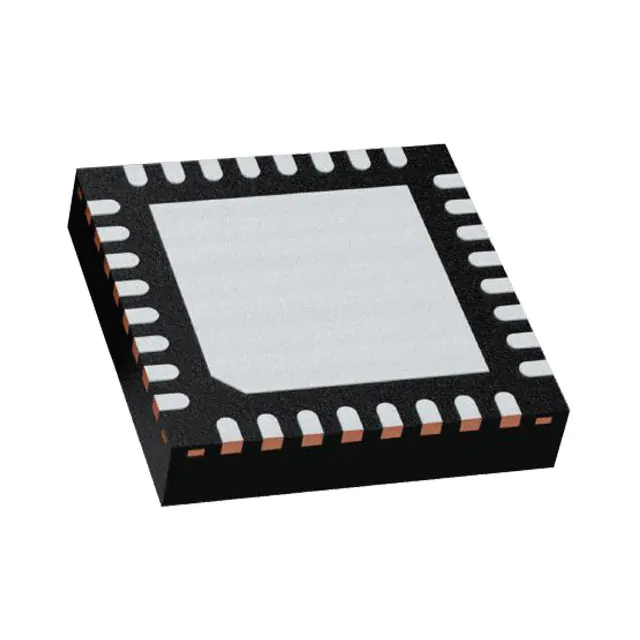
Texas Instruments DP83826ERHBT
- Part No.:
- DP83826ERHBT
- Manufacturer:
- Texas Instruments
- Category:
- Controllers
- Package:
- 32-VFQFN Exposed Pad
- Datasheet:
-
 DP83826ERHBT.pdf
- Description:
- LOW COST ENET PHY INDUSTRIAL
- Quantity:
- Payment:

- Shipping:

Inventory:1,149
Please send an inquiry. Send us your inquiry, and we will respond immediately.
Product details
Overview
DP83826ERHBT from Texas Instruments is a deterministic, low-latency 10/100 Mbps industrial Ethernet PHY with TX latency of 40 ns and RX latency of 170 ns, ±2 ns latency stability over power cycles, and support for MII/RMII MAC interfaces. It operates across –40°C to 105°C and meets IEEE 802.3 (10BASE-Te, 100BASE-TX) and EtherCAT® standards for real-time factory automation and motion control systems.
For engineers reviewing the DP83826ERHBT datasheet, DP83826ERHBT pinout, DP83826ERHBT application, or DP83826ERHBT equivalent, key selection criteria include deterministic latency performance, dual-mode pin configuration (BASIC/ENHANCED), integrated EMC robustness (IEC 61000-4-2 ±8 kV contact), RMII back-to-back repeater capability, and programmable energy-saving modes including EEE (IEEE 802.3az) and Wake-on-LAN.
Technical Context
The DP83826ERHBT implements a hardware-strapped dual-mode architecture: BASIC mode delivers standard Ethernet pin compatibility and speed/duplex bootstrap control, while ENHANCED mode enables real-time features including strap-controllable fast link-drop detection, Auto-MDIX, RMII repeater configuration, and fixed-phase XI-to-TX_CLK timing (<±2 ns). Both modes share identical 32-pin VQFN (5.00 mm × 5.00 mm) packaging and single 3.3 V analog supply.
Its physical layer supports voltage-mode line driving with integrated MDI terminations, cable reach >150 m, and I/O voltage flexibility (1.8 V or 3.3 V). Diagnostic capabilities include cable diagnostics, BIST, and multiple loopback modes - all accessible via SMI (MDC/MDIO) register interface without host CPU intervention.
Key Specifications
| Parameter | Value and Actual Design Meaning |
|---|---|
| Latency (TX/RX) | 40 ns / 170 ns - Enables sub-microsecond end-to-end timing in EtherCAT® and PROFINET IRT systems. |
| Latency stability | ±2 ns over power cycles - Guarantees deterministic behavior across cold/warm restarts without recalibration. |
| Operating temperature | –40°C to 105°C - Qualified for extended industrial environments including motor drives and grid infrastructure. |
| Power consumption | <160 mW active - Supports energy-efficient designs with Active Sleep, Deep Power Down, and IEEE 802.3az EEE. |
| EMC immunity | IEC 61000-4-2 ±8 kV contact - Reduces need for external TVS diodes in harsh factory settings. |
| MAC interface | MII and RMII - Enables direct connection to microcontrollers and SoCs with minimal glue logic; RMII leader/follower modes supported. |
| Cable reach | >150 meters - Extends deployment range without repeaters in distributed I/O networks. |
Pinout & Package
DP83826ERHBT uses a 32-pin VQFN package (RHB suffix), 5.00 mm × 5.00 mm body size, with exposed thermal pad connected to GND. Pin functions differ between BASIC and ENHANCED modes; ModeSelect (Pin 1) configures mode at power-up (GND = BASIC, NC/pull-up = ENHANCED).
| Pin/Terminal | Circuit Role | Design Meaning |
|---|---|---|
| ModeSelect (Pin 1) | Mode configuration input | Determines BASIC (GND) or ENHANCED (NC/pull-up) operation - affects pin mapping and feature availability. |
| RX_D[3:0] / RX_D[1:0] | Receive data bus | MII: 4-bit parallel nibble synchronous to RX_CLK; RMII: 2-bit parallel synchronous to 50 MHz reference clock. |
| TX_CLK / RX_CLK | MAC timing reference | MII: 25 MHz (100 Mbps) or 2.5 MHz (10 Mbps); RMII leader: 50 MHz output; RMII follower: input not used. |
| PWRDN/INT (Pin 21, ENHANCED) | Power-down/interrupt dual-function | Default = active-low power-down; configurable as open-drain interrupt with internal 9.5 kΩ pull-up. |
| CLKOUT/LED1 (Pin 31, ENHANCED) | Reference clock output / LED driver | 25 MHz clock derived from XI, unaffected by resets; can be reconfigured as LED1 indicating 100 Mbps link status. |
| LED0 (Pin 30) | Link/activity indicator | Auto-detects polarity (active-high/low); ON = good link, blinking = TX/RX activity - requires no external biasing resistors. |
Key Features
| Feature | Design Value |
|---|---|
| Deterministic latency | Fixed TX/RX latency with ±2 ns variation across power cycles - eliminates jitter-induced timing violations in synchronized motion control. |
| Dual-mode pin configuration | BASIC mode matches legacy PHY pinouts for drop-in replacement; ENHANCED mode unlocks real-time fieldbus features via hardware straps. |
| Integrated EMC protection | Meets IEC 61000-4-2 (±8 kV contact), IEC 61000-4-4 (±4 kV), and CISPR 22 Class B - reduces board-level filtering components by up to 30%. |
| RMII back-to-back repeater mode | Enables daisy-chained topology without external switch ICs - lowers BOM cost and PCB area in multi-node sensor networks. |
| Fast link-drop detection | <10 µs response time - critical for fault-tolerant EtherCAT® ring topologies requiring rapid reconvergence. |
Applications
| Industrial Motion Control | Factory Automation Network |
|---|---|
Use Scenario: Synchronized multi-axis servo drives communicating via EtherCAT® in CNC machinery. IC Role / Device Role / Timing Role: PHY layer device providing deterministic 100BASE-TX transmission with <40 ns TX latency and fixed XI-to-TX_CLK phase alignment. Use Value: Enables sub-1 µs cycle times and jitter-free position feedback loops without external timing compensation. | Use Scenario: Distributed I/O modules connecting PLCs to sensors/actuators across 150+ meter production lines. IC Role / Device Role / Timing Role: Industrial Ethernet PHY with >150 m cable reach, integrated MDI terminations, and fast link-drop (<10 µs). Use Value: Eliminates need for mid-span repeaters and reduces network downtime during cable fault recovery. |
| Grid Infrastructure Monitoring | Building Automation System |
Use Scenario: Remote RTU units reporting power quality metrics over unshielded twisted-pair in substations. IC Role / Device Role / Timing Role: Robust PHY with IEC 61000-4-4 EFT immunity (±4 kV) and wide temperature range (–40°C to 105°C). Use Value: Ensures reliable communication under high-voltage transients and ambient extremes without derating. | Use Scenario: HVAC controllers and lighting nodes deployed in commercial buildings with shared Ethernet backbone. IC Role / Device Role / Timing Role: Low-power 10/100 Mbps PHY supporting Energy Efficient Ethernet (IEEE 802.3az) and Wake-on-LAN. Use Value: Cuts standby power by >40% compared to legacy PHYs while maintaining instant network responsiveness. |
Equivalent & Alternatives
The following parts are listed as comparable options for similar Ethernet PHY applications.
| Alternative Part | Technical Difference | Application Difference | Selection Advice |
|---|---|---|---|
| DP83822HFRTVT | Supports RGMII interface and fiber media; wider temperature range (–40°C to 105°C); same 32-pin VQFN package. | Targeted at higher-bandwidth industrial gateways requiring RGMII-to-100BASE-TX bridging. | Select when RGMII host interface or multimode fiber uplink is required; not pin-compatible due to differing pin functions. |
| LAN8720AI-CP | Single 3.3 V supply; lower power (~120 mW); no ENHANCED mode or deterministic latency specs; QFN-24 package. | Suitable for cost-sensitive building automation where latency determinism is not required. | Choose for simpler, lower-cost deployments lacking real-time fieldbus requirements; requires PCB redesign due to 24-pin footprint. |
Compared with DP83826ERHBT, DP83822HFRTVT adds RGMII and fiber support but lacks BASIC/ENHANCED mode flexibility, while LAN8720AI-CP offers lower cost and power at the expense of latency control, EMC robustness, and industrial temperature rating.
Availability
DP83826ERHBT is available at Aetrix Electronics and suitable for factory automation, motor drives, and grid infrastructure applications requiring stable component supply, long-term lifecycle assurance, and guaranteed industrial temperature grade (–40°C to 105°C).
Supply support for DP83826ERHBT includes scheduled delivery planning, volume procurement assistance, BOM continuity management, traceable sourcing, and lifecycle availability coordination for OEM customers, industrial embedded developers, connected-device designers, and electronics production programs.
Manufacturer
Texas Instruments is a global semiconductor company specializing in analog, embedded processing, and connectivity solutions for industrial, automotive, and communications markets.
The DP83826 product line was designed specifically for deterministic industrial Ethernet applications - delivering ultra-low, repeatable latency, hardware-configurable real-time features, and integrated EMC resilience to replace discrete PHY + filter solutions.
FAQ
What is the operating temperature range for DP83826ERHBT?
The DP83826ERHBT is rated for –40°C to 105°C, matching the DP83826E industrial grade specification. This extended range ensures reliable operation in demanding environments such as motor drive enclosures, outdoor grid monitoring units, and high-temperature factory floors - unlike commercial-grade PHYs limited to 0°C–70°C.
Does DP83826ERHBT support both MII and RMII interfaces?
Yes, DP83826ERHBT natively supports both MII and RMII MAC interfaces. In MII mode, it uses 25 MHz/2.5 MHz clocks and 4-bit data paths; in RMII mode, it operates at 50 MHz with 2-bit data paths and supports leader/follower configurations - including RMII back-to-back repeater mode, which is configurable only in ENHANCED mode.
How does the BASIC vs. ENHANCED mode selection affect DP83826ERHBT functionality?
Mode selection on DP83826ERHBT is controlled by ModeSelect (Pin 1): GND enables BASIC mode (standard Ethernet pinout, speed/duplex strapping), while NC or pull-up enables ENHANCED mode (additional real-time features like strap-controllable fast link-drop, Auto-MDIX, and RMII repeater mode). Pin functions differ - e.g., Pin 21 is INT in BASIC but PWRDN/INT in ENHANCED; Pin 31 is LED1/TX_ER in BASIC but CLKOUT/LED1 in ENHANCED.
What EMC standards does DP83826ERHBT meet out-of-the-box?
DP83826ERHBT meets IEC 61000-4-2 (±8 kV contact, ±15 kV air), IEC 61000-4-4 (±4 kV EFT), and CISPR 22 Class B emissions without external filtering. Its integrated circuitry for enhanced EMC reduces system-level design effort - enabling compliance in industrial enclosures where space and cost constraints limit use of external ferrites or shielded magnetics.
Can DP83826ERHBT operate with a 1.8 V I/O supply?
Yes, DP83826ERHBT supports dual I/O voltage operation: VDDIO may be set to either 1.8 V or 3.3 V, allowing direct interfacing with low-voltage microcontrollers and FPGAs. When using 1.8 V, all digital I/O pins (TX_EN, RX_D[3:0], MDIO, etc.) and XI oscillator input must be within 1.62–1.98 V - verified per TI's Recommended Operating Conditions table in the DP83826ERHBT datasheet.
DP83826ERHBT Specifications
- Product attributes
- Attribute value
- Manufacturer:
- Texas Instruments
- Package/Case:
- 32-VFQFN Exposed Pad
- Programmable:
- Not Verified
- Protocol:
- Ethernet
- Function:
- Controller
- Interface:
- MII, RMII
- Standards:
- 10/100 Base-T/TX PHY
- Voltage - Supply:
- 1.62V ~ 1.98V, 3V ~ 3.6V
- Current - Supply:
- 55mA
- Operating Temperature:
- -40°C ~ 105°C (TA)
- Supplier Device Package:
- 32-VQFN (5x5)
- Grade:
- -
- Qualification:
- -
DP83826ERHBT FAQ
1.How can I place an order for DP83826ERHBT through Aetrix?
Please submit a Request for Quotation (RFQ) for DP83826ERHBT on Aetrix. Our sales agent will provide a competitive quotation and guide you through the order confirmation once you accept the terms.
2.Are the price and stock information for DP83826ERHBT reliable?
The price and inventory of DP83826ERHBT are updated periodically and may fluctuate due to market conditions. Stock and pricing data are typically refreshed every 24 hours. Quotation validity for DP83826ERHBT is usually 5 days.
3.What payment methods are accepted for DP83826ERHBT?
We accept Wire Transfer, PayPal, Credit Card, Western Union, MoneyGram, and Escrow for DP83826ERHBT transactions.
Note: Certain payment methods may incur a processing fee.
4.How is shipping managed for DP83826ERHBT?
DP83826ERHBT orders can be shipped via leading logistics carriers, including DHL, UPS, FedEx, TNT, or Registered Mail.
Once your DP83826ERHBT order is processed, you will receive an email with the shipment details and tracking number.
Note: Tracking information may take up to 24 hours to appear. Express delivery typically takes 3–5 business days.
5.How can I obtain technical support or documentation for DP83826ERHBT?
For technical support, including DP83826ERHBT datasheets, pinout diagrams, or application guidance, please contact our engineering support team. They can provide detailed documentation and assistance for your DP83826ERHBT requirements.
6.How does Aetrix verify that DP83826ERHBT is sourced from the original manufacturer or authorized distributors?
All DP83826ERHBT products on Aetrix are procured from qualified distributors and authorized channels. Our dedicated quality assurance team conducts strict verification, including traceability checks and, if necessary, third-party testing. This ensures that DP83826ERHBT meets industry standards.
7.What is the process for return or replacement of DP83826ERHBT?
All DP83826ERHBT units undergo pre-shipment inspection (PSI). If there is an issue with DP83826ERHBT, returns or replacements are accepted under the following conditions:
1.Quantity discrepancies, incorrect items, or visible external defects (such as breakage or corrosion), acknowledged by Aetrix.
2.The issue is reported within 90 days of delivery.
3.The DP83826ERHBT part is unused and in its original packaging.
Return procedure for DP83826ERHBT:
1.Submit a request within 90 days.
2.Obtain a Return Material Authorization (RMA) from Aetrix.
DP83826ERHBT Tags
-
PTN5150AHXMP
NXP Semiconductors
-
USB3740B-AI9-TR
Microchip Technology
-
USB3740B-AI2-TR
Microchip Technology
-
USB3300-EZK-TR
Microchip Technology
-
USB3300-EZK
Microchip Technology
-
FUSB340TMX
onsemi
-
FUSB302BMPX
onsemi
-
DP83826IRHBR
Texas Instruments
-
MCP2518FDT-E/QBB
Microchip Technology
-
FUSB302MPX
onsemi
-
MCP2518FDT-E/SL
Microchip Technology
-
FT260Q-R
FTDI, Future Technology Devices International Ltd
Tech Hub

A practical engineering guide to 3.3V and 5V logic compatibility, input thresholds, resistor dividers, translator ICs, MOSFET level shifting, I2C pull-ups, timing limits and power-sequencing risks.

The 74HC595 uses push-pull logic outputs, while the TPIC6B595 uses 50 V open-drain DMOS sinks for higher-power loads. This guide compares timing, current limits, 3.3 V interfacing, load wiring, thermal…

The 74HC595 converts serial data into eight stable parallel outputs. This guide covers pin functions, shift and storage timing, OE and MR behavior, drive-current limits, cascading, voltage compatibilit…

A technical comparison of level-sensitive latches and edge-triggered flip-flops, covering timing windows, setup and hold limits, master–slave operation, time borrowing, race-through, HDL inference and…

A D latch stores one bit while Enable controls when data can pass. This reference covers gate-level operation, truth tables, transparency, setup and hold timing, LE versus OE, common ICs and practical …

An SR latch stores one bit through cross-coupled feedback. This engineering reference covers NOR and NAND implementations, truth tables, forbidden-state recovery, gated operation, switch debouncing, fa…

Latch circuits retain one bit through feedback. This technical reference covers SR and D latches, truth tables, transparency, timing limits, latch-versus-flip-flop behavior, applications and common log…

An engineering guide to LED driver operation, constant-current and constant-voltage outputs, linear and switching topologies, dimming, IC selection, calculations, replacement compatibility, and fault c…

Operational amplifier guide covering op amp basics, feedback, ideal vs real op amps, common configurations, buffer circuits, offset, bias current, gain-bandwidth, slew rate, rail-to-rail limits and sel…

Jumper cables guide covering safe connection order, red and black clamp placement, final ground connection, cable gauge, length, clamp quality, copper vs CCA cables, jump starter comparison and battery…


