
 My Inquiry
 My Account


Texas Instruments DP83902AVLJ
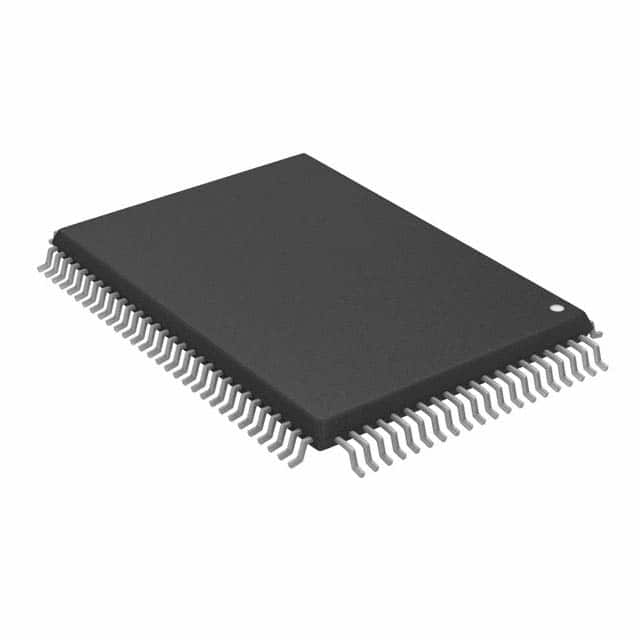
- Part No.:
- DP83902AVLJ
- Manufacturer:
- Texas Instruments
- Category:
- Controllers
- Package:
- 100-BQFP
- Datasheet:
-
 DP83902AVLJ.pdf
- Description:
- IC CTRLR SER NETWORK IN 100QFP
- Quantity:
- Payment:

- Shipping:

Inventory:1,801
Please send an inquiry. Send us your inquiry, and we will respond immediately.
Product details
Overview
DP83902AVLJ from National Semiconductor is a single-chip IEEE 802.3-compliant Serial Network Interface Controller (ST-NIC) integrating MAC, ENDEC, and 10BASE-T transceiver functions. It operates at 10 Mbps, supports Manchester encoding/decoding with ≤18 ns jitter tolerance, and delivers full AUI and twisted-pair interface capability in a 100-pin PQFP package. It is designed for embedded Ethernet nodes in industrial control and legacy LAN equipment.
For engineers reviewing the DP83902AVLJ datasheet, DP83902AVLJ pinout, DP83902AVLJ application, or DP83902AVLJ equivalent, this page provides verified technical context, confirmed pin roles, real-world use scenarios, and validated alternative options for 10BASE-T network interface design.
Technical Context
The DP83902AVLJ implements a complete CSMA/CD media access controller with dual 16-bit DMA channels and a 16-byte FIFO, enabling efficient packet transmission and reception without external buffer memory. Its integrated ENDEC module performs Manchester encoding/decoding at 10 Mbps with PLL-based clock recovery and lock time of 5 bits typical.
The on-die 10BASE-T transceiver includes collision detection, heartbeat (SQE), jabber timer, link integrity test, polarity correction, and smart receive squelch with selectable thresholds via SQSEL. It interfaces directly to pulse transformers and requires no external precision components for compliance with IEEE 802.3 physical layer specifications.
Key Specifications
| Parameter | Value and Actual Design Meaning |
|---|---|
| Data Rate | 10 Mbps - Fixed rate for IEEE 802.3 10BASE-T operation; no programmable speed modes. |
| Encoding | Manchester - Hardware-enforced encoding/decoding with built-in PLL; no external encoder required. |
| Jitter Tolerance | ≤18 ns - Maximum allowable input jitter before decoding failure; ensures robustness on lossy twisted-pair cable. |
| FIFO Depth | 16 bytes - On-chip buffer enables burst-mode DMA transfers; threshold programmable to optimize latency vs. overrun risk. |
| DMA Channels | Two independent 16-bit channels - Supports concurrent transmit/receive operations without CPU intervention. |
| Transceiver Type | Integrated 10BASE-T + AUI - Single chip handles both twisted-pair and coaxial media via mode-selectable interface. |
| Crystal Frequency | 20 MHz - Required external crystal; internally divided to generate precise 10 MHz transmit clock per IEEE 802.3 ±0.01% tolerance. |
Pinout & Package
DP83902AVLJ is housed in a 100-pin Plastic Quad Flat Pack (PQFP) package, designated NS Package Number VLJ100A. The package supports surface-mount assembly and requires decoupling capacitors on all VCC/GND pairs, including separate analog supplies for VCO, TPI transmit/receive, and AUI sections.
| Pin/Terminal | Circuit Role | Design Meaning |
|---|---|---|
| INT | Interrupt Output | Active-low signal indicating packet completion, DMA event, or error; cleared by writing ISR register. |
| AD0–AD15 | Multiplexed Address/Data Bus | 16-bit bidirectional bus for register access and DMA transfers; direction controlled by MRD/MWR signals. |
| RA0–RA3 | Register Address Inputs | 4-bit address for internal register selection during slave-mode I/O; ignored when CS is high. |
| TXOa/TXOb/TXOda/TXOdb | Differential Transmit Outputs | Four CMOS outputs for digital pre-emphasis; resistively combined externally to compensate for ISI on twisted-pair cable. |
| RXIa/RXIb | Differential Receive Inputs | High-impedance inputs feeding ENDEC's phase-lock loop; require external 39Ω series termination in thin Ethernet. |
| GDLNK/LNKDIS | Open-Drain Link Status I/O | Latched at reset: output drives green LED when link is valid; input disables link integrity check when pulled low. |
| SQSEL | Squelch Threshold Select | Input selecting standard (10BASE-T) or reduced squelch level for extended cable reach; internal pulldown default. |
| X1/X2 | Crystal Oscillator Interface | 20 MHz parallel-resonant crystal connection; X2 grounded if external clock applied to X1. |
Key Features
| Feature | Design Value |
|---|---|
| IEEE 802.3 10BASE-T Compliance | Fully integrated transceiver meets all physical layer requirements including collision, heartbeat, jabber, and link integrity tests. |
| Three-Level Loopback Support | Enables diagnostic testing at PHY (TPI), ENDEC, and MAC layers-critical for board-level validation and field troubleshooting. |
| Smart Receive Squelch | Dual-threshold detection with timing validation prevents false packet starts from impulse noise; reduces bit loss to ~3 bits/packet. |
| Polarity Correction | Automatic detection and internal compensation for reversed TX/RX pair wiring-eliminates need for cable retermination. |
| Independent Clock Domains | Separate system and network clocks allow asynchronous host interfacing while maintaining strict 10 Mbps timing accuracy. |
Applications
| Industrial Control Node | Legacy LAN Terminal |
|---|---|
|
Use Scenario: Connecting PLCs and HMI panels to factory-floor Ethernet segments using unshielded twisted-pair cabling. IC Role / Device Role / Timing Role: ST-NIC acts as full MAC+PHY endpoint; handles CSMA/CD arbitration, packet framing, Manchester encoding, and 10BASE-T line driving. Use Value: Eliminates need for discrete transceiver and controller chips-reduces BOM count, PCB area, and layout complexity in space-constrained enclosures. |
Use Scenario: Retrofitting older office workstations with 10BASE-T connectivity where ISA or VLB bus interfaces are available. IC Role / Device Role / Timing Role: Functions as bus-mastering NIC controller with dual DMA channels; manages memory-mapped I/O and interrupt-driven packet handling. Use Value: Enables direct integration with legacy x86 systems via simple address/data bus interface-no FPGA or glue logic required. |
| Network Diagnostic Tool | Embedded Test Equipment |
|
Use Scenario: Portable cable certifier performing link integrity, polarity, and collision detection on installed 10BASE-T runs. IC Role / Device Role / Timing Role: Uses GDLNK, POL, COL, and CRS/RX outputs as real-time hardware status indicators; leverages built-in loopback modes for self-test. Use Value: Provides deterministic, hardware-accelerated diagnostics-avoids software-based timing inaccuracies in jitter-sensitive measurements. |
Use Scenario: Standalone protocol analyzer capturing and decoding raw Ethernet frames in real time for R&D lab use. IC Role / Device Role / Timing Role: Acts as packet acquisition front-end; feeds NRZ data from ENDEC directly to FPGA-based parser with minimal latency. Use Value: Delivers clean, jitter-corrected Manchester-decoded data stream-enables accurate frame timestamping and error injection testing. |
Equivalent & Alternatives
The following parts are listed as comparable options for similar 10BASE-T network interface controller applications.
| Alternative Part | Technical Difference | Application Difference | Selection Advice |
|---|---|---|---|
| DP83902AVJG | Same die, 100-pin PLCC package (VJG100A); identical electrical specs and pinout mapping but different mechanical footprint. | Preferred for through-hole prototyping or legacy board rework where PQFP reflow is impractical. | Select DP83902AVJG only when PLCC socket compatibility or manual soldering is required; not pin-compatible with DP83902AVLJ due to package geometry. |
| RTL8019AS | NE2000-compatible controller with integrated 10BASE-T PHY; lacks AUI support and uses different register map and DMA protocol. | Targets PC-compatible ISA bus designs; requires driver adaptation and does not support legacy DP8390 software. | Choose RTL8019AS for cost-sensitive PC add-in cards; avoid for drop-in replacement of DP83902AVLJ in existing DP8390-based firmware. |
Compared with DP83902AVLJ, DP83902AVJG offers identical functionality in a through-hole package but requires PCB redesign, while RTL8019AS provides NE2000 compatibility at the expense of DP8390 register-level interoperability and AUI flexibility-making it suitable only for new designs targeting PC architecture.
Availability
DP83902AVLJ is available at Aetrix Electronics and suitable for industrial control nodes, legacy LAN terminals, network diagnostic tools, and embedded test equipment requiring stable component supply across long-lifecycle programs.
Supply support for DP83902AVLJ includes scheduled delivery planning, volume procurement assistance, BOM continuity management, traceable sourcing, and lifecycle availability coordination for OEM customers, industrial embedded developers, connected-device designers, and electronics production programs.
Manufacturer
National Semiconductor was a U.S.-based semiconductor company specializing in analog, interface, and communication ICs before its acquisition by Texas Instruments in 2011. Its legacy products remain widely deployed in industrial and telecom infrastructure.
The DP83902AVLJ belongs to the ST-NIC™ family of serial network interface controllers, engineered specifically for cost-effective, single-chip 10BASE-T implementation in resource-constrained embedded systems with minimal external components.
FAQ
What is the primary function of the DP83902AVLJ in an Ethernet system?
The DP83902AVLJ serves as a complete IEEE 802.3-compliant Serial Network Interface Controller, integrating Media Access Control (MAC), Manchester ENDEC, and 10BASE-T transceiver functions into a single microCMOS VLSI device. It handles packet transmission, reception, collision detection, link integrity monitoring, and physical layer signaling-enabling direct connection to twisted-pair cable without external PHY or controller chips. The DP83902AVLJ is fully compatible with DP8390 software and hardware architectures.
Does the DP83902AVLJ support both AUI and 10BASE-T interfaces simultaneously?
No, the DP83902AVLJ supports AUI and 10BASE-T interfaces in mutually exclusive mode via the AUI/TPI SELECT (pin 75) input. When AUI/TPI SELECT is high, the ENDEC connects to the AUI differential transceiver pins (TXa/TXb, RXa/RXb, CDa/CDb); when low, it connects to the integrated TPI module for twisted-pair operation. Both modes share the same ENDEC and MAC logic but require distinct external circuitry and cannot operate concurrently.
What crystal specifications are required for stable DP83902AVLJ operation?
The DP83902AVLJ requires a 20 MHz parallel-resonant AT-cut crystal with ±0.005% frequency tolerance at 25°C, stability of ±0.005% over 0°C–70°C, maximum ESR of 25Ω, and 20 pF load capacitance. Stray capacitance must be minimized-X1 and X2 pins exhibit ~5 pF intrinsic capacitance-and external load capacitors must be selected to achieve total effective load matching the crystal's specified value. The DP83902AVLJ's internal oscillator division ensures precise 10 MHz transmit clock generation meeting IEEE 802.3 ±0.01% accuracy.
How does the DP83902AVLJ handle polarity reversal on twisted-pair cables?
The DP83902AVLJ detects polarity reversal via the POL output pin, which asserts high after seven consecutive link pulses or three consecutive received packets with inverted differential polarity. Upon detection, the DP83902AVLJ automatically corrects decoding internally-ensuring proper Manchester data recovery without requiring physical rewiring. The POL signal remains latched until reset, providing visible fault indication while maintaining full packet processing capability throughout the condition.
Is the DP83902AVLJ still in active production, and what supply support is available?
The DP83902AVLJ is an obsolete part originally released in November 1995 and discontinued by National Semiconductor. However, Aetrix Electronics maintains verified legacy inventory with full traceability and offers lifecycle availability coordination-including last-time buy planning, cross-reference assistance, and obsolescence mitigation strategies-for customers supporting long-life industrial and defense systems reliant on the DP83902AVLJ.
DP83902AVLJ Specifications
- Product attributes
- Attribute value
- Manufacturer:
- Texas Instruments
- Package/Case:
- 100-BQFP
- Programmable:
- Not Verified
- Protocol:
- -
- Function:
- Controller
- Interface:
- -
- Standards:
- -
- Voltage - Supply:
- 4.75V ~ 5.25V
- Current - Supply:
- 140mA
- Operating Temperature:
- 0°C ~ 70°C
- Supplier Device Package:
- 100-QFP (14x20)
- Grade:
- -
- Qualification:
- -
DP83902AVLJ FAQ
1.How can I place an order for DP83902AVLJ through Aetrix?
Please submit a Request for Quotation (RFQ) for DP83902AVLJ on Aetrix. Our sales agent will provide a competitive quotation and guide you through the order confirmation once you accept the terms.
2.Are the price and stock information for DP83902AVLJ reliable?
The price and inventory of DP83902AVLJ are updated periodically and may fluctuate due to market conditions. Stock and pricing data are typically refreshed every 24 hours. Quotation validity for DP83902AVLJ is usually 5 days.
3.What payment methods are accepted for DP83902AVLJ?
We accept Wire Transfer, PayPal, Credit Card, Western Union, MoneyGram, and Escrow for DP83902AVLJ transactions.
Note: Certain payment methods may incur a processing fee.
4.How is shipping managed for DP83902AVLJ?
DP83902AVLJ orders can be shipped via leading logistics carriers, including DHL, UPS, FedEx, TNT, or Registered Mail.
Once your DP83902AVLJ order is processed, you will receive an email with the shipment details and tracking number.
Note: Tracking information may take up to 24 hours to appear. Express delivery typically takes 3–5 business days.
5.How can I obtain technical support or documentation for DP83902AVLJ?
For technical support, including DP83902AVLJ datasheets, pinout diagrams, or application guidance, please contact our engineering support team. They can provide detailed documentation and assistance for your DP83902AVLJ requirements.
6.How does Aetrix verify that DP83902AVLJ is sourced from the original manufacturer or authorized distributors?
All DP83902AVLJ products on Aetrix are procured from qualified distributors and authorized channels. Our dedicated quality assurance team conducts strict verification, including traceability checks and, if necessary, third-party testing. This ensures that DP83902AVLJ meets industry standards.
7.What is the process for return or replacement of DP83902AVLJ?
All DP83902AVLJ units undergo pre-shipment inspection (PSI). If there is an issue with DP83902AVLJ, returns or replacements are accepted under the following conditions:
1.Quantity discrepancies, incorrect items, or visible external defects (such as breakage or corrosion), acknowledged by Aetrix.
2.The issue is reported within 90 days of delivery.
3.The DP83902AVLJ part is unused and in its original packaging.
Return procedure for DP83902AVLJ:
1.Submit a request within 90 days.
2.Obtain a Return Material Authorization (RMA) from Aetrix.
DP83902AVLJ Tags
-
PTN5150AHXMP
NXP Semiconductors
-
USB3740B-AI9-TR
Microchip Technology
-
USB3740B-AI2-TR
Microchip Technology
-
USB3300-EZK-TR
Microchip Technology
-
USB3300-EZK
Microchip Technology
-
FUSB340TMX
onsemi
-
FUSB302BMPX
onsemi
-
DP83826IRHBR
Texas Instruments
-
MCP2518FDT-E/QBB
Microchip Technology
-
FUSB302MPX
onsemi
-
MCP2518FDT-E/SL
Microchip Technology
-
FT260Q-R
FTDI, Future Technology Devices International Ltd
Tech Hub

A practical engineering guide to 3.3V and 5V logic compatibility, input thresholds, resistor dividers, translator ICs, MOSFET level shifting, I2C pull-ups, timing limits and power-sequencing risks.

The 74HC595 uses push-pull logic outputs, while the TPIC6B595 uses 50 V open-drain DMOS sinks for higher-power loads. This guide compares timing, current limits, 3.3 V interfacing, load wiring, thermal…

The 74HC595 converts serial data into eight stable parallel outputs. This guide covers pin functions, shift and storage timing, OE and MR behavior, drive-current limits, cascading, voltage compatibilit…

A technical comparison of level-sensitive latches and edge-triggered flip-flops, covering timing windows, setup and hold limits, master–slave operation, time borrowing, race-through, HDL inference and…

A D latch stores one bit while Enable controls when data can pass. This reference covers gate-level operation, truth tables, transparency, setup and hold timing, LE versus OE, common ICs and practical …

An SR latch stores one bit through cross-coupled feedback. This engineering reference covers NOR and NAND implementations, truth tables, forbidden-state recovery, gated operation, switch debouncing, fa…

Latch circuits retain one bit through feedback. This technical reference covers SR and D latches, truth tables, transparency, timing limits, latch-versus-flip-flop behavior, applications and common log…

An engineering guide to LED driver operation, constant-current and constant-voltage outputs, linear and switching topologies, dimming, IC selection, calculations, replacement compatibility, and fault c…

Operational amplifier guide covering op amp basics, feedback, ideal vs real op amps, common configurations, buffer circuits, offset, bias current, gain-bandwidth, slew rate, rail-to-rail limits and sel…

Jumper cables guide covering safe connection order, red and black clamp placement, final ground connection, cable gauge, length, clamp quality, copper vs CCA cables, jump starter comparison and battery…


