
 My Inquiry
 My Account


Texas Instruments DRV2604LDGSR
- Part No.:
- DRV2604LDGSR
- Manufacturer:
- Texas Instruments
- Category:
- Motor Drivers, Controllers
- Package:
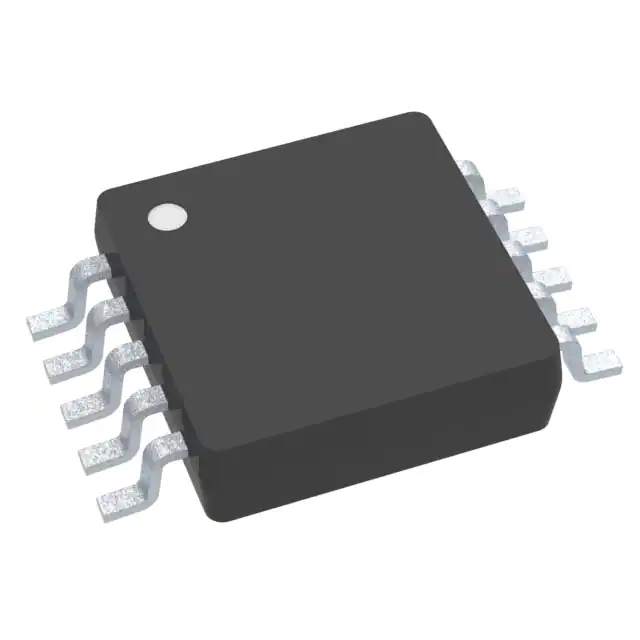
- 10-TFSOP, 10-MSOP (0.118", 3.00mm Width)
- Datasheet:
-
 DRV2604LDGSR.pdf
- Description:
- IC MOTOR DRIVER 2V-5.5V 10VSSOP
- Quantity:
- Payment:

- Shipping:

Inventory:2,877
Please send an inquiry. Send us your inquiry, and we will respond immediately.
Product details
Overview
DRV2604LDGSR from Texas Instruments is a 2-V to 5.2-V haptic driver IC optimized for closed-loop control of Linear Resonance Actuators (LRA) and Eccentric Rotating Mass (ERM) motors. It integrates 100+ waveform RAM, Smart-Loop architecture with automatic resonance tracking (LRA), real-time back-EMF detection, and differential PWM output drive - enabling precise tactile feedback in space-constrained mobile devices.
For engineers reviewing the DRV2604LDGSR datasheet, DRV2604LDGSR pinout, DRV2604LDGSR application, or DRV2604LDGSR equivalent, key selection criteria include LRA/ERM dual-mode support, I²C-controlled playback engine, auto-calibration capability, 1.8-V tolerant digital interface, and DSBGA-9 package compatibility with sub-1.5 mm² footprint.
Technical Context
The DRV2604LDGSR implements a trinary-modulated differential output stage for high-efficiency actuator drive and uses real-time back-EMF sampling to sustain closed-loop operation. Its Smart-Loop architecture performs automatic overdrive, braking, level calibration, and actuator diagnostics without host intervention.
It supports three input modes via IN/TRIG pin (I²C-configurable): hardware-triggered playback, real-time I²C waveform streaming (RTP), and analog/PWM input. The device transitions autonomously between closed-loop (back-EMF valid) and open-loop (no back-EMF) operation for LRA - with configurable fallback frequency and synchronization behavior.
Key Specifications
| Parameter | Value and Actual Design Meaning |
|---|---|
| Supply Voltage Range | 2 V to 5.2 V - enables direct integration with single-cell Li-ion battery systems without external regulation. |
| Output Drive Type | Differential switching output - delivers high peak current with low conduction loss and minimal heat generation. |
| LRA Frequency Range | 125 Hz to 300 Hz - covers standard LRA resonant bands used in smartphones and wearables. |
| I²C Interface | 400-kHz Fast Mode - compatible with standard microcontroller I²C peripherals; 1.8-V tolerant inputs. |
| Startup Time | 0.7 ms (GO bit) / 1.5 ms (EN high) - ensures near-instantaneous haptic response for UI feedback. |
| Internal RAM Size | ≥100 preloaded waveforms - eliminates host memory burden and enables deterministic playback latency. |
| Quiescent Current | 0.5–0.65 mA - minimizes standby power draw in always-on haptic subsystems. |
Pinout & Package
DRV2604LDGSR is packaged in a 9-pin DSBGA (YZF) with 0.5-mm pitch and 1.50 mm × 1.50 mm body size - optimized for ultra-thin mobile PCB layouts.
| Pin/Terminal | Circuit Role | Design Meaning |
|---|---|---|
| EN | Enable input | Active-high digital enable; internal 2-MΩ pull-down ensures safe default-off state during power-up. |
| REG | 1.8-V regulator output | Provides regulated 1.8-V supply for internal logic and I²C interface; requires 1-µF decoupling capacitor. |
| OUT+ | Differential output (positive) | Drives one side of LRA/ERM load; paired with OUT− to deliver balanced, low-noise haptic drive signal. |
| OUT− | Differential output (negative) | Complements OUT+; differential swing improves EMI performance and reduces ground bounce. |
| IN/TRIG | Multi-function input | Configurable as hardware trigger, analog voltage input, or PWM signal - simplifies system-level interface options. |
| SDA | I²C data line | Open-drain, 1.8-V tolerant I/O; supports bidirectional waveform upload, register access, and status readback. |
| SCL | I²C clock line | Input-only, 1.8-V tolerant; 400-kHz max clock rate enables fast configuration and real-time waveform streaming. |
| GND | Power ground | Primary return path for output current and internal regulator; must be connected to low-impedance PCB ground plane. |
| VDD | Main supply input | Accepts 2–5.2 V; requires 1-µF ceramic decoupling capacitor placed adjacent to pin for stable operation. |
Key Features
| Feature | Design Value |
|---|---|
| Smart-Loop Architecture | Enables automatic resonance tracking (LRA), overdrive, braking, and level calibration - eliminating need for per-actuator firmware tuning. |
| Back-EMF Detection | Real-time analog sensing with programmable gain and sampling timing - ensures robust closed-loop operation across diverse LRA models. |
| Auto-Calibration Engine | Compensates for actuator-to-actuator variation in back-EMF magnitude and resistive losses - guarantees consistent rated-voltage delivery. |
| Dual-Mode I²C Interface | Supports both memory-based playback (preloaded waveforms) and real-time streaming (RTP) - offers flexibility for static and dynamic haptic content. |
| Fail-Safe Open-Loop Fallback | Automatically switches to configurable open-loop drive if LRA fails to generate valid back-EMF - maintains basic functionality during fault conditions. |
Applications
| Smartphone Tactile Feedback | Wearable Haptic Alerts |
|---|---|
|
Use Scenario: Simulating button press, scroll inertia, and notification vibration in Android/iOS UI frameworks. IC Role / Device Role / Timing Role: Closed-loop LRA driver executing preloaded Immersion TouchSense® 3000 waveforms with <1-ms startup latency. Use Value: Delivers consistent acceleration amplitude and timing across battery discharge cycles due to drive compensation and auto-calibration. |
Use Scenario: Delivering discreet, low-power haptic cues for fitness tracking alerts, call notifications, and gesture confirmation. IC Role / Device Role / Timing Role: Low-quiescent-current ERM controller using hardware-triggered playback to minimize MCU wake-ups. Use Value: Achieves <7 µA shutdown current and 0.65 mA active quiescent draw - extending wearable battery life by >15% versus legacy drivers. |
| Tablet Stylus Interaction | AR/VR Controller Feedback |
|
Use Scenario: Providing pressure-sensitive haptics during stylus tip contact and tilt-based menu navigation. IC Role / Device Role / Timing Role: Real-time I²C waveform streaming (RTP mode) synchronized to stylus ADC sampling at 100 Hz. Use Value: Enables dynamic waveform morphing based on stylus force - supported by 400-kHz I²C bandwidth and <0.7-ms GO-bit latency. |
Use Scenario: Generating directional, multi-frequency haptics for object interaction and spatial audio alignment in immersive environments. IC Role / Device Role / Timing Role: Dual-actuator driver managing independent LRA (for fine texture) and ERM (for coarse impact) outputs. Use Value: Uses Smart-Loop's automatic resonance tracking and braking stabilization to maintain fidelity across variable mechanical loading in handheld controllers. |
Equivalent & Alternatives
The following parts are listed as comparable options for similar haptic driver applications.
| Alternative Part | Technical Difference | Application Difference | Selection Advice |
|---|---|---|---|
| DRV2605LDGST | Includes integrated boost converter (up to 22 V); supports higher-voltage LRAs; larger 10-pin VSSOP package. | Required for LRAs needing >5.2 V drive; not suitable for space-constrained DSBGA designs. | Select when driving high-impedance LRAs or requiring extended voltage headroom beyond battery rail. |
| MAX20303EWJ+T | PMIC-integrated haptic driver with buck/boost, fuel gauge, and USB-C PD; no internal waveform RAM; SPI interface only. | Targets power-constrained wearables needing system-level power management; lacks LRA resonance tracking. | Choose when consolidating power and haptics into single PMIC; avoid if closed-loop LRA control or waveform memory is required. |
Compared with DRV2604LDGSR, DRV2605LDGST adds voltage boosting but increases board area and BOM count, while MAX20303EWJ+T reduces component count at the cost of haptic-specific features like Smart-Loop and RAM-based playback - making DRV2604LDGSR optimal for dedicated, high-fidelity haptic subsystems in compact mobile form factors.
Availability
DRV2604LDGSR is available at Aetrix Electronics and suitable for smartphone tactile feedback, wearable haptic alerts, tablet stylus interaction, AR/VR controller feedback, and portable medical device user interface applications requiring stable component supply and long-term production continuity.
Supply support for DRV2604LDGSR includes scheduled delivery planning, volume procurement assistance, BOM continuity management, traceable sourcing, and lifecycle availability coordination for OEM customers, industrial embedded developers, connected-device designers, and electronics production programs.
Manufacturer
Texas Instruments is a global semiconductor leader specializing in analog, embedded processing, and connectivity technologies - with decades of expertise in precision power management and signal chain solutions.
The DRV2604LDGSR belongs to TI's haptic driver product line, engineered specifically for high-fidelity, low-latency tactile feedback in battery-powered consumer electronics - emphasizing closed-loop control, energy efficiency, and seamless integration with mobile SoCs.
FAQ
What actuator types does the DRV2604LDGSR support?
The DRV2604LDGSR supports both Linear Resonance Actuators (LRA) and Eccentric Rotating Mass (ERM) motors. It uses Smart-Loop architecture to automatically adapt control parameters - including resonance tracking for LRA and feedback-optimized drive for ERM - ensuring optimal performance without manual tuning. The ERM_LRA bit in register 0x1A selects the active actuator type.
How does the DRV2604LDGSR handle battery voltage variation during operation?
The DRV2604LDGSR compensates for battery discharge through its Smart-Loop architecture and drive compensation algorithms. It maintains consistent haptic output amplitude across the 2-V to 5.2-V supply range by dynamically adjusting drive strength and leveraging real-time back-EMF feedback - eliminating perceptible weakening of vibrations as the battery depletes.
Does the DRV2604LDGSR require external components for basic operation?
Yes - the DRV2604LDGSR requires two mandatory external capacitors: a 1-µF ceramic capacitor on VDD and another 1-µF capacitor on REG. These ensure stable power delivery and clean 1.8-V logic supply. No external resistors or inductors are needed for standard LRA/ERM operation, though an RC filter may be added for oscilloscope measurement per TI's recommended test setup.
Can the DRV2604LDGSR operate without an I²C host controller?
Yes - the DRV2604LDGSR supports standalone operation via its IN/TRIG pin, which can be configured as a hardware trigger input. In this mode, preloaded waveforms stored in internal RAM are executed on rising/falling edges of the trigger signal, enabling haptic feedback without continuous I²C communication or host CPU involvement.
What is the purpose of the REG pin on the DRV2604LDGSR?
The REG pin on the DRV2604LDGSR is a dedicated 1.8-V regulator output that powers the internal digital logic and I²C interface circuitry. It must be decoupled with a 1-µF ceramic capacitor to ensure noise-free operation. This regulated supply allows the device to maintain full functionality even when VDD drops below 1.8 V - supporting robust operation across wide battery voltage ranges.
DRV2604LDGSR Specifications
- Product attributes
- Attribute value
- Manufacturer:
- Texas Instruments
- Series:
- -
- Package/Case:
- 10-TFSOP, 10-MSOP (0.118", 3.00mm Width)
- Packaging:
- Tape & Reel (TR)
- Product Status:
- Active
- Motor Type - Stepper:
- -
- Motor Type - AC, DC:
- ERM, LRA
- Function:
- Driver - Fully Integrated, Control and Power Stage
- Output Configuration:
- Half Bridge (2)
- Interface:
- I2C
- Technology:
- Power MOSFET
- Step Resolution:
- -
- Applications:
- Haptic Feedback
- Current - Output:
- -
- Voltage - Supply:
- 2V ~ 5.5V
- Voltage - Load:
- 2V ~ 5.5V
- Operating Temperature:
- -40°C ~ 85°C (TA)
- Grade:
- -
- Qualification:
- -
- Mounting Type:
- Surface Mount
- Supplier Device Package:
- 10-VSSOP
DRV2604LDGSR FAQ
1.How can I place an order for DRV2604LDGSR through Aetrix?
Please submit a Request for Quotation (RFQ) for DRV2604LDGSR on Aetrix. Our sales agent will provide a competitive quotation and guide you through the order confirmation once you accept the terms.
2.Are the price and stock information for DRV2604LDGSR reliable?
The price and inventory of DRV2604LDGSR are updated periodically and may fluctuate due to market conditions. Stock and pricing data are typically refreshed every 24 hours. Quotation validity for DRV2604LDGSR is usually 5 days.
3.What payment methods are accepted for DRV2604LDGSR?
We accept Wire Transfer, PayPal, Credit Card, Western Union, MoneyGram, and Escrow for DRV2604LDGSR transactions.
Note: Certain payment methods may incur a processing fee.
4.How is shipping managed for DRV2604LDGSR?
DRV2604LDGSR orders can be shipped via leading logistics carriers, including DHL, UPS, FedEx, TNT, or Registered Mail.
Once your DRV2604LDGSR order is processed, you will receive an email with the shipment details and tracking number.
Note: Tracking information may take up to 24 hours to appear. Express delivery typically takes 3–5 business days.
5.How can I obtain technical support or documentation for DRV2604LDGSR?
For technical support, including DRV2604LDGSR datasheets, pinout diagrams, or application guidance, please contact our engineering support team. They can provide detailed documentation and assistance for your DRV2604LDGSR requirements.
6.How does Aetrix verify that DRV2604LDGSR is sourced from the original manufacturer or authorized distributors?
All DRV2604LDGSR products on Aetrix are procured from qualified distributors and authorized channels. Our dedicated quality assurance team conducts strict verification, including traceability checks and, if necessary, third-party testing. This ensures that DRV2604LDGSR meets industry standards.
7.What is the process for return or replacement of DRV2604LDGSR?
All DRV2604LDGSR units undergo pre-shipment inspection (PSI). If there is an issue with DRV2604LDGSR, returns or replacements are accepted under the following conditions:
1.Quantity discrepancies, incorrect items, or visible external defects (such as breakage or corrosion), acknowledged by Aetrix.
2.The issue is reported within 90 days of delivery.
3.The DRV2604LDGSR part is unused and in its original packaging.
Return procedure for DRV2604LDGSR:
1.Submit a request within 90 days.
2.Obtain a Return Material Authorization (RMA) from Aetrix.
DRV2604LDGSR Tags
-
DRV2603RUNR
Texas Instruments
-
DRV8837CDSGR
Texas Instruments
-
DRV8837DSGR
Texas Instruments
-
DRV8838DSGR
Texas Instruments
-
DRV8839DSSR
Texas Instruments
-
EMC2301-1-ACZL-TR
Microchip Technology
-
DRV8231ADSGR
Texas Instruments
-
EMC2302-2-AIZL-TR
Microchip Technology
-
DRV8800PWPR
Texas Instruments
-
DRV8835DSSR
Texas Instruments
-
EMC2303-1-KP-TR
Microchip Technology
-
DRV8876PWPR
Texas Instruments
Tech Hub

A practical engineering guide to 3.3V and 5V logic compatibility, input thresholds, resistor dividers, translator ICs, MOSFET level shifting, I2C pull-ups, timing limits and power-sequencing risks.

The 74HC595 uses push-pull logic outputs, while the TPIC6B595 uses 50 V open-drain DMOS sinks for higher-power loads. This guide compares timing, current limits, 3.3 V interfacing, load wiring, thermal…

The 74HC595 converts serial data into eight stable parallel outputs. This guide covers pin functions, shift and storage timing, OE and MR behavior, drive-current limits, cascading, voltage compatibilit…

A technical comparison of level-sensitive latches and edge-triggered flip-flops, covering timing windows, setup and hold limits, master–slave operation, time borrowing, race-through, HDL inference and…

A D latch stores one bit while Enable controls when data can pass. This reference covers gate-level operation, truth tables, transparency, setup and hold timing, LE versus OE, common ICs and practical …

An SR latch stores one bit through cross-coupled feedback. This engineering reference covers NOR and NAND implementations, truth tables, forbidden-state recovery, gated operation, switch debouncing, fa…

Latch circuits retain one bit through feedback. This technical reference covers SR and D latches, truth tables, transparency, timing limits, latch-versus-flip-flop behavior, applications and common log…

An engineering guide to LED driver operation, constant-current and constant-voltage outputs, linear and switching topologies, dimming, IC selection, calculations, replacement compatibility, and fault c…

Operational amplifier guide covering op amp basics, feedback, ideal vs real op amps, common configurations, buffer circuits, offset, bias current, gain-bandwidth, slew rate, rail-to-rail limits and sel…

Jumper cables guide covering safe connection order, red and black clamp placement, final ground connection, cable gauge, length, clamp quality, copper vs CCA cables, jump starter comparison and battery…


