
 My Inquiry
 My Account


Texas Instruments DRV2604LYZFR
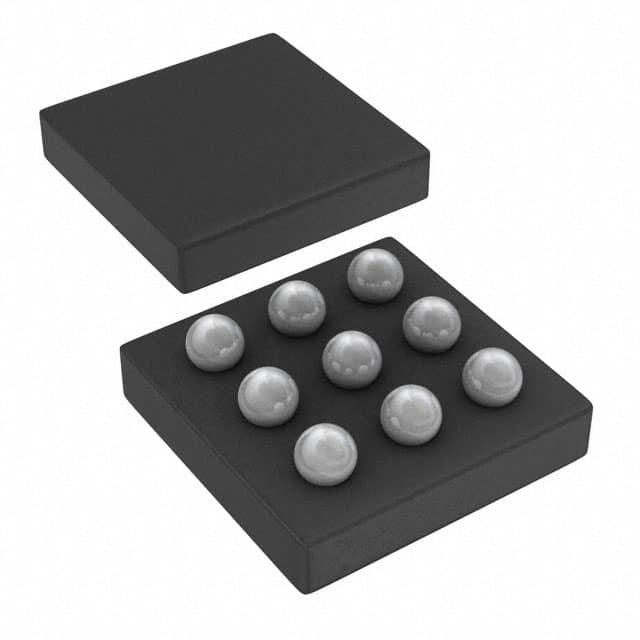
- Part No.:
- DRV2604LYZFR
- Manufacturer:
- Texas Instruments
- Category:
- Motor Drivers, Controllers
- Package:
- 9-UFBGA, DSBGA
- Datasheet:
-
 DRV2604LYZFR.pdf
- Description:
- IC MOTOR DRIVER 2V-5.5V 9DSBGA
- Quantity:
- Payment:

- Shipping:

Inventory:3,605
Please send an inquiry. Send us your inquiry, and we will respond immediately.
Product details
Overview
DRV2604LYZFR from Texas Instruments is a 2-V to 5.2-V haptic driver IC for linear resonance actuators (LRA) and eccentric rotating mass (ERM) motors, featuring integrated RAM, I²C-controlled playback engine, smart-loop closed-loop control with automatic resonance tracking (LRA), overdrive/braking, and back-EMF detection. It delivers consistent tactile feedback in mobile phones and tablets.
For engineers reviewing the DRV2604LYZFR datasheet, DRV2604LYZFR pinout, DRV2604LYZFR application, or DRV2604LYZFR equivalent, key selection criteria include LRA/ERM dual-mode support, 9-pin DSBGA package compatibility, 1.8-V I²C interface tolerance, internal waveform memory capacity (>100 waveforms), and real-time playback capability via I²C.
Technical Context
The DRV2604LYZFR implements a patent-pending smart-loop architecture combining real-time back-EMF sensing, auto-resonance tracking for LRAs (125–300 Hz), and feedback-optimized ERM drive. Its trinary-modulated differential output stage enables efficient switching drive with automatic overdrive boost and brake stabilization.
It supports three operational modes: RAM-based waveform playback (I²C or hardware trigger), real-time playback (RTP) via I²C, and open-loop PWM/analog input. The device automatically transitions between closed-loop and open-loop operation based on valid back-EMF detection, with configurable loop gain, brake factor, and calibration timing.
Key Specifications
| Parameter | Value and Actual Design Meaning |
|---|---|
| Supply Voltage Range | 2 V to 5.2 V - supports single-cell Li-ion and Li-poly battery systems without external regulation |
| I²C Interface Voltage | 1.8-V tolerant - interoperable with low-voltage application processors without level shifters |
| LRA Frequency Range | 125 Hz to 300 Hz - covers full resonant range of common linear actuators used in smartphones |
| Startup Time | 0.7 ms - enables sub-millisecond tactile response critical for UI feedback |
| Internal RAM Size | ≥100 waveforms - sufficient for complex haptic sequences without host processor intervention |
| ESD Rating (HBM) | ±1000 V - meets robustness requirements for handheld consumer electronics assembly |
| Thermal Resistance (θJA) | 145.2 °C/W - validated for compact 1.5 mm × 1.5 mm DSBGA package in thermally constrained PCB layouts |
Pinout & Package
DRV2604LYZFR is packaged in a 9-pin DSBGA (YZF) with 0.5-mm pitch and 1.50 mm × 1.50 mm body size. The package is optimized for space-constrained mobile applications and requires no thermal pad.
| Pin/Terminal | Circuit Role | Design Meaning |
|---|---|---|
| A1 EN | Enable input | Active-high digital enable; internal 2 MΩ pull-down ensures safe default shutdown state |
| A2 REG | 1.8-V regulator output | Provides regulated 1.8-V supply for I²C interface; requires 1-µF decoupling capacitor |
| A3 OUT+ | Differential output (+) | Drives positive terminal of LRA/ERM; paired with OUT− for balanced drive and EMI reduction |
| B1 IN/TRIG | Multi-function input | Configurable as PWM, analog, or hardware trigger; must be tied to GND if unused |
| B2 SDA | I²C data bidirectional | Open-drain I²C bus line; 1.8-V tolerant, supports standard/fast-mode (400 kHz) communication |
| B3 GND | Power ground | Primary return path for haptic current and digital logic; must be connected to low-impedance system ground plane |
| C1 SCL | I²C clock input | Master-generated clock; synchronizes all register reads/writes and waveform triggers |
| C2 VDD | Main power input | 2–5.2 V supply; requires 1-µF ceramic decoupling capacitor placed near pin |
| C3 OUT− | Differential output (−) | Completes differential haptic drive path; enables zero-net DC current through actuator |
Key Features
| Feature | Design Value |
|---|---|
| Smart-loop closed-loop control | Enables automatic resonance tracking (LRA) and feedback-optimized drive (ERM), eliminating need for actuator-specific waveform tuning |
| Auto-calibration of back-EMF gain | Compensates for inter-actuator variation in back-EMF magnitude during initialization, ensuring consistent output amplitude across production units |
| Automatic overdrive and braking | Reduces start/stop latency by dynamically adjusting drive voltage-no host-side waveform pre-compensation required |
| Real-time resonance reporting | Exposes LRA resonant period (0x22 register) via I²C, enabling host firmware to adapt haptic effects to mechanical aging or temperature drift |
| Actuator diagnostics | Detects open-circuit (no actuator) and short-circuit faults during startup, reporting status via DIAG_RESULT bit for system-level error handling |
Applications
| Mobile Phone UI Feedback | Tablet Gaming Haptics |
|---|---|
Use Scenario: Providing precise click, tap, and swipe feedback during touchscreen interaction in Android/iOS devices. IC Role / Device Role / Timing Role: Haptic driver executing closed-loop LRA control with <1-ms latency and automatic resonance tracking. Use Value: Delivers consistent acceleration profiles across battery discharge cycles and temperature ranges, improving perceived UI responsiveness. | Use Scenario: Delivering immersive vibration effects synchronized with game events (e.g., weapon recoil, terrain impact). IC Role / Device Role / Timing Role: Real-time playback (RTP) engine receiving dynamic waveform data over I²C from GPU or application processor. Use Value: Enables host-driven variable-intensity effects without preloading, supporting adaptive haptic rendering in resource-constrained embedded systems. |
| Wearable Device Alerts | Industrial Handheld Keypads |
Use Scenario: Generating discreet, low-power tactile alerts for notifications in smartwatches and fitness bands. IC Role / Device Role / Timing Role: Low-quiescent-current (4.1–7 µA standby) driver operating from 2-V coin cell or small Li-ion battery. Use Value: Extends battery life while maintaining reliable actuator activation under varying load impedance (8–25 Ω). | Use Scenario: Reinforcing button presses in ruggedized industrial scanners and data collectors exposed to shock/vibration. IC Role / Device Role / Timing Role: ERM driver with automatic level calibration and resistive-loss compensation for stable output despite connector/contact resistance drift. Use Value: Ensures tactile feedback remains perceptible after years of mechanical wear and environmental stress. |
Equivalent & Alternatives
The following parts are listed as comparable options for similar haptic driver applications.
| Alternative Part | Technical Difference | Application Difference | Selection Advice |
|---|---|---|---|
| DRV2605L | Includes integrated boost converter (up to 110 V); supports higher-voltage LRAs; larger 16-pin VQFN package | Required for high-performance LRAs needing >5.2 V drive; not drop-in compatible due to different pinout and power architecture | Select when driving high-impedance LRAs or requiring extended voltage headroom beyond battery rail |
| DRV2624 | Single-ended output architecture; no differential drive; lacks real-time resonance reporting; smaller 12-pin WSON package | Suitable for cost-sensitive ERM-only designs where differential noise immunity and LRA auto-tuning are unnecessary | Choose for simplified ERM applications with tight BOM cost targets and no LRA support requirement |
Compared with DRV2605L and DRV2624, the DRV2604LYZFR uniquely balances space-constrained DSBGA packaging, dual LRA/ERM support, differential drive, and real-time resonance telemetry-making it optimal for mainstream smartphone and tablet haptics where board area and closed-loop precision are critical.
Availability
DRV2604LYZFR is available at Aetrix Electronics and suitable for mobile phone UI feedback, tablet gaming haptics, wearable device alerts, and industrial handheld keypads requiring stable component supply and long-term lifecycle support.
Supply support for DRV2604LYZFR includes scheduled delivery planning, volume procurement assistance, BOM continuity management, traceable sourcing, and lifecycle availability coordination for OEM customers, industrial embedded developers, connected-device designers, and electronics production programs.
Manufacturer
Texas Instruments is a global semiconductor company specializing in analog and embedded processing technologies, with leadership in power management, signal chain, and interface solutions.
The DRV2604LYZFR belongs to TI's Immersion TouchSense®-compatible haptic driver product line, engineered specifically for high-fidelity, low-latency tactile feedback in battery-powered portable electronics.
FAQ
What is the primary function of the DRV2604LYZFR in a haptic system?
The DRV2604LYZFR serves as a programmable haptic driver IC that provides closed-loop control for both linear resonance actuators (LRA) and eccentric rotating mass (ERM) motors. It executes automatic resonance tracking, overdrive, braking, and level calibration using back-EMF feedback. The DRV2604LYZFR integrates an I²C-controlled playback engine and >100-waveform RAM, enabling high-fidelity tactile feedback in compact mobile devices without host processor overhead.
Does the DRV2604LYZFR require external components for basic operation?
Yes, the DRV2604LYZFR requires two mandatory external capacitors: a 1-µF ceramic capacitor on VDD and a 1-µF capacitor on the REG pin. These ensure stable power delivery and proper 1.8-V I²C interface regulation. No external inductors or boost circuitry are needed, as the DRV2604LYZFR uses an efficient trinary-modulated differential output stage. All other functionality-including RAM storage, smart-loop algorithms, and diagnostics-is fully integrated within the DRV2604LYZFR die.
How does the smart-loop architecture in the DRV2604LYZFR improve LRA performance?
The smart-loop architecture in the DRV2604LYZFR improves LRA performance by continuously monitoring back-EMF to track resonant frequency in real time (125–300 Hz), automatically adjusting drive frequency to maintain peak efficiency. It enables automatic overdrive at startup and active braking at stop-reducing latency to 0.7 ms-and performs on-the-fly level calibration to compensate for actuator variance and battery droop. This eliminates manual tuning and ensures consistent tactile output across temperature, aging, and voltage conditions for the DRV2604LYZFR.
Can the DRV2604LYZFR operate in open-loop mode, and when would that be necessary?
Yes, the DRV2604LYZFR can operate in open-loop mode via its IN/TRIG pin configured for PWM or analog input, or automatically when LRA back-EMF is invalid. Open-loop mode is necessary for off-resonance LRA driving, rapid prototyping without calibration, or fallback operation during actuator fault conditions. While open-loop mode bypasses smart-loop benefits like auto-tracking and braking, the DRV2604LYZFR retains internal PWM generation and 0–100% duty-cycle control-ensuring functional haptic output even when closed-loop operation is unavailable.
What package type and footprint does the DRV2604LYZFR use, and why is it significant?
The DRV2604LYZFR uses a 9-pin DSBGA (YZF) package measuring 1.50 mm × 1.50 mm with 0.5-mm pitch. This ultra-compact chip-scale package minimizes PCB area-critical for thin smartphones and wearables-while maintaining thermal performance (θJA = 145.2 °C/W). Its solder-ball layout enables high-density routing and low-inductance connections to VDD and GND. The YZF footprint is standardized across TI's haptic portfolio, simplifying design reuse and reducing layout risk for the DRV2604LYZFR in space-constrained applications.
DRV2604LYZFR Specifications
- Product attributes
- Attribute value
- Manufacturer:
- Texas Instruments
- Series:
- -
- Package/Case:
- 9-UFBGA, DSBGA
- Packaging:
- Tape & Reel (TR)
- Product Status:
- Active
- Motor Type - Stepper:
- -
- Motor Type - AC, DC:
- ERM, LRA
- Function:
- Driver - Fully Integrated, Control and Power Stage
- Output Configuration:
- Half Bridge (2)
- Interface:
- I2C
- Technology:
- Power MOSFET
- Step Resolution:
- -
- Applications:
- Haptic Feedback
- Current - Output:
- -
- Voltage - Supply:
- 2V ~ 5.5V
- Voltage - Load:
- 2V ~ 5.5V
- Operating Temperature:
- -40°C ~ 85°C (TA)
- Grade:
- -
- Qualification:
- -
- Mounting Type:
- Surface Mount
- Supplier Device Package:
- 9-DSBGA
DRV2604LYZFR FAQ
1.How can I place an order for DRV2604LYZFR through Aetrix?
Please submit a Request for Quotation (RFQ) for DRV2604LYZFR on Aetrix. Our sales agent will provide a competitive quotation and guide you through the order confirmation once you accept the terms.
2.Are the price and stock information for DRV2604LYZFR reliable?
The price and inventory of DRV2604LYZFR are updated periodically and may fluctuate due to market conditions. Stock and pricing data are typically refreshed every 24 hours. Quotation validity for DRV2604LYZFR is usually 5 days.
3.What payment methods are accepted for DRV2604LYZFR?
We accept Wire Transfer, PayPal, Credit Card, Western Union, MoneyGram, and Escrow for DRV2604LYZFR transactions.
Note: Certain payment methods may incur a processing fee.
4.How is shipping managed for DRV2604LYZFR?
DRV2604LYZFR orders can be shipped via leading logistics carriers, including DHL, UPS, FedEx, TNT, or Registered Mail.
Once your DRV2604LYZFR order is processed, you will receive an email with the shipment details and tracking number.
Note: Tracking information may take up to 24 hours to appear. Express delivery typically takes 3–5 business days.
5.How can I obtain technical support or documentation for DRV2604LYZFR?
For technical support, including DRV2604LYZFR datasheets, pinout diagrams, or application guidance, please contact our engineering support team. They can provide detailed documentation and assistance for your DRV2604LYZFR requirements.
6.How does Aetrix verify that DRV2604LYZFR is sourced from the original manufacturer or authorized distributors?
All DRV2604LYZFR products on Aetrix are procured from qualified distributors and authorized channels. Our dedicated quality assurance team conducts strict verification, including traceability checks and, if necessary, third-party testing. This ensures that DRV2604LYZFR meets industry standards.
7.What is the process for return or replacement of DRV2604LYZFR?
All DRV2604LYZFR units undergo pre-shipment inspection (PSI). If there is an issue with DRV2604LYZFR, returns or replacements are accepted under the following conditions:
1.Quantity discrepancies, incorrect items, or visible external defects (such as breakage or corrosion), acknowledged by Aetrix.
2.The issue is reported within 90 days of delivery.
3.The DRV2604LYZFR part is unused and in its original packaging.
Return procedure for DRV2604LYZFR:
1.Submit a request within 90 days.
2.Obtain a Return Material Authorization (RMA) from Aetrix.
DRV2604LYZFR Tags
-
DRV2603RUNR
Texas Instruments
-
DRV8837CDSGR
Texas Instruments
-
DRV8837DSGR
Texas Instruments
-
DRV8838DSGR
Texas Instruments
-
DRV8839DSSR
Texas Instruments
-
EMC2301-1-ACZL-TR
Microchip Technology
-
DRV8231ADSGR
Texas Instruments
-
EMC2302-2-AIZL-TR
Microchip Technology
-
DRV8800PWPR
Texas Instruments
-
DRV8835DSSR
Texas Instruments
-
EMC2303-1-KP-TR
Microchip Technology
-
DRV8876PWPR
Texas Instruments
Tech Hub

A practical engineering guide to 3.3V and 5V logic compatibility, input thresholds, resistor dividers, translator ICs, MOSFET level shifting, I2C pull-ups, timing limits and power-sequencing risks.

The 74HC595 uses push-pull logic outputs, while the TPIC6B595 uses 50 V open-drain DMOS sinks for higher-power loads. This guide compares timing, current limits, 3.3 V interfacing, load wiring, thermal…

The 74HC595 converts serial data into eight stable parallel outputs. This guide covers pin functions, shift and storage timing, OE and MR behavior, drive-current limits, cascading, voltage compatibilit…

A technical comparison of level-sensitive latches and edge-triggered flip-flops, covering timing windows, setup and hold limits, master–slave operation, time borrowing, race-through, HDL inference and…

A D latch stores one bit while Enable controls when data can pass. This reference covers gate-level operation, truth tables, transparency, setup and hold timing, LE versus OE, common ICs and practical …

An SR latch stores one bit through cross-coupled feedback. This engineering reference covers NOR and NAND implementations, truth tables, forbidden-state recovery, gated operation, switch debouncing, fa…

Latch circuits retain one bit through feedback. This technical reference covers SR and D latches, truth tables, transparency, timing limits, latch-versus-flip-flop behavior, applications and common log…

An engineering guide to LED driver operation, constant-current and constant-voltage outputs, linear and switching topologies, dimming, IC selection, calculations, replacement compatibility, and fault c…

Operational amplifier guide covering op amp basics, feedback, ideal vs real op amps, common configurations, buffer circuits, offset, bias current, gain-bandwidth, slew rate, rail-to-rail limits and sel…

Jumper cables guide covering safe connection order, red and black clamp placement, final ground connection, cable gauge, length, clamp quality, copper vs CCA cables, jump starter comparison and battery…


