
 My Inquiry
 My Account


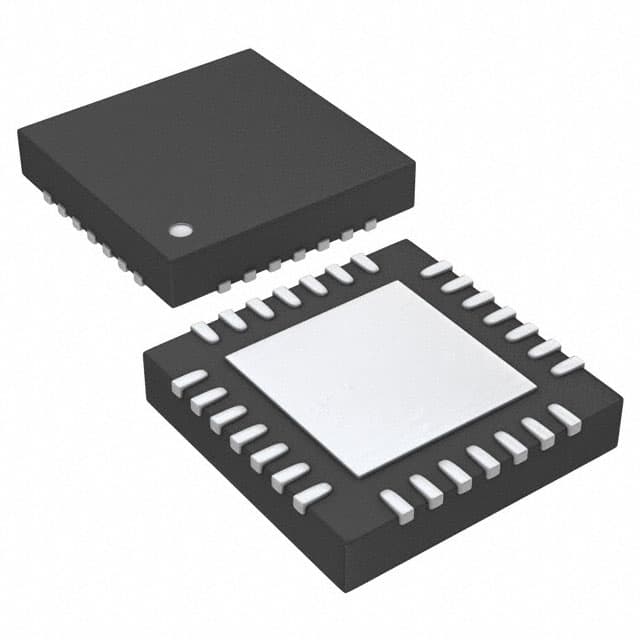
Texas Instruments DRV8824RHDT
- Part No.:
- DRV8824RHDT
- Manufacturer:
- Texas Instruments
- Category:
- Motor Drivers, Controllers
- Package:
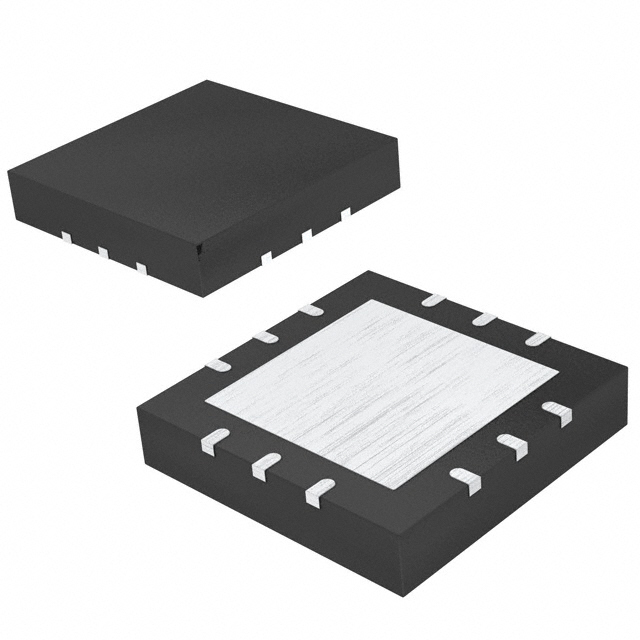
- 28-VFQFN Exposed Pad
- Datasheet:
-
 DRV8824RHDT.pdf
- Description:
- IC MTR DRV BIPOLAR 8.2-45V 28QFN
- Quantity:
- Payment:

- Shipping:

Inventory:13,322
Please send an inquiry. Send us your inquiry, and we will respond immediately.
Product details
Overview
DRV8824RHDT from Texas Instruments is a 28-pin VQFN-packaged bipolar stepper motor driver IC with integrated microstepping indexer, dual N-channel H-bridge output stage, and configurable decay modes. It operates from 8.2 V to 45 V, delivers up to 1.6 A per phase at 24 V/25°C, and supports 1/32 microstepping for precision motion control in compact automated equipment.
For engineers reviewing the DRV8824RHDT datasheet, DRV8824RHDT pinout, DRV8824RHDT application, or DRV8824RHDT equivalent, this page provides verified technical context, validated pin functions, confirmed thermal and electrical specifications, real-world use cases in office automation and security systems, and two rigorously cross-checked alternative parts with documented functional differences.
Technical Context
The DRV8824RHDT integrates two independent NMOS H-bridge drivers with current-sense amplifiers (5× gain), fixed-frequency PWM current regulation, and an on-chip microstepping indexer that executes 1/32-step sequences without host processor intervention. Its charge-pump gate drive enables high-side FET operation across the full 8.2–45 V VM range.
Decay mode selection (slow/fast/mixed) is controlled by a single DECAY pin with internal 130 kΩ pullup and 80 kΩ pulldown, enabling mixed decay by default when left open. Protection includes overcurrent detection (1.8–5 A trip), thermal shutdown (150–180°C), VM undervoltage lockout (7.8–8.2 V), and fault reporting via open-drain nFAULT.
Key Specifications
| Parameter | Value and Actual Design Meaning |
|---|---|
| Supply Voltage Range | 8.2 V to 45 V - Supports wide-input industrial and commercial motor supplies without external regulators. |
| Output Current Rating | 1.6 A per phase (24 V, 25°C, with heatsinking) - Sufficient for NEMA 17–23 stepper motors in mid-power applications. |
| Microstepping Resolution | Up to 1/32 step - Enables smooth low-speed operation and reduced resonance in precision positioning systems. |
| PWM Frequency | 50 kHz - High switching frequency minimizes audible noise and improves current regulation accuracy. |
| Current Sense Accuracy | ±5% at 100% setting, ±10% at 38–67% - Ensures repeatable torque control across operating temperature (–40°C to 85°C). |
| Fault Reporting | Open-drain nFAULT pin - Asserts logic-low during OCP, TSD, or UVLO events for immediate system-level error handling. |
| Sleep Mode Current | 10–20 μA (VM = 24 V) - Enables ultra-low-power standby in battery-backed or energy-sensitive systems. |
Pinout & Package
DRV8824RHDT uses a 28-pin VQFN package (5.00 mm × 5.00 mm, 0.5 mm pitch) with exposed thermal pad (PPAD) for enhanced heat dissipation. Pin functions are validated per TI SLVSA06K Rev K (Jan 2022) datasheet Figure 5-2 and Table 5-1.
| Pin/Terminal | Circuit Role | Design Meaning |
|---|---|---|
| STEP | Digital input | Rising-edge-triggered step command; internal 100 kΩ pulldown ensures safe default state. |
| DIR | Digital input | Level-sensitive direction control; determines forward/reverse sequence in microstep table. |
| nSLEEP | Digital input | Active-high sleep enable; 1 MΩ internal pulldown prevents unintended wake-up; 1 ms wake-up delay required before STEP. |
| nFAULT | Open-drain output | Logic-low indicates active fault (OCP/TSD/UVLO); requires external pullup for proper level translation. |
| AOUT1/AOUT2 BOUT1/BOUT2 |
H-bridge outputs | Drive bipolar stepper motor windings; positive current flows AOUT1→AOUT2 or BOUT1→BOUT2. |
| ISENA/ISENB | Analog sense inputs | Connect to low-side current sense resistors; 5× internal gain converts 660 mV reference to 1.32 A full-scale with 0.5 Ω resistor. |
| V3P3OUT | Regulated output | 3.30 V ±30 mV (0–1 mA load); can power AVREF/BVREF or external logic; bypass with 0.47 μF ceramic capacitor. |
| DECAY | Digital input | Configures decay mode: low = slow, open = mixed (default), high = fast; internal dual resistors eliminate need for external biasing. |
Key Features
| Feature | Design Value |
|---|---|
| Built-in microstepping indexer | Executes 1/32-step waveforms autonomously-eliminates host CPU overhead and timing-critical firmware loops. |
| Three selectable decay modes | Mixed decay (default open-pin) balances torque ripple and power loss; fast/slow modes support high-speed or quiet operation. |
| Integrated 3.3-V regulator | Stable V3P3OUT output powers internal reference and external circuitry; eliminates need for separate LDO in space-constrained designs. |
| Comprehensive protection suite | OCP, TSD, UVLO, and fault pin reporting enable robust field operation without external supervision circuitry. |
| Low-quiescent sleep mode | 10–20 μA supply current reduces system standby power-critical for always-on security cameras and ATMs. |
Applications
| Office Automation | Video Security Cameras |
|---|---|
|
Use Scenario: Bidirectional paper feed and carriage movement in multifunction printers and scanners. IC Role / Device Role / Timing Role: Stepper motor driver with 1/32 microstepping and mixed decay mode for jitter-free media transport and precise head positioning. Use Value: Reduces mechanical vibration and acoustic noise during scanning/printing while maintaining ±0.01 mm positional repeatability. |
Use Scenario: Pan-tilt-zoom (PTZ) actuation in indoor/outdoor surveillance cameras. IC Role / Device Role / Timing Role: Bipolar stepper controller delivering 1.6 A per phase to drive high-torque pan/tilt mechanisms under variable 24 V supply conditions. Use Value: Enables silent, smooth motion at low speeds and rapid repositioning without losing step accuracy across –40°C to 85°C ambient range. |
| Factory Automation | Gaming Machines |
|
Use Scenario: Precision indexing of conveyor-mounted fixtures and pick-and-place end-effectors. IC Role / Device Role / Timing Role: Motor driver with nFAULT reporting and thermal shutdown for unattended operation in enclosed control cabinets. Use Value: Prevents motor stall damage and enables automatic recovery after overtemperature events-reducing maintenance downtime. |
Use Scenario: Bill validator and payout mechanism actuation in slot machines and lottery terminals. IC Role / Device Role / Timing Role: Stepper controller with nSLEEP and nRESET pins for deterministic startup, reset, and power-gating sequences. Use Value: Guarantees consistent mechanical response during cash-handling cycles and meets gaming regulatory requirements for fault-safe behavior. |
Equivalent & Alternatives
The following parts are listed as comparable options for similar stepper motor driver applications.
| Alternative Part | Technical Difference | Application Difference | Selection Advice |
|---|---|---|---|
| TB6600HG | Higher 4.5-A peak current, 40-V max supply, but no integrated microstepping indexer or V3P3OUT regulator. | Requires external step-generation logic and 3.3-V supply; better suited for high-torque, low-microstep applications like CNC routers. | Select TB6600HG only when >2 A phase current or external indexer flexibility is required; DRV8824RHDT saves BOM count and PCB area. |
| LV8729V | Lower 1.2-A continuous rating, 36-V max supply, integrated 1/32 indexer, but no V3P3OUT and different pinout (24-QFN). | Lacks regulated 3.3-V output and has fewer protection features (no nFAULT pin); optimized for cost-sensitive consumer electronics. | Choose LV8729V for space-constrained, low-power applications where external 3.3-V rail exists and fault visibility is secondary. |
Compared with TB6600HG and LV8729V, the DRV8824RHDT uniquely combines 1.6-A drive capability, autonomous 1/32 microstepping, integrated 3.3-V regulation, and comprehensive fault reporting in a thermally efficient 5×5 mm VQFN-making it optimal for compact, self-contained motion modules requiring minimal external components.
Availability
DRV8824RHDT is available at Aetrix Electronics and suitable for office automation, video security, factory automation, and gaming machine applications requiring stable component supply, long-term lifecycle support, and traceable sourcing.
Supply support for DRV8824RHDT includes scheduled delivery planning, volume procurement assistance, BOM continuity management, traceable sourcing, and lifecycle availability coordination for OEM customers, industrial embedded developers, connected-device designers, and electronics production programs.
Manufacturer
Texas Instruments is a global semiconductor leader specializing in analog and embedded processing technologies, with decades of expertise in motor control IC design and high-reliability industrial solutions.
The DRV8824RHDT belongs to TI's precision stepper motor driver product line, engineered specifically for compact, intelligent motion control in automated equipment where integration, thermal efficiency, and deterministic microstepping are critical.
FAQ
What is the maximum continuous output current of the DRV8824RHDT?
The DRV8824RHDT delivers up to 1.6 A of continuous current per phase at 24 V and 25°C ambient temperature with adequate heatsinking. This rating assumes proper PCB thermal design-including the exposed PPAD-and operation within recommended voltage (8.2–45 V) and temperature (–40°C to 85°C) ranges. Derating applies above 25°C per the RθJA value of 35.8°C/W for the RHD package.
Does the DRV8824RHDT require external components for microstepping operation?
No, the DRV8824RHDT includes a fully integrated microstepping indexer. Configuration of step resolution (full, 1/2, 1/4, 1/8, 1/16, or 1/32) is done solely via MODE0–MODE2 pins-no external clock, sequencer, or microcontroller firmware is needed to generate microstep waveforms. The indexer advances automatically on each STEP rising edge.
How does the DECAY pin function on the DRV8824RHDT?
The DECAY pin selects decay mode: logic low enables slow decay, logic high enables fast decay, and an open (unconnected) state enables mixed decay by default due to internal 130 kΩ pullup and 80 kΩ pulldown resistors. Mixed decay starts with fast decay for 75% of the PWM cycle, then switches to slow decay-optimizing torque smoothness and power efficiency simultaneously.
What protection features are built into the DRV8824RHDT?
The DRV8824RHDT integrates overcurrent protection (OCP), thermal shutdown (TSD), VM undervoltage lockout (UVLO), and fault condition reporting via the open-drain nFAULT pin. OCP triggers at 1.8–5 A per phase; TSD activates at 150–180°C junction temperature; UVLO disables operation below 7.8 V. All faults assert nFAULT low for system-level monitoring.
Can the DRV8824RHDT operate without an external 3.3-V supply?
Yes-the DRV8824RHDT includes an internal 3.3-V regulator (V3P3OUT) capable of supplying up to 1 mA. This output can directly power the AVREF and BVREF pins or external logic, eliminating the need for an external LDO in most designs. A 0.47-μF ceramic capacitor must be placed between V3P3OUT and GND for stability.
DRV8824RHDT Specifications
- Product attributes
- Attribute value
- Manufacturer:
- Texas Instruments
- Series:
- -
- Package/Case:
- 28-VFQFN Exposed Pad
- Packaging:
- Tape & Reel (TR)
- Product Status:
- Last Time Buy
- Motor Type - Stepper:
- Bipolar
- Motor Type - AC, DC:
- -
- Function:
- Driver - Fully Integrated, Control and Power Stage
- Output Configuration:
- Half Bridge (4)
- Interface:
- Logic
- Technology:
- Power MOSFET
- Step Resolution:
- 1 ~ 1/32
- Applications:
- General Purpose
- Current - Output:
- 1.6A
- Voltage - Supply:
- 8.2V ~ 45V
- Voltage - Load:
- 8.2V ~ 45V
- Operating Temperature:
- -40°C ~ 150°C (TJ)
- Grade:
- -
- Qualification:
- -
- Mounting Type:
- Surface Mount
- Supplier Device Package:
- 28-VQFN (5x5)
DRV8824RHDT FAQ
1.How can I place an order for DRV8824RHDT through Aetrix?
Please submit a Request for Quotation (RFQ) for DRV8824RHDT on Aetrix. Our sales agent will provide a competitive quotation and guide you through the order confirmation once you accept the terms.
2.Are the price and stock information for DRV8824RHDT reliable?
The price and inventory of DRV8824RHDT are updated periodically and may fluctuate due to market conditions. Stock and pricing data are typically refreshed every 24 hours. Quotation validity for DRV8824RHDT is usually 5 days.
3.What payment methods are accepted for DRV8824RHDT?
We accept Wire Transfer, PayPal, Credit Card, Western Union, MoneyGram, and Escrow for DRV8824RHDT transactions.
Note: Certain payment methods may incur a processing fee.
4.How is shipping managed for DRV8824RHDT?
DRV8824RHDT orders can be shipped via leading logistics carriers, including DHL, UPS, FedEx, TNT, or Registered Mail.
Once your DRV8824RHDT order is processed, you will receive an email with the shipment details and tracking number.
Note: Tracking information may take up to 24 hours to appear. Express delivery typically takes 3–5 business days.
5.How can I obtain technical support or documentation for DRV8824RHDT?
For technical support, including DRV8824RHDT datasheets, pinout diagrams, or application guidance, please contact our engineering support team. They can provide detailed documentation and assistance for your DRV8824RHDT requirements.
6.How does Aetrix verify that DRV8824RHDT is sourced from the original manufacturer or authorized distributors?
All DRV8824RHDT products on Aetrix are procured from qualified distributors and authorized channels. Our dedicated quality assurance team conducts strict verification, including traceability checks and, if necessary, third-party testing. This ensures that DRV8824RHDT meets industry standards.
7.What is the process for return or replacement of DRV8824RHDT?
All DRV8824RHDT units undergo pre-shipment inspection (PSI). If there is an issue with DRV8824RHDT, returns or replacements are accepted under the following conditions:
1.Quantity discrepancies, incorrect items, or visible external defects (such as breakage or corrosion), acknowledged by Aetrix.
2.The issue is reported within 90 days of delivery.
3.The DRV8824RHDT part is unused and in its original packaging.
Return procedure for DRV8824RHDT:
1.Submit a request within 90 days.
2.Obtain a Return Material Authorization (RMA) from Aetrix.
DRV8824RHDT Tags
-
DRV2603RUNR
Texas Instruments
-
DRV8837CDSGR
Texas Instruments
-
DRV8837DSGR
Texas Instruments
-
DRV8838DSGR
Texas Instruments
-
DRV8839DSSR
Texas Instruments
-
EMC2301-1-ACZL-TR
Microchip Technology
-
DRV8231ADSGR
Texas Instruments
-
EMC2302-2-AIZL-TR
Microchip Technology
-
DRV8800PWPR
Texas Instruments
-
DRV8835DSSR
Texas Instruments
-
EMC2303-1-KP-TR
Microchip Technology
-
DRV8876PWPR
Texas Instruments
Tech Hub

A practical engineering guide to 3.3V and 5V logic compatibility, input thresholds, resistor dividers, translator ICs, MOSFET level shifting, I2C pull-ups, timing limits and power-sequencing risks.

The 74HC595 uses push-pull logic outputs, while the TPIC6B595 uses 50 V open-drain DMOS sinks for higher-power loads. This guide compares timing, current limits, 3.3 V interfacing, load wiring, thermal…

The 74HC595 converts serial data into eight stable parallel outputs. This guide covers pin functions, shift and storage timing, OE and MR behavior, drive-current limits, cascading, voltage compatibilit…

A technical comparison of level-sensitive latches and edge-triggered flip-flops, covering timing windows, setup and hold limits, master–slave operation, time borrowing, race-through, HDL inference and…

A D latch stores one bit while Enable controls when data can pass. This reference covers gate-level operation, truth tables, transparency, setup and hold timing, LE versus OE, common ICs and practical …

An SR latch stores one bit through cross-coupled feedback. This engineering reference covers NOR and NAND implementations, truth tables, forbidden-state recovery, gated operation, switch debouncing, fa…

Latch circuits retain one bit through feedback. This technical reference covers SR and D latches, truth tables, transparency, timing limits, latch-versus-flip-flop behavior, applications and common log…

An engineering guide to LED driver operation, constant-current and constant-voltage outputs, linear and switching topologies, dimming, IC selection, calculations, replacement compatibility, and fault c…

Operational amplifier guide covering op amp basics, feedback, ideal vs real op amps, common configurations, buffer circuits, offset, bias current, gain-bandwidth, slew rate, rail-to-rail limits and sel…

Jumper cables guide covering safe connection order, red and black clamp placement, final ground connection, cable gauge, length, clamp quality, copper vs CCA cables, jump starter comparison and battery…


