
 My Inquiry
 My Account


Texas Instruments DRV8846RGET
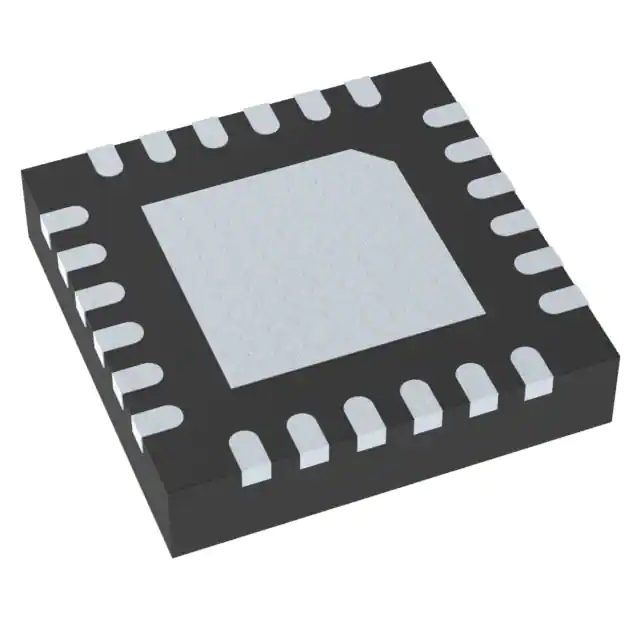
- Part No.:
- DRV8846RGET
- Manufacturer:
- Texas Instruments
- Category:
- Motor Drivers, Controllers
- Package:
- 24-VFQFN Exposed Pad
- Datasheet:
-
 DRV8846RGET.pdf
- Description:
- IC MOTOR DRIVER PAR 24VQFN
- Quantity:
- Payment:

- Shipping:

Inventory:221
Please send an inquiry. Send us your inquiry, and we will respond immediately.
Product details
Overview
DRV8846RGET from Texas Instruments is a dual H-bridge stepper motor driver IC with integrated microstepping indexer, 4–18 V operating range, 1.4-A full-scale output current per bridge (at 25°C with heatsinking), 1/32 microstepping resolution, and STEP/DIR control interface-designed for precision motion control in compact optical positioning systems.
For engineers reviewing the DRV8846RGET datasheet, DRV8846RGET pinout, DRV8846RGET application, or DRV8846RGET equivalent, this page delivers verified technical context, validated pin functions, confirmed decay mode configurations (Smart Tune, mixed/slow/fast), real-world torque DAC scaling (12.5–100%), and precise thermal shutdown behavior (150°C trip, 50°C hysteresis).
Technical Context
The DRV8846RGET integrates two independent NMOS/PMOS H-bridges with fixed-off-time PWM current regulation, adaptive blanking time, and a hardware-based microstepping indexer that executes 1/32-step sequences without host CPU intervention. Its tri-level input architecture (M0/M1, I0/I1, DEC0/DEC1, TOFF_SEL) enables dynamic configuration of step mode, torque scaling, decay type, and off-time (10/20/30 µs).
Internal protection includes VM undervoltage lockout (3.0 V recovery), overcurrent detection (2 A trip), and thermal shutdown with hysteresis-reported via open-drain nFAULT. The device uses internal 3.3-V reference (VINT-bypassed) and supports external VREF (1–3.3 V) with 6.6× attenuation for current sense threshold setting.
Key Specifications
| Parameter | Value and Actual Design Meaning |
|---|---|
| Supply Voltage | 4–18 V - Enables direct use with 5 V, 12 V, or 15 V motor rails without external regulators. |
| Full-Scale Output Current | 1.4 A per H-bridge at TA = 25°C with heatsinking - Supports NEMA 11–17 bipolar stepper motors in space-constrained designs. |
| Microstepping Resolution | 1/32 step - Achieves 6400 steps/rev with 1.8° motors, enabling sub-arcminute positioning accuracy. |
| PWM Off-Time Options | 10 / 20 / 30 µs - Selectable via TOFF_SEL tri-level pin to optimize current ripple vs. torque response across motor inductance ranges. |
| Torque DAC Scaling | 12.5% to 100% in 12.5% steps - Digitally adjusts full-scale current without modifying VREF or sense resistor, reducing power dissipation during idle/low-torque phases. |
| Thermal Shutdown | 150°C trip with 50°C hysteresis - Prevents latch-up during sustained overload while allowing safe recovery without system reset. |
| nFAULT Output Type | Open-drain with internal pulldown - Requires external pullup; asserts low on UVLO, OCP, or TSD, enabling shared fault bus in multi-driver systems. |
Pinout & Package
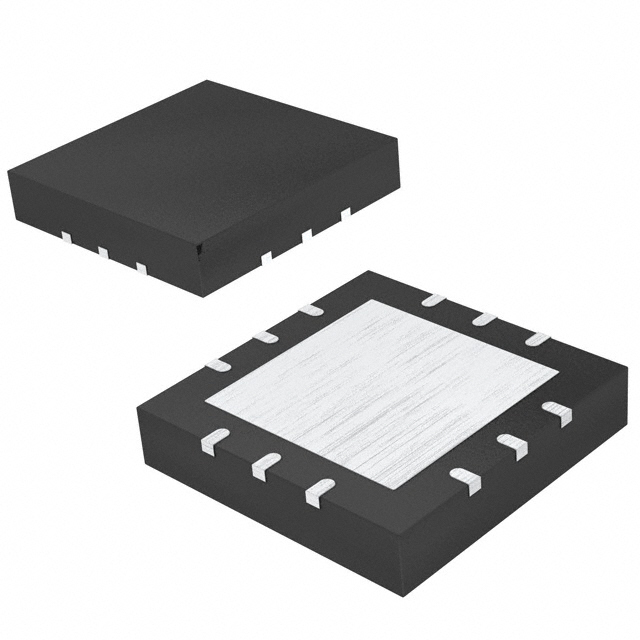
VQFN-24 package (4.00 × 4.00 mm, exposed thermal pad) with wettable flank leads for automated optical inspection and robust thermal performance (RθJA = 34°C/W).
| Pin/Terminal | Circuit Role | Design Meaning |
|---|---|---|
| AOUT1, AOUT2 | H-bridge A output terminals | Drive winding A of bipolar stepper; support bidirectional current flow up to 1.4 A with RDS(ON) = 550 mΩ (HS) + 350 mΩ (LS) at 25°C. |
| BOUT1, BOUT2 | H-bridge B output terminals | Drive winding B; identical electrical specs to A-side; phase relationship with AOUT determines stepping direction and microstep position. |
| STEP, DIR, nENBL, nSLEEP | Digital control inputs | STEP rising edge advances indexer; DIR sets rotation direction; nENBL disables outputs only; nSLEEP cuts quiescent current to 1.2 µA. |
| M0, M1 | Tri-level microstep mode select | Configure full/half/1/4/1/8/1/16/1/32 step modes and edge sensitivity (rising-only or both edges) - no software overhead required. |
| I0, I1 | Tri-level torque DAC inputs | Select 8 discrete current scales (0%–100%) - enables dynamic torque reduction during acceleration/deceleration or hold phases. |
| DEC0, DEC1, ADEC | Decay mode control | Set Smart Tune (ADEC = high), mixed, slow, or fast decay; ADEC override enables automatic decay optimization per step transition. |
| VREF | Current reference input | Sets full-scale chopping threshold; shorted to VINT for internal 3.3 V reference; external voltage (1–3.3 V) allows fine-grained current calibration. |
| nFAULT | Fault status indicator | Open-drain output pulled low on UVLO, overcurrent, or thermal fault - provides single-wire system-level fault reporting. |
Key Features
| Feature | Design Value |
|---|---|
| Hardware Microstepping Indexer | Executes 1/32-step sequences autonomously using STEP/DIR signals - eliminates firmware timing-critical loop and reduces MCU resource load. |
| Smart Tune Decay Control | Automatically selects optimal decay mode per step transition to minimize current ripple while maintaining responsiveness - simplifies tuning for diverse motor inductances. |
| Configurable PWM Off-Time | 10/20/30 µs selection via TOFF_SEL pin - balances torque smoothness (shorter tOFF) against conduction loss (longer tOFF) without changing PCB layout. |
| 3-Bit Torque DAC | Digitally scales full-scale current from 12.5% to 100% in hardware - enables rapid torque adaptation during motion profiles without analog voltage adjustment. |
| Integrated Protection Suite | UVLO, cycle-by-cycle OCP, thermal shutdown, and fault reporting via nFAULT - ensures robust operation in unattended embedded systems without external supervision. |
Applications
| Printers | Video Security Cameras |
|---|---|
|
Use Scenario: Precision paper feed and carriage positioning in inkjet and laser printers. IC Role / Device Role / Timing Role: Dual H-bridge driver executing microstepped motion commands from printer controller via STEP/DIR interface. Use Value: 1/32 microstepping enables <1 µm positional resolution on lead-screw mechanisms, reducing banding artifacts and improving print fidelity. |
Use Scenario: Pan-tilt-zoom (PTZ) actuation in IP surveillance cameras requiring silent, jitter-free motion. IC Role / Device Role / Timing Role: Stepper driver controlling dual-axis gimbal motors with torque DAC-enabled quiet hold current reduction. Use Value: Smart Tune decay minimizes audible coil whine; low-power sleep mode (<1.2 µA) extends battery life in solar-powered outdoor units. |
| Scanners | Projectors |
|
Use Scenario: Linear CCD sensor carriage movement in flatbed and document scanners. IC Role / Device Role / Timing Role: High-accuracy stepper driver synchronizing scan line capture with motor position via indexer state. Use Value: Adaptive blanking time prevents step-induced vibration blur; 1.4-A drive capability supports high-inertia carriages without external boost stages. |
Use Scenario: Focus and zoom lens actuation in DLP and LCD projectors requiring repeatable sub-micron positioning. IC Role / Device Role / Timing Role: Microstepping indexer driving voice-coil-assisted stepper motors with precise current regulation. Use Value: Tri-level M0/M1 pins enable on-the-fly resolution switching (e.g., coarse zoom → fine focus); VREF scaling ensures consistent optical alignment across temperature. |
Equivalent & Alternatives
The following parts are listed as comparable options for similar stepper motor driver applications.
| Alternative Part | Technical Difference | Application Difference | Selection Advice |
|---|---|---|---|
| DRV8825RGER | Same VQFN-24 package, 1.5-A rating, but lacks Smart Tune; fixed 1/32 microstepping only; no torque DAC. | Requires external decay tuning; less suitable for variable-inductance motors or noise-sensitive PTZ systems. | Choose when cost sensitivity outweighs adaptive decay needs and torque scaling is handled externally. |
| STSPIN220TR | Compact 3 × 3 mm QFN-16, 1.3-A rating, integrated current sense; no tri-level inputs; SPI interface instead of STEP/DIR. | Demands MCU firmware for microstep sequencing; better for space-constrained designs where SPI control is already present. | Prefer when board area is critical and host processor can manage indexing logic and SPI communication overhead. |
Compared with DRV8825RGER and STSPIN220TR, the DRV8846RGET uniquely combines hardware-based Smart Tune decay optimization, 3-bit torque DAC, and full STEP/DIR simplicity in a thermally enhanced 4×4 mm package-making it optimal for noise-sensitive, thermally constrained, or firmware-light embedded motion systems.
Availability
DRV8846RGET is available at Aetrix Electronics and suitable for printers, video security cameras, scanners, and projectors requiring stable component supply, long-term production continuity, and automotive-grade reliability validation.
Supply support for DRV8846RGET includes scheduled delivery planning, volume procurement assistance, BOM continuity management, traceable sourcing, and lifecycle availability coordination for OEM customers, industrial embedded developers, connected-device designers, and electronics production programs.
Manufacturer
Texas Instruments is a global semiconductor leader specializing in analog, embedded processing, and power management technologies, with decades of expertise in motor control IC design.
The DRV8846RGET belongs to TI's high-integration stepper driver product line, engineered specifically for compact optical and imaging equipment demanding silent, precise, and thermally robust motion control without MCU intervention.
FAQ
What is the maximum continuous output current per H-bridge for the DRV8846RGET?
The DRV8846RGET delivers up to 1.4 A full-scale output current per H-bridge at TA = 25°C with adequate heatsinking and proper PCB copper area. This rating decreases with ambient temperature rise and reduced thermal resistance-consult RθJA (34°C/W) and derating curves in the datasheet for system-level thermal design. The DRV8846RGET maintains this current capability across its 4–18 V supply range.
How does the Smart Tune feature in the DRV8846RGET improve stepper motor performance?
Smart Tune dynamically selects the optimal decay mode (fast, slow, or mixed) for each step transition based on real-time current error, minimizing current ripple while preserving responsiveness. Unlike fixed-decay drivers, the DRV8846RGET avoids manual tuning and reduces audible motor noise and torque variation-especially beneficial for PTZ cameras and precision scanners where smooth motion is critical.
Can the DRV8846RGET operate without an external current sense resistor?
Yes-the DRV8846RGET supports operation without external sense resistors by grounding AISEN and BISEN pins. In this mode, current regulation is disabled and the H-bridges function as basic switches. However, microstepping, torque DAC scaling, and overcurrent protection require functional sense paths; omitting resistors forfeits closed-loop current control and fault detection capabilities of the DRV8846RGET.
What is the role of the nSLEEP pin on the DRV8846RGET, and how much power does it save?
The nSLEEP pin places the DRV8846RGET into ultra-low-power sleep mode, reducing VM supply current to just 1.2 µA (typical) at 12 V. This state disables all internal circuitry except wake-up logic, preserving system energy during motor idle periods. Exiting sleep requires ~1 ms wake time, and the indexer reinitializes to home state (45°)-a key behavior for predictable restart in printers and projectors using the DRV8846RGET.
How do the tri-level inputs (M0, M1, I0, I1, etc.) function on the DRV8846RGET?
Tri-level inputs on the DRV8846RGET accept three valid states: logic low (0), logic high (1), or high-impedance (Z)-each mapped to distinct configuration values in lookup tables. For example, M0/M1 combinations define 1/32-step mode with rising/falling-edge clocking, while I0/I1 set 8 torque levels. These pins eliminate the need for external level-shifting or additional GPIOs, simplifying interface design for the DRV8846RGET in resource-limited controllers.
DRV8846RGET Specifications
- Product attributes
- Attribute value
- Manufacturer:
- Texas Instruments
- Series:
- -
- Package/Case:
- 24-VFQFN Exposed Pad
- Packaging:
- Tape & Reel (TR)
- Product Status:
- Last Time Buy
- Motor Type - Stepper:
- Bipolar
- Motor Type - AC, DC:
- -
- Function:
- Driver - Fully Integrated, Control and Power Stage
- Output Configuration:
- Half Bridge (4)
- Interface:
- Step/Direction
- Technology:
- Power MOSFET
- Step Resolution:
- 1 ~ 1/32
- Applications:
- Stepper Motors
- Current - Output:
- 1.4A
- Voltage - Supply:
- 4V ~ 18V
- Voltage - Load:
- 4V ~ 18V
- Operating Temperature:
- -40°C ~ 150°C (TJ)
- Grade:
- -
- Qualification:
- -
- Mounting Type:
- Surface Mount
- Supplier Device Package:
- 24-VQFN (4x4)
DRV8846RGET FAQ
1.How can I place an order for DRV8846RGET through Aetrix?
Please submit a Request for Quotation (RFQ) for DRV8846RGET on Aetrix. Our sales agent will provide a competitive quotation and guide you through the order confirmation once you accept the terms.
2.Are the price and stock information for DRV8846RGET reliable?
The price and inventory of DRV8846RGET are updated periodically and may fluctuate due to market conditions. Stock and pricing data are typically refreshed every 24 hours. Quotation validity for DRV8846RGET is usually 5 days.
3.What payment methods are accepted for DRV8846RGET?
We accept Wire Transfer, PayPal, Credit Card, Western Union, MoneyGram, and Escrow for DRV8846RGET transactions.
Note: Certain payment methods may incur a processing fee.
4.How is shipping managed for DRV8846RGET?
DRV8846RGET orders can be shipped via leading logistics carriers, including DHL, UPS, FedEx, TNT, or Registered Mail.
Once your DRV8846RGET order is processed, you will receive an email with the shipment details and tracking number.
Note: Tracking information may take up to 24 hours to appear. Express delivery typically takes 3–5 business days.
5.How can I obtain technical support or documentation for DRV8846RGET?
For technical support, including DRV8846RGET datasheets, pinout diagrams, or application guidance, please contact our engineering support team. They can provide detailed documentation and assistance for your DRV8846RGET requirements.
6.How does Aetrix verify that DRV8846RGET is sourced from the original manufacturer or authorized distributors?
All DRV8846RGET products on Aetrix are procured from qualified distributors and authorized channels. Our dedicated quality assurance team conducts strict verification, including traceability checks and, if necessary, third-party testing. This ensures that DRV8846RGET meets industry standards.
7.What is the process for return or replacement of DRV8846RGET?
All DRV8846RGET units undergo pre-shipment inspection (PSI). If there is an issue with DRV8846RGET, returns or replacements are accepted under the following conditions:
1.Quantity discrepancies, incorrect items, or visible external defects (such as breakage or corrosion), acknowledged by Aetrix.
2.The issue is reported within 90 days of delivery.
3.The DRV8846RGET part is unused and in its original packaging.
Return procedure for DRV8846RGET:
1.Submit a request within 90 days.
2.Obtain a Return Material Authorization (RMA) from Aetrix.
DRV8846RGET Tags
-
DRV2603RUNR
Texas Instruments
-
DRV8837CDSGR
Texas Instruments
-
DRV8837DSGR
Texas Instruments
-
DRV8838DSGR
Texas Instruments
-
DRV8839DSSR
Texas Instruments
-
EMC2301-1-ACZL-TR
Microchip Technology
-
DRV8231ADSGR
Texas Instruments
-
EMC2302-2-AIZL-TR
Microchip Technology
-
DRV8800PWPR
Texas Instruments
-
DRV8835DSSR
Texas Instruments
-
EMC2303-1-KP-TR
Microchip Technology
-
DRV8876PWPR
Texas Instruments
Tech Hub

A practical engineering guide to 3.3V and 5V logic compatibility, input thresholds, resistor dividers, translator ICs, MOSFET level shifting, I2C pull-ups, timing limits and power-sequencing risks.

The 74HC595 uses push-pull logic outputs, while the TPIC6B595 uses 50 V open-drain DMOS sinks for higher-power loads. This guide compares timing, current limits, 3.3 V interfacing, load wiring, thermal…

The 74HC595 converts serial data into eight stable parallel outputs. This guide covers pin functions, shift and storage timing, OE and MR behavior, drive-current limits, cascading, voltage compatibilit…

A technical comparison of level-sensitive latches and edge-triggered flip-flops, covering timing windows, setup and hold limits, master–slave operation, time borrowing, race-through, HDL inference and…

A D latch stores one bit while Enable controls when data can pass. This reference covers gate-level operation, truth tables, transparency, setup and hold timing, LE versus OE, common ICs and practical …

An SR latch stores one bit through cross-coupled feedback. This engineering reference covers NOR and NAND implementations, truth tables, forbidden-state recovery, gated operation, switch debouncing, fa…

Latch circuits retain one bit through feedback. This technical reference covers SR and D latches, truth tables, transparency, timing limits, latch-versus-flip-flop behavior, applications and common log…

An engineering guide to LED driver operation, constant-current and constant-voltage outputs, linear and switching topologies, dimming, IC selection, calculations, replacement compatibility, and fault c…

Operational amplifier guide covering op amp basics, feedback, ideal vs real op amps, common configurations, buffer circuits, offset, bias current, gain-bandwidth, slew rate, rail-to-rail limits and sel…

Jumper cables guide covering safe connection order, red and black clamp placement, final ground connection, cable gauge, length, clamp quality, copper vs CCA cables, jump starter comparison and battery…


