
 My Inquiry
 My Account


Analog Devices Inc./Maxim Integrated DS1077Z-66+
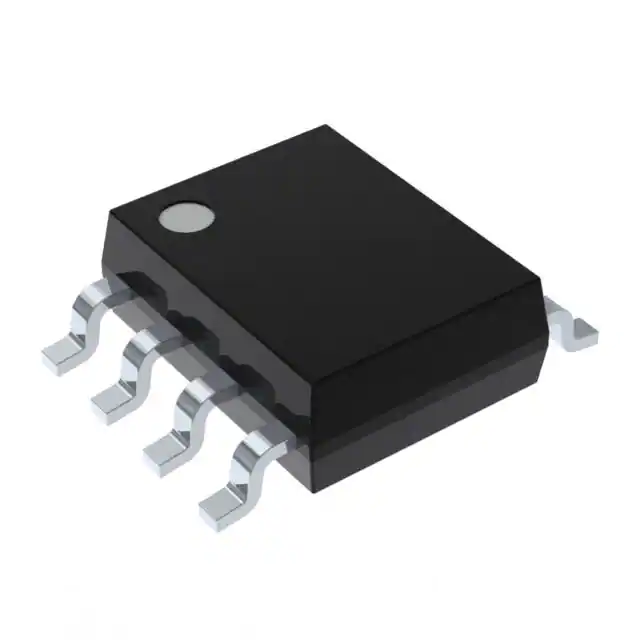
- Part No.:
- DS1077Z-66+
- Manufacturer:
- Analog Devices Inc./Maxim Integrated
- Category:
- Programmable Timers and Oscillators
- Package:
- 8-SOIC (0.154", 3.90mm Width)
- Datasheet:
-
 DS1077Z-66+.pdf
- Description:
- IC OSC DUAL FX FREQ PROG 8SOIC
- Quantity:
- Payment:

- Shipping:

Inventory:3,678
Please send an inquiry. Send us your inquiry, and we will respond immediately.
Product details
Overview
DS1077Z-66+ from Maxim Integrated (now Analog Devices) is a dual-output, nonvolatile, programmable fixed-frequency oscillator with 2-wire serial interface. It delivers synchronous outputs of 66.666MHz (OUT1) and user-selectable reference frequencies down to 8.1kHz (OUT0), ±0.5% initial tolerance and ±0.5% variation over +25°C to +70°C, operating from a single 5V supply with no external components.
For engineers reviewing the DS1077Z-66+ datasheet, DS1077Z-66+ pinout, DS1077Z-66+ application, or DS1077Z-66+ equivalent, this page provides verified technical context on its dual-output prescaler/divider architecture, EEPROM-stored frequency settings, power-down control via CTRL0/CTRL1, and compatibility with standard/fast-mode I²C buses up to 400kHz.
Technical Context
The DS1077Z-66+ integrates a factory-trimmed internal master oscillator (66.666MHz nominal), two independent programmable prescalers (P0 and P1, each selectable for ÷1/÷2/÷4/÷8), and a 10-bit programmable divider (N = 2–1025) on OUT1. The OUT0 path bypasses the N-divider and routes directly from P0's output or the master clock via a MUX controlled by CTRL0.
Its 2-wire serial interface supports both standard (100kHz) and fast-mode (400kHz) operation, with slave address 0xB0–0xB7 (A2–A0 configurable), automatic or manual EEPROM write control (WC bit), and register-level access to DIV, MUX, and BUS words - all stored nonvolatily in on-chip EEPROM.
Key Specifications
| Parameter | Value and Actual Design Meaning |
|---|---|
| Output Frequency Range | 66.666MHz (OUT1) to 8.1kHz (OUT0); full range programmable via prescalers and N-divider |
| Frequency Accuracy | ±0.5% initial tolerance; ±0.5% over +25°C to +70°C - enables stable timing without calibration |
| Supply Voltage | 4.75V to 5.25V - compatible with standard 5V logic rails and tolerant of typical rail variation |
| Active Supply Current | Typ. 30mA at 66.666MHz (OUT1 active, OUT0 enabled) - scales with output frequency and divider value |
| Power-Down Current | 2–5µA - enables ultra-low-power standby when CTRL0 or CTRL1 asserts PDN |
| Output Jitter | 30ps pk-pk (3σ) at 133MHz; confirmed low-jitter performance applies to DS1077Z-66+ at its 66.666MHz primary output |
| I²C Interface Speed | Supports 100kHz (standard) and 400kHz (fast) modes - allows flexible host controller integration |
Pinout & Package
DS1077Z-66+ is housed in an 8-pin 150mil SOIC package (Z suffix), with exposed pad not present and lead finish matte tin.
| Pin/Terminal | Circuit Role | Design Meaning |
|---|---|---|
| OUT1 | Main oscillator output | Delivers primary frequency (e.g., 66.666MHz) after P1 prescaling and optional N-divider; CMOS-compatible |
| OUT0 | Reference output | Provides secondary synchronized frequency from P0 prescaler or master clock; selectable via CTRL0 |
| VDD | Power supply | Single 5V supply input; requires local 0.01µF + 0.1µF ceramic decoupling |
| GND | Ground reference | Common return for VDD, outputs, and interface; must be low-impedance |
| SCL | Serial clock input | Asynchronous I²C clock; accepts 100kHz or 400kHz; open-drain, requires pull-up |
| CTRL0 | Multifunction control | Configurable as MUX select, OUT0 enable, or power-down (PDN0) per register settings |
| CTRL1 | Multifunction control | Configurable as OUT1 enable or power-down (PDN1); OR'd with CTRL0 for global shutdown |
| SDA | Serial data I/O | Open-drain bidirectional I²C data line; requires 5kΩ pull-up; supports ACK/NACK |
Key Features
| Feature | Design Value |
|---|---|
| Dual synchronous outputs | OUT1 and OUT0 share same master clock source and prescaler timing - eliminates inter-channel skew in clock distribution |
| Nonvolatile frequency storage | All prescaler (P0/P1) and divider (N) settings retained in EEPROM - survives power cycles without reprogramming |
| On-the-fly frequency reconfiguration | Full register update via I²C while running - enables dynamic clock scaling in embedded systems |
| Programmable power-down control | Independent PDN0/PDN1 bits allow selective or global shutdown of outputs and core oscillator - reduces idle current to µA range |
| No external components required | Self-contained oscillator with integrated master crystal-less resonator - eliminates BOM cost and layout area for load caps or crystals |
Applications
| Communications Baseband Timing | Industrial PLC Clocking |
|---|---|
Use Scenario: Synchronizing ADC sampling and FPGA logic in LTE/5G small-cell baseband units requiring precise dual-clock domains. IC Role / Device Role / Timing Role: DS1077Z-66+ generates 66.666MHz system clock for FPGA fabric and 8.192MHz reference for ADC sampling engine - both derived from same master oscillator. Use Value: Sub-30ps jitter and ±0.5% temp stability ensure deterministic timing closure and <1 LSB INL drift over temperature. | Use Scenario: Providing deterministic real-time clock and I/O scan timing in DIN-rail mounted programmable logic controllers. IC Role / Device Role / Timing Role: DS1077Z-66+ supplies 66.666MHz CPU clock and 16.384kHz watchdog timer reference - both powered from single 5V rail. Use Value: Nonvolatile frequency storage eliminates boot-time configuration; power-down mode cuts standby consumption to <5µA during sleep cycles. |
| Medical Imaging Data Acquisition | Test & Measurement Signal Generation |
Use Scenario: Driving high-speed analog front-end and digital processing pipeline in portable ultrasound beamformers. IC Role / Device Role / Timing Role: DS1077Z-66+ delivers 66.666MHz sampling clock to ADC and 33.333MHz reference to FPGA interpolation logic - synchronized via shared prescaler chain. Use Value: Dual-output synchronization and low jitter preserve SNR >72dB across full operating temperature range. | Use Scenario: Serving as programmable clock source in benchtop oscilloscopes and arbitrary waveform generators requiring multiple stable frequencies. IC Role / Device Role / Timing Role: DS1077Z-66+ provides main 66.666MHz timebase and adjustable reference output (e.g., 10MHz) for PLL lock verification - updated in-circuit via microcontroller. Use Value: On-the-fly I²C reprogramming enables rapid test setup changes without hardware modification or firmware reload. |
Equivalent & Alternatives
The following parts are listed as comparable options for similar programmable oscillator applications.
| Alternative Part | Technical Difference | Application Difference | Selection Advice |
|---|---|---|---|
| Si5351A-B-GM | 3-output, I²C-programmable clock generator with fractional PLL; requires external crystal; 2.5–3.6V supply | Supports wider frequency range (8kHz–200MHz) and multi-phase outputs; higher complexity and BOM cost | Choose Si5351A-B-GM when >2 outputs, sub-Hz resolution, or crystal-referenced stability are required. |
| ICS843002AGI-01LFT | Dual-output LVDS clock generator; fixed-frequency (66.666MHz/33.333MHz); no I²C interface; 3.3V only | Limited to factory-set frequencies; no in-system reconfiguration; lower jitter (1.5ps RMS) but no flexibility | Choose ICS843002AGI-01LFT when absolute jitter minimization and production volume cost are prioritized over programmability. |
Compared with Si5351A-B-GM and ICS843002AGI-01LFT, DS1077Z-66+ uniquely balances single-supply 5V operation, EEPROM-retained dual-output programmability, zero external components, and µA-level power-down - making it optimal for cost-sensitive, space-constrained embedded designs needing field-upgradable timing.
Availability
DS1077Z-66+ is available at Aetrix Electronics and suitable for communications infrastructure, industrial automation, medical imaging, and test equipment requiring stable component supply with guaranteed long-term availability.
Supply support for DS1077Z-66+ includes scheduled delivery planning, volume procurement assistance, BOM continuity management, traceable sourcing, and lifecycle availability coordination for OEM customers, industrial embedded developers, connected-device designers, and electronics production programs.
Manufacturer
Maxim Integrated (acquired by Analog Devices in 2021) is a leader in precision analog, mixed-signal, and high-reliability semiconductor solutions for industrial, communications, and computing markets.
The DS1077 series belongs to Maxim's EconOscillator™ family - designed specifically for applications demanding programmable, low-jitter, dual-output clock generation with minimal board footprint and zero external components.
FAQ
What is the maximum output frequency supported by DS1077Z-66+?
The DS1077Z-66+ supports a maximum output frequency of 66.666MHz on OUT1, as defined by its -66 frequency option. This is the factory-trimmed master oscillator frequency; OUT0 can be derived at lower frequencies via P0 prescaling (÷1/÷2/÷4/÷8), down to 8.1kHz. The device does not support frequencies above 66.666MHz - unlike the DS1077Z-133 variant which operates up to 133.333MHz. DS1077Z-66+ maintains ±0.5% accuracy across its specified range.
Does DS1077Z-66+ require an external crystal or resonator?
No, DS1077Z-66+ does not require any external crystal, resonator, or load capacitors. It contains a fully integrated, factory-trimmed silicon-based oscillator circuit that delivers stable 66.666MHz operation from power-up. This eliminates BOM cost, PCB area, and layout sensitivity associated with external timing components - a key advantage over crystal-based clock generators. DS1077Z-66+ achieves ±0.5% frequency accuracy over temperature using on-die trimming and EEPROM compensation.
How is frequency programming performed on DS1077Z-66+?
Frequency programming on DS1077Z-66+ is performed via its 2-wire (I²C-compatible) serial interface using dedicated command codes: Access DIV [01] writes the 10-bit N-divider value (2–1025), Access MUX [02] configures P0/P1 prescaler selection bits (0M1/0M0/1M1/1M0), and Write E2 [3F] commits settings to EEPROM. All registers default to factory values on power-up and retain settings nonvolatily. DS1077Z-66+ supports both standard (100kHz) and fast-mode (400kHz) I²C timing, with slave address determined by A2–A0 bits (default 0xB0).
Can DS1077Z-66+ generate two independent frequencies simultaneously?
Yes, DS1077Z-66+ generates two synchronous but independently programmable frequencies: OUT1 (main output) is set by P1 prescaling and optional N-divider (range: 66.666MHz ÷ P1 ÷ N), while OUT0 (reference output) is set solely by P0 prescaling (66.666MHz ÷ P0), with optional MUX selection between master clock and P0 output. Both outputs derive from the same master oscillator, ensuring deterministic phase relationship and eliminating inter-channel drift - critical for coherent sampling and clock domain crossing in DS1077Z-66+ applications.
What power management features does DS1077Z-66+ support?
DS1077Z-66+ supports three-tiered power management: (1) Full device power-down (2–5µA) asserted via CTRL0 (PDN0=1) or CTRL1 (PDN1=1), (2) Individual output disable via EN0/EN1 bits - placing OUT0 or OUT1 in Hi-Z without stopping the oscillator, and (3) Dynamic current reduction by configuring unused outputs to highest prescale ratio (e.g., ÷8). Power-down mode halts all outputs and core oscillator; recovery time is ≤1ms. These features are controlled entirely through I²C-accessible registers and persist across power cycles due to EEPROM storage.
DS1077Z-66+ Specifications
- Product attributes
- Attribute value
- Manufacturer:
- Analog Devices Inc./Maxim Integrated
- Series:
- EconOscillator™
- Package/Case:
- 8-SOIC (0.154", 3.90mm Width)
- Packaging:
- Bulk
- Product Status:
- Obsolete
- Type:
- Oscillator, Fixed Frequency (Dual)
- Count:
- -
- Frequency:
- 8.1kHz ~ 66.666MHz
- Voltage - Supply:
- 4.75V ~ 5.25V
- Current - Supply:
- 50 mA
- Operating Temperature:
- -40°C ~ 85°C
- Supplier Device Package:
- 8-SOIC
- Mounting Type:
- Surface Mount
- Grade:
- -
- Qualification:
- -
DS1077Z-66+ FAQ
1.How can I place an order for DS1077Z-66+ through Aetrix?
Please submit a Request for Quotation (RFQ) for DS1077Z-66+ on Aetrix. Our sales agent will provide a competitive quotation and guide you through the order confirmation once you accept the terms.
2.Are the price and stock information for DS1077Z-66+ reliable?
The price and inventory of DS1077Z-66+ are updated periodically and may fluctuate due to market conditions. Stock and pricing data are typically refreshed every 24 hours. Quotation validity for DS1077Z-66+ is usually 5 days.
3.What payment methods are accepted for DS1077Z-66+?
We accept Wire Transfer, PayPal, Credit Card, Western Union, MoneyGram, and Escrow for DS1077Z-66+ transactions.
Note: Certain payment methods may incur a processing fee.
4.How is shipping managed for DS1077Z-66+?
DS1077Z-66+ orders can be shipped via leading logistics carriers, including DHL, UPS, FedEx, TNT, or Registered Mail.
Once your DS1077Z-66+ order is processed, you will receive an email with the shipment details and tracking number.
Note: Tracking information may take up to 24 hours to appear. Express delivery typically takes 3–5 business days.
5.How can I obtain technical support or documentation for DS1077Z-66+?
For technical support, including DS1077Z-66+ datasheets, pinout diagrams, or application guidance, please contact our engineering support team. They can provide detailed documentation and assistance for your DS1077Z-66+ requirements.
6.How does Aetrix verify that DS1077Z-66+ is sourced from the original manufacturer or authorized distributors?
All DS1077Z-66+ products on Aetrix are procured from qualified distributors and authorized channels. Our dedicated quality assurance team conducts strict verification, including traceability checks and, if necessary, third-party testing. This ensures that DS1077Z-66+ meets industry standards.
7.What is the process for return or replacement of DS1077Z-66+?
All DS1077Z-66+ units undergo pre-shipment inspection (PSI). If there is an issue with DS1077Z-66+, returns or replacements are accepted under the following conditions:
1.Quantity discrepancies, incorrect items, or visible external defects (such as breakage or corrosion), acknowledged by Aetrix.
2.The issue is reported within 90 days of delivery.
3.The DS1077Z-66+ part is unused and in its original packaging.
Return procedure for DS1077Z-66+:
1.Submit a request within 90 days.
2.Obtain a Return Material Authorization (RMA) from Aetrix.
DS1077Z-66+ Tags

-
NE555DR
Texas Instruments
-
SA555DR
Texas Instruments
-
NA555DR
Texas Instruments
-
SE555DR
Texas Instruments
-
NE555P
Texas Instruments
-
CD4541BM96
Texas Instruments
-
CD4541BE
Texas Instruments
-
TLC555QDR
Texas Instruments
-
TLC555IDR
Texas Instruments
-
TLC555QDRQ1
Texas Instruments

-
TPL5010DDCR
Texas Instruments
-
TLC555CP
Texas Instruments
Tech Hub

A practical engineering guide to 3.3V and 5V logic compatibility, input thresholds, resistor dividers, translator ICs, MOSFET level shifting, I2C pull-ups, timing limits and power-sequencing risks.

The 74HC595 uses push-pull logic outputs, while the TPIC6B595 uses 50 V open-drain DMOS sinks for higher-power loads. This guide compares timing, current limits, 3.3 V interfacing, load wiring, thermal…

The 74HC595 converts serial data into eight stable parallel outputs. This guide covers pin functions, shift and storage timing, OE and MR behavior, drive-current limits, cascading, voltage compatibilit…

A technical comparison of level-sensitive latches and edge-triggered flip-flops, covering timing windows, setup and hold limits, master–slave operation, time borrowing, race-through, HDL inference and…

A D latch stores one bit while Enable controls when data can pass. This reference covers gate-level operation, truth tables, transparency, setup and hold timing, LE versus OE, common ICs and practical …

An SR latch stores one bit through cross-coupled feedback. This engineering reference covers NOR and NAND implementations, truth tables, forbidden-state recovery, gated operation, switch debouncing, fa…

Latch circuits retain one bit through feedback. This technical reference covers SR and D latches, truth tables, transparency, timing limits, latch-versus-flip-flop behavior, applications and common log…

An engineering guide to LED driver operation, constant-current and constant-voltage outputs, linear and switching topologies, dimming, IC selection, calculations, replacement compatibility, and fault c…

Operational amplifier guide covering op amp basics, feedback, ideal vs real op amps, common configurations, buffer circuits, offset, bias current, gain-bandwidth, slew rate, rail-to-rail limits and sel…

Jumper cables guide covering safe connection order, red and black clamp placement, final ground connection, cable gauge, length, clamp quality, copper vs CCA cables, jump starter comparison and battery…


