
 My Inquiry
 My Account


Analog Devices Inc./Maxim Integrated DS1086LU+C66
- Part No.:
- DS1086LU+C66
- Manufacturer:
- Analog Devices Inc./Maxim Integrated
- Package:
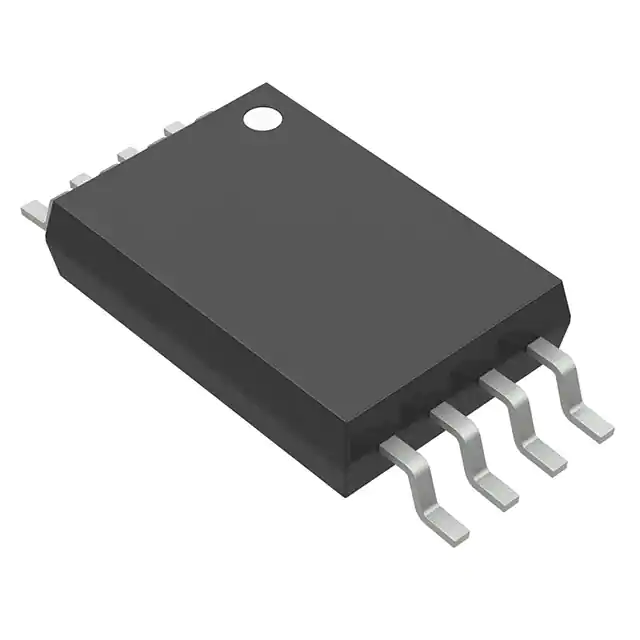
- 8-TSSOP, 8-MSOP (0.118", 3.00mm Width)
- Datasheet:
-
 DS1086LU+C66.pdf
- Description:
- IC SS CLOCK GENERATOR 8UMAX
- Quantity:
- Payment:

- Shipping:

Inventory:2,592
Please send an inquiry. Send us your inquiry, and we will respond immediately.
Product details
Overview
DS1086LU+C66 from Maxim Integrated is a 3.3V spread-spectrum programmable clock oscillator with nonvolatile EEPROM configuration, generating dithered square-wave outputs from 130kHz to 66.6MHz. It features selectable dither depth (0.5%–8%), adjustable dither rate (fOSC/8192 to fOSC/2048), glitchless output-enable control, and power-down mode. It operates in industrial temperature range (−40°C to +85°C) and is used in printers, cable modems, and PC peripherals for EMI reduction.
For engineers reviewing the DS1086LU+C66 datasheet, DS1086LU+C66 pinout, DS1086LU+C66 application, or DS1086LU+C66 equivalent, key selection considerations include its spread-spectrum dithering capability, 2-wire serial programmability, 5kHz DAC step resolution, μSOP-8 package compatibility, and standalone operation without external timing components.
Technical Context
The DS1086LU+C66 integrates a voltage-controlled master oscillator (33.3–66.6MHz), a programmable triangle-wave dither generator, and a binary prescaler (÷1 to ÷256) to produce spectrally shaped outputs. Its frequency is set via OFFSET (selects 13 MHz-wide frequency bands) and DAC (5kHz steps within band) registers stored in NV EEPROM.
Dither magnitude (0.5%, 1%, 2%, 4%, or 8%) is controlled by JS2–JS0 bits; dither rate (fOSC/8192, /4096, or /2048) by JS4–JS3 bits; and output enable (OE), power-down (PDN), and dither enable (SPRD) are hardware-controlled asynchronous inputs. All register writes use standard-mode or fast-mode 2-wire interface (100 kHz / 400 kHz SCL).
Key Specifications
| Parameter | Value and Actual Design Meaning |
|---|---|
| Output Frequency Range | 130kHz to 66.6MHz - covers USB, PCIe reference, Ethernet PHY, and legacy peripheral clocks without external dividers. |
| Spread-Spectrum Dither Depth | 0.5%, 1%, 2%, 4%, or 8% - unidirectional downward dither reduces peak radiated emissions by spreading energy across bandwidth. |
| Supply Voltage | 2.7V to 3.6V - compatible with 3.3V logic rails and tolerant of typical PCB voltage droop. |
| Operating Temperature | −40°C to +85°C - qualified for industrial and commercial embedded systems with no derating required. |
| Power-Down Current | 10μA max at +85°C - enables low-power sleep states in battery-backed or always-on peripherals. |
| DAC Resolution | 5kHz step size - allows precise frequency tuning (e.g., 11.0592MHz UART clock) with <0.004% error in typical configurations. |
| Interface | 2-wire serial (I²C-compatible) - supports in-system programming during production test or field updates without rework. |
Pinout & Package
DS1086LU+C66 is housed in an 8-pin μSOP package (118 mil width), RoHS-compliant and lead(Pb)-free. The package supports standard reflow profiles and provides thermal performance suitable for high-density PCB layouts.
| Pin/Terminal | Circuit Role | Design Meaning |
|---|---|---|
| 1: OUT | Oscillator Output | CMOS square-wave output; drives 15pF load with 45–55% duty cycle; glitchless enable/disable via OE. |
| 2: SPRD | Dither Enable Input | Active-high TTL/CMOS input; enables/disables spread-spectrum modulation without affecting frequency programming. |
| 3: VCC | Power Supply | 3.3V nominal supply; requires 0.1μF + 0.01μF decoupling close to pin for stable oscillation and low noise. |
| 4: GND | Ground Reference | Common return path for oscillator core, I/O, and internal regulators; must be low-impedance plane. |
| 5: OE | Output Enable | Active-high control; places OUT in high-impedance state while master oscillator remains active - ideal for clock gating. |
| 6: PDN | Power-Down Control | Active-low input; disables master oscillator and forces OUT to Hi-Z or low (configurable via Lo/HiZ bit) - cuts ICCQ to ≤10μA. |
| 7: SDA | 2-Wire Serial Data | Open-drain bidirectional line; requires external pull-up; supports standard/fast-mode I²C read/write to EEPROM registers. |
| 8: SCL | 2-Wire Serial Clock | Input-only clock line; synchronizes register access; tolerates 100 kHz (standard) or 400 kHz (fast) operation. |
Key Features
| Feature | Design Value |
|---|---|
| User-programmable frequency | Configurable from 130kHz to 66.6MHz in 5kHz increments via OFFSET/DAC registers - eliminates need for multiple crystal SKUs. |
| Nonvolatile settings storage | All configuration registers retained in on-chip EEPROM - device powers up with last programmed frequency and dither settings. |
| Glitchless output control | OE and PDN inputs synchronize to internal clock domain - prevents runt pulses or metastability on OUT during enable/disable transitions. |
| EMI reduction architecture | Programmable dither depth and rate allow optimization for specific regulatory limits (e.g., FCC Class B) without board-level redesign. |
| No external timing components | Self-contained oscillator core - no external crystal, capacitor, or resistor required - reduces BOM count and layout area. |
Applications
| Printers & Copiers | PC Peripherals |
|---|---|
Use Scenario: High-speed laser printer controller requiring stable pixel clock and reduced EMI to pass CISPR 22 Class B emissions testing. IC Role / Device Role / Timing Role: Primary spread-spectrum clock source for image processing ASIC and motor control MCU. Use Value: 4% dither at 48MHz reduces 24MHz harmonic peaks by >10dB, eliminating need for ferrite beads or shielded enclosures. |
Use Scenario: USB 2.0 hub IC requiring precise 48MHz reference with low jitter and minimal conducted noise on shared 3.3V rail. IC Role / Device Role / Timing Role: Standalone clock generator replacing crystal + buffer; configured via 2-wire during manufacturing test. Use Value: Factory-programmed 48.000MHz output with 1% dither achieves <±50ppm stability over temperature and voltage, meeting USB spec. |
| Cable Modems | Industrial PCs |
Use Scenario: DOCSIS 3.0 cable modem with multi-core SoC needing low-emission 100MHz reference for SerDes lanes. IC Role / Device Role / Timing Role: Spread-spectrum clock for PCIe Gen2 interface; synchronized to upstream QAM carrier timing. Use Value: Configurable dither rate (fOSC/4096) aligns spectral spreading with channel bandwidth, avoiding interference with adjacent RF channels. |
Use Scenario: Fanless industrial PC motherboard where thermal constraints prevent use of active cooling near clock circuitry. IC Role / Device Role / Timing Role: Low-power 33.333MHz clock for real-time OS timer and display controller, operating in −40°C to +85°C ambient. Use Value: 10μA power-down current and μSOP-8 footprint enable placement near heat-sensitive components without thermal derating. |
Equivalent & Alternatives
The following parts are listed as comparable options for similar spread-spectrum oscillator applications.
| Alternative Part | Technical Difference | Application Difference | Selection Advice |
|---|---|---|---|
| Si5351A-B-GM | 3-output, I²C-programmable clock generator with PLL-based architecture; higher phase noise; requires external crystal. | Supports multi-frequency synthesis (e.g., simultaneous 25MHz + 125MHz); not single-output spread-spectrum optimized. | Choose Si5351A-B-GM when multiple independent clocks or fractional-N synthesis are required; DS1086LU+C66 is preferred for single-output EMI reduction with zero external components. |
| ICS843002AGI-01LFT | Fixed-frequency 50MHz spread-spectrum oscillator (±0.25% dither); no programmability; LVDS output; 3.3V only. | Limited to factory-set frequency; no in-field reconfiguration; requires level-shifting for CMOS loads. | Choose ICS843002AGI-01LFT for cost-sensitive, high-volume applications where frequency and dither are invariant; DS1086LU+C66 offers design flexibility and field update capability. |
Compared with Si5351A-B-GM and ICS843002AGI-01LFT, DS1086LU+C66 uniquely combines single-output spread-spectrum operation, full 130kHz–66.6MHz programmability, nonvolatile storage, and zero external component requirement - making it optimal for EMI-constrained, space-limited, and configuration-flexible designs.
Availability
DS1086LU+C66 is available at Aetrix Electronics and suitable for printers, cable modems, and industrial PCs requiring stable component supply, long-term lifecycle support, and RoHS-compliant packaging.
Supply support for DS1086LU+C66 includes scheduled delivery planning, volume procurement assistance, BOM continuity management, traceable sourcing, and lifecycle availability coordination for OEM customers, industrial embedded developers, connected-device designers, and electronics production programs.
Manufacturer
Maxim Integrated (now part of Analog Devices) is a semiconductor company specializing in precision analog, mixed-signal, and power management ICs for industrial, communications, and computing markets.
The DS1086L EconOscillator product line was designed to replace fixed-frequency crystals in EMI-sensitive digital systems, delivering programmable spread-spectrum timing with minimal design overhead and no external components.
FAQ
What is the factory-default output frequency of the DS1086LU+C66?
The DS1086LU+C66 ships with a factory-programmed default master oscillator frequency of 48.65MHz. This value is trimmed per unit and stored in the RANGE register. When used in stand-alone mode (SDA/SCL tied high), the device outputs this frequency with 1% dither enabled if SPRD is asserted, and the prescaler set to ÷1 unless modified by external configuration.
Can the DS1086LU+C66 operate without connecting SDA and SCL pins?
Yes, the DS1086LU+C66 can operate in stand-alone mode with SDA and SCL permanently tied to VCC. In this configuration, it uses the factory-programmed EEPROM values for OFFSET, DAC, and PRESCALER registers. No in-circuit programming is possible, but the device retains full functionality including dither control via SPRD, output enable via OE, and power-down via PDN.
What is the maximum load capacitance supported on the OUT pin of the DS1086LU+C66?
The DS1086LU+C66 specifies a maximum load capacitance of 50pF on the OUT pin. For reliable operation at frequencies above 25MHz, a 15pF load is recommended. Exceeding 50pF may degrade rise/fall times, increase jitter, or cause duty cycle distortion - especially at 66.6MHz output with full 8% dither.
How does the DS1086LU+C66 achieve EMI reduction without compromising timing accuracy?
The DS1086LU+C66 achieves EMI reduction through unidirectional frequency dithering - shifting the output frequency downward by 0.5% to 8% in a controlled triangle waveform. This spreads spectral energy across a narrow band while maintaining tight average frequency accuracy (±0.75% over temperature/voltage). The dither is fully programmable and does not affect long-term stability or ppm drift.
Is the DS1086LU+C66 pin-compatible with other members of the DS1086L family?
Yes, the DS1086LU+C66 shares identical pinout, package (μSOP-8), and electrical interface with all DS1086L variants including DS1086LU and DS1086LU+. Differences are limited to marking, RoHS compliance status (+ suffix), and minor internal calibration - all functional registers, timing, and control behavior remain consistent across the family.
DS1086LU+C66 Specifications
- Product attributes
- Attribute value
- Manufacturer:
- Analog Devices Inc./Maxim Integrated
- Series:
- EconOscillator™
- Package/Case:
- 8-TSSOP, 8-MSOP (0.118", 3.00mm Width)
- Packaging:
- Tube
- Product Status:
- Obsolete
- Programmable:
- Not Verified
- Type:
- Spread Spectrum Clock Generator
- PLL:
- No
- Input:
- Clock
- Output:
- Clock
- Number of Circuits:
- 1
- Ratio - Input:Output:
- 1:1
- Differential - Input:Output:
- No/No
- Frequency - Max:
- -
- Divider/Multiplier:
- Yes/No
- Voltage - Supply:
- 2.7V ~ 3.6V
- Operating Temperature:
- -40°C ~ 85°C
- Mounting Type:
- Surface Mount
- Grade:
- -
- Qualification:
- -
- Supplier Device Package:
- 8-uMAX/uSOP
DS1086LU+C66 FAQ
1.How can I place an order for DS1086LU+C66 through Aetrix?
Please submit a Request for Quotation (RFQ) for DS1086LU+C66 on Aetrix. Our sales agent will provide a competitive quotation and guide you through the order confirmation once you accept the terms.
2.Are the price and stock information for DS1086LU+C66 reliable?
The price and inventory of DS1086LU+C66 are updated periodically and may fluctuate due to market conditions. Stock and pricing data are typically refreshed every 24 hours. Quotation validity for DS1086LU+C66 is usually 5 days.
3.What payment methods are accepted for DS1086LU+C66?
We accept Wire Transfer, PayPal, Credit Card, Western Union, MoneyGram, and Escrow for DS1086LU+C66 transactions.
Note: Certain payment methods may incur a processing fee.
4.How is shipping managed for DS1086LU+C66?
DS1086LU+C66 orders can be shipped via leading logistics carriers, including DHL, UPS, FedEx, TNT, or Registered Mail.
Once your DS1086LU+C66 order is processed, you will receive an email with the shipment details and tracking number.
Note: Tracking information may take up to 24 hours to appear. Express delivery typically takes 3–5 business days.
5.How can I obtain technical support or documentation for DS1086LU+C66?
For technical support, including DS1086LU+C66 datasheets, pinout diagrams, or application guidance, please contact our engineering support team. They can provide detailed documentation and assistance for your DS1086LU+C66 requirements.
6.How does Aetrix verify that DS1086LU+C66 is sourced from the original manufacturer or authorized distributors?
All DS1086LU+C66 products on Aetrix are procured from qualified distributors and authorized channels. Our dedicated quality assurance team conducts strict verification, including traceability checks and, if necessary, third-party testing. This ensures that DS1086LU+C66 meets industry standards.
7.What is the process for return or replacement of DS1086LU+C66?
All DS1086LU+C66 units undergo pre-shipment inspection (PSI). If there is an issue with DS1086LU+C66, returns or replacements are accepted under the following conditions:
1.Quantity discrepancies, incorrect items, or visible external defects (such as breakage or corrosion), acknowledged by Aetrix.
2.The issue is reported within 90 days of delivery.
3.The DS1086LU+C66 part is unused and in its original packaging.
Return procedure for DS1086LU+C66:
1.Submit a request within 90 days.
2.Obtain a Return Material Authorization (RMA) from Aetrix.
DS1086LU+C66 Tags
-
CD74HCT4046AM96
Texas Instruments
-
MC14046BDWR2G
onsemi

-
501MILFT
Renesas
-
CD74HC7046AM
Texas Instruments
-
CDCVF2505PWR
Texas Instruments

-
RC19004A100GNL#KB0
Renesas
-
SI5351A-B-GTR
Skyworks Solutions Inc.
-
CY2305SXI-1T
Infineon Technologies
-
570BILFT
Renesas
-
CDCE913PWR
Texas Instruments
-
CY2305SXI-1HT
Infineon Technologies
-
DS1086LU+T
Analog Devices Inc./Maxim Integrated
Tech Hub

A practical engineering guide to 3.3V and 5V logic compatibility, input thresholds, resistor dividers, translator ICs, MOSFET level shifting, I2C pull-ups, timing limits and power-sequencing risks.

The 74HC595 uses push-pull logic outputs, while the TPIC6B595 uses 50 V open-drain DMOS sinks for higher-power loads. This guide compares timing, current limits, 3.3 V interfacing, load wiring, thermal…

The 74HC595 converts serial data into eight stable parallel outputs. This guide covers pin functions, shift and storage timing, OE and MR behavior, drive-current limits, cascading, voltage compatibilit…

A technical comparison of level-sensitive latches and edge-triggered flip-flops, covering timing windows, setup and hold limits, master–slave operation, time borrowing, race-through, HDL inference and…

A D latch stores one bit while Enable controls when data can pass. This reference covers gate-level operation, truth tables, transparency, setup and hold timing, LE versus OE, common ICs and practical …

An SR latch stores one bit through cross-coupled feedback. This engineering reference covers NOR and NAND implementations, truth tables, forbidden-state recovery, gated operation, switch debouncing, fa…

Latch circuits retain one bit through feedback. This technical reference covers SR and D latches, truth tables, transparency, timing limits, latch-versus-flip-flop behavior, applications and common log…

An engineering guide to LED driver operation, constant-current and constant-voltage outputs, linear and switching topologies, dimming, IC selection, calculations, replacement compatibility, and fault c…

Operational amplifier guide covering op amp basics, feedback, ideal vs real op amps, common configurations, buffer circuits, offset, bias current, gain-bandwidth, slew rate, rail-to-rail limits and sel…

Jumper cables guide covering safe connection order, red and black clamp placement, final ground connection, cable gauge, length, clamp quality, copper vs CCA cables, jump starter comparison and battery…


