
 My Inquiry
 My Account


Analog Devices Inc./Maxim Integrated DS1239S-5
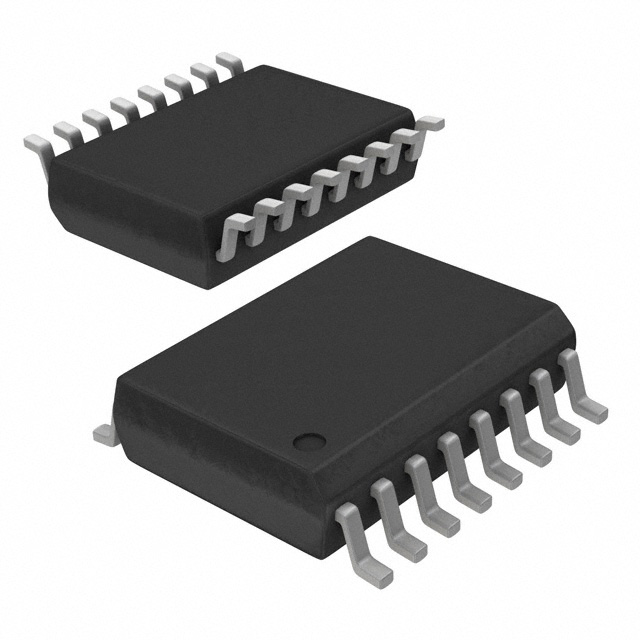
- Part No.:
- DS1239S-5
- Manufacturer:
- Analog Devices Inc./Maxim Integrated
- Category:
- Supervisors
- Package:
- 16-SOIC (0.295", 7.50mm Width)
- Datasheet:
-
 DS1239S-5.pdf
- Description:
- IC SUPERVISOR 1 CHANNEL 16SOIC
- Quantity:
- Payment:

- Shipping:

Inventory:1,666
Please send an inquiry. Send us your inquiry, and we will respond immediately.
Product details
Overview
DS1239S-5 from Maxim Integrated (now Analog Devices) is a power supply supervisory and memory backup controller IC for microprocessor systems. It provides power-fail warning (PF), non-maskable interrupt (NMI), reset generation (RST), switched SRAM supply (VCCO), battery-backed write protection, and keyboard-initiated AC power control via PSI/PSO - all in a 16-pin SOIC package with industrial temperature range support (-40°C to +85°C).
For engineers reviewing the DS1239S-5 datasheet, DS1239S-5 pinout, DS1239S-5 application, or DS1239S-5 equivalent, key selection considerations include its dual PF output polarity support, 10% VCC monitoring accuracy, 200 ms minimum PSI-to-VCC turn-on timing, tristate PSO with 10 mA drive capability, and integration of memory backup control without external logic.
Technical Context
The DS1239S-5 implements NMOS-mode-compatible supervision logic derived from the DS1236 architecture, with PSI and PSO replacing RC and RST to enable bidirectional AC power sequencing. Its internal VCC monitoring comparator triggers PF at 10% (or optionally 5%) undervoltage threshold, while the NMI and RST outputs coordinate controlled processor halt and restart during transients.
VBAT-powered operation ensures continuous function during main supply loss; VCCO supplies switched +5 V to SRAM only when VCC is valid, and WC/SC enables low-power stop mode entry. The 0.1 µF debounce-capable PSI input and 500 ms max PSO pulse width support reliable pushbutton-initiated power-up/down sequences in handheld and embedded systems.
Key Specifications
| Parameter | Value and Actual Design Meaning |
|---|---|
| VCC Monitoring Accuracy | ±10% (standard); optional ±5% version designated DS1239-5 - sets precise brown-out detection threshold for stable reset assertion. |
| PSI Input Current | 3 µA typical - enables direct connection to RC debounce networks or keypad matrix without external pull-ups. |
| PSO Output Drive | 10 mA sink/source - directly drives opto-SCR gates for AC power switching without buffer stages. |
| tPSI Turn-on Delay | 200 ms min - ensures AC-DC supply stabilization before releasing processor from reset. |
| VCCO Switching Threshold | Tracks VCC validity - powers SRAM only when main supply is within tolerance, preventing data corruption during brownouts. |
| Battery Current Draw | <100 nA - extends 3 V lithium battery life to >10 years in memory backup applications. |
| Operating Temp Range | -40°C to +85°C - qualified for industrial and automotive-adjacent embedded environments. |
Pinout & Package
DS1239S-5 is housed in a 16-pin SOIC (300-mil width) package with standard DIP pinout compatibility. Pin functions are electrically identical to the DS1236 in NMOS mode, except PSI replaces RC and PSO replaces RST.
| Pin/Terminal | Circuit Role | Design Meaning |
|---|---|---|
| VBAT | +3 V Battery Input | Primary power source during VCC loss; enables continuous supervision and memory backup. |
| VCCO | Switched SRAM Supply Output | Provides regulated +5 V to SRAM only when VCC is valid - prevents data loss during power transitions. |
| VCC | +5 V Power Supply Input | Main system supply input; monitored for undervoltage/failure events triggering PF and RST. |
| GND | Ground Reference | Common return path for all analog and digital circuitry; critical for accurate voltage threshold sensing. |
| PF | Power Fail Output (dual polarity) | Active-high and active-low outputs simultaneously warn of impending VCC failure - supports multiple interrupt architectures. |
| WC/SC | Wake-Up Control / Sleep Command | Initiates low-power stop mode in battery-operated systems; halts CPU clock while preserving RAM state. |
| PSI | Power Supply Control Input | Pushbutton- or keyboard-driven trigger for AC power-up/down sequencing; internally pulled high by VBAT. |
| PSO | Power Supply Control Output | Tristate output sourcing up to 10 mA; drives external SCR/optocoupler to control mains-derived DC supply. |
| RST | Reset Output (Active Low) | Asserts synchronous reset to microprocessor upon power-on, brown-out, or manual PBRST activation. |
| NMI | Non-Maskable Interrupt | Signals imminent power failure to processor for last-chance data save before VCC collapse. |
| CEO / CEI | Chip Enable Output / Input | Enables daisy-chained supervision across multiple memory banks or peripheral controllers. |
| PBRST | Pushbutton Reset Input | Hardware reset initiation independent of VCC status - functional even during complete main supply loss. |
Key Features
| Feature | Design Value |
|---|---|
| Unconditional SRAM Write Protection | Automatically asserts VCCO cutoff and disables writes when VCC drops below threshold - prevents memory corruption during brownout. |
| Dual-Polarity Power-Fail Outputs | Simultaneous PF (active-high) and PF (active-low) signals eliminate level-shifting requirements for diverse host interrupt controllers. |
| Integrated AC Power Sequencing | PSI/PSO pair replaces discrete SCR driver circuits - reduces BOM count and PCB area in keyboard-controlled power systems. |
| Low-Power Stop Mode Support | WC/SC pin enables full system sleep with <100 nA battery drain - essential for multi-year battery life in portable instrumentation. |
| Industrial Temperature Qualification | Guaranteed operation from -40°C to +85°C - validated for deployment in factory automation, point-of-sale, and transportation electronics. |
Applications
| Handheld Data Collector | Industrial PLC Controller |
|---|---|
Use Scenario: Battery-powered field terminal performing intermittent sensor logging with volatile SRAM cache. IC Role / Device Role / Timing Role: DS1239S-5 monitors VCC during battery swap, asserts NMI for immediate RAM save, then holds RST until stable VCC returns. Use Value: Prevents data loss during hot-swap events and extends usable battery life beyond 5 years via sub-100 nA standby current. | Use Scenario: DIN-rail mounted programmable logic controller requiring fail-safe shutdown on AC line sag. IC Role / Device Role / Timing Role: DS1239S-5 detects 10% VCC drop, activates PF to signal I/O modules, and initiates orderly program halt via NMI before asserting RST. Use Value: Eliminates need for external brown-out detectors and discrete reset supervisors - reduces system-level component count by 3–4 parts. |
| Point-of-Sale Terminal | Medical Infusion Pump |
Use Scenario: Retail kiosk with keyboard-initiated power-on and scheduled shutdown after idle timeout. IC Role / Device Role / Timing Role: DS1239S-5 uses PSI from keypad matrix to trigger PSO-driven SCR, enabling zero-standby AC power control without mechanical switch. Use Value: Achieves Energy Star compliance via true zero-watt standby; eliminates relay wear and audible click noise. | Use Scenario: Life-critical infusion device storing therapy parameters in battery-backed SRAM with mandatory power-fail logging. IC Role / Device Role / Timing Role: DS1239S-5 converts CMOS SRAM into nonvolatile memory by gating VCCO and asserting NMI 20 ms before VCC collapse. Use Value: Meets IEC 62304 Class C software safety requirements for uninterruptible parameter retention during AC loss. |
Equivalent & Alternatives
The following parts are listed as comparable options for similar power supervision and memory backup applications.
| Alternative Part | Technical Difference | Application Difference | Selection Advice |
|---|---|---|---|
| DS1236S-5 | Identical pinout and core functionality, but uses RC/RST instead of PSI/PSO; lacks integrated AC power sequencing logic. | Requires external SCR driver circuitry for keyboard-initiated power control; suitable where AC sequencing is handled elsewhere. | Select DS1236S-5 only if PSI/PSO functionality is unused and legacy DS1236 design reuse is prioritized. |
| MAX690TSA+ | Single-supply 5 V supervisor with 4.65 V reset threshold; no VCCO, PSI/PSO, or NMI; lower integration. | Supports basic reset and watchdog only - cannot replace DS1239S-5 in SRAM backup or AC power control roles. | Choose MAX690TSA+ only for simple reset-only applications where memory backup and power sequencing are implemented separately. |
Compared with DS1236S-5 and MAX690TSA+, the DS1239S-5 uniquely integrates AC power sequencing (PSI/PSO), dual-polarity PF, and SRAM supply switching (VCCO) in one 16-pin SOIC - reducing total system components and enabling true keyboard-controlled zero-standby operation.
Availability
DS1239S-5 is available at Aetrix Electronics and suitable for industrial PLC controllers, handheld data collectors, point-of-sale terminals, and medical infusion pumps requiring stable component supply with long-term lifecycle assurance.
Supply support for DS1239S-5 includes scheduled delivery planning, volume procurement assistance, BOM continuity management, traceable sourcing, and lifecycle availability coordination for OEM customers, industrial embedded developers, connected-device designers, and electronics production programs.
Manufacturer
Analog Devices (via acquisition of Maxim Integrated) designs precision analog, mixed-signal, and power management ICs for industrial, automotive, and communications applications.
The DS1239S-5 belongs to Maxim's MicroManager family - engineered specifically for microprocessor-based systems needing coordinated power supervision, memory backup, and keyboard-initiated AC power control without external logic.
FAQ
What is the primary function of the DS1239S-5 in a microprocessor system?
The DS1239S-5 serves as an integrated power supervisor and memory backup controller. It manages power-up/down sequencing via PSI/PSO, generates reset (RST) and non-maskable interrupt (NMI) signals, monitors VCC for brown-out conditions, controls switched SRAM supply (VCCO), and provides battery-backed write protection. In every operational mode, the DS1239S-5 ensures deterministic behavior during power transients - making it essential for reliable firmware execution and data integrity in systems using volatile memory.
Does the DS1239S-5 support both active-high and active-low power-fail signaling?
Yes, the DS1239S-5 provides two dedicated PF pins: one active-high and one active-low. This dual-polarity output eliminates the need for external inverters or level shifters when interfacing with microcontrollers or FPGAs that require specific interrupt polarity. Both PF outputs respond identically to the same VCC monitoring event, ensuring consistent timing and simplifying system-level interrupt handling - a feature confirmed in the official DS1239 datasheet and mechanically implemented on the die.
How does the DS1239S-5 enable keyboard-initiated AC power control?
The DS1239S-5 uses the PSI (Power Supply Control Input) and PSO (Power Supply Control Output) pins to implement keyboard-triggered AC power sequencing. When a keypress pulls PSI low, the DS1239S-5 asserts PSO high (up to 10 mA), which can directly drive an opto-SCR to initiate AC-to-DC conversion. Once VCC stabilizes, PSO tracks VCC; a subsequent PSI low pulse tristates PSO to shut down the supply. This functionality is intrinsic to the DS1239S-5 and requires no firmware or external logic.
What is the role of the VCCO pin on the DS1239S-5?
The VCCO pin on the DS1239S-5 delivers switched +5 V power exclusively to CMOS SRAM when VCC is within specification. It remains off during power-up, brown-out, or VCC loss - preventing invalid writes and ensuring data retention in battery-backed memory. This behavior is hardwired in the DS1239S-5's internal logic and is not configurable; it directly enables nonvolatile SRAM operation without external MOSFETs or control circuitry.
Is the DS1239S-5 compatible with the DS1236 in terms of pinout and software interface?
The DS1239S-5 shares identical pinout and electrical behavior with the DS1236 in NMOS mode, except that pins RC and RST are replaced by PSI and PSO. All other pins - including PF, NMI, RST (renamed), CEO/CEI, and WC/SC - retain identical functions and timing. Firmware written for DS1236-based systems requires no modification to use DS1239S-5, though PSI/PSO functionality must be leveraged to exploit its AC power control capability.
DS1239S-5 Specifications
- Product attributes
- Attribute value
- Manufacturer:
- Analog Devices Inc./Maxim Integrated
- Series:
- MicroManager
- Package/Case:
- 16-SOIC (0.295", 7.50mm Width)
- Packaging:
- Tube
- Product Status:
- Obsolete
- Programmable:
- Not Verified
- Type:
- Battery Backup Circuit
- Number of Voltages Monitored:
- 1
- Voltage - Threshold:
- 4.62V
- Output:
- Open Drain or Open Collector
- Reset:
- Active Low
- Reset Timeout:
- 25ms Minimum
- Operating Temperature:
- 0°C ~ 70°C (TA)
- Grade:
- -
- Qualification:
- -
- Mounting Type:
- Surface Mount
- Supplier Device Package:
- 16-SOIC
DS1239S-5 FAQ
1.How can I place an order for DS1239S-5 through Aetrix?
Please submit a Request for Quotation (RFQ) for DS1239S-5 on Aetrix. Our sales agent will provide a competitive quotation and guide you through the order confirmation once you accept the terms.
2.Are the price and stock information for DS1239S-5 reliable?
The price and inventory of DS1239S-5 are updated periodically and may fluctuate due to market conditions. Stock and pricing data are typically refreshed every 24 hours. Quotation validity for DS1239S-5 is usually 5 days.
3.What payment methods are accepted for DS1239S-5?
We accept Wire Transfer, PayPal, Credit Card, Western Union, MoneyGram, and Escrow for DS1239S-5 transactions.
Note: Certain payment methods may incur a processing fee.
4.How is shipping managed for DS1239S-5?
DS1239S-5 orders can be shipped via leading logistics carriers, including DHL, UPS, FedEx, TNT, or Registered Mail.
Once your DS1239S-5 order is processed, you will receive an email with the shipment details and tracking number.
Note: Tracking information may take up to 24 hours to appear. Express delivery typically takes 3–5 business days.
5.How can I obtain technical support or documentation for DS1239S-5?
For technical support, including DS1239S-5 datasheets, pinout diagrams, or application guidance, please contact our engineering support team. They can provide detailed documentation and assistance for your DS1239S-5 requirements.
6.How does Aetrix verify that DS1239S-5 is sourced from the original manufacturer or authorized distributors?
All DS1239S-5 products on Aetrix are procured from qualified distributors and authorized channels. Our dedicated quality assurance team conducts strict verification, including traceability checks and, if necessary, third-party testing. This ensures that DS1239S-5 meets industry standards.
7.What is the process for return or replacement of DS1239S-5?
All DS1239S-5 units undergo pre-shipment inspection (PSI). If there is an issue with DS1239S-5, returns or replacements are accepted under the following conditions:
1.Quantity discrepancies, incorrect items, or visible external defects (such as breakage or corrosion), acknowledged by Aetrix.
2.The issue is reported within 90 days of delivery.
3.The DS1239S-5 part is unused and in its original packaging.
Return procedure for DS1239S-5:
1.Submit a request within 90 days.
2.Obtain a Return Material Authorization (RMA) from Aetrix.
DS1239S-5 Tags
-
MIC826SYMT-TR
Microchip Technology
-
APX803S-31SA-7
Diodes Incorporated
-
APX803L20-29SA-7
Diodes Incorporated
-
TPS3828-33DBVR
Texas Instruments

-
V6340RSP3B+
EM Microelectronic
-
EM6325CXSP5B-2.9+
EM Microelectronic
-
MCP120T-300I/TT
Microchip Technology
-
MCP130T-315I/TT
Microchip Technology
-
MCP120T-475I/TT
Microchip Technology
-
MCP111T-300E/TT
Microchip Technology
-
MCP120T-315I/TT
Microchip Technology
-
MCP809T-315I/TT
Microchip Technology
Tech Hub

A practical engineering guide to 3.3V and 5V logic compatibility, input thresholds, resistor dividers, translator ICs, MOSFET level shifting, I2C pull-ups, timing limits and power-sequencing risks.

The 74HC595 uses push-pull logic outputs, while the TPIC6B595 uses 50 V open-drain DMOS sinks for higher-power loads. This guide compares timing, current limits, 3.3 V interfacing, load wiring, thermal…

The 74HC595 converts serial data into eight stable parallel outputs. This guide covers pin functions, shift and storage timing, OE and MR behavior, drive-current limits, cascading, voltage compatibilit…

A technical comparison of level-sensitive latches and edge-triggered flip-flops, covering timing windows, setup and hold limits, master–slave operation, time borrowing, race-through, HDL inference and…

A D latch stores one bit while Enable controls when data can pass. This reference covers gate-level operation, truth tables, transparency, setup and hold timing, LE versus OE, common ICs and practical …

An SR latch stores one bit through cross-coupled feedback. This engineering reference covers NOR and NAND implementations, truth tables, forbidden-state recovery, gated operation, switch debouncing, fa…

Latch circuits retain one bit through feedback. This technical reference covers SR and D latches, truth tables, transparency, timing limits, latch-versus-flip-flop behavior, applications and common log…

An engineering guide to LED driver operation, constant-current and constant-voltage outputs, linear and switching topologies, dimming, IC selection, calculations, replacement compatibility, and fault c…

Operational amplifier guide covering op amp basics, feedback, ideal vs real op amps, common configurations, buffer circuits, offset, bias current, gain-bandwidth, slew rate, rail-to-rail limits and sel…

Jumper cables guide covering safe connection order, red and black clamp placement, final ground connection, cable gauge, length, clamp quality, copper vs CCA cables, jump starter comparison and battery…


