
 My Inquiry
 My Account


Dallas Semiconductor DS1708ESA
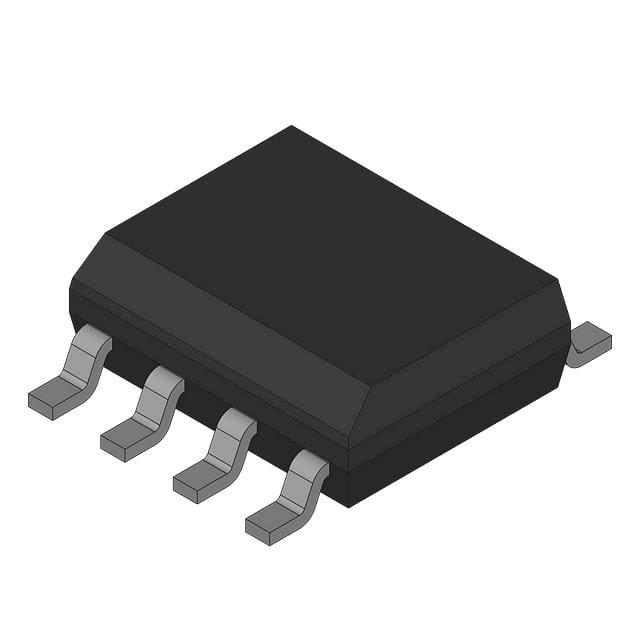
- Part No.:
- DS1708ESA
- Manufacturer:
- Dallas Semiconductor
- Category:
- Supervisors
- Package:
- 8-SOIC (0.154", 3.90mm Width)
- Datasheet:
-
 DS1708ESA.pdf
- Description:
- IC SUPERVISOR DS1708 5V MICROMON
- Quantity:
- Payment:

- Shipping:

Inventory:19,277
Please send an inquiry. Send us your inquiry, and we will respond immediately.
Product details
Overview
DS1708ESA from Maxim Integrated is a 5.0V ±10% microprocessor supervisory circuit that monitors VCC, senses external voltage via IN pin, and debounces pushbutton reset input (PBRST). It delivers active-low and active-high reset outputs (RST and RST), non-maskable interrupt (NMI), and operates across -40°C to +85°C. Used in embedded systems requiring reliable power-up sequencing and early power-fail warning.
For engineers reviewing the DS1708ESA datasheet, DS1708ESA pinout, DS1708ESA application, or DS1708ESA equivalent, key selection criteria include its 5V-10% VCC trip point (4.25–4.50 V), 130 ms minimum reset pulse width, NMI generation at 1.25 V IN threshold, and compatibility with industrial-grade 8-pin SOIC packaging.
Technical Context
The DS1708ESA integrates three independent monitoring functions: VCC supply detection using an internal temperature-compensated reference, high-impedance voltage sense at the IN pin referenced to 1.25 V, and edge-triggered PBRST debouncing with guaranteed 130 ms reset assertion. All logic thresholds are internally fixed and require no external components.
Its dual-reset architecture provides simultaneous active-low (RST) and active-high (RST) signals for direct interfacing with diverse microprocessor reset inputs, while the NMI output enables preemptive system shutdown before VCC collapse. The device asserts reset when VCC falls below 4.25 V and holds it for ≥130 ms after recovery.
Key Specifications
| Parameter | Value and Actual Design Meaning |
|---|---|
| VCC Trip Point | 4.25 V (min) to 4.50 V (max); precise 5V-10% monitoring window for stable 5.0V rail supervision |
| Reset Pulse Width | 130 ms (min); ensures sufficient time for microprocessor and power supply stabilization on power-up or recovery |
| IN Pin Threshold | 1.25 V (typ); enables user-configurable voltage sensing of upstream rails via resistor divider |
| NMI Pulse Width | 200 µs (min); provides deterministic early-warning interrupt before reset activation |
| Operating Temp | -40°C to +85°C; qualified for industrial environments without derating |
| Supply Current | 60 µA (max at VCC < 5.5 V); ultra-low quiescent draw for battery-backed or energy-sensitive systems |
| Package | 8-pin SOIC (150-mil); surface-mount compatible with standard reflow profiles and automated assembly |
Pinout & Package
DS1708ESA is housed in an 8-pin SOIC (150-mil) package with gull-wing leads, JEDEC MS-012AC compliant, 1.75 mm body height, and 1.27 mm pitch.
| Pin/Terminal | Circuit Role | Design Meaning |
|---|---|---|
| PBRST | Pushbutton Reset Input | Active-low, internally pulled up to VCC (40 kΩ typ); debounced to generate ≥130 ms reset pulse on release |
| VCC | Power Supply Input | Primary supply rail input (1.2–5.5 V); powers internal comparators, reference, and output drivers |
| GND | Ground Reference | Analog and digital ground return; must be low-impedance connection to minimize noise coupling |
| IN | Voltage Sense Input | High-impedance (≤1 µA leakage) comparator input referenced to 1.25 V; supports external voltage divider for custom trip points |
| RST | Active-Low Reset Output | Open-drain NMOS output; sinks ≥10 mA at 0.4 V; requires external pull-up for microprocessor reset input |
| RST | Active-High Reset Output | Push-pull CMOS output; drives high to VCC or low to GND; directly interfaces with processors needing active-high reset |
| NC | No Connect | Unbonded pin; must remain unconnected per design; no electrical function or internal connection |
| NMI | Non-Maskable Interrupt Output | Open-drain NMOS output; pulses low for ≥200 µs when IN voltage drops below 1.25 V; enables early power-fail response |
Key Features
| Feature | Design Value |
|---|---|
| Dual Reset Outputs | Simultaneous RST (active-low) and RST (active-high) eliminate need for external inverters or level translators |
| Programmable Voltage Sensing | IN pin with 1.25 V threshold allows monitoring of any DC rail (e.g., 12 V, 24 V) via external resistor divider |
| Debounced Pushbutton Interface | PBRST pin includes internal RC timing and edge detection to guarantee clean, noise-immune 130 ms reset pulses |
| Early Power-Fail Warning | NMI output activates ≥200 µs before RST/RST, providing deterministic time margin for controlled data save or state preservation |
| Industrial Temperature Range | Guaranteed operation from -40°C to +85°C without performance degradation or calibration drift |
Applications
| Industrial PLC Controller | Medical Diagnostic Equipment |
|---|---|
Use Scenario: Microcontroller-based PLC unit operating in factory-floor environments with fluctuating 5V supply rails and EMI exposure. IC Role / Device Role / Timing Role: Supervisory IC monitoring VCC and upstream 24V DC bus via IN pin; generating NMI for graceful I/O shutdown and RST for full processor reset. Use Value: Prevents firmware corruption during brownouts by asserting reset before VCC drops below 4.25 V and enabling 200 µs advance warning via NMI. |
Use Scenario: Portable ultrasound imaging device with battery backup and real-time signal processing requiring deterministic power-loss response. IC Role / Device Role / Timing Role: System supervisor detecting main 5V rail collapse and triggering NMI-driven RAM save routine before RST halts CPU execution. Use Value: Guarantees ≥130 ms reset hold time for safe memory flush and ≥200 µs NMI lead time for critical state capture prior to power loss. |
| Telecom Base Station Card | Automotive Infotainment Head Unit |
Use Scenario: Hot-swappable line card in carrier-grade telecom chassis where 5V supply may dip during insertion or load transients. IC Role / Device Role / Timing Role: Real-time VCC monitor with fast 5 µs response (tRPD) to supply droop; generates synchronized RST/RST to halt FPGA configuration and DSP cores. Use Value: Eliminates need for discrete RC reset circuits and ensures reset assertion within 5 µs of VCC falling below 4.25 V. |
Use Scenario: In-vehicle infotainment system powered from vehicle battery (9–16 V) with local 5V regulator; subject to cold-crank and load-dump events. IC Role / Device Role / Timing Role: Monitors regulated 5V rail and uses IN pin to sense raw battery voltage via divider; asserts NMI for audio buffer flush and RST for MCU reboot. Use Value: Supports dual-point monitoring-local 5V rail integrity and upstream battery health-enabling differentiated fault responses. |
Equivalent & Alternatives
The following parts are listed as comparable options for similar microprocessor supervisory applications.
| Alternative Part | Technical Difference | Application Difference | Selection Advice |
|---|---|---|---|
| MAX708ESA | Same 8-pin SOIC package; 5V-10% VCC trip (4.25–4.50 V); identical RST/RST/NMI/PBRST functionality and timing | Pin-compatible and functionally identical; designed as direct replacement per Maxim documentation | Select MAX708ESA if sourcing from legacy Maxim inventory or when cross-referencing against older design documentation |
| TPS3808G18DBVR | Single active-low reset output only; 1.8V fixed trip (not adjustable); no NMI or PBRST; 360 ms reset timeout (vs. 130 ms) | Lacks dual-reset, NMI, and pushbutton support; suited for simpler 1.8V systems without early-warning requirements | Choose TPS3808G18DBVR only for cost-sensitive 1.8V applications where NMI and dual-reset are unnecessary |
Compared with DS1708ESA, MAX708ESA offers identical supervision features and pinout for seamless drop-in use, while TPS3808G18DBVR provides lower-cost basic reset functionality but omits NMI, PBRST, and dual-output capability required for robust industrial fail-safe designs.
Availability
DS1708ESA is available at Aetrix Electronics and suitable for industrial control systems, medical diagnostics equipment, telecom infrastructure cards, and automotive infotainment head units requiring stable component supply and long-term lifecycle assurance.
Supply support for DS1708ESA includes scheduled delivery planning, volume procurement assistance, BOM continuity management, traceable sourcing, and lifecycle availability coordination for OEM customers, industrial embedded developers, connected-device designers, and electronics production programs.
Manufacturer
Maxim Integrated (now part of Analog Devices) is a semiconductor company specializing in analog, mixed-signal, and power management ICs for industrial, communications, and computing markets.
The DS1708ESA belongs to Maxim's MicroMonitor™ family of supervisory circuits, engineered specifically for deterministic power-fail detection, reset generation, and system-level reliability in harsh industrial and embedded environments.
FAQ
What is the exact VCC trip point range for DS1708ESA?
The DS1708ESA has a guaranteed VCC trip point range of 4.25 V (minimum) to 4.50 V (maximum) at -40°C to +85°C, corresponding to a nominal 5.0 V supply with ±10% tolerance. This specification is validated per Maxim's DS1707/DS1708 datasheet Rev. 0, page 7, DC Electrical Characteristics table. The DS1708ESA does not support 3.3 V or other voltage variants - those are handled by DS1708TESA (3.3V-5%) or DS1708SESA (3.3V-10%).
Does DS1708ESA provide both active-low and active-high reset outputs?
Yes, DS1708ESA provides two independent reset outputs: RST (active-low, open-drain) and RST (active-high, push-pull). This dual-output architecture eliminates the need for external inverters or pull-up resistors in many microprocessor interfaces. The RST output can drive directly into processors requiring active-high reset, while RST interfaces cleanly with legacy systems expecting active-low assertion - both asserted synchronously for ≥130 ms during power-up or brownout recovery.
Can DS1708ESA monitor a 12V supply rail?
Yes, DS1708ESA can monitor a 12 V supply rail using its IN pin, which has a fixed 1.25 V threshold. A resistor divider (e.g., R1 = 26 kΩ, R2 = 10 kΩ) scales the 12 V input down to 1.25 V at the IN pin. Per the datasheet Figure 5, this configuration ensures accurate trip-point translation while limiting IN pin voltage to ≤VCC. The DS1708ESA's high-impedance IN input (≤1 µA leakage) minimizes loading on the divider network, preserving accuracy across temperature.
What is the purpose of the NMI output on DS1708ESA?
The NMI (non-maskable interrupt) output on DS1708ESA provides early warning of impending power failure - activating ≥200 µs before RST/RST assert - by detecting when the IN pin voltage falls below 1.25 V. This gives the host microprocessor time to execute critical tasks like saving volatile data or shutting down peripherals safely. Unlike RST, NMI is edge-triggered and self-clearing, making it ideal for initiating controlled shutdown sequences without halting core execution until final reset.
Is DS1708ESA pin-compatible with MAX708ESA?
Yes, DS1708ESA is pin-compatible with MAX708ESA in the 8-pin SOIC (150-mil) package, sharing identical pin assignments, electrical behavior, timing specs, and functional block diagram. Maxim explicitly states this compatibility in the "Pin Compatible With" section of the DS1707/DS1708 datasheet (page 1). Both devices deliver 5V-10% supervision, dual reset outputs, NMI, and PBRST debounce - enabling direct substitution without PCB or firmware changes.
DS1708ESA Specifications
- Product attributes
- Attribute value
- Manufacturer:
- Dallas Semiconductor
- Series:
- MicroMonitor™
- Package/Case:
- 8-SOIC (0.154", 3.90mm Width)
- Packaging:
- Bulk
- Product Status:
- Active
- Programmable:
- Not Verified
- Type:
- Simple Reset/Power-On Reset
- Number of Voltages Monitored:
- 1
- Voltage - Threshold:
- 4.4V
- Output:
- Push-Pull, Push-Pull
- Reset:
- Active High/Active Low
- Reset Timeout:
- 130ms Minimum
- Operating Temperature:
- -40°C ~ 85°C (TA)
- Grade:
- -
- Qualification:
- -
- Mounting Type:
- Surface Mount
- Supplier Device Package:
- 8-SOIC
DS1708ESA FAQ
1.How can I place an order for DS1708ESA through Aetrix?
Please submit a Request for Quotation (RFQ) for DS1708ESA on Aetrix. Our sales agent will provide a competitive quotation and guide you through the order confirmation once you accept the terms.
2.Are the price and stock information for DS1708ESA reliable?
The price and inventory of DS1708ESA are updated periodically and may fluctuate due to market conditions. Stock and pricing data are typically refreshed every 24 hours. Quotation validity for DS1708ESA is usually 5 days.
3.What payment methods are accepted for DS1708ESA?
We accept Wire Transfer, PayPal, Credit Card, Western Union, MoneyGram, and Escrow for DS1708ESA transactions.
Note: Certain payment methods may incur a processing fee.
4.How is shipping managed for DS1708ESA?
DS1708ESA orders can be shipped via leading logistics carriers, including DHL, UPS, FedEx, TNT, or Registered Mail.
Once your DS1708ESA order is processed, you will receive an email with the shipment details and tracking number.
Note: Tracking information may take up to 24 hours to appear. Express delivery typically takes 3–5 business days.
5.How can I obtain technical support or documentation for DS1708ESA?
For technical support, including DS1708ESA datasheets, pinout diagrams, or application guidance, please contact our engineering support team. They can provide detailed documentation and assistance for your DS1708ESA requirements.
6.How does Aetrix verify that DS1708ESA is sourced from the original manufacturer or authorized distributors?
All DS1708ESA products on Aetrix are procured from qualified distributors and authorized channels. Our dedicated quality assurance team conducts strict verification, including traceability checks and, if necessary, third-party testing. This ensures that DS1708ESA meets industry standards.
7.What is the process for return or replacement of DS1708ESA?
All DS1708ESA units undergo pre-shipment inspection (PSI). If there is an issue with DS1708ESA, returns or replacements are accepted under the following conditions:
1.Quantity discrepancies, incorrect items, or visible external defects (such as breakage or corrosion), acknowledged by Aetrix.
2.The issue is reported within 90 days of delivery.
3.The DS1708ESA part is unused and in its original packaging.
Return procedure for DS1708ESA:
1.Submit a request within 90 days.
2.Obtain a Return Material Authorization (RMA) from Aetrix.
DS1708ESA Tags
-
MIC826SYMT-TR
Microchip Technology
-
APX803S-31SA-7
Diodes Incorporated
-
APX803L20-29SA-7
Diodes Incorporated

-
TPS3828-33DBVR
Texas Instruments

-
V6340RSP3B+
EM Microelectronic
-
EM6325CXSP5B-2.9+
EM Microelectronic
-
MCP120T-300I/TT
Microchip Technology
-
MCP130T-315I/TT
Microchip Technology
-
MCP120T-475I/TT
Microchip Technology
-
MCP111T-300E/TT
Microchip Technology
-
MCP120T-315I/TT
Microchip Technology
-
MCP809T-315I/TT
Microchip Technology
Tech Hub

An engineering guide to LED driver operation, constant-current and constant-voltage outputs, linear and switching topologies, dimming, IC selection, calculations, replacement compatibility, and fault c…

Operational amplifier guide covering op amp basics, feedback, ideal vs real op amps, common configurations, buffer circuits, offset, bias current, gain-bandwidth, slew rate, rail-to-rail limits and sel…

Jumper cables guide covering safe connection order, red and black clamp placement, final ground connection, cable gauge, length, clamp quality, copper vs CCA cables, jump starter comparison and battery…

LDO regulator guide covering low dropout voltage, power dissipation, thermal design, PSRR, output noise, capacitor stability, adjustable LDO circuits, LDO vs buck converter and datasheet selection chec…

Conditional Access Module guide covering CAM meaning, CI/CI+ interface, smart card authorization, DVB security workflow, TV and set-top box compatibility, internal electronics, ESD protection, connecto…

Guide to electronic component obsolescence covering EOL risk, PCN/PDN notices, last-time buy planning, replacement options, form-fit-function validation, counterfeit risk and BOM lifecycle management.

18650 battery guide covering lithium-ion cell basics, 3.6V/3.7V voltage, 4.2V charging, mAh and Wh capacity, protected cells, chargers, BMS, series-parallel packs, holders, welding and sourcing checks.…

Hall effect sensor guide covering working principle, linear and digital sensors, Arduino circuits, current sensing, speed detection, automotive applications, A3144 examples, signal filtering and datash…

Product Change Notification guide for electronic components, covering PCN meaning, PCN vs PDN/EOL, common change types, risk levels, form-fit-function review, engineering validation, BOM control, LTB/L…

A practical guide to blend door actuators, covering HVAC function, symptoms, location, AC and heater issues, reset and calibration, replacement cost, electrical diagnosis, compatibility checks, and rep…


