
 My Inquiry
 My Account


Analog Devices Inc./Maxim Integrated DS1832+
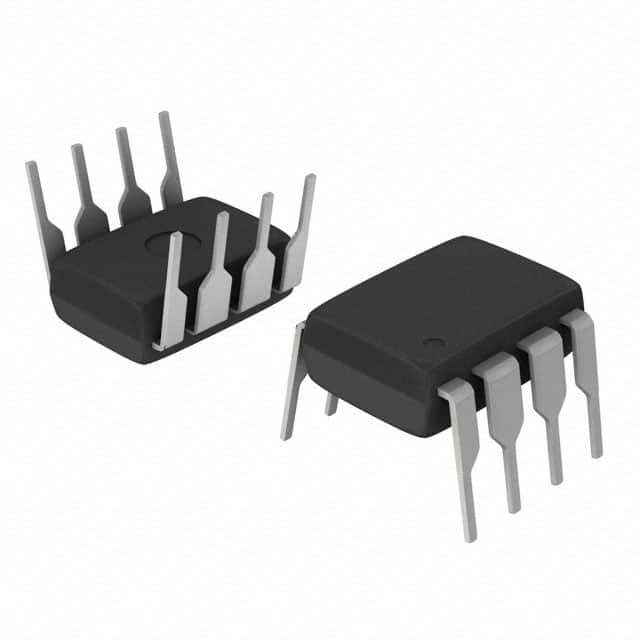
- Part No.:
- DS1832+
- Manufacturer:
- Analog Devices Inc./Maxim Integrated
- Category:
- Supervisors
- Package:
- 8-DIP (0.300", 7.62mm)
- Datasheet:
-
 DS1832+.pdf
- Description:
- IC SUPERVISOR 1 CHANNEL 8DIP
- Quantity:
- Payment:

- Shipping:

Inventory:3,209
Please send an inquiry. Send us your inquiry, and we will respond immediately.
Product details
Overview
DS1832+ from Maxim Integrated is a programmable digital thermostat and thermometer IC with 1-Wire® interface, operating across –55°C to +125°C, delivering ±1°C accuracy from 0°C to +85°C, and providing 8-bit (1°C resolution) temperature readings in ≤1 second. It functions autonomously as a standalone thermostat using user-defined TH/TL trip-points stored in nonvolatile EEPROM, commonly deployed in industrial thermal monitoring and embedded environmental control systems.
For engineers reviewing the DS1832+ datasheet, DS1832+ pinout, DS1832+ application, or DS1832+ equivalent, key selection considerations include its dual-mode operation (1-Wire sensor vs. self-contained thermostat), open-drain DQ pin behavior, nonvolatile trip-point storage, VDD-dependent conversion timing, and TO92/SO package compatibility with legacy DS1821 designs.
Technical Context
The DS1832+ implements a proprietary direct-to-digital temperature sensing architecture using dual oscillators-one with low temperature coefficient for counting and one with high temp-co for gate timing-enabling centigrade measurement without external calibration. Its internal logic supports two mutually exclusive operating modes: 1-Wire mode (T/R̄ = 0) for microprocessor-controlled read/write access to TH, TL, status, and temperature registers; and thermostat mode (T/R̄ = 1) for autonomous DQ output activation based on preprogrammed thresholds.
Communication occurs exclusively via the open-drain DQ pin using Maxim's 1-Wire protocol, requiring no external components beyond a 4.7 kΩ pullup resistor. All configuration bits affecting power-up behavior (T/R̄), thermostat polarity (POL), and conversion mode (1SHOT) are stored in nonvolatile EEPROM, retaining settings across power cycles. The NVB bit enables real-time monitoring of EEPROM write completion.
Key Specifications
| Parameter | Value and Actual Design Meaning |
|---|---|
| Interface | 1-Wire® single-pin bidirectional bus; requires only DQ + pullup - eliminates UART/I²C routing complexity. |
| Temp Range | –55°C to +125°C operational range - validated for harsh environments including automotive under-hood and industrial enclosures. |
| Accuracy | ±1°C over 0°C to +85°C - meets Class B requirements for thermostatic control in HVAC and appliance applications. |
| Resolution | 8-bit (1°C LSB) temperature register - sufficient for discrete threshold detection without floating-point math overhead. |
| Conversion Time | ≤1 second max per reading - enables responsive thermal shutdown or fan speed staging in real-time systems. |
| Nonvolatile Storage | EEPROM holds TH, TL, T/R̄, POL, 1SHOT - allows factory programming for plug-and-play thermostat deployment. |
| Supply Voltage | 2.7V to 5.5V - compatible with 3.3V and 5V logic domains without level-shifting circuitry. |
Pinout & Package
DS1832+ is available in 3-pin TO92 (DS1832+T) and 8-pin SO (DS1832+S) packages. Both variants share identical pin functionality and electrical characteristics; unused pins in SO package are NC.
| Pin/Terminal | Circuit Role | Design Meaning |
|---|---|---|
| GND | Ground reference | Common return path for internal analog/digital circuitry; must be low-impedance connection to system ground plane. |
| DQ | Data I/O & thermostat output | Open-drain 1-Wire communication line; also serves as active-high/low thermostat alert signal - requires external 4.7 kΩ pullup. |
| VDD | Power supply input | Accepts 2.7–5.5V DC; powers internal oscillator, EEPROM, and logic - no internal regulator; bypass capacitor recommended. |
| NC (SO only) | No connect | Pins 3–7 in 8-pin SO package are unconnected die pads - must remain floating; no PCB trace or solder mask required. |
Key Features
| Feature | Design Value |
|---|---|
| Standalone thermostat operation | Autonomous DQ output toggling between TH/TL thresholds without host MCU involvement - reduces firmware load and enables fail-safe thermal protection. |
| User-programmable trip points | TH and TL registers stored in EEPROM - allows field reconfiguration or factory-set thresholds before system integration. |
| Selectable DQ polarity | POL bit configures active-high or active-low thermostat output - matches existing control logic without external inverters. |
| Two conversion modes | 1SHOT bit selects continuous or one-shot measurement - balances responsiveness (continuous) against power savings (one-shot) in battery-powered devices. |
| Thermal event flags | THF and TLF bits latch temperature excursions beyond TH/TL - provides diagnostic history across power cycles for maintenance logging. |
Applications
| Industrial Temperature Monitoring | Embedded Appliance Control |
|---|---|
Use Scenario: Real-time ambient temperature tracking in PLC cabinets, motor drives, and power converters where thermal derating is critical. IC Role / Device Role / Timing Role: DS1832+ acts as primary thermal sensor and independent overtemperature shutoff trigger, interfacing directly to relay drivers or MCU GPIOs. Use Value: Eliminates need for separate ADC and comparator circuits while maintaining ±1°C accuracy across wide industrial temperature range. | Use Scenario: Oven, refrigerator, or coffee maker temperature regulation requiring precise setpoint enforcement and hysteresis control. IC Role / Device Role / Timing Role: DS1832+ operates as self-contained thermostat with factory-programmed TH/TL values, driving heating/cooling elements directly via DQ output. Use Value: Reduces BOM count by replacing thermistor + op-amp + comparator + microcontroller subsystem with single IC. |
| Automotive Cabin Climate Systems | Medical Diagnostic Equipment |
Use Scenario: Cabin air temperature sensing in HVAC modules where space-constrained TO92 mounting is preferred. IC Role / Device Role / Timing Role: DS1832+ provides calibrated centigrade readings via 1-Wire to body control module, enabling closed-loop blower speed adjustment. Use Value: Delivers automotive-grade reliability (-55°C to +125°C) with minimal PCB footprint and no external calibration components. | Use Scenario: Temperature validation inside portable ultrasound or blood analyzers during self-test sequences. IC Role / Device Role / Timing Role: DS1832+ performs rapid one-shot measurements during startup to confirm safe operating temperature before enabling high-power subsystems. Use Value: Achieves <1s conversion time with ±1°C accuracy at room temperature - satisfies IEC 60601-1 thermal safety verification requirements. |
Equivalent & Alternatives
The following parts are listed as comparable options for similar programmable digital thermostat and thermometer applications.
| Alternative Part | Technical Difference | Application Difference | Selection Advice |
|---|---|---|---|
| DS18B20+ | 12-bit resolution (0.0625°C), parasite-power capable, supports multi-drop 1-Wire networks; larger SO package (8-pin vs. DS1832+'s 3-pin TO92). | Used where higher resolution or multi-sensor daisy-chaining is required; not suitable for space-constrained TO92-only layouts. | Choose DS18B20+ when sub-degree resolution or networked sensing is needed; DS1832+ remains optimal for simple, single-node, cost-sensitive thermostat use. |
| LMT70AYPWR | Analog output (ratiometric voltage), 0.1°C typical accuracy, requires external ADC and comparator; no built-in EEPROM or thermostat logic. | Requires full analog signal chain design; lacks autonomous thermostat capability and nonvolatile trip storage. | Select LMT70AYPWR only if system already includes precision ADC resources and demands better than ±1°C accuracy; DS1832+ integrates sensing, logic, and memory in one device. |
Compared with DS18B20+ and LMT70AYPWR, the DS1832+ uniquely combines autonomous thermostat operation, EEPROM-stored trip points, and minimal 3-pin TO92 packaging - making it the most direct solution for cost-optimized, single-point thermal control without host processor dependency.
Availability
DS1832+ is available at Aetrix Electronics and suitable for industrial temperature monitoring, embedded appliance control, automotive cabin climate systems, and medical diagnostic equipment requiring stable component supply and long-term lifecycle support.
Supply support for DS1832+ includes scheduled delivery planning, volume procurement assistance, BOM continuity management, traceable sourcing, and lifecycle availability coordination for OEM customers, industrial embedded developers, connected-device designers, and electronics production programs.
Manufacturer
Maxim Integrated (now part of Analog Devices) is a semiconductor company specializing in precision analog, mixed-signal, and high-reliability ICs for industrial, automotive, and communications markets.
The DS1832+ belongs to Maxim's 1-Wire temperature sensor family, designed specifically for applications demanding integrated thermal sensing, autonomous decision-making, and minimal external component count in constrained environments.
FAQ
What is the operating temperature range of the DS1832+?
The DS1832+ operates across –55°C to +125°C, fully specified and tested over this range. Its ±1°C accuracy is guaranteed only from 0°C to +85°C per the datasheet's DC Electrical Characteristics table; outside that span, error increases gradually as shown in the Typical Error vs. Temperature curve. This makes DS1832+ suitable for extreme environments like engine bays or outdoor industrial enclosures where passive thermal protection is essential.
How does the DS1832+ differ from the DS1821 in terms of functionality?
The DS1832+ is a direct functional and pin-compatible successor to the DS1821, retaining identical 1-Wire command set, register map, EEPROM structure, and TO92/SO packaging. Key enhancements include improved ESD robustness, tighter initial calibration tolerance, and extended qualification for automotive temperature cycling. No firmware or hardware changes are needed when upgrading from DS1821 to DS1832+, making it a drop-in replacement for legacy designs.
Can the DS1832+ operate without an external power supply (VDD)?
No, the DS1832+ requires a valid VDD supply between 2.7V and 5.5V to function - it does not support parasite-power mode like the DS18B20. The DQ pin cannot source current to power the device internally. In thermostat mode, VDD must remain active for continuous temperature conversions and DQ output assertion; removing VDD disables all functionality, including latched THF/TLF flag states.
What is the purpose of the THF and TLF bits in the DS1832+ status register?
The THF (Temperature High Flag) and TLF (Temperature Low Flag) bits in the DS1832+ status/configuration register are nonvolatile latches that record whether the measured temperature has ever exceeded TH or fallen below TL since last reset or clear. Once set to '1', they remain '1' until explicitly written to '0' by the host. These flags enable post-mortem thermal diagnostics - for example, confirming if an industrial controller experienced overheating during unattended operation, even after multiple power cycles.
How do I configure the DS1832+ to power up in thermostat mode?
To configure the DS1832+ to power up in thermostat mode, write '1' to the T/R̄ bit (bit 6) of the status/configuration register using the Write Status [0Ch] command while the device is in 1-Wire mode. This value is stored in nonvolatile EEPROM, so it persists across power cycles. After writing, cycle VDD to apply the change. Once configured, DS1832+ will begin continuous temperature conversions at power-up and assert DQ according to TH/TL thresholds without any host interaction.
DS1832+ Specifications
- Product attributes
- Attribute value
- Manufacturer:
- Analog Devices Inc./Maxim Integrated
- Series:
- MicroMonitor™
- Package/Case:
- 8-DIP (0.300", 7.62mm)
- Packaging:
- Tube
- Product Status:
- Active
- Programmable:
- Not Verified
- Type:
- Simple Reset/Power-On Reset
- Number of Voltages Monitored:
- 1
- Voltage - Threshold:
- 2.55V, 2.88V
- Output:
- Push-Pull, Push-Pull
- Reset:
- Active High/Active Low
- Reset Timeout:
- 250ms Minimum
- Operating Temperature:
- -40°C ~ 85°C (TA)
- Grade:
- -
- Qualification:
- -
- Mounting Type:
- Through Hole
- Supplier Device Package:
- 8-PDIP
DS1832+ FAQ
1.How can I place an order for DS1832+ through Aetrix?
Please submit a Request for Quotation (RFQ) for DS1832+ on Aetrix. Our sales agent will provide a competitive quotation and guide you through the order confirmation once you accept the terms.
2.Are the price and stock information for DS1832+ reliable?
The price and inventory of DS1832+ are updated periodically and may fluctuate due to market conditions. Stock and pricing data are typically refreshed every 24 hours. Quotation validity for DS1832+ is usually 5 days.
3.What payment methods are accepted for DS1832+?
We accept Wire Transfer, PayPal, Credit Card, Western Union, MoneyGram, and Escrow for DS1832+ transactions.
Note: Certain payment methods may incur a processing fee.
4.How is shipping managed for DS1832+?
DS1832+ orders can be shipped via leading logistics carriers, including DHL, UPS, FedEx, TNT, or Registered Mail.
Once your DS1832+ order is processed, you will receive an email with the shipment details and tracking number.
Note: Tracking information may take up to 24 hours to appear. Express delivery typically takes 3–5 business days.
5.How can I obtain technical support or documentation for DS1832+?
For technical support, including DS1832+ datasheets, pinout diagrams, or application guidance, please contact our engineering support team. They can provide detailed documentation and assistance for your DS1832+ requirements.
6.How does Aetrix verify that DS1832+ is sourced from the original manufacturer or authorized distributors?
All DS1832+ products on Aetrix are procured from qualified distributors and authorized channels. Our dedicated quality assurance team conducts strict verification, including traceability checks and, if necessary, third-party testing. This ensures that DS1832+ meets industry standards.
7.What is the process for return or replacement of DS1832+?
All DS1832+ units undergo pre-shipment inspection (PSI). If there is an issue with DS1832+, returns or replacements are accepted under the following conditions:
1.Quantity discrepancies, incorrect items, or visible external defects (such as breakage or corrosion), acknowledged by Aetrix.
2.The issue is reported within 90 days of delivery.
3.The DS1832+ part is unused and in its original packaging.
Return procedure for DS1832+:
1.Submit a request within 90 days.
2.Obtain a Return Material Authorization (RMA) from Aetrix.
DS1832+ Tags
-
MIC826SYMT-TR
Microchip Technology
-
APX803S-31SA-7
Diodes Incorporated
-
APX803L20-29SA-7
Diodes Incorporated
-
TPS3828-33DBVR
Texas Instruments

-
V6340RSP3B+
EM Microelectronic
-
EM6325CXSP5B-2.9+
EM Microelectronic
-
MCP120T-300I/TT
Microchip Technology
-
MCP130T-315I/TT
Microchip Technology
-
MCP120T-475I/TT
Microchip Technology
-
MCP111T-300E/TT
Microchip Technology
-
MCP120T-315I/TT
Microchip Technology
-
MCP809T-315I/TT
Microchip Technology
Tech Hub

A practical engineering guide to 3.3V and 5V logic compatibility, input thresholds, resistor dividers, translator ICs, MOSFET level shifting, I2C pull-ups, timing limits and power-sequencing risks.

The 74HC595 uses push-pull logic outputs, while the TPIC6B595 uses 50 V open-drain DMOS sinks for higher-power loads. This guide compares timing, current limits, 3.3 V interfacing, load wiring, thermal…

The 74HC595 converts serial data into eight stable parallel outputs. This guide covers pin functions, shift and storage timing, OE and MR behavior, drive-current limits, cascading, voltage compatibilit…

A technical comparison of level-sensitive latches and edge-triggered flip-flops, covering timing windows, setup and hold limits, master–slave operation, time borrowing, race-through, HDL inference and…

A D latch stores one bit while Enable controls when data can pass. This reference covers gate-level operation, truth tables, transparency, setup and hold timing, LE versus OE, common ICs and practical …

An SR latch stores one bit through cross-coupled feedback. This engineering reference covers NOR and NAND implementations, truth tables, forbidden-state recovery, gated operation, switch debouncing, fa…

Latch circuits retain one bit through feedback. This technical reference covers SR and D latches, truth tables, transparency, timing limits, latch-versus-flip-flop behavior, applications and common log…

An engineering guide to LED driver operation, constant-current and constant-voltage outputs, linear and switching topologies, dimming, IC selection, calculations, replacement compatibility, and fault c…

Operational amplifier guide covering op amp basics, feedback, ideal vs real op amps, common configurations, buffer circuits, offset, bias current, gain-bandwidth, slew rate, rail-to-rail limits and sel…

Jumper cables guide covering safe connection order, red and black clamp placement, final ground connection, cable gauge, length, clamp quality, copper vs CCA cables, jump starter comparison and battery…


