
 My Inquiry
 My Account


Analog Devices Inc./Maxim Integrated DS1832
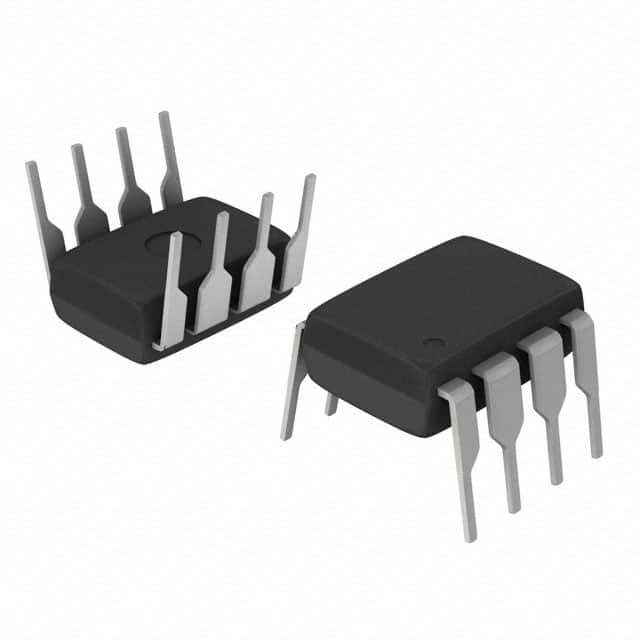
- Part No.:
- DS1832
- Manufacturer:
- Analog Devices Inc./Maxim Integrated
- Category:
- Supervisors
- Package:
- 8-DIP (0.300", 7.62mm)
- Datasheet:
-
 DS1832.pdf
- Description:
- IC SUPERVISOR 1 CHANNEL 8DIP
- Quantity:
- Payment:

- Shipping:

Inventory:3,711
Please send an inquiry. Send us your inquiry, and we will respond immediately.
Product details
Overview
DS1832 from Maxim Integrated is a programmable digital thermostat and thermometer IC with 1-Wire® interface, operating across –55°C to +125°C, delivering ±1°C accuracy from 0°C to +85°C, 8-bit (1°C) resolution, and standalone thermostat functionality using user-defined TH/TL trip-points. It serves as a system-level thermal monitor in embedded control loops requiring minimal external components.
For engineers reviewing the DS1832 datasheet, DS1832 pinout, DS1832 application, or DS1832 equivalent, key selection criteria include its single-pin 1-Wire bus compatibility, nonvolatile trip-point storage, dual-mode operation (thermostat vs. sensor), open-drain DQ output polarity control, and TO92/SO package options for space-constrained thermal sensing nodes.
Technical Context
The DS1832 implements a proprietary direct-to-digital temperature sensor using dual-oscillator architecture - one low-temp-co oscillator for counting and one high-temp-co oscillator defining gate period - enabling centigrade measurement without calibration. Its 1-Wire interface uses strict timing-controlled read/write slots and reset/presence pulses, with DQ serving as both bidirectional data line and open-drain thermostat output.
Two nonvolatile EEPROM registers (TH and TL) store user-defined trip-points, while the status/configuration register holds T/R¯ (power-up mode), POL (DQ polarity), 1SHOT (conversion mode), and THF/TLF flags. All EEPROM writes require up to 10 ms and are monitored via the NVB bit; continuous conversion completes in ≤1 second.
Key Specifications
| Parameter | Value and Actual Design Meaning |
|---|---|
| Operating Temp Range | –55°C to +125°C: Enables deployment in automotive under-hood, industrial motor drives, and outdoor environmental sensors. |
| Accuracy | ±1°C over 0°C to +85°C: Meets Class B RTD-grade precision for HVAC control and medical thermometry. |
| Resolution | 8-bit (1°C): Provides integer-degree centigrade output directly readable via 1-Wire without post-processing. |
| Conversion Time | ≤1 second max: Supports responsive thermal feedback in closed-loop fan speed or heater control systems. |
| Interface | Single-wire 1-Wire®: Reduces PCB routing to one signal + ground, eliminating UART/I²C overhead and simplifying microcontroller GPIO usage. |
| Power Supply | 2.7V to 5.5V: Compatible with standard 3.3V and 5V logic domains without level-shifting. |
| Thermostat Output | Open-drain DQ with user-selectable polarity (POL bit): Directly drives optocouplers, MOSFET gates, or comparator inputs without external buffering. |
Pinout & Package
DS1832 is available in 3-pin TO92 and 8-pin SO (208-mil) packages. Both variants share identical pin functions but differ in pin count and layout due to NC pins in SO version.
| Pin/Terminal | Circuit Role | Design Meaning |
|---|---|---|
| GND | Ground reference | Common return path for internal analog circuitry and DQ pull-down current; must be low-impedance for stable temperature readings. |
| DQ | Data I/O & thermostat output | Open-drain bidirectional node: requires external ~4.7kΩ pullup; serves as 1-Wire data line or active-high/low thermostat switch output. |
| VDD | Power supply input | Accepts 2.7V–5.5V; powers internal oscillator, EEPROM, and logic; no internal regulation - supply must be clean and decoupled. |
| NC (SO only) | No-connect terminal | Unused silicon bond pads; must remain unconnected per datasheet - floating or tied to GND/VDD may cause latch-up or parametric shift. |
Key Features
| Feature | Design Value |
|---|---|
| Standalone thermostat mode | Enables self-contained thermal switching without host MCU - ideal for fail-safe heater cutoff or fan activation in power-loss scenarios. |
| User-programmable TH/TL registers | Nonvolatile EEPROM storage allows pre-configuration before system integration, eliminating field programming requirements. |
| Dual operating modes | Configurable T/R¯ bit selects 1-Wire sensor mode or thermostat mode at power-up - supports flexible design reuse across product variants. |
| Thermostat output polarity control | POL bit sets DQ active-high or active-low, matching existing logic families (e.g., TTL vs. CMOS) without external inverters. |
| Temperature high/low flag bits (THF/TLF) | Nonvolatile status flags record thermal excursions beyond trip points across power cycles - enables diagnostic logging in unattended equipment. |
Applications
| Industrial Motor Protection | Medical Thermometer |
|---|---|
Use Scenario: Monitoring stator winding temperature in AC induction motors to prevent thermal runaway during overload conditions. IC Role / Device Role / Timing Role: DS1832 acts as autonomous thermal shutdown trigger, asserting DQ when winding exceeds TH limit, directly disabling drive enable signal. Use Value: Eliminates need for dedicated ADC + microcontroller in safety-critical paths, reducing BOM cost and failure modes while meeting IEC 60034-11 thermal class compliance. | Use Scenario: Contact-based body temperature measurement in handheld clinical thermometers with fast response and low power consumption. IC Role / Device Role / Timing Role: DS1832 provides calibrated 1°C-resolution centigrade output via 1-Wire, sampled by low-power MCU during 10-second measurement window. Use Value: Achieves ±1°C accuracy across human physiological range (35–42°C) with single-pin interface, enabling compact probe design and battery life >500 measurements per charge. |
| Smart HVAC Thermostat | Server Rack Thermal Management |
Use Scenario: Room ambient sensing and compressor control in residential Wi-Fi thermostats with local hysteresis-based decision logic. IC Role / Device Role / Timing Role: DS1832 operates in thermostat mode with TH=24°C/TL=22°C, driving relay coil via DQ to cycle HVAC compressor. Use Value: Removes dependency on cloud or gateway for basic temperature regulation - ensures continued operation during network outages with zero firmware overhead. | Use Scenario: Hot-spot monitoring on CPU voltage regulator modules (VRMs) and GPU memory banks in enterprise servers. IC Role / Device Role / Timing Role: DS1832 mounted adjacent to VRM MOSFETs delivers real-time die temperature to BMC via 1-Wire bus, triggering dynamic fan speed ramping. Use Value: Enables precise thermal throttling at component level without adding I²C address conflicts or requiring additional controller GPIO resources. |
Equivalent & Alternatives
The following parts are listed as comparable options for similar programmable digital thermostat applications.
| Alternative Part | Technical Difference | Application Difference | Selection Advice |
|---|---|---|---|
| DS18B20 | 12-bit resolution (0.0625°C), parasite-power capable, supports multi-drop 1-Wire bus; lacks standalone thermostat mode and TH/TL EEPROM registers. | Requires host MCU for all temperature decisions; suited for high-precision data logging, not autonomous switching. | Select DS18B20 when higher resolution and multi-sensor bus sharing are required, but avoid if standalone thermostat behavior is needed. |
| LMT70AIDSC | Analog output (ratiometric voltage), 0.1°C typical accuracy, requires external ADC; no built-in EEPROM or digital interface. | Demands additional signal conditioning and processing; cannot operate autonomously or store trip points. | Choose LMT70AIDSC only when analog integration is preferred and system already includes high-accuracy ADC resources. |
Compared with DS18B20 and LMT70AIDSC, the DS1832 uniquely combines autonomous thermostat operation, nonvolatile trip-point storage, and single-wire digital interface - making it the only option among the three that eliminates host intervention for thermal switching tasks.
Availability
DS1832 is available at Aetrix Electronics and suitable for industrial motor protection, medical thermometry, smart HVAC control, and server rack thermal management requiring stable component supply across extended temperature ranges and long production lifecycles.
Supply support for DS1832 includes scheduled delivery planning, volume procurement assistance, BOM continuity management, traceable sourcing, and lifecycle availability coordination for OEM customers, industrial embedded developers, connected-device designers, and electronics production programs.
Manufacturer
Maxim Integrated (now part of Analog Devices) designs precision analog, mixed-signal, and digital ICs for industrial, communications, computing, and consumer applications.
The DS1832 belongs to Maxim's 1-Wire temperature sensor family, engineered specifically for applications demanding autonomous thermal control with minimal external components and robust operation across extreme temperatures.
FAQ
What is the primary function of the DS1832 in thermostat mode?
The DS1832 functions as a standalone thermostat in thermostat mode, continuously converting temperature and asserting its open-drain DQ pin when measured temperature exceeds the TH register value, holding active until temperature falls below the TL register value. This behavior requires no host processor interaction and relies on nonvolatile EEPROM-stored trip points programmed earlier in 1-Wire mode.
Does the DS1832 require an external power supply in all configurations?
Yes, the DS1832 requires a VDD supply between 2.7V and 5.5V for normal operation in both 1-Wire and thermostat modes. Unlike some 1-Wire devices (e.g., DS18B20), it does not support parasite-power operation - the VDD pin must be connected to a valid supply; leaving it unpowered will disable temperature conversion and thermostat output.
How is temperature data formatted in the DS1832's temperature register?
Temperature data in the DS1832 is stored as an 8-bit two's complement value in the temperature register, providing 1°C resolution across –55°C to +125°C. Bit 7 is the sign bit: 0 indicates positive temperature, 1 indicates negative. For example, 0x00 = 0°C, 0xFF = –1°C, and 0xC9 = –55°C - all values directly readable via the Read Temperature [AAh] command.
Can the DS1832 operate in both thermostat and 1-Wire modes simultaneously?
No, the DS1832 operates exclusively in one mode at a time, selected by the T/R¯ bit in its status/configuration register. When T/R¯ = 0, it powers up in 1-Wire mode for sensor readout and configuration; when T/R¯ = 1, it powers up in thermostat mode for autonomous switching. Mode switching requires reprogramming the T/R¯ bit via 1-Wire commands or power cycling after temporary mode entry.
What is the purpose of the THF and TLF bits in the DS1832 status register?
The THF (Temperature High Flag) and TLF (Temperature Low Flag) bits are nonvolatile status indicators that record whether the DS1832 has ever exceeded the TH or fallen below the TL trip point since last cleared. THF = 1 means temperature exceeded TH at least once; TLF = 1 means it dropped below TL. Both retain state across power cycles and are cleared only by explicit write - enabling thermal event logging in maintenance-sensitive systems.
DS1832 Specifications
- Product attributes
- Attribute value
- Manufacturer:
- Analog Devices Inc./Maxim Integrated
- Series:
- MicroMonitor™
- Package/Case:
- 8-DIP (0.300", 7.62mm)
- Packaging:
- Tube
- Product Status:
- Obsolete
- Programmable:
- Not Verified
- Type:
- Simple Reset/Power-On Reset
- Number of Voltages Monitored:
- 1
- Voltage - Threshold:
- 2.55V, 2.88V
- Output:
- Push-Pull, Push-Pull
- Reset:
- Active High/Active Low
- Reset Timeout:
- 250ms Minimum
- Operating Temperature:
- -40°C ~ 85°C (TA)
- Grade:
- -
- Qualification:
- -
- Mounting Type:
- Through Hole
- Supplier Device Package:
- 8-PDIP
DS1832 FAQ
1.How can I place an order for DS1832 through Aetrix?
Please submit a Request for Quotation (RFQ) for DS1832 on Aetrix. Our sales agent will provide a competitive quotation and guide you through the order confirmation once you accept the terms.
2.Are the price and stock information for DS1832 reliable?
The price and inventory of DS1832 are updated periodically and may fluctuate due to market conditions. Stock and pricing data are typically refreshed every 24 hours. Quotation validity for DS1832 is usually 5 days.
3.What payment methods are accepted for DS1832?
We accept Wire Transfer, PayPal, Credit Card, Western Union, MoneyGram, and Escrow for DS1832 transactions.
Note: Certain payment methods may incur a processing fee.
4.How is shipping managed for DS1832?
DS1832 orders can be shipped via leading logistics carriers, including DHL, UPS, FedEx, TNT, or Registered Mail.
Once your DS1832 order is processed, you will receive an email with the shipment details and tracking number.
Note: Tracking information may take up to 24 hours to appear. Express delivery typically takes 3–5 business days.
5.How can I obtain technical support or documentation for DS1832?
For technical support, including DS1832 datasheets, pinout diagrams, or application guidance, please contact our engineering support team. They can provide detailed documentation and assistance for your DS1832 requirements.
6.How does Aetrix verify that DS1832 is sourced from the original manufacturer or authorized distributors?
All DS1832 products on Aetrix are procured from qualified distributors and authorized channels. Our dedicated quality assurance team conducts strict verification, including traceability checks and, if necessary, third-party testing. This ensures that DS1832 meets industry standards.
7.What is the process for return or replacement of DS1832?
All DS1832 units undergo pre-shipment inspection (PSI). If there is an issue with DS1832, returns or replacements are accepted under the following conditions:
1.Quantity discrepancies, incorrect items, or visible external defects (such as breakage or corrosion), acknowledged by Aetrix.
2.The issue is reported within 90 days of delivery.
3.The DS1832 part is unused and in its original packaging.
Return procedure for DS1832:
1.Submit a request within 90 days.
2.Obtain a Return Material Authorization (RMA) from Aetrix.
DS1832 Tags
-
MIC826SYMT-TR
Microchip Technology
-
APX803S-31SA-7
Diodes Incorporated
-
APX803L20-29SA-7
Diodes Incorporated
-
TPS3828-33DBVR
Texas Instruments

-
V6340RSP3B+
EM Microelectronic
-
EM6325CXSP5B-2.9+
EM Microelectronic
-
MCP120T-300I/TT
Microchip Technology
-
MCP130T-315I/TT
Microchip Technology
-
MCP120T-475I/TT
Microchip Technology
-
MCP111T-300E/TT
Microchip Technology
-
MCP120T-315I/TT
Microchip Technology
-
MCP809T-315I/TT
Microchip Technology
Tech Hub

A practical engineering guide to 3.3V and 5V logic compatibility, input thresholds, resistor dividers, translator ICs, MOSFET level shifting, I2C pull-ups, timing limits and power-sequencing risks.

The 74HC595 uses push-pull logic outputs, while the TPIC6B595 uses 50 V open-drain DMOS sinks for higher-power loads. This guide compares timing, current limits, 3.3 V interfacing, load wiring, thermal…

The 74HC595 converts serial data into eight stable parallel outputs. This guide covers pin functions, shift and storage timing, OE and MR behavior, drive-current limits, cascading, voltage compatibilit…

A technical comparison of level-sensitive latches and edge-triggered flip-flops, covering timing windows, setup and hold limits, master–slave operation, time borrowing, race-through, HDL inference and…

A D latch stores one bit while Enable controls when data can pass. This reference covers gate-level operation, truth tables, transparency, setup and hold timing, LE versus OE, common ICs and practical …

An SR latch stores one bit through cross-coupled feedback. This engineering reference covers NOR and NAND implementations, truth tables, forbidden-state recovery, gated operation, switch debouncing, fa…

Latch circuits retain one bit through feedback. This technical reference covers SR and D latches, truth tables, transparency, timing limits, latch-versus-flip-flop behavior, applications and common log…

An engineering guide to LED driver operation, constant-current and constant-voltage outputs, linear and switching topologies, dimming, IC selection, calculations, replacement compatibility, and fault c…

Operational amplifier guide covering op amp basics, feedback, ideal vs real op amps, common configurations, buffer circuits, offset, bias current, gain-bandwidth, slew rate, rail-to-rail limits and sel…

Jumper cables guide covering safe connection order, red and black clamp placement, final ground connection, cable gauge, length, clamp quality, copper vs CCA cables, jump starter comparison and battery…


