
 My Inquiry
 My Account


UMW DS18B20Z
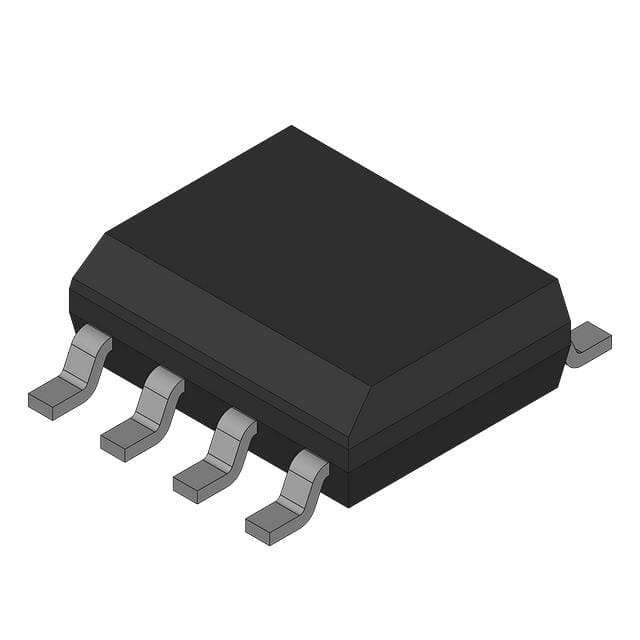
- Part No.:
- DS18B20Z
- Manufacturer:
- UMW
- Category:
- Analog and Digital Output
- Package:
- 8-SOIC (0.154", 3.90mm Width)
- Datasheet:
-
 DS18B20Z.pdf
- Description:
- 11 B -55 ~ 125C 1-WIRE DIGITAL,
- Quantity:
- Payment:

- Shipping:

Inventory:4,680
Please send an inquiry. Send us your inquiry, and we will respond immediately.
Product details
Overview
DS18B20Z from Maxim Integrated is a programmable-resolution 1-Wire digital thermometer with ±0.5°C accuracy from −10°C to +85°C, −55°C to +125°C operating range, and parasite-power capability requiring only DQ and GND pins. It delivers 9–12-bit temperature data over a single-wire bus and supports distributed sensing in HVAC control systems.
For engineers reviewing the DS18B20Z datasheet, DS18B20Z pinout, DS18B20Z application, or DS18B20Z equivalent, key selection considerations include parasitic vs. VDD-powered operation, 1-Wire multidrop topology support, alarm threshold programming via EEPROM, and resolution–conversion time tradeoffs (750 ms at 12-bit).
Technical Context
The DS18B20Z implements a 1-Wire interface using open-drain DQ signaling with weak pullup (4.7 kΩ) and optional strong pullup for parasite-power temperature conversions. Its internal architecture integrates a bandgap temperature sensor, 2-byte sign-extended two's complement temperature register, and 64-bit laser-programmed ROM containing family code 28h.
It features nonvolatile TH/TL alarm registers and configuration register (R0/R1 bits) stored in EEPROM, enabling user-defined trip points and resolution settings retained across power cycles. Alarm status is verified via ECh command, and CRC-8 validation (X⁸+X⁵+X⁴+1) ensures data integrity for both ROM reads and scratchpad access.
Key Specifications
| Parameter | Value and Actual Design Meaning |
|---|---|
| Temperature Range | −55°C to +125°C - supports industrial freezer monitoring and high-temp machinery sensing without external compensation. |
| Accuracy | ±0.5°C from −10°C to +85°C - meets Class B RTD-grade precision for thermostatic control loops. |
| Resolution | Programmable 9–12 bits (0.5°C to 0.0625°C steps) - enables tradeoff between measurement granularity and conversion latency (93.75–750 ms). |
| Power Modes | Parasite power (DQ+GND only) or local VDD supply - eliminates dedicated power routing in dense sensor arrays. |
| Interface | 1-Wire bus (single data line + GND) - allows up to 100+ devices on one microcontroller GPIO with unique 64-bit addressing. |
| Alarm Function | User-programmable TH/TL thresholds with EEPROM retention - enables autonomous overtemp/undertemp detection without host polling. |
| EEPROM Endurance | 50,000 write cycles, 10-year data retention at −55°C to +55°C - supports field calibration updates in deployed equipment. |
Pinout & Package
DS18B20Z is supplied in an 8-pin SO (150 mils) surface-mount package. Pin 1 is NC; Pin 2 is NC; Pin 3 is VDD (must be grounded in parasite-power mode); Pin 4 is DQ (open-drain 1-Wire I/O and parasite power input); Pin 5 is GND; Pins 6–8 are NC.
| Pin | Circuit Role | Design Meaning |
|---|---|---|
| 1, 2, 6, 7, 8 | No Connection | Unbonded die pads - must remain unconnected; floating or tied to GND has no functional impact. |
| 3 | VDD Supply Input | Optional local power rail; grounded when using parasite power to prevent conflict with DQ-supplied VDD. |
| 4 | DQ (Data I/O) | Open-drain 1-Wire bidirectional signal; provides communication path and parasitic power charging current during bus high periods. |
| 5 | GND | Reference ground for all internal circuitry and external pullup resistor return path. |
Key Features
| Feature | Design Value |
|---|---|
| Unique 64-bit ROM ID | Enables plug-and-play multidrop deployment - microcontroller auto-discovers device count and IDs via Search ROM without manual address assignment. |
| Parasite Power Mode | Eliminates VDD trace routing - ideal for PCB space-constrained nodes like embedded thermostat modules or retrofit sensor probes. |
| Configurable Resolution | Runtime-selectable 9–12-bit conversion - permits dynamic adjustment: 9-bit for fast response in HVAC fan control, 12-bit for lab-grade calibration logging. |
| Nonvolatile Alarm Registers | TH/TL values persist through power loss - allows fail-safe thermal shutdown triggers in unattended industrial controllers. |
| Integrated CRC-8 Generator | Hardware-accelerated error checking on ROM and scratchpad reads - reduces firmware overhead for data integrity verification. |
Applications
| Refrigeration Monitoring | HVAC Zone Control |
|---|---|
|
Use Scenario: Continuous temperature logging inside commercial walk-in freezers and cold storage units. IC Role / Device Role / Timing Role: Direct-to-digital temperature sensor with parasite power, reporting via 1-Wire bus to central controller every 30 seconds. Use Value: Eliminates analog signal conditioning and ADC resources on host MCU while supporting >50 sensors per bus for cost-effective fleet-wide monitoring. |
Use Scenario: Distributed room-by-room temperature feedback in multi-zone HVAC systems. IC Role / Device Role / Timing Role: Local ambient sensor node with programmable alarm thresholds triggering zone-specific damper actuation. Use Value: Enables autonomous thermal event response without constant host polling, reducing bus traffic and MCU interrupt load. |
| Industrial Machinery Protection | Consumer Appliance Sensing |
|
Use Scenario: Bearing and motor winding temperature surveillance in CNC machine tools. IC Role / Device Role / Timing Role: High-reliability sensor operating at +125°C with EEPROM-stored upper limit (e.g., +95°C) for thermal derating. Use Value: Prevents catastrophic failure by initiating controlled shutdown before insulation breakdown, leveraging guaranteed accuracy at elevated temperatures. |
Use Scenario: Temperature feedback in smart coffee makers, air fryers, and rice cookers. IC Role / Device Role / Timing Role: Low-cost, self-contained thermal monitor interfacing directly to 8-bit MCU GPIO with minimal external components. Use Value: Reduces BOM count by integrating sensor, ADC, and nonvolatile memory - no external EEPROM or signal chain required. |
Equivalent & Alternatives
The following parts are listed as comparable options for similar digital thermometer applications.
| Alternative Part | Technical Difference | Application Difference | Selection Advice |
|---|---|---|---|
| DS18S20 | Fixed 9-bit resolution, ±1°C accuracy from −10°C to +85°C, no programmable alarms. | Lacks TH/TL registers and resolution flexibility - suitable only for basic on/off thermal switching. | Select DS18S20 only if cost sensitivity outweighs need for alarm autonomy or sub-degree resolution. |
| MAX31820 | Same 1-Wire interface and pinout, but adds integrated 12-bit delta-sigma ADC and improved noise immunity. | Higher immunity to EMI in motor drive environments; supports longer cable runs without signal degradation. | Choose MAX31820 where electrical noise or extended wiring (>10 m) compromises DS18B20Z reliability. |
Compared with DS18B20Z, DS18S20 offers lower cost but sacrifices resolution, accuracy, and alarm functionality; MAX31820 maintains full compatibility while enhancing robustness in electrically noisy industrial settings - making it a drop-in upgrade where signal integrity is critical.
Availability
DS18B20Z is available at Aetrix Electronics and suitable for HVAC environmental controls, industrial machinery monitoring, and consumer appliance thermal management requiring stable component supply and long-term lifecycle support.
Supply support for DS18B20Z includes scheduled delivery planning, volume procurement assistance, BOM continuity management, traceable sourcing, and lifecycle availability coordination for OEM customers, industrial embedded developers, connected-device designers, and electronics production programs.
Manufacturer
Maxim Integrated (now part of Analog Devices) designs precision analog, mixed-signal, and digital ICs for industrial, communications, and computing applications.
The DS18B20Z belongs to Maxim's 1-Wire sensor family, engineered specifically for distributed, low-wiring-count temperature measurement in harsh or space-constrained environments.
FAQ
What is the maximum number of DS18B20Z sensors supported on a single 1-Wire bus?
The DS18B20Z uses a unique 64-bit ROM address, allowing theoretically unlimited devices on one bus. In practice, signal integrity limits reliable operation to ~50–100 units depending on bus length, pullup strength, and noise. For DS18B20Z deployments beyond 30 units, a 1-Wire repeater or active pullup is recommended to maintain timing margins.
Does DS18B20Z require external components for basic operation?
No - DS18B20Z operates with only a 4.7 kΩ pullup resistor on the DQ line and GND connection. In parasite-power mode, VDD is grounded; in VDD-powered mode, a clean 3.0–5.5 V supply is connected to Pin 3. No decoupling capacitor or additional passive components are needed for standard use cases.
How does DS18B20Z handle temperature conversion during parasite power operation?
During parasite-power temperature conversion, DS18B20Z requires a strong pullup (e.g., MOSFET-switched VDD) applied to DQ within 10 µs of issuing Convert T [44h]. This ensures sufficient current (up to 1.5 mA) for accurate conversion. Without strong pullup, measurements may fail or report invalid data - especially above +85°C.
Can DS18B20Z alarm thresholds be updated in the field without reprogramming firmware?
Yes - DS18B20Z stores TH and TL alarm values in nonvolatile EEPROM. Host firmware can issue Write Scratchpad [4Eh] followed by Copy Scratchpad [48h] commands to update thresholds dynamically. These values persist across power cycles, enabling remote recalibration of thermal limits in deployed systems.
What is the significance of the DS18B20Z family code 28h in the 64-bit ROM?
The 8-bit family code 28h identifies the device as a DS18B20-series 1-Wire thermometer. It allows the bus master to distinguish DS18B20Z from other 1-Wire devices (e.g., DS2401 = 01h, DS2438 = 26h) during ROM search operations - ensuring correct command dispatch and preventing protocol conflicts on shared buses.
DS18B20Z Specifications
- Product attributes
- Attribute value
- Manufacturer:
- UMW
- Series:
- UMW DS18B20
- Package/Case:
- 8-SOIC (0.154", 3.90mm Width)
- Packaging:
- Cut Tape (CT)
- Product Status:
- Active
- Sensor Type:
- Digital, Local
- Sensing Temperature - Local:
- -55°C ~ 125°C
- Sensing Temperature - Remote:
- -
- Output Type:
- 1-Wire®
- Voltage - Supply:
- 2.5V ~ 5.5V
- Resolution:
- 9 b, 10 b, 11 b, 12 b
- Features:
- Standby Mode
- Accuracy - Highest (Lowest):
- ±0.4°C
- Test Condition:
- -10°C ~ 70°C
- Operating Temperature:
- -55°C ~ 125°C
- Mounting Type:
- Surface Mount
- Grade:
- -
- Qualification:
- -
- Supplier Device Package:
- 8-SOP
DS18B20Z FAQ
1.How can I place an order for DS18B20Z through Aetrix?
Please submit a Request for Quotation (RFQ) for DS18B20Z on Aetrix. Our sales agent will provide a competitive quotation and guide you through the order confirmation once you accept the terms.
2.Are the price and stock information for DS18B20Z reliable?
The price and inventory of DS18B20Z are updated periodically and may fluctuate due to market conditions. Stock and pricing data are typically refreshed every 24 hours. Quotation validity for DS18B20Z is usually 5 days.
3.What payment methods are accepted for DS18B20Z?
We accept Wire Transfer, PayPal, Credit Card, Western Union, MoneyGram, and Escrow for DS18B20Z transactions.
Note: Certain payment methods may incur a processing fee.
4.How is shipping managed for DS18B20Z?
DS18B20Z orders can be shipped via leading logistics carriers, including DHL, UPS, FedEx, TNT, or Registered Mail.
Once your DS18B20Z order is processed, you will receive an email with the shipment details and tracking number.
Note: Tracking information may take up to 24 hours to appear. Express delivery typically takes 3–5 business days.
5.How can I obtain technical support or documentation for DS18B20Z?
For technical support, including DS18B20Z datasheets, pinout diagrams, or application guidance, please contact our engineering support team. They can provide detailed documentation and assistance for your DS18B20Z requirements.
6.How does Aetrix verify that DS18B20Z is sourced from the original manufacturer or authorized distributors?
All DS18B20Z products on Aetrix are procured from qualified distributors and authorized channels. Our dedicated quality assurance team conducts strict verification, including traceability checks and, if necessary, third-party testing. This ensures that DS18B20Z meets industry standards.
7.What is the process for return or replacement of DS18B20Z?
All DS18B20Z units undergo pre-shipment inspection (PSI). If there is an issue with DS18B20Z, returns or replacements are accepted under the following conditions:
1.Quantity discrepancies, incorrect items, or visible external defects (such as breakage or corrosion), acknowledged by Aetrix.
2.The issue is reported within 90 days of delivery.
3.The DS18B20Z part is unused and in its original packaging.
Return procedure for DS18B20Z:
1.Submit a request within 90 days.
2.Obtain a Return Material Authorization (RMA) from Aetrix.
DS18B20Z Tags
-
MCP9700T-E/TT
Microchip Technology
-
MCP9700T-E/LT
Microchip Technology
-
MCP9701T-E/TT
Microchip Technology
-
MCP9701T-E/LT
Microchip Technology
-
TMP235A4DBZR
Texas Instruments
-
MCP9700AT-E/TT
Microchip Technology
-
MCP9700AT-E/LT
Microchip Technology
-
MCP9701AT-E/LT
Microchip Technology
-
MCP9701AT-E/TT
Microchip Technology
,TO-226_straightlead.jpg)
-
LM335Z
STMicroelectronics
-
TMP1075NDRLR
Texas Instruments
-
TMP1075DGKR
Texas Instruments
Tech Hub

An engineering guide to LED driver operation, constant-current and constant-voltage outputs, linear and switching topologies, dimming, IC selection, calculations, replacement compatibility, and fault c…

Operational amplifier guide covering op amp basics, feedback, ideal vs real op amps, common configurations, buffer circuits, offset, bias current, gain-bandwidth, slew rate, rail-to-rail limits and sel…

Jumper cables guide covering safe connection order, red and black clamp placement, final ground connection, cable gauge, length, clamp quality, copper vs CCA cables, jump starter comparison and battery…

LDO regulator guide covering low dropout voltage, power dissipation, thermal design, PSRR, output noise, capacitor stability, adjustable LDO circuits, LDO vs buck converter and datasheet selection chec…

Conditional Access Module guide covering CAM meaning, CI/CI+ interface, smart card authorization, DVB security workflow, TV and set-top box compatibility, internal electronics, ESD protection, connecto…

Guide to electronic component obsolescence covering EOL risk, PCN/PDN notices, last-time buy planning, replacement options, form-fit-function validation, counterfeit risk and BOM lifecycle management.

18650 battery guide covering lithium-ion cell basics, 3.6V/3.7V voltage, 4.2V charging, mAh and Wh capacity, protected cells, chargers, BMS, series-parallel packs, holders, welding and sourcing checks.…

Hall effect sensor guide covering working principle, linear and digital sensors, Arduino circuits, current sensing, speed detection, automotive applications, A3144 examples, signal filtering and datash…

Product Change Notification guide for electronic components, covering PCN meaning, PCN vs PDN/EOL, common change types, risk levels, form-fit-function review, engineering validation, BOM control, LTB/L…

A practical guide to blend door actuators, covering HVAC function, symptoms, location, AC and heater issues, reset and calibration, replacement cost, electrical diagnosis, compatibility checks, and rep…


