
 My Inquiry
 My Account


Analog Devices Inc./Maxim Integrated DS18S20+T&R
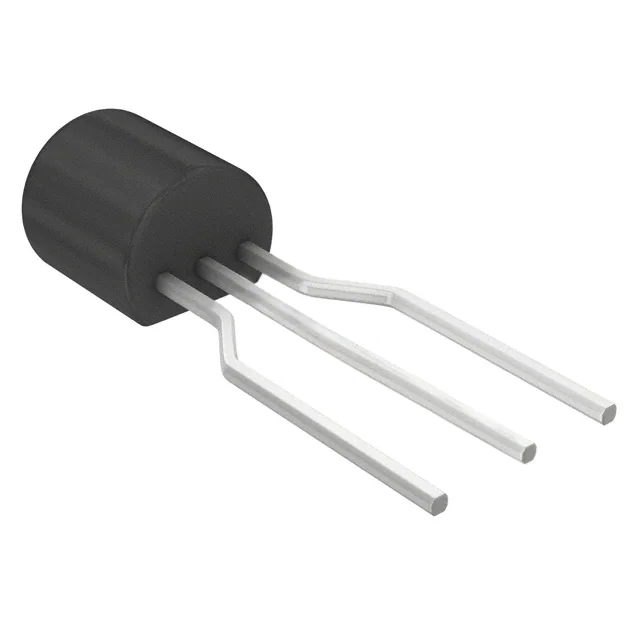
- Part No.:
- DS18S20+T&R
- Manufacturer:
- Analog Devices Inc./Maxim Integrated
- Category:
- Analog and Digital Output
- Package:
- TO-226-3, TO-92-3 (TO-226AA) Formed Leads
- Datasheet:
-
 DS18S20+T&R.pdf
- Description:
- SENSOR DIGITAL -55C-125C TO92-3
- Quantity:
- Payment:

- Shipping:

Inventory:3,552
Please send an inquiry. Send us your inquiry, and we will respond immediately.
Product details
Overview
DS18S20+T&R from Maxim Integrated is a high-precision 1-Wire digital thermometer IC with 9-bit resolution, ±0.5°C accuracy from −10°C to +85°C, and operating range of −55°C to +125°C. It functions as a self-contained temperature sensor node on a single-wire bus, supporting parasitic power mode (DQ + GND only) and featuring nonvolatile alarm thresholds (TH/TL) for autonomous thermal monitoring in distributed systems.
For engineers reviewing the DS18S20+T&R datasheet, DS18S20+T&R pinout, DS18S20+T&R application, or DS18S20+T&R equivalent, key selection considerations include 1-Wire multidrop capability, unique 64-bit ROM addressing, parasite-power compatibility, and EEPROM-stored alarm trigger values requiring no external components.
Technical Context
The DS18S20+T&R implements a direct-to-digital temperature sensor with 9-bit output (0.5°C LSB), internal scratchpad memory (9 bytes), and dedicated TH/TL alarm registers stored in nonvolatile EEPROM. Its 1-Wire interface uses open-drain DQ signaling with strict timing slots (tSLOT = 60–120 µs) and requires a weak pullup resistor (typically 4.7 kΩ) for bus idle state.
It supports two power modes: local VDD supply (3.0–5.5 V) or parasite power via DQ, where internal capacitor CPP sustains operation during low-bus periods. Strong pullup activation (within 10 µs) is mandatory during temperature conversion (tCONV = 750 ms) or EEPROM write (tWR = 2–10 ms) under parasite power.
Key Specifications
| Parameter | Value and Actual Design Meaning |
|---|---|
| Temperature Range | −55°C to +125°C - fully specified operation across industrial and automotive ambient extremes |
| Accuracy | ±0.5°C from −10°C to +85°C - enables high-fidelity HVAC and process control without calibration |
| Resolution | 9-bit (0.5°C step) - fixed native resolution; extended resolution calculable using COUNT_REMAIN/PER_C registers |
| Supply Voltage | 3.0 V to 5.5 V - compatible with standard microcontroller I/O rails and common 3.3 V / 5 V systems |
| Standby Current | 750–1000 nA at ≤+70°C - ultra-low quiescent draw ideal for battery-powered remote sensors |
| Active Current | 1–1.5 mA during conversion - dictates strong-pullup design requirements in parasite-power configurations |
| EEPROM Endurance | 50,000 writes at −55°C to +55°C - supports infrequent but reliable alarm threshold updates over product lifetime |
Pinout & Package
DS18S20+T&R is supplied in TO-92 package (3-pin, through-hole), with pin 1 = GND, pin 2 = DQ (open-drain 1-Wire I/O), pin 3 = VDD (optional; must be grounded in parasite power mode).
| Pin/Terminal | Circuit Role | Design Meaning |
|---|---|---|
| 1 (TO-92) | GND | Ground reference for all internal circuitry and bus signaling; required connection in both power modes |
| 2 (TO-92) | DQ | Open-drain bidirectional 1-Wire data line; provides signal path and parasitic power input when bus is high |
| 3 (TO-92) | VDD | Optional external supply input; must be tied to GND for parasite-power operation to prevent conflict |
Key Features
| Feature | Design Value |
|---|---|
| Unique 64-bit ROM ID | Enables >1000 devices on one 1-Wire bus without address conflicts or bus arbitration overhead |
| Parasite Power Mode | Eliminates VDD trace and local regulator; reduces PCB footprint and BOM count in remote sensor nodes |
| Nonvolatile Alarm Registers | TH/TL values persist across power cycles, enabling autonomous out-of-range detection without host intervention |
| Alarm Search Command (ECh) | Allows master to identify *only* devices currently exceeding alarm thresholds-reducing bus traffic vs full enumeration |
| No External Components | Operates with only pullup resistor; no decoupling caps, level shifters, or voltage regulators required |
Applications
| Thermostatic Controls | Industrial Process Monitoring |
|---|---|
Use Scenario: Residential and commercial HVAC systems requiring zone-level temperature feedback with minimal wiring per sensor. IC Role / Device Role / Timing Role: Direct-to-digital temperature sensing node with autonomous alarm flagging; communicates asynchronously over shared 1-Wire bus. Use Value: Reduces installation cost by eliminating separate power runs-single twisted pair supports up to 100 sensors per bus segment. |
Use Scenario: Real-time thermal monitoring inside motor windings, transformers, or chemical reactors where space and isolation are critical. IC Role / Device Role / Timing Role: Self-powered, isolated temperature node; operates reliably at +125°C with ±0.5°C accuracy in the critical −10°C to +85°C band. Use Value: Enables predictive maintenance via continuous drift tracking (±0.2°C max drift after 1000h @ +125°C). |
| Consumer Appliance Sensing | Equipment Health Diagnostics |
Use Scenario: Smart refrigerators, ovens, and washing machines needing embedded temperature feedback without added power infrastructure. IC Role / Device Role / Timing Role: Low-power, TO-92-mounted sensor interfacing directly to MCU GPIO; leverages parasite power to avoid dedicated LDO. Use Value: Achieves <1 µA average system current in sleep mode-extends battery backup life in smart appliance controllers. |
Use Scenario: Server rack inlet/outlet air monitoring, UPS battery cabinets, or telecom base station enclosures. IC Role / Device Role / Timing Role: Distributed thermal node with CRC-protected data (scratchpad byte 8) ensuring integrity over long 1-Wire traces (>100 m). Use Value: Detects localized hotspots before thermal runaway; alarm search command isolates faulted units without polling each device. |
Equivalent & Alternatives
The following parts are listed as comparable options for similar digital thermometer applications.
| Alternative Part | Technical Difference | Application Difference | Selection Advice |
|---|---|---|---|
| DS18B20+T&R | 12-bit resolution (0.0625°C), ±0.5°C accuracy over −10°C to +85°C, same 1-Wire interface and TO-92 package | Higher-resolution logging for lab equipment or precision climate chambers; requires same bus timing but longer tCONV (750 ms vs 750 ms) | Select DS18B20+T&R when sub-degree resolution is required; DS18S20+T&R remains optimal for cost-sensitive, 0.5°C-step applications. |
| MAX31820MUA+ | Pin-compatible TO-92 upgrade with integrated 1-Wire controller, 12-bit resolution, and improved −55°C to +125°C accuracy (±1°C) | Drop-in replacement with enhanced cold-temperature performance; supports same parasite power architecture | Choose MAX31820MUA+ for new designs needing wider accuracy spec at extremes; DS18S20+T&R suits legacy systems and price-driven volume deployments. |
Compared with DS18B20+T&R and MAX31820MUA+, the DS18S20+T&R delivers proven reliability and lowest BOM cost for 0.5°C-resolution thermal monitoring, while maintaining identical 1-Wire protocol compliance and TO-92 mechanical fit-making it ideal for high-volume, space-constrained, or legacy-compatible deployments.
Availability
DS18S20+T&R is available at Aetrix Electronics and suitable for HVAC environmental controls, industrial process monitoring systems, and consumer appliance thermal management requiring stable component supply and long-term lifecycle support.
Supply support for DS18S20+T&R includes scheduled delivery planning, volume procurement assistance, BOM continuity management, traceable sourcing, and lifecycle availability coordination for OEM customers, industrial embedded developers, connected-device designers, and electronics production programs.
Manufacturer
Maxim Integrated (now part of Analog Devices) is a semiconductor company specializing in precision analog, mixed-signal, and digital ICs for industrial, communications, and computing applications.
The DS18S20+T&R belongs to Maxim's 1-Wire temperature sensor family, designed specifically for distributed, low-wiring-cost thermal sensing in harsh or space-constrained environments.
FAQ
What is the maximum number of DS18S20+T&R sensors that can operate on a single 1-Wire bus?
There is no hard limit-the DS18S20+T&R uses a unique 64-bit ROM serial code for device identification, enabling hundreds of units on one bus. Practical limits depend on bus capacitance, pullup strength, and cable length; typical installations support 20–50 sensors with proper 4.7 kΩ pullup and twisted-pair wiring. The DS18S20+T&R's multidrop capability eliminates address conflicts inherent in I²C or SPI sensors.
Does DS18S20+T&R require an external power supply, or can it run on parasite power alone?
The DS18S20+T&R supports both modes: local VDD supply (3.0–5.5 V) or parasite power via the DQ pin. In parasite mode, VDD must be grounded. Parasite power eliminates the need for a second wire but requires a strong pullup (e.g., MOSFET-switched rail) during temperature conversion (750 ms) and EEPROM writes (up to 10 ms) to meet the 1.5 mA peak current demand.
How accurate is DS18S20+T&R across its full temperature range?
The DS18S20+T&R guarantees ±0.5°C accuracy from −10°C to +85°C-the most commonly used industrial range. Outside this band, accuracy degrades to ±2°C from −55°C to +125°C. Drift is limited to ±0.2°C after 1000 hours at +125°C, making it suitable for long-life embedded applications where recalibration is impractical.
Can DS18S20+T&R store custom alarm thresholds, and do they persist after power loss?
Yes-the DS18S20+T&R includes nonvolatile EEPROM storage for upper (TH) and lower (TL) alarm trigger values. These settings retain data for ≥10 years at −55°C to +55°C and survive unlimited power cycles. Thresholds are written via Write Scratchpad and copied to EEPROM using Copy Scratchpad commands-no external memory or firmware storage needed.
What is the function of the CRC byte in DS18S20+T&R's scratchpad memory?
The CRC byte (scratchpad byte 8) provides error detection for the first 8 bytes of scratchpad data (temperature, TH/TL, COUNT registers). The DS18S20+T&R calculates it using polynomial X⁸ + X⁵ + X⁴ + 1. Host microcontrollers must recalculate CRC from received data and compare it to this byte to verify transmission integrity-critical for reliable remote sensing in noisy industrial environments.
DS18S20+T&R Specifications
- Product attributes
- Attribute value
- Manufacturer:
- Analog Devices Inc./Maxim Integrated
- Series:
- -
- Package/Case:
- TO-226-3, TO-92-3 (TO-226AA) Formed Leads
- Packaging:
- Tape & Reel (TR)
- Product Status:
- Active
- Sensor Type:
- Digital, Local
- Sensing Temperature - Local:
- -55°C ~ 125°C
- Sensing Temperature - Remote:
- -
- Output Type:
- 1-Wire®
- Voltage - Supply:
- 3V ~ 5.5V
- Resolution:
- 9 b
- Features:
- Programmable Limit, Standby Mode
- Accuracy - Highest (Lowest):
- ±0.5°C (±2°C)
- Test Condition:
- -10°C ~ 85°C (-55°C ~ 125°C)
- Operating Temperature:
- -55°C ~ 125°C
- Mounting Type:
- Through Hole
- Grade:
- -
- Qualification:
- -
- Supplier Device Package:
- TO-92-3
DS18S20+T&R FAQ
1.How can I place an order for DS18S20+T&R through Aetrix?
Please submit a Request for Quotation (RFQ) for DS18S20+T&R on Aetrix. Our sales agent will provide a competitive quotation and guide you through the order confirmation once you accept the terms.
2.Are the price and stock information for DS18S20+T&R reliable?
The price and inventory of DS18S20+T&R are updated periodically and may fluctuate due to market conditions. Stock and pricing data are typically refreshed every 24 hours. Quotation validity for DS18S20+T&R is usually 5 days.
3.What payment methods are accepted for DS18S20+T&R?
We accept Wire Transfer, PayPal, Credit Card, Western Union, MoneyGram, and Escrow for DS18S20+T&R transactions.
Note: Certain payment methods may incur a processing fee.
4.How is shipping managed for DS18S20+T&R?
DS18S20+T&R orders can be shipped via leading logistics carriers, including DHL, UPS, FedEx, TNT, or Registered Mail.
Once your DS18S20+T&R order is processed, you will receive an email with the shipment details and tracking number.
Note: Tracking information may take up to 24 hours to appear. Express delivery typically takes 3–5 business days.
5.How can I obtain technical support or documentation for DS18S20+T&R?
For technical support, including DS18S20+T&R datasheets, pinout diagrams, or application guidance, please contact our engineering support team. They can provide detailed documentation and assistance for your DS18S20+T&R requirements.
6.How does Aetrix verify that DS18S20+T&R is sourced from the original manufacturer or authorized distributors?
All DS18S20+T&R products on Aetrix are procured from qualified distributors and authorized channels. Our dedicated quality assurance team conducts strict verification, including traceability checks and, if necessary, third-party testing. This ensures that DS18S20+T&R meets industry standards.
7.What is the process for return or replacement of DS18S20+T&R?
All DS18S20+T&R units undergo pre-shipment inspection (PSI). If there is an issue with DS18S20+T&R, returns or replacements are accepted under the following conditions:
1.Quantity discrepancies, incorrect items, or visible external defects (such as breakage or corrosion), acknowledged by Aetrix.
2.The issue is reported within 90 days of delivery.
3.The DS18S20+T&R part is unused and in its original packaging.
Return procedure for DS18S20+T&R:
1.Submit a request within 90 days.
2.Obtain a Return Material Authorization (RMA) from Aetrix.
DS18S20+T&R Tags
-
MCP9700T-E/TT
Microchip Technology
-
MCP9700T-E/LT
Microchip Technology
-
MCP9701T-E/TT
Microchip Technology
-
MCP9701T-E/LT
Microchip Technology
-
TMP235A4DBZR
Texas Instruments
-
MCP9700AT-E/TT
Microchip Technology
-
MCP9700AT-E/LT
Microchip Technology
-
MCP9701AT-E/LT
Microchip Technology
-
MCP9701AT-E/TT
Microchip Technology
,TO-226_straightlead.jpg)
-
LM335Z
STMicroelectronics
-
TMP1075NDRLR
Texas Instruments
-
TMP1075DGKR
Texas Instruments
Tech Hub

A practical engineering guide to 3.3V and 5V logic compatibility, input thresholds, resistor dividers, translator ICs, MOSFET level shifting, I2C pull-ups, timing limits and power-sequencing risks.

The 74HC595 uses push-pull logic outputs, while the TPIC6B595 uses 50 V open-drain DMOS sinks for higher-power loads. This guide compares timing, current limits, 3.3 V interfacing, load wiring, thermal…

The 74HC595 converts serial data into eight stable parallel outputs. This guide covers pin functions, shift and storage timing, OE and MR behavior, drive-current limits, cascading, voltage compatibilit…

A technical comparison of level-sensitive latches and edge-triggered flip-flops, covering timing windows, setup and hold limits, master–slave operation, time borrowing, race-through, HDL inference and…

A D latch stores one bit while Enable controls when data can pass. This reference covers gate-level operation, truth tables, transparency, setup and hold timing, LE versus OE, common ICs and practical …

An SR latch stores one bit through cross-coupled feedback. This engineering reference covers NOR and NAND implementations, truth tables, forbidden-state recovery, gated operation, switch debouncing, fa…

Latch circuits retain one bit through feedback. This technical reference covers SR and D latches, truth tables, transparency, timing limits, latch-versus-flip-flop behavior, applications and common log…

An engineering guide to LED driver operation, constant-current and constant-voltage outputs, linear and switching topologies, dimming, IC selection, calculations, replacement compatibility, and fault c…

Operational amplifier guide covering op amp basics, feedback, ideal vs real op amps, common configurations, buffer circuits, offset, bias current, gain-bandwidth, slew rate, rail-to-rail limits and sel…

Jumper cables guide covering safe connection order, red and black clamp placement, final ground connection, cable gauge, length, clamp quality, copper vs CCA cables, jump starter comparison and battery…


