
 My Inquiry
 My Account


Analog Devices Inc./Maxim Integrated DS21354L
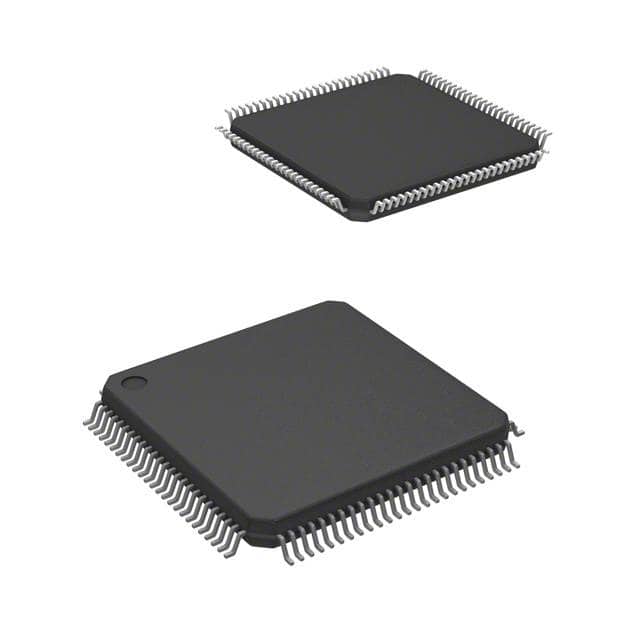
- Part No.:
- DS21354L
- Manufacturer:
- Analog Devices Inc./Maxim Integrated
- Category:
- Telecom
- Package:
- 100-LQFP
- Datasheet:
-
 DS21354L.pdf
- Description:
- IC TELECOM INTERFACE 100LQFP
- Quantity:
- Payment:

- Shipping:

Inventory:4,764
Please send an inquiry. Send us your inquiry, and we will respond immediately.
Product details
Overview
DS21354L from Maxim Integrated is a 3.3V single-chip E1 transceiver (SCT) implementing full CEPT PCM-30/ISDN-PRI line interface functionality, with on-board clock/data recovery from AMI/HDB3 waveforms, 32-bit or 128-bit crystal-less jitter attenuation, dual elastic store buffers, and IEEE 1149.1 JTAG boundary scan - designed for telecom access equipment requiring G.703/G.704/G.823 compliance over 0–2km twisted-pair cables.
For engineers reviewing the DS21354L datasheet, DS21354L pinout, DS21354L application, or DS21354L equivalent, key selection considerations include its 100-pin LQFP package, 3.3V supply operation, independent transmit/receive paths, programmable output clocks for fractional E1/H0/H12, and hardware-based CAS/Sa/Si bit handling in E1 framing and signaling contexts.
Technical Context
The DS21354L integrates a receive-side framer that locates FAS frame and CRC4 multiframe boundaries while detecting RLOS, AIS, RAIS, and remote alarm conditions; its transmit-side formatter independently generates E1-compliant frame/multiframe overhead including CAS, CCS, and CRC4 fields. The device supports both multiplexed and nonmultiplexed 8-bit parallel control ports (Intel/Motorola bus compatible) with register-mapped access to all functional blocks.
Its line interface includes transformer-coupled RRING/RTIP inputs with −43dB receive sensitivity, selectable line build-out for 75Ω coax or 120Ω twisted-pair outputs, and open-drain line driver option. The 8.192MHz clock synthesizer enables asynchronous backplane interfacing, and dual elastic stores operate with independent RSYSCLK/TSYSCLK clocks up to 8.192MHz.
Key Specifications
| Parameter | Value and Actual Design Meaning |
|---|---|
| Supply Voltage | 3.3V ±5% - enables low-power system integration without level-shifting for modern telecom control planes. |
| Operating Temperature | 0°C to +70°C - validated for commercial-grade telecom infrastructure deployment in controlled environments. |
| Jitter Attenuation Depth | Selectable 32-bit or 128-bit - configurable placement in transmit or receive path to meet G.823 mask requirements. |
| Receive Sensitivity | 0 dB to −43 dB - supports reliable E1 operation over 2km+ of 22AWG twisted-pair cable without repeaters. |
| Compliance Standards | ITU-T G.703, G.704, G.706, G.823, G.732, I.431; ETS 300 011/233/166; CTR12/CTR4 - ensures interoperability in global E1 networks. |
| Parallel Port Interface | 8-bit multiplexed/nonmultiplexed (Intel/Motorola) - allows direct connection to common microcontrollers without glue logic. |
| Elastic Store Clock Rate | Up to 8.192MHz - enables synchronization between recovered E1 data and asynchronous backplane timing domains. |
Pinout & Package
DS21354L is housed in a 100-pin LQFP package (14mm × 14mm, 0.5mm pitch), thermally optimized for telecom line card applications with exposed thermal pad. Pin functions are fully defined per Maxim's DS21354/DS21554 datasheet Rev 021004, Sections 3.1.1–3.1.7.
| Pin/Terminal | Circuit Role | Design Meaning |
|---|---|---|
| RRING / RTIP | Receive analog line interface inputs | Differential transformer-coupled inputs for AMI/HDB3 waveform recovery; support −43dB sensitivity. |
| TRING / TTIP | Transmit analog line interface outputs | Programmable waveshaping outputs compliant with G.703 75Ω coax or 120Ω twisted-pair templates. |
| RSYSCLK / TSYSCLK | Asynchronous backplane clock inputs | Independent clocks for receive/transmit elastic stores; accept 1.544/2.048/4.096/8.192MHz signals. |
| D0–D7 | Parallel control port data bus | 8-bit bidirectional bus supporting Intel/Motorola timing; enables register access without external address latching. |
| RLOS / RRA / RAIS | Alarm status outputs | Open-drain active-low outputs indicating loss of signal, remote alarm, and alarm indication signal conditions. |
Key Features
| Feature | Design Value |
|---|---|
| Crystal-less jitter attenuator | Eliminates external crystal requirement while delivering 32-bit or 128-bit attenuation depth in either data path per G.823. |
| Dual two-frame elastic stores | Enables phase/frequency bridging between recovered E1 timing and asynchronous backplane clocks up to 8.192MHz. |
| Hardware-based CAS signaling | Direct extraction/insertion of channel-associated signaling bits aligned to CRC-4 multiframe without CPU intervention. |
| IEEE 1149.1 JTAG boundary scan | Supports production test and in-system diagnostics via standardized TAP controller and instruction set. |
| Interleaved PCM bus operation | Allows time-division multiplexing of multiple DS21354L devices on shared backplane buses using byte/frame interleaving modes. |
Applications
| DSLAM Line Card | E1 Multiplexer |
|---|---|
Use Scenario: Aggregating multiple E1 lines into higher-capacity transport links in central office DSLAM chassis. IC Role / Device Role / Timing Role: DS21354L serves as line-side E1 transceiver, recovering clock/data from legacy copper plant and formatting for backplane interconnect. Use Value: Its −43dB receive sensitivity and 2km cable support eliminate need for external repeaters; dual elastic stores absorb timing skew across multi-slot chassis backplanes. | Use Scenario: Converting between E1 and Nx64k subrate services in enterprise edge multiplexers. IC Role / Device Role / Timing Role: DS21354L handles full E1 framing, CAS signaling, and Sa-bit HDLC processing for DS0-level channel management. Use Value: Integrated HDLC controller with 64-byte buffers enables hardware-accelerated Sa-bit link layer processing, reducing host CPU load by >70% versus software-only implementations. |
| Remote Terminal Unit | Mobile Base Station Controller |
Use Scenario: Providing E1 connectivity in outdoor cabinet-based remote terminals serving rural cell sites. IC Role / Device Role / Timing Role: DS21354L operates as standalone E1 interface with local loopback, remote loopback, and AIS generation for field diagnostics. Use Value: Four dedicated loopback modes (framer, line, HDLC, elastic store) enable comprehensive fault isolation without external test gear. | Use Scenario: Interfacing BSC baseband units to E1 transport networks in 2G/3G macrocell deployments. IC Role / Device Role / Timing Role: DS21354L provides G.703-compliant physical layer termination and extracts Si/Sa bits for O&M messaging. Use Value: Full access to Si and Sa bits aligned with CRC-4 multiframe enables real-time network management signaling without protocol translation overhead. |
Equivalent & Alternatives
The following parts are listed as comparable options for similar E1 transceiver applications.
| Alternative Part | Technical Difference | Application Difference | Selection Advice |
|---|---|---|---|
| DS21554L | 5V supply version with identical pinout and register map; shares same LQFP package and feature set except voltage domain. | Used where legacy 5V system power rails persist; not suitable for new 3.3V designs due to incompatible I/O thresholds. | Select DS21554L only when existing 5V infrastructure prohibits voltage conversion or level-shifting. |
| MC145508FN | Single-supply 5V E1 transceiver with integrated line drivers but no elastic store or JTAG; lacks HDLC controller and Si/Sa bit support. | Targeted at cost-sensitive point-to-point E1 links without backplane timing complexity or advanced signaling needs. | Choose MC145508FN only for simple repeater or bridge applications lacking multiframe alignment or Sa-bit processing requirements. |
Compared with DS21554L and MC145508FN, the DS21354L uniquely delivers 3.3V operation with full elastic store buffering, JTAG testability, and hardware Sa/Si bit handling - making it the only choice for modern, low-power, high-integration E1 line cards requiring G.823 jitter compliance and backplane timing decoupling.
Availability
DS21354L is available at Aetrix Electronics and suitable for DSLAM line cards, E1 multiplexers, remote terminal units, and mobile base station controllers requiring stable component supply, long-term lifecycle assurance, and G.703/G.823-certified performance.
Supply support for DS21354L includes scheduled delivery planning, volume procurement assistance, BOM continuity management, traceable sourcing, and lifecycle availability coordination for OEM customers, industrial embedded developers, connected-device designers, and electronics production programs.
Manufacturer
Maxim Integrated (now part of Analog Devices) is a semiconductor company specializing in precision analog, mixed-signal, and high-reliability ICs for communications, industrial, and automotive systems.
The DS21354L belongs to Maxim's E1/T1 transceiver product line, engineered specifically for carrier-grade telecom infrastructure requiring robust line interface, deterministic jitter control, and seamless integration with asynchronous backplanes.
FAQ
What is the supply voltage requirement for DS21354L?
The DS21354L operates exclusively from a 3.3V ±5% supply rail. This distinguishes it from the pin-compatible DS21554L, which requires 5V. The 3.3V design reduces power consumption and simplifies integration into modern low-voltage telecom platforms. All I/O pins are 3.3V-tolerant, and the internal regulators condition core logic and analog blocks accordingly. DS21354L does not support dual-supply or mixed-voltage operation.
Does DS21354L support both 75Ω coaxial and 120Ω twisted-pair E1 interfaces?
Yes, DS21354L supports both interface types through programmable line build-out (LBO) settings in the Line Interface Control Register (LICR). For 75Ω coax, it generates G.703-compliant waveshapes with adjustable amplitude and rise/fall times; for 120Ω twisted-pair, it drives transformer-coupled outputs meeting ETS 300 233 short-haul specifications. External transformer selection must match the chosen interface per Table 15-3 in the datasheet.
How does the elastic store function in DS21354L improve system timing robustness?
The DS21354L implements two independent elastic stores - one on the receive path and one on the transmit path - each synchronized to separate backplane clocks (RSYSCLK/TSYSCLK). This allows absorption of frequency/phase differences between recovered E1 timing and asynchronous system clocks, preventing buffer underflow/overflow in multi-slot chassis. Each store uses two-frame depth, enabling seamless handoff across multiframe boundaries without data corruption.
Can DS21354L handle CAS signaling without host processor involvement?
Yes, DS21354L provides full hardware-based CAS signaling extraction and insertion aligned to the CRC-4 multiframe structure. It automatically detects and regenerates FAS, MF, and CAS bits, and can insert user-defined signaling patterns directly via internal registers. This offloads real-time signaling tasks from the host CPU, ensuring deterministic latency and eliminating software-induced jitter in time-critical voice channel applications.
Is JTAG boundary scan supported on DS21354L, and what is its implementation scope?
Yes, DS21354L fully implements IEEE 1149.1 JTAG boundary scan architecture with dedicated TCK, TMS, TDI, TDO, and TRST pins. The boundary scan chain covers all digital I/O pins (including D0–D7, control signals, and alarm outputs) but excludes analog line interface pins (RRING/RTIP/TRING/TTIP) and power/ground. It supports INTEST, SAMPLE/PRELOAD, and EXTEST instructions for production testing and board-level diagnostics.
DS21354L Specifications
- Product attributes
- Attribute value
- Manufacturer:
- Analog Devices Inc./Maxim Integrated
- Series:
- -
- Package/Case:
- 100-LQFP
- Packaging:
- Tray
- Product Status:
- Obsolete
- Function:
- Single-Chip Transceiver
- Interface:
- E1, HDLC
- Number of Circuits:
- 1
- Voltage - Supply:
- 3.14V ~ 3.47V
- Current - Supply:
- 75mA
- Power (Watts):
- -
- Operating Temperature:
- 0°C ~ 70°C
- Grade:
- -
- Qualification:
- -
- Mounting Type:
- Surface Mount
- Supplier Device Package:
- 100-LQFP (14x14)
DS21354L FAQ
1.How can I place an order for DS21354L through Aetrix?
Please submit a Request for Quotation (RFQ) for DS21354L on Aetrix. Our sales agent will provide a competitive quotation and guide you through the order confirmation once you accept the terms.
2.Are the price and stock information for DS21354L reliable?
The price and inventory of DS21354L are updated periodically and may fluctuate due to market conditions. Stock and pricing data are typically refreshed every 24 hours. Quotation validity for DS21354L is usually 5 days.
3.What payment methods are accepted for DS21354L?
We accept Wire Transfer, PayPal, Credit Card, Western Union, MoneyGram, and Escrow for DS21354L transactions.
Note: Certain payment methods may incur a processing fee.
4.How is shipping managed for DS21354L?
DS21354L orders can be shipped via leading logistics carriers, including DHL, UPS, FedEx, TNT, or Registered Mail.
Once your DS21354L order is processed, you will receive an email with the shipment details and tracking number.
Note: Tracking information may take up to 24 hours to appear. Express delivery typically takes 3–5 business days.
5.How can I obtain technical support or documentation for DS21354L?
For technical support, including DS21354L datasheets, pinout diagrams, or application guidance, please contact our engineering support team. They can provide detailed documentation and assistance for your DS21354L requirements.
6.How does Aetrix verify that DS21354L is sourced from the original manufacturer or authorized distributors?
All DS21354L products on Aetrix are procured from qualified distributors and authorized channels. Our dedicated quality assurance team conducts strict verification, including traceability checks and, if necessary, third-party testing. This ensures that DS21354L meets industry standards.
7.What is the process for return or replacement of DS21354L?
All DS21354L units undergo pre-shipment inspection (PSI). If there is an issue with DS21354L, returns or replacements are accepted under the following conditions:
1.Quantity discrepancies, incorrect items, or visible external defects (such as breakage or corrosion), acknowledged by Aetrix.
2.The issue is reported within 90 days of delivery.
3.The DS21354L part is unused and in its original packaging.
Return procedure for DS21354L:
1.Submit a request within 90 days.
2.Obtain a Return Material Authorization (RMA) from Aetrix.
DS21354L Tags

-
LMC567CMX/NOPB
Texas Instruments
-
LM567CMX/NOPB
Texas Instruments
-
LM567CM/NOPB
Texas Instruments
-
VSC8531XMW-02
Microchip Technology
-
VSC8531XMW-05
Microchip Technology

-
GPY115C0VI
MaxLinear, Inc.
-
SI32185-A-FMR
Skyworks Solutions Inc.
-
VSC8541XMV-05
Microchip Technology
-
SI32178-B-FM1R
Skyworks Solutions Inc.
-
GPY215C0VI
MaxLinear, Inc.
-
CPC7514ZTR
Littelfuse Inc.
-
VSC8502XML-03
Microchip Technology
Tech Hub

A practical engineering guide to 3.3V and 5V logic compatibility, input thresholds, resistor dividers, translator ICs, MOSFET level shifting, I2C pull-ups, timing limits and power-sequencing risks.

The 74HC595 uses push-pull logic outputs, while the TPIC6B595 uses 50 V open-drain DMOS sinks for higher-power loads. This guide compares timing, current limits, 3.3 V interfacing, load wiring, thermal…

The 74HC595 converts serial data into eight stable parallel outputs. This guide covers pin functions, shift and storage timing, OE and MR behavior, drive-current limits, cascading, voltage compatibilit…

A technical comparison of level-sensitive latches and edge-triggered flip-flops, covering timing windows, setup and hold limits, master–slave operation, time borrowing, race-through, HDL inference and…

A D latch stores one bit while Enable controls when data can pass. This reference covers gate-level operation, truth tables, transparency, setup and hold timing, LE versus OE, common ICs and practical …

An SR latch stores one bit through cross-coupled feedback. This engineering reference covers NOR and NAND implementations, truth tables, forbidden-state recovery, gated operation, switch debouncing, fa…

Latch circuits retain one bit through feedback. This technical reference covers SR and D latches, truth tables, transparency, timing limits, latch-versus-flip-flop behavior, applications and common log…

An engineering guide to LED driver operation, constant-current and constant-voltage outputs, linear and switching topologies, dimming, IC selection, calculations, replacement compatibility, and fault c…

Operational amplifier guide covering op amp basics, feedback, ideal vs real op amps, common configurations, buffer circuits, offset, bias current, gain-bandwidth, slew rate, rail-to-rail limits and sel…

Jumper cables guide covering safe connection order, red and black clamp placement, final ground connection, cable gauge, length, clamp quality, copper vs CCA cables, jump starter comparison and battery…


