
 My Inquiry
 My Account


Analog Devices Inc./Maxim Integrated DS2167
- Part No.:
- DS2167
- Manufacturer:
- Analog Devices Inc./Maxim Integrated
- Category:
- DSP (Digital Signal Processors)
- Package:
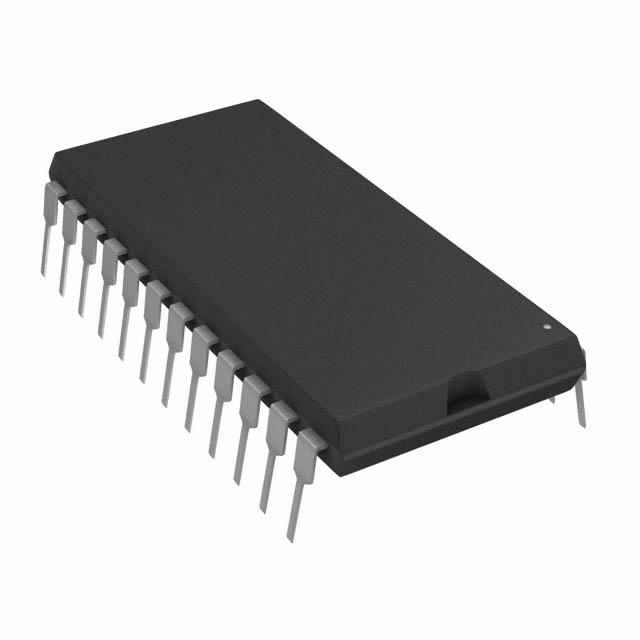
- 24-DIP (0.600", 15.24mm)
- Datasheet:
-
 DS2167.pdf
- Description:
- IC PROC ADPCM 16/24/32K 24-DIP
- Quantity:
- Payment:

- Shipping:

Inventory:4,370
Please send an inquiry. Send us your inquiry, and we will respond immediately.
Product details
Overview
DS2167 from Maxim Integrated is a dedicated CMOS ADPCM processor IC optimized for voice compression in TDM telephony systems. It supports the July 1986 T1Y1 and CCITT G.721 recommendations, delivers 10 MIPS processing, operates at 5 V, reduces voice bandwidth from 64 kbps to 32 kbps, and interfaces directly with µ-law/A-law codecs - enabling voice mail and channel bank applications.
For engineers reviewing the DS2167 datasheet, DS2167 pinout, DS2167 application, or DS2167 equivalent, this page provides verified functional identity, hardware/software mode behavior, dual-channel PCM timing control, timeslot programmability, and low-power idle operation - all critical for T1/E1 infrastructure design and legacy telecom system upgrades.
Technical Context
The DS2167 implements a fixed-function 10 MIPS DSP engine dedicated to ADPCM compression and expansion, with independent X- and Y-side PCM interfaces supporting 1.544 MHz (T1), 2.048 MHz (E1), and 4.096 MHz data rates. Each interface features user-programmable input/output timeslots, µ-law or A-law format selection, and bypass/idle modes.
It operates in two mutually exclusive configuration modes: software mode (SPS = high) uses a 3-wire serial port (CS/SCLK/SDI) to configure registers across up to 64 devices on one bus; hardware mode (SPS = low) maps control bits directly to address pins (A0–A5), eliminating host dependency and defaulting to timeslot 0 for both channels.
Key Specifications
| Parameter | Value and Actual Design Meaning |
|---|---|
| Processing Capability | 10 MIPS fixed-function ADPCM engine for real-time 64→32 kbps voice compression/expansion |
| Supported Standards | July 1986 T1Y1 and CCITT G.721 recommendations - not compatible with older G.721 variants |
| Supply Voltage | 5.0 V ±10% - requires stable 5 V rail; no 3.3 V operation |
| Operating Temperature | 0°C to +70°C - commercial-grade rating, not extended or industrial |
| Power Consumption | 30 mA active current; drops to 1 mA in dual-channel idle mode |
| PCM Data Rates | Supports 1.544 MHz (T1), 2.048 MHz (E1), and 4.096 MHz backplane clocking |
| Master Clock | 10 MHz required for DSP core - asynchronous to PCM clocks (CLKX/CLKY) |
Pinout & Package
DS2167 is available in 24-pin DIP (600 mil) and 28-pin PLCC packages. The 24-pin DIP variant is explicitly documented in the datasheet as the base configuration for DS2167; pin functions are validated per Table 1 and Figures 1–2.
| Pin/Terminal | Circuit Role | Design Meaning |
|---|---|---|
| RST | Asynchronous reset input | High-low-high transition clears internal registers and resets both ADPCM algorithms; required at power-up and mode changes |
| SPS | Serial Port Select | High = software mode (serial port enabled); low = hardware mode (address pins control function directly) |
| MCLK | Master clock input | 10 MHz clock for DSP core - must be stable before RST release; asynchronous to CLKX/CLKY |
| XIN / YIN | PCM data inputs | Samples on falling edge of respective CLKX/CLKY during programmed input timeslots |
| XOUT / YOUT | PCM data outputs | Updated on rising edge of respective CLKX/CLKY during programmed output timeslots |
| FSX / FSY | Frame sync inputs | 8 kHz frame synchronization signals for X/Y PCM interfaces - define timeslot boundaries |
| CLKX / CLKY | Data clock inputs | Coherent PCM clocks aligned to FSX/FSY rising edges; support 1.544/2.048/4.096 MHz rates |
| A0–A5 | Address select inputs | In software mode: match address/command byte; in hardware mode: map to CP/EX and µ/A control bits |
Key Features
| Feature | Design Value |
|---|---|
| Dual independent PCM interfaces (X/Y) | Enables full-duplex, dual-compression, or dual-expansion operation without external multiplexing logic |
| Hardware mode with no host controller | Eliminates microcontroller dependency - ideal for voice mail systems where timeslot and algorithm are fixed |
| Shared 3-wire serial control bus | Supports up to 64 DS2167 devices on one CS/SCLK/SDI bus via unique 6-bit addressing |
| Programmable input/output timeslots | On-chip counters allow dynamic allocation of PCM time slots in TDM systems - enables flexible channel routing |
| Channel idle and standby power reduction | Tri-stating both X/Y outputs reduces supply current from 30 mA to 1 mA - extends system-level power efficiency |
Applications
| Voice Mail Systems | T1 Channel Banks |
|---|---|
Use Scenario: Standalone voice recording/playback units requiring low-latency, fixed-algorithm compression without host CPU overhead. IC Role / Device Role / Timing Role: Primary ADPCM encoder/decoder performing real-time 64→32 kbps voice compression and expansion in hardware mode. Use Value: Eliminates need for external microcontroller; supports immediate power-on operation with timeslot 0 defaults and µ-law codec interfacing. |
Use Scenario: Central office line cards aggregating multiple T1 spans into digital switching fabric. IC Role / Device Role / Timing Role: Dual-channel ADPCM transcoder bridging analog subscriber lines to digital TDM backplanes at 1.544 MHz. Use Value: Halves bandwidth per voice channel while maintaining toll-quality fidelity; supports per-channel A-law/µ-law selection and timeslot remapping. |
| Legacy PBX Upgrades | Secure Voice Terminals |
Use Scenario: Retrofitting analog PBX systems with digital trunk interfaces using existing TDM infrastructure. IC Role / Device Role / Timing Role: ADPCM co-processor handling compression/expansion between legacy codec filters (e.g., TP3054) and T1 backplane. Use Value: Direct µ-law/A-law codec interconnect minimizes glue logic; bypass mode allows transparent timeslot pass-through during maintenance. |
Use Scenario: Encrypted voice endpoints requiring deterministic, low-jitter ADPCM processing prior to encryption. IC Role / Device Role / Timing Role: Deterministic-latency ADPCM engine operating in hardware mode to avoid software-induced jitter in encrypted streams. Use Value: Fixed 10 MIPS execution and synchronous PCM I/O ensure consistent processing delay - critical for end-to-end voice crypto timing. |
Equivalent & Alternatives
The following parts are listed as comparable options for similar ADPCM processor applications.
| Alternative Part | Technical Difference | Application Difference | Selection Advice |
|---|---|---|---|
| DS2168 | Supports "old" CCITT G.721 (pre-July 1986); requires hardware reset to exit standby mode | Used where legacy G.721 compliance is mandated; not interoperable with DS2167's T1Y1/G.721 (1986) bitstream | Select DS2168 only if system must interoperate with pre-1986 ADPCM equipment - DS2167 and DS2168 are not bitstream-compatible. |
| MC3418 | Single-channel ADPCM processor; supports only µ-law; no hardware mode; 20-pin DIP package | Targeted at cost-sensitive single-line voice applications - lacks dual-channel flexibility and timeslot programmability | Choose MC3418 only for simple, single-channel designs without TDM routing needs - DS2167 provides full duplex, dual timeslot control, and lower power idle. |
Compared with DS2168, DS2167 ensures compatibility with post-1986 T1Y1 deployments and offers faster wake-up from standby (200 ms vs. hardware reset required); versus MC3418, DS2167 delivers dual-channel independence, hardware-mode autonomy, and programmable timeslot routing essential for multi-channel TDM systems.
Availability
DS2167 is available at Aetrix Electronics and suitable for voice mail systems, T1 channel banks, legacy PBX upgrades, secure voice terminals, and telecom infrastructure requiring stable component supply with long-term lifecycle support.
Supply support for DS2167 includes scheduled delivery planning, volume procurement assistance, BOM continuity management, traceable sourcing, and lifecycle availability coordination for OEM customers, industrial embedded developers, connected-device designers, and electronics production programs.
Manufacturer
Maxim Integrated (now part of Analog Devices) is a U.S.-based semiconductor company specializing in precision analog, mixed-signal, and high-reliability ICs for communications, industrial, and computing markets.
The DS2167 belongs to Maxim's legacy telecom DSP product line, designed specifically for ADPCM-based voice bandwidth reduction in TDM telephony infrastructure - targeting voice mail, channel banks, and digital loop carrier systems.
FAQ
What standards does DS2167 support, and how does it differ from DS2168?
The DS2167 supports the July 1986 T1Y1 recommendations and the corresponding updated CCITT G.721 standard - distinct from the earlier "old" G.721 version supported by DS2168. This makes DS2167 incompatible with pre-1986 ADPCM implementations. DS2167 also powers up from standby in 200 ms without reset, whereas DS2168 requires a hardware reset. Both share identical pinout and packaging but differ in algorithm implementation and wake-up behavior.
Does DS2167 require an external microcontroller to operate?
No - DS2167 supports hardware mode when SPS is tied low, enabling stand-alone operation without any host processor. In this mode, control bits (CP/EX, µ/A, IPD) are mapped directly to address pins A0–A5, and both channels default to timeslot 0. This configuration is ideal for voice mail systems and other fixed-function applications where minimal external logic is preferred.
What are the power consumption characteristics of DS2167 in active and idle states?
DS2167 draws 30 mA under active operation (1.544 MHz PCM clocks, 10 MHz MCLK, outputs open). When both X and Y channels are placed in idle mode (IPD = 1), supply current drops to 1 mA - a 30× reduction. The DS2167 automatically wakes within 200 ms after either channel exits idle, making it suitable for burst-mode voice applications requiring rapid power-state transitions.
Can DS2167 interface directly with common µ-law and A-law codecs?
Yes - DS2167 interconnects directly with standard µ-law or A-law codec/filter devices such as the TP3054, TP3057, MC14550, and TCM29CXX. Its PCM interfaces accept standard 8-bit µ-law or A-law samples synchronized to FSX/FSY and CLKX/CLKY, eliminating the need for level-shifting or protocol translation logic in typical telephony designs.
What package options are available for DS2167, and are they pin-compatible?
DS2167 is offered in 24-pin DIP (600 mil) and 28-pin PLCC packages. The 24-pin DIP is the baseline configuration documented across all functional and timing specifications. The 28-pin PLCC (DS2167Q) adds NC pins and reassigns some terminal locations - they are not pin-compatible. Designers must select the appropriate package variant early, as PCB layout and signal routing differ between the two.
DS2167 Specifications
- Product attributes
- Attribute value
- Manufacturer:
- Analog Devices Inc./Maxim Integrated
- Series:
- -
- Package/Case:
- 24-DIP (0.600", 15.24mm)
- Packaging:
- Tube
- Product Status:
- Obsolete
- Type:
- ADPCM
- Interface:
- ADPCM, PCM
- Clock Rate:
- 10MHz
- Non-Volatile Memory:
- -
- On-Chip RAM:
- -
- Voltage - I/O:
- 5.00V
- Voltage - Core:
- 5.00V
- Operating Temperature:
- 0°C ~ 70°C (TA)
- Grade:
- -
- Qualification:
- -
- Mounting Type:
- Through Hole
- Supplier Device Package:
- 24-PDIP
DS2167 FAQ
1.How can I place an order for DS2167 through Aetrix?
Please submit a Request for Quotation (RFQ) for DS2167 on Aetrix. Our sales agent will provide a competitive quotation and guide you through the order confirmation once you accept the terms.
2.Are the price and stock information for DS2167 reliable?
The price and inventory of DS2167 are updated periodically and may fluctuate due to market conditions. Stock and pricing data are typically refreshed every 24 hours. Quotation validity for DS2167 is usually 5 days.
3.What payment methods are accepted for DS2167?
We accept Wire Transfer, PayPal, Credit Card, Western Union, MoneyGram, and Escrow for DS2167 transactions.
Note: Certain payment methods may incur a processing fee.
4.How is shipping managed for DS2167?
DS2167 orders can be shipped via leading logistics carriers, including DHL, UPS, FedEx, TNT, or Registered Mail.
Once your DS2167 order is processed, you will receive an email with the shipment details and tracking number.
Note: Tracking information may take up to 24 hours to appear. Express delivery typically takes 3–5 business days.
5.How can I obtain technical support or documentation for DS2167?
For technical support, including DS2167 datasheets, pinout diagrams, or application guidance, please contact our engineering support team. They can provide detailed documentation and assistance for your DS2167 requirements.
6.How does Aetrix verify that DS2167 is sourced from the original manufacturer or authorized distributors?
All DS2167 products on Aetrix are procured from qualified distributors and authorized channels. Our dedicated quality assurance team conducts strict verification, including traceability checks and, if necessary, third-party testing. This ensures that DS2167 meets industry standards.
7.What is the process for return or replacement of DS2167?
All DS2167 units undergo pre-shipment inspection (PSI). If there is an issue with DS2167, returns or replacements are accepted under the following conditions:
1.Quantity discrepancies, incorrect items, or visible external defects (such as breakage or corrosion), acknowledged by Aetrix.
2.The issue is reported within 90 days of delivery.
3.The DS2167 part is unused and in its original packaging.
Return procedure for DS2167:
1.Submit a request within 90 days.
2.Obtain a Return Material Authorization (RMA) from Aetrix.
DS2167 Tags
-
TMS320C5535AZAY10
Texas Instruments
-
TMS320VC5501PGF300
Texas Instruments
-
ADSP-BF592KCPZ
Analog Devices Inc.
-
ADAU1463WBCPZ150
Analog Devices Inc.
-
TMS320VC5402PGE100
Texas Instruments
-
ADAU1701JSTZ-RL
Analog Devices Inc.
-
ADAU1701JSTZ
Analog Devices Inc.
-
TMS320VC5502PGF300
Texas Instruments
-
ADAU1462WBCPZ300RL
Analog Devices Inc.
-
ADAU1452KCPZRL
Analog Devices Inc.
-
ADAU1452WBCPZ-RL
Analog Devices Inc.
-
TMS320C6747DZKB3
Texas Instruments
Tech Hub

A practical engineering guide to 3.3V and 5V logic compatibility, input thresholds, resistor dividers, translator ICs, MOSFET level shifting, I2C pull-ups, timing limits and power-sequencing risks.

The 74HC595 uses push-pull logic outputs, while the TPIC6B595 uses 50 V open-drain DMOS sinks for higher-power loads. This guide compares timing, current limits, 3.3 V interfacing, load wiring, thermal…

The 74HC595 converts serial data into eight stable parallel outputs. This guide covers pin functions, shift and storage timing, OE and MR behavior, drive-current limits, cascading, voltage compatibilit…

A technical comparison of level-sensitive latches and edge-triggered flip-flops, covering timing windows, setup and hold limits, master–slave operation, time borrowing, race-through, HDL inference and…

A D latch stores one bit while Enable controls when data can pass. This reference covers gate-level operation, truth tables, transparency, setup and hold timing, LE versus OE, common ICs and practical …

An SR latch stores one bit through cross-coupled feedback. This engineering reference covers NOR and NAND implementations, truth tables, forbidden-state recovery, gated operation, switch debouncing, fa…

Latch circuits retain one bit through feedback. This technical reference covers SR and D latches, truth tables, transparency, timing limits, latch-versus-flip-flop behavior, applications and common log…

An engineering guide to LED driver operation, constant-current and constant-voltage outputs, linear and switching topologies, dimming, IC selection, calculations, replacement compatibility, and fault c…

Operational amplifier guide covering op amp basics, feedback, ideal vs real op amps, common configurations, buffer circuits, offset, bias current, gain-bandwidth, slew rate, rail-to-rail limits and sel…

Jumper cables guide covering safe connection order, red and black clamp placement, final ground connection, cable gauge, length, clamp quality, copper vs CCA cables, jump starter comparison and battery…


