
 My Inquiry
 My Account


Texas Instruments DS22EV5110SQ/NOPB
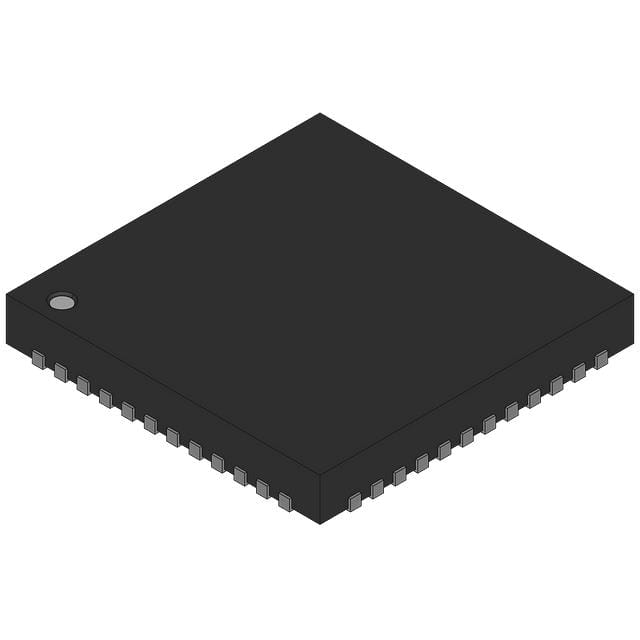
- Part No.:
- DS22EV5110SQ/NOPB
- Manufacturer:
- Texas Instruments
- Category:
- Video Processing
- Package:
- 48-WFQFN Exposed Pad
- Datasheet:
-
 DS22EV5110SQ/NOPB.pdf
- Description:
- IC VIDEO EQUALIZER 48WQFN
- Quantity:
- Payment:

- Shipping:

Inventory:1,334
Please send an inquiry. Send us your inquiry, and we will respond immediately.
Product details
Overview
DS22EV5110SQ/NOPB from Texas Instruments is a 6.75 Gbps DVI/HDMI extended-reach equalizer with integrated retimer and configurable output de-emphasis. It processes three TMDS data channels and one clock channel at up to 2.25 Gbps per channel, incorporates dedicated CDR per data channel, delivers ≤0.09 UI total output jitter at 2.25 Gbps, and supports 25 m of 28 AWG HDMI cable for 1080p/36-bit color. It serves as source, sink, or repeater in high-definition video extension systems.
For engineers reviewing the DS22EV5110SQ/NOPB datasheet, DS22EV5110SQ/NOPB pinout, DS22EV5110SQ/NOPB application, or DS22EV5110SQ/NOPB equivalent, key selection criteria include TMDS channel count (4-channel: 3 data + 1 clock), CDR-based jitter reduction capability, resistor-adjustable differential output voltage (800–1200 mVp-p), EQ/DE programmability via LVCMOS control pins, and WQFN-48 package compatibility with high-speed layout constraints.
Technical Context
The DS22EV5110SQ/NOPB implements independent CDRs per TMDS data channel, each with loop bandwidth ≈ bit rate / 1000 (e.g., 2.25 MHz at 2.25 Gbps), synchronized to a high-performance PLL on the clock channel. Its input equalizer offers eight programmable boost levels (0–30 dB) via EQ[2:0], while output de-emphasis provides four selectable levels (0, –3, –6, –9 dB) via DE[1:0].
It supports both DC-coupled (24 kΩ VOD_CRL) and AC-coupled (12 kΩ VOD_CRL + external biasing) TMDS interfaces, features open-collector CML outputs with 50 Ω on-chip termination at inputs, and integrates signal detect (SD) and lock (LOCK) status indicators for system-level handshaking and automatic enable control.
Key Specifications
| Parameter | Value and Actual Design Meaning |
|---|---|
| Data Rate | Up to 2.25 Gbps per TMDS data channel; enables 1080p/36-bit color (6.75 Gbps aggregate) |
| Total Output Jitter | ≤0.09 UIp-p at 2.25 Gbps; ensures timing margin for HDMI v1.3a/DVI v1.0 compliance |
| Differential Output Voltage | 800–1200 mVp-p; set by external resistor on VOD_CRL pin (12 kΩ for AC, 24 kΩ for DC coupling) |
| Equalization Boost | 0–30 dB in 8 steps via EQ2/EQ1/EQ0 pins; compensates up to 25 m of 28 AWG HDMI cable loss |
| De-Emphasis Levels | 0, –3, –6, –9 dB via DE1/DE0 pins; optimizes driving into FR4 traces or additional cable length |
| Supply Voltage | 3.3 V ±5%; requires low-inductance VDD/GND planes and 0.1 µF bypass per VDD pin |
| Operating Temperature | 0 °C to +70 °C; validated for commercial-grade video equipment environments |
Pinout & Package
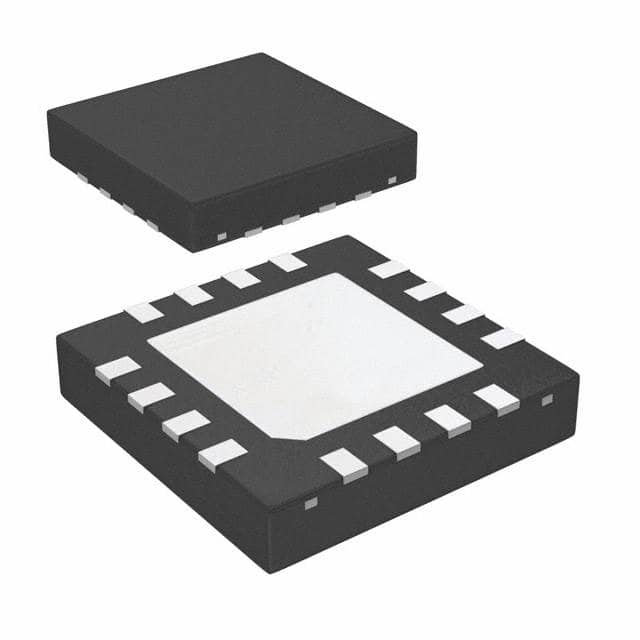
DS22EV5110SQ/NOPB uses a 7 mm × 7 mm, 48-pin WQFN package (RHS0048A) with exposed thermal pad (DAP) requiring connection to ground plane. Pin functions are defined per TI SNLS311E Rev. April 2013.
| Pin/Terminal | Circuit Role | Design Meaning |
|---|---|---|
| C_IN+, C_IN− | TMDS clock input pair | CML inputs with internal 50 Ω termination to VDD; feed clock channel PLL |
| D_IN0+ to D_IN2− | Three TMDS data input pairs | CML inputs with internal 50 Ω termination; each feeds dedicated CDR and equalizer |
| C_OUT+, C_OUT− | TMDS clock output pair | Open-collector CML outputs; regenerated low-jitter clock for downstream recovery |
| D_OUT0+ to D_OUT2− | Three TMDS data output pairs | Open-collector CML outputs with configurable de-emphasis; drive extended cables or PCB traces |
| EQ2, EQ1, EQ0 | Equalization control inputs | LVCMOS pins selecting one of eight boost levels (0–30 dB); default = 000 (0 dB) |
| DE1, DE0 | De-emphasis control inputs | LVCMOS pins selecting 0/–3/–6/–9 dB; default = 00 (0 dB) |
| EN, BYPASS, SD, LOCK | Device control/status I/O | LVCMOS EN (active-high output enable); BYPASS (retimer/de-emphasis disable); SD (all-channel signal detect); LOCK (PLL lock indicator) |
| VOD_CRL, LFn, LFp | Analog configuration pins | VOD_CRL sets output swing via external resistor; LFn/LFp connect external RC loop filter for PLL stability |
Key Features
| Feature | Design Value |
|---|---|
| Dedicated CDR per TMDS data channel | Enables independent jitter cleanup and latency management across all three data lanes at up to 2.25 Gbps |
| Configurable receive equalization (8 levels) | Compensates frequency-dependent loss in long HDMI/DVI cables or UTP Cat5e/Cat6 links without external components |
| Programmable transmit de-emphasis (4 levels) | Optimizes signal integrity when driving FR4 backplanes or additional cable segments beyond equalizer reach |
| Resistor-adjustable differential output voltage | Supports both DC-coupled (24 kΩ) and AC-coupled (12 kΩ) TMDS interfaces with identical 1000 mVp-p nominal swing |
| Integrated signal detect and PLL lock indicators | LVCMOS SD and LOCK pins enable automatic power sequencing and system-level link training in repeater/sink applications |
Applications
| HDMI/DVI Repeater Box | High-Definition Video Card |
|---|---|
Use Scenario: Extending HDMI signal from source to display over 25 m of 28 AWG shielded cable in digital signage or AV distribution systems. IC Role / Device Role / Timing Role: Acts as active repeater-equalizing degraded input, re-timing with low-jitter CDR, and de-emphasizing output to drive long cable runs. Use Value: Enables 1080p/36-bit color transmission with ≤0.09 UI jitter, eliminating eye closure and ensuring HDMI v1.3a compliance at full reach. |
Use Scenario: Integrating into GPU or media processor board to drive HDMI outputs directly from silicon with robust cable-driving capability. IC Role / Device Role / Timing Role: Functions as HDMI source buffer-conditioning TMDS signals before connector, adding de-emphasis for trace/cable loss compensation. Use Value: Eliminates need for discrete level-shifting or external equalization; supports plug-and-play compatibility with standard HDMI displays. |
| Blu-ray Disc Player Output Stage | Game Console Video Interface |
Use Scenario: Enhancing HDMI output from Blu-ray player SoC to maintain signal integrity over consumer-grade HDMI cables up to 15 m. IC Role / Device Role / Timing Role: Operates as source-side signal conditioner-applying precise de-emphasis based on detected cable length and format (e.g., 2.25 Gbps 1080p). Use Value: Guarantees stable deep-color playback without artifacts; leverages SD/LOCK pins for automatic power-down during standby. |
Use Scenario: Embedding in game console motherboard to support high-bandwidth HDMI output for 1080p/60Hz gaming with minimal latency. IC Role / Device Role / Timing Role: Serves as low-latency retimer-CDR latency fixed at 400 ps (data) / 600 ps (clock), preserving real-time video timing. Use Value: Maintains sub-frame synchronization critical for interactive gameplay; avoids frame stutter caused by jitter-induced receiver resync. |
Equivalent & Alternatives
The following parts are listed as comparable options for similar HDMI/DVI signal conditioning applications.
| Alternative Part | Technical Difference | Application Difference | Selection Advice |
|---|---|---|---|
| TI DS10EV016AQ/NOPB | 4-channel, 1.65 Gbps max; no CDR-only equalization; smaller 32-pin WQFN | Limited to 1080i/720p; unsuitable for 2.25 Gbps 1080p/36-bit or jitter-sensitive repeater use | Select only for cost-sensitive, lower-bandwidth HDMI sources where retiming is unnecessary. |
| Maxim MAX3815 | Single-channel, 2.5 Gbps; includes deskew; requires external reference clock; different pinout | Used in multi-chip solutions for skew-critical applications; not drop-in compatible; higher BOM complexity | Choose only when inter-pair skew correction is mandatory and system design accommodates separate clock routing and layout overhead. |
Compared with DS22EV5110SQ/NOPB, DS10EV016AQ/NOPB lacks retiming and de-emphasis-limiting reach and jitter performance-while MAX3815 adds deskew but increases design complexity and does not match the integrated 4-channel, self-contained architecture of the DS22EV5110SQ/NOPB.
Availability
DS22EV5110SQ/NOPB is available at Aetrix Electronics and suitable for HDMI/DVI repeater boxes, high-definition video cards, Blu-ray disc players, and game console video interfaces requiring stable component supply, long-cable signal integrity, and production-ready qualification.
Supply support for DS22EV5110SQ/NOPB includes scheduled delivery planning, volume procurement assistance, BOM continuity management, traceable sourcing, and lifecycle availability coordination for OEM customers, industrial embedded developers, connected-device designers, and electronics production programs.
Manufacturer
Texas Instruments is a global semiconductor leader specializing in analog, embedded processing, and connectivity technologies, with decades of expertise in high-speed interface ICs and video signal conditioning.
The DS22EV5110SQ/NOPB belongs to TI's Display Interface product line, engineered specifically for HDMI/DVI signal extension in commercial AV equipment, targeting robust cable reach, low-jitter retiming, and seamless integration into source/sink/repeater topologies.
FAQ
What is the maximum supported data rate per TMDS channel for DS22EV5110SQ/NOPB?
The DS22EV5110SQ/NOPB supports up to 2.25 Gbps per TMDS data channel, enabling full 1080p resolution with 36-bit deep color (6.75 Gbps aggregate). This matches HDMI v1.3a and DVI v1.0 specifications and is validated across temperature and voltage ranges per TI SNLS311E.
How does DS22EV5110SQ/NOPB reduce jitter in HDMI/DVI systems?
The DS22EV5110SQ/NOPB reduces jitter using dedicated CDR circuits per data channel that regenerate clean sampling clocks from the incoming TMDS signal. At 2.25 Gbps, it achieves ≤0.09 UI total output jitter-significantly improving eye opening and timing margin versus passive equalizers or unconditioned links.
Can DS22EV5110SQ/NOPB be used in AC-coupled HDMI applications?
Yes, DS22EV5110SQ/NOPB supports AC-coupled operation using a 12 kΩ resistor on the VOD_CRL pin and external 50 Ω pull-up resistors at the outputs. However, this configuration is not HDMI-compliant for source devices per specification; it is intended for custom extender designs using Cat5e/Cat6 cabling between chassis.
What is the function of the BYPASS pin on DS22EV5110SQ/NOPB?
The BYPASS pin on DS22EV5110SQ/NOPB disables the retiming and de-emphasis functions when driven HIGH, configuring the device as a pure equalizer. In normal operation (BYPASS = LOW), DS22EV5110SQ/NOPB performs full equalization, CDR-based re-timing, and output de-emphasis.
Does DS22EV5110SQ/NOPB include built-in ESD protection?
Yes, DS22EV5110SQ/NOPB includes >8 kV HBM ESD protection on all pins, as specified in the Absolute Maximum Ratings table of the TI SNLS311E datasheet. This meets industrial handling requirements and reduces need for external TVS diodes in most HDMI interface designs.
DS22EV5110SQ/NOPB Specifications
- Product attributes
- Attribute value
- Manufacturer:
- Texas Instruments
- Series:
- -
- Package/Case:
- 48-WFQFN Exposed Pad
- Packaging:
- Tape & Reel (TR)
- Product Status:
- Not For New Designs
- Function:
- Equalizer
- Applications:
- -
- Standards:
- -
- Control Interface:
- -
- Voltage - Supply:
- -
- Mounting Type:
- Surface Mount
- Grade:
- -
- Qualification:
- -
- Supplier Device Package:
- 48-WQFN (7x7)
DS22EV5110SQ/NOPB FAQ
1.How can I place an order for DS22EV5110SQ/NOPB through Aetrix?
Please submit a Request for Quotation (RFQ) for DS22EV5110SQ/NOPB on Aetrix. Our sales agent will provide a competitive quotation and guide you through the order confirmation once you accept the terms.
2.Are the price and stock information for DS22EV5110SQ/NOPB reliable?
The price and inventory of DS22EV5110SQ/NOPB are updated periodically and may fluctuate due to market conditions. Stock and pricing data are typically refreshed every 24 hours. Quotation validity for DS22EV5110SQ/NOPB is usually 5 days.
3.What payment methods are accepted for DS22EV5110SQ/NOPB?
We accept Wire Transfer, PayPal, Credit Card, Western Union, MoneyGram, and Escrow for DS22EV5110SQ/NOPB transactions.
Note: Certain payment methods may incur a processing fee.
4.How is shipping managed for DS22EV5110SQ/NOPB?
DS22EV5110SQ/NOPB orders can be shipped via leading logistics carriers, including DHL, UPS, FedEx, TNT, or Registered Mail.
Once your DS22EV5110SQ/NOPB order is processed, you will receive an email with the shipment details and tracking number.
Note: Tracking information may take up to 24 hours to appear. Express delivery typically takes 3–5 business days.
5.How can I obtain technical support or documentation for DS22EV5110SQ/NOPB?
For technical support, including DS22EV5110SQ/NOPB datasheets, pinout diagrams, or application guidance, please contact our engineering support team. They can provide detailed documentation and assistance for your DS22EV5110SQ/NOPB requirements.
6.How does Aetrix verify that DS22EV5110SQ/NOPB is sourced from the original manufacturer or authorized distributors?
All DS22EV5110SQ/NOPB products on Aetrix are procured from qualified distributors and authorized channels. Our dedicated quality assurance team conducts strict verification, including traceability checks and, if necessary, third-party testing. This ensures that DS22EV5110SQ/NOPB meets industry standards.
7.What is the process for return or replacement of DS22EV5110SQ/NOPB?
All DS22EV5110SQ/NOPB units undergo pre-shipment inspection (PSI). If there is an issue with DS22EV5110SQ/NOPB, returns or replacements are accepted under the following conditions:
1.Quantity discrepancies, incorrect items, or visible external defects (such as breakage or corrosion), acknowledged by Aetrix.
2.The issue is reported within 90 days of delivery.
3.The DS22EV5110SQ/NOPB part is unused and in its original packaging.
Return procedure for DS22EV5110SQ/NOPB:
1.Submit a request within 90 days.
2.Obtain a Return Material Authorization (RMA) from Aetrix.
DS22EV5110SQ/NOPB Tags
-
HDMI2C1-6C1
STMicroelectronics
-
ADA4430-1YKSZ-R7
Analog Devices Inc.

-
LM1881MX/NOPB
Texas Instruments
-
SN75DP130SSRGZR
Texas Instruments
-
EQCO30T5.2
Microchip Technology
-
LMH1980MM/NOPB
Texas Instruments
-
EQCO30R5.D
Microchip Technology

-
SII9022ACNU
Lattice Semiconductor Corporation
-
SN65DP159RGZR
Texas Instruments
-
SN65DP159RSBR
Texas Instruments
-
SN65DP141RLJR
Texas Instruments
-
LMH0303SQ/NOPB
Texas Instruments
Tech Hub

A practical engineering guide to 3.3V and 5V logic compatibility, input thresholds, resistor dividers, translator ICs, MOSFET level shifting, I2C pull-ups, timing limits and power-sequencing risks.

The 74HC595 uses push-pull logic outputs, while the TPIC6B595 uses 50 V open-drain DMOS sinks for higher-power loads. This guide compares timing, current limits, 3.3 V interfacing, load wiring, thermal…

The 74HC595 converts serial data into eight stable parallel outputs. This guide covers pin functions, shift and storage timing, OE and MR behavior, drive-current limits, cascading, voltage compatibilit…

A technical comparison of level-sensitive latches and edge-triggered flip-flops, covering timing windows, setup and hold limits, master–slave operation, time borrowing, race-through, HDL inference and…

A D latch stores one bit while Enable controls when data can pass. This reference covers gate-level operation, truth tables, transparency, setup and hold timing, LE versus OE, common ICs and practical …

An SR latch stores one bit through cross-coupled feedback. This engineering reference covers NOR and NAND implementations, truth tables, forbidden-state recovery, gated operation, switch debouncing, fa…

Latch circuits retain one bit through feedback. This technical reference covers SR and D latches, truth tables, transparency, timing limits, latch-versus-flip-flop behavior, applications and common log…

An engineering guide to LED driver operation, constant-current and constant-voltage outputs, linear and switching topologies, dimming, IC selection, calculations, replacement compatibility, and fault c…

Operational amplifier guide covering op amp basics, feedback, ideal vs real op amps, common configurations, buffer circuits, offset, bias current, gain-bandwidth, slew rate, rail-to-rail limits and sel…

Jumper cables guide covering safe connection order, red and black clamp placement, final ground connection, cable gauge, length, clamp quality, copper vs CCA cables, jump starter comparison and battery…


