
 My Inquiry
 My Account


Analog Devices Inc./Maxim Integrated DS2490S
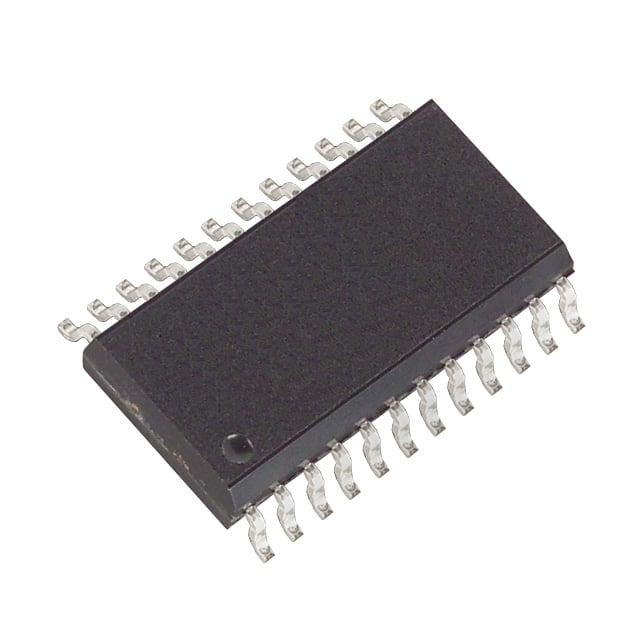
- Part No.:
- DS2490S
- Manufacturer:
- Analog Devices Inc./Maxim Integrated
- Category:
- Controllers
- Package:
- 24-SOIC (0.295", 7.50mm Width)
- Datasheet:
-
 DS2490S.pdf
- Description:
- IC BRIDGE CLIP USB TO 1-W 24SOIC
- Quantity:
- Payment:

- Shipping:

Inventory:3,813
Please send an inquiry. Send us your inquiry, and we will respond immediately.
Product details
Overview
DS2490S from Maxim Integrated is a USB-to-1-Wire bridge IC that enables full-speed 12Mbps USB host communication with 1-Wire buses, supports regular/overdrive/flexible timing modes, provides active slew-rate-controlled 1-Wire edge shaping, and delivers stiff 5V strong pullup for EEPROMs, sensors, and iButton® devices in industrial and embedded systems.
For engineers reviewing the DS2490S datasheet, DS2490S pinout, DS2490S application, or DS2490S equivalent, key selection criteria include USB remote wake-up capability, programmable pulldown slew rate (target 1V/µs for 300m networks), crystal-based 12MHz timebase for precision waveform generation, and support for stiff 5V pullup on long or loaded 1-Wire networks.
Technical Context
The DS2490S integrates a USB 1.1-compliant transceiver, USB device controller, and dedicated 1-Wire interface controller with active edge shaping circuitry. It uses an external 12.0MHz crystal (XI/XO) to generate precise 1-Wire timing, enabling accurate reset/presence detection and data slot waveforms across all speed modes.
Its 1-Wire I/O features programmable parameters including Write-1 low time (4–11µs), data sample offset (10–24µs), strong pullup duration (predefined or infinite), and pulldown slew rate (adjustable via MODE_CMD). USB remote wake-up is supported but disabled at power-on default and requires explicit host enablement.
Key Specifications
| Parameter | Value and Actual Design Meaning |
|---|---|
| USB Interface | Full-speed 12Mbps USB 1.1 compliant; integrated transceiver; remote wake-up capable |
| 1-Wire Speed Modes | Regular (65µs slot), Overdrive (10.4µs slot), Flexible (60–81µs slot); configurable per command |
| 1-Wire Timing Control | Programmable Write-1 low time (4–11µs) and data sample offset (10–24µs) for noise margin optimization |
| Pulldown Slew Rate | Adjustable via MODE_CMD; target 1V/µs (≈4µs fall time) for reliable operation on 300m networks |
| Strong Pullup | 5V active pullup with programmable duration (predefined or infinite); enabled/disabled via ENABLE PULSE |
| Operating Temp | 0°C to +70°C; suitable for commercial and industrial ambient environments |
| Power Supplies | VD = 5.0V ±10% (digital & 1-Wire), VB = 3.3V ±10% (USB), VD2 externally tied to VD |
Pinout & Package
DS2490S is housed in a 24-pin SOIC package (300-mil width), RoHS-compliant and lead-free. Pin functions are validated per Maxim's DS2490 datasheet Rev 19-4993.
| Pin/Terminal | Circuit Role | Design Meaning |
|---|---|---|
| VD | Power supply input | Digital and 1-Wire logic supply (5.0V ±10%); must be decoupled locally |
| VD2 | Power supply input | Second VD pin; externally tied to VD - not internally connected |
| VB | Power supply input | USB interface supply (3.3V ±10%), regulated from USB VBUS |
| D+, D− | USB differential I/O | Full-speed USB data pair; integrated transceiver eliminates external PHY |
| 1-Wire | 1-Wire bus I/O | Single-wire bidirectional interface with active edge shaping and 5V strong pullup |
| SUSO | USB suspend output | Open-drain indicator of USB suspend state; requires external pullup resistor |
| XI, XO | Clock input/output | Connects to 12.0MHz fundamental-mode crystal or CMOS clock source for precise timing |
| GND | Ground reference | Common ground return for digital, USB, and 1-Wire circuits |
| PMOD | Reserved input | Must be tied to GND; no internal function; future use only |
| NC | No connect | Factory-reserved pins; must remain unconnected |
Key Features
| Feature | Design Value |
|---|---|
| Active 1-Wire edge shaping | Rising edges accelerated by active pullup (reducing rise time vs resistive pullup); falling edges slew-rate controlled to minimize radiation on long lines |
| Flexible 1-Wire timing | Independent control of Write-1 low time and data sample offset allows tuning for large or noisy networks without violating tMSR of slave devices |
| Crystal-referenced timing | 12MHz XI/XO oscillator ensures accurate reset, presence detect, and data slot timing across temperature and voltage variations |
| USB remote wake-up | Enables DS2490S to resume suspended host upon 1-Wire device attachment - critical for battery-powered or energy-aware systems |
| Stiff 5V strong pullup | Delivers sustained 5V pullup current for parasitic-powered 1-Wire devices (e.g., DS1990A iButton®, DS2438 smart battery monitor) |
Applications
| Industrial Asset Tagging | Secure Access Control |
|---|---|
Use Scenario: Reading tamper-evident iButton® tokens attached to machinery, valves, or enclosures in factory-floor environments with EMI and long cable runs. IC Role / Device Role / Timing Role: DS2490S acts as USB-host-facing 1-Wire master, providing robust timing, active edge shaping, and 5V strong pullup to reliably read crypto iButton® devices over 100+ meter cables. Use Value: Eliminates timing jitter and bus contention issues common with software-bitbanged USB-to-1-Wire solutions, ensuring deterministic presence detection and secure challenge-response authentication. | Use Scenario: Integrating Dallas Semiconductor 1-Wire security tokens into physical access systems using standard USB ports on Windows/Linux workstations or embedded gateways. IC Role / Device Role / Timing Role: DS2490S bridges USB host to 1-Wire security devices (e.g., DS1961S, DS2432), handling all low-level timing, strong pullup sequencing, and wake-up signaling required for cryptographic operations. Use Value: Enables plug-and-play deployment without custom USB drivers; supports remote wake-up so door controllers can respond instantly to token insertion even from low-power sleep states. |
| Environmental Sensor Networks | Legacy System Modernization |
Use Scenario: Connecting distributed 1-Wire temperature/humidity sensors (e.g., DS18B20, DS2438) to PC-based SCADA or data loggers via USB, often over extended wiring in HVAC or agricultural settings. IC Role / Device Role / Timing Role: DS2490S serves as timing-critical 1-Wire bus controller, applying programmable slew rate and flexible timing to maintain signal integrity across 300m daisy-chained sensor strings. Use Value: Achieves stable multi-drop communication where microcontroller-based USB adapters fail due to timing drift or insufficient pullup drive on long lines. | Use Scenario: Retrofitting aging industrial equipment (e.g., PLC racks, calibration tools) with USB connectivity while retaining existing 1-Wire sensor or memory modules. IC Role / Device Role / Timing Role: DS2490S replaces legacy serial/parallel port 1-Wire interfaces, translating USB commands into precise 1-Wire waveforms compatible with decades-old Dallas Semiconductor devices. Use Value: Preserves investment in certified 1-Wire components while eliminating obsolete COM ports and enabling modern OS compatibility without firmware changes to end devices. |
Equivalent & Alternatives
The following parts are listed as comparable options for similar USB-to-1-Wire bridge applications.
| Alternative Part | Technical Difference | Application Difference | Selection Advice |
|---|---|---|---|
| DS9490R | Same core silicon as DS2490S but in integrated USB dongle form factor (no PCB footprint); includes onboard USB connector and 1-Wire pullup resistor. | Plug-and-play evaluation and light-duty field use; lacks flexibility for embedded integration or custom 1-Wire topology design. | Select DS9490R for rapid prototyping or end-user accessories; choose DS2490S when board-level integration, custom 1-Wire termination, or thermal/power optimization is required. |
| TUSB3410 | TI USB-to-serial bridge with external 1-Wire interface logic; no integrated 1-Wire controller, timing, or strong pullup - requires external FPGA/microcontroller for 1-Wire protocol handling. | Demands significant host-side firmware development and external timing circuitry; unsuitable for direct drop-in replacement. | Choose TUSB3410 only if existing system already implements 1-Wire bit-banging in firmware and requires only USB physical layer bridging. |
Compared with DS9490R, DS2490S offers full layout control, thermal management, and custom 1-Wire network design; compared with TUSB3410, DS2490S eliminates firmware timing-critical code and external analog components, delivering turnkey 1-Wire compliance with crystal-locked accuracy.
Availability
DS2490S is available at Aetrix Electronics and suitable for industrial asset tagging, secure access control, environmental sensor networks, and legacy system modernization requiring stable component supply and long-term lifecycle support.
Supply support for DS2490S includes scheduled delivery planning, volume procurement assistance, BOM continuity management, traceable sourcing, and lifecycle availability coordination for OEM customers, industrial embedded developers, connected-device designers, and electronics production programs.
Manufacturer
Maxim Integrated (now part of Analog Devices) designs high-performance analog and mixed-signal ICs for industrial, communications, and computing applications.
The DS2490S belongs to Maxim's 1-Wire interface product line, engineered specifically to offload precise 1-Wire timing, edge control, and USB protocol handling from host processors in embedded and PC-connected systems.
FAQ
What is the primary function of the DS2490S in a USB-to-1-Wire system?
The DS2490S serves as a dedicated hardware bridge that translates USB host commands into precisely timed 1-Wire waveforms. It handles all low-level 1-Wire protocol requirements - including reset/presence detection, data slot timing, active edge shaping, and 5V strong pullup - freeing the host CPU from real-time timing constraints. This makes DS2490S essential for reliable communication with Dallas Semiconductor 1-Wire devices such as iButton® tokens, temperature sensors, and crypto memories.
Does the DS2490S require an external crystal, and why?
Yes, the DS2490S requires an external 12.0MHz fundamental-mode parallel-resonant crystal connected between XI and XO pins. This crystal provides the timebase for all 1-Wire timing functions - including reset pulse widths, data slot durations, and presence sampling offsets - ensuring accuracy across voltage and temperature variations. Without this crystal, DS2490S cannot generate compliant 1-Wire waveforms; a CMOS clock source may substitute but must meet strict jitter and stability specs.
How does the DS2490S support long 1-Wire networks up to 300 meters?
The DS2490S supports long 1-Wire networks through programmable pulldown slew rate control (target 1V/µs), flexible timing mode with adjustable Write-1 low time and data sample offset, and active rising-edge pullup that reduces rise time versus passive resistors. These features collectively minimize ringing, improve noise margin, and ensure reliable signal recovery on highly capacitive lines - validated in Maxim's documentation for networks up to 300m using appropriate cabling and termination.
Can the DS2490S wake up a suspended USB host system?
Yes, the DS2490S supports USB remote wake-up: when enabled via vendor-specific command, it asserts resume signaling on the USB bus upon detecting 1-Wire device attachment or activity. This feature is disabled by default at power-on and must be explicitly activated by host software. Once enabled, DS2490S allows battery-powered or energy-efficient hosts to remain in suspend mode until a 1-Wire event triggers wake-up - critical for access control and sensor polling applications.
What are the power supply requirements for the DS2490S?
The DS2490S requires three distinct supplies: VB = 3.3V ±10% for USB interface (derived from USB VBUS), and VD = 5.0V ±10% for digital logic and 1-Wire functions. VD2 is a second VD pin that must be externally tied to VD - it is not internally connected. All supplies require local ceramic decoupling (e.g., 0.1µF) near the respective pins. GND serves as the common reference for all domains.
DS2490S Specifications
- Product attributes
- Attribute value
- Manufacturer:
- Analog Devices Inc./Maxim Integrated
- Package/Case:
- 24-SOIC (0.295", 7.50mm Width)
- Programmable:
- Not Verified
- Protocol:
- USB
- Function:
- Bridge, USB to 1-Wire®
- Interface:
- 1-Wire®
- Standards:
- -
- Voltage - Supply:
- 3V ~ 5.5V
- Current - Supply:
- 20mA
- Operating Temperature:
- 0°C ~ 70°C
- Supplier Device Package:
- 24-SOIC
- Grade:
- -
- Qualification:
- -
DS2490S FAQ
1.How can I place an order for DS2490S through Aetrix?
Please submit a Request for Quotation (RFQ) for DS2490S on Aetrix. Our sales agent will provide a competitive quotation and guide you through the order confirmation once you accept the terms.
2.Are the price and stock information for DS2490S reliable?
The price and inventory of DS2490S are updated periodically and may fluctuate due to market conditions. Stock and pricing data are typically refreshed every 24 hours. Quotation validity for DS2490S is usually 5 days.
3.What payment methods are accepted for DS2490S?
We accept Wire Transfer, PayPal, Credit Card, Western Union, MoneyGram, and Escrow for DS2490S transactions.
Note: Certain payment methods may incur a processing fee.
4.How is shipping managed for DS2490S?
DS2490S orders can be shipped via leading logistics carriers, including DHL, UPS, FedEx, TNT, or Registered Mail.
Once your DS2490S order is processed, you will receive an email with the shipment details and tracking number.
Note: Tracking information may take up to 24 hours to appear. Express delivery typically takes 3–5 business days.
5.How can I obtain technical support or documentation for DS2490S?
For technical support, including DS2490S datasheets, pinout diagrams, or application guidance, please contact our engineering support team. They can provide detailed documentation and assistance for your DS2490S requirements.
6.How does Aetrix verify that DS2490S is sourced from the original manufacturer or authorized distributors?
All DS2490S products on Aetrix are procured from qualified distributors and authorized channels. Our dedicated quality assurance team conducts strict verification, including traceability checks and, if necessary, third-party testing. This ensures that DS2490S meets industry standards.
7.What is the process for return or replacement of DS2490S?
All DS2490S units undergo pre-shipment inspection (PSI). If there is an issue with DS2490S, returns or replacements are accepted under the following conditions:
1.Quantity discrepancies, incorrect items, or visible external defects (such as breakage or corrosion), acknowledged by Aetrix.
2.The issue is reported within 90 days of delivery.
3.The DS2490S part is unused and in its original packaging.
Return procedure for DS2490S:
1.Submit a request within 90 days.
2.Obtain a Return Material Authorization (RMA) from Aetrix.
DS2490S Tags
-
PTN5150AHXMP
NXP Semiconductors
-
USB3740B-AI9-TR
Microchip Technology
-
USB3740B-AI2-TR
Microchip Technology
-
USB3300-EZK-TR
Microchip Technology
-
USB3300-EZK
Microchip Technology
-
FUSB340TMX
onsemi
-
FUSB302BMPX
onsemi
-
DP83826IRHBR
Texas Instruments
-
MCP2518FDT-E/QBB
Microchip Technology
-
FUSB302MPX
onsemi
-
MCP2518FDT-E/SL
Microchip Technology
-
FT260Q-R
FTDI, Future Technology Devices International Ltd
Tech Hub

A practical engineering guide to 3.3V and 5V logic compatibility, input thresholds, resistor dividers, translator ICs, MOSFET level shifting, I2C pull-ups, timing limits and power-sequencing risks.

The 74HC595 uses push-pull logic outputs, while the TPIC6B595 uses 50 V open-drain DMOS sinks for higher-power loads. This guide compares timing, current limits, 3.3 V interfacing, load wiring, thermal…

The 74HC595 converts serial data into eight stable parallel outputs. This guide covers pin functions, shift and storage timing, OE and MR behavior, drive-current limits, cascading, voltage compatibilit…

A technical comparison of level-sensitive latches and edge-triggered flip-flops, covering timing windows, setup and hold limits, master–slave operation, time borrowing, race-through, HDL inference and…

A D latch stores one bit while Enable controls when data can pass. This reference covers gate-level operation, truth tables, transparency, setup and hold timing, LE versus OE, common ICs and practical …

An SR latch stores one bit through cross-coupled feedback. This engineering reference covers NOR and NAND implementations, truth tables, forbidden-state recovery, gated operation, switch debouncing, fa…

Latch circuits retain one bit through feedback. This technical reference covers SR and D latches, truth tables, transparency, timing limits, latch-versus-flip-flop behavior, applications and common log…

An engineering guide to LED driver operation, constant-current and constant-voltage outputs, linear and switching topologies, dimming, IC selection, calculations, replacement compatibility, and fault c…

Operational amplifier guide covering op amp basics, feedback, ideal vs real op amps, common configurations, buffer circuits, offset, bias current, gain-bandwidth, slew rate, rail-to-rail limits and sel…

Jumper cables guide covering safe connection order, red and black clamp placement, final ground connection, cable gauge, length, clamp quality, copper vs CCA cables, jump starter comparison and battery…


