
 My Inquiry
 My Account


Analog Devices Inc./Maxim Integrated DS2505+T&R
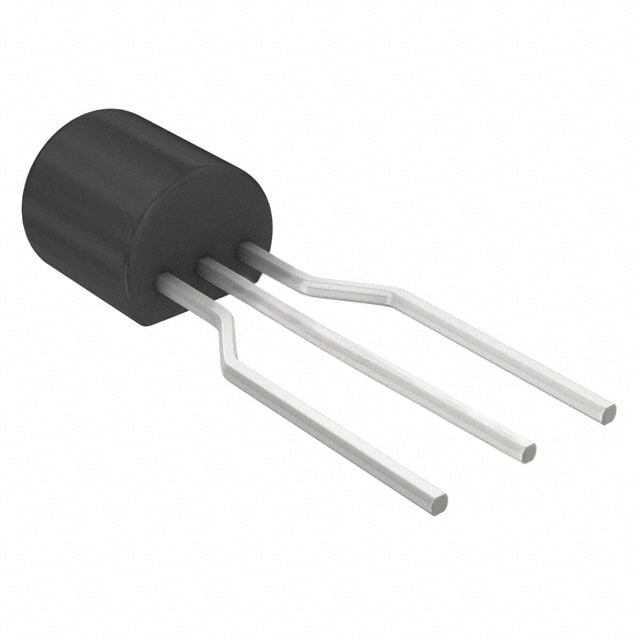
- Part No.:
- DS2505+T&R
- Manufacturer:
- Analog Devices Inc./Maxim Integrated
- Category:
- Memory
- Package:
- TO-226-3, TO-92-3 (TO-226AA) Formed Leads
- Datasheet:
-
 DS2505+T&R.pdf
- Description:
- IC EPROM 16KBIT 1-WIRE TO92-3
- Quantity:
- Payment:

- Shipping:

Inventory:3,564
Please send an inquiry. Send us your inquiry, and we will respond immediately.
Product details
Overview
DS2505+T&R from Maxim Integrated (now Analog Devices) is a 16 kbit add-only EPROM memory IC with factory-lasered 64-bit ROM, operating via single-wire 1-Wire® interface. It provides traceable device identity (8-bit family code 0xBH, 48-bit serial number, 8-bit CRC), 64 pages of 256-bit memory, page-level write protection, and software-managed page redirection for data patching. Used in calibration storage, asset tracking, and maintenance logging where tamper-resistant, low-pin-count memory is required.
For engineers reviewing the DS2505+T&R datasheet, DS2505+T&R pinout, DS2505+T&R application, or DS2505+T&R equivalent, key selection considerations include its parasitic-power operation (2.8–6.0 V read, 11.5–12.0 V program), TO-92 tape-and-reel packaging, 16.3 kbps communication speed, and strict 1-Wire protocol compliance - especially ROM function command sequencing and EPROM status byte management.
Technical Context
The DS2505+T&R implements a hierarchical 1-Wire protocol requiring ROM Function Commands (Read/Match/Search/Skip ROM) before accessing memory functions. Its internal architecture separates 64-bit lasered ROM (for device singulation), 16384-bit EPROM data memory (64 × 256-bit pages), and 704-bit EPROM status memory (write-protect bits, page redirection bytes, and usage flags).
Power is derived entirely from the 1-Wire line during read operations using parasitic capacitance; programming requires externally pulsed 12 V at 10 mA. Data integrity relies on dual-layer CRC: 8-bit CRC over ROM contents and 16-bit CRC per memory transaction (scratchpad load, page read/write, status access), with all bit transfers LSB-first.
Key Specifications
| Parameter | Value and Actual Design Meaning |
|---|---|
| Memory Type | 16384-bit EPROM (add-only; bits change 1→0 only) |
| Interface | Single-contact 1-Wire® (DATA + GND); no VDD required |
| Read Voltage Range | 2.8 V to 6.0 V across –40°C to +85°C |
| Program Voltage | 11.5 V to 12.0 V, applied as 480 µs pulse |
| Data Rate | Up to 16.3 kbits/s (standard speed mode) |
| ROM Identity | 64-bit factory-lasered: 8-bit family code (0xBH) + 48-bit serial number + 8-bit CRC |
| Memory Organization | 64 pages × 256 bits (32 bytes); 704-bit status memory with write-protect and page redirection control |
Pinout & Package
DS2505+T&R is supplied in lead(Pb)-free TO-92 package (3.7 × 4.0 × 1.5 mm), tape-and-reel format. Pin configuration supports minimal PCB footprint and compatibility with standard automated assembly equipment.
| Pin/Terminal | Circuit Role | Design Meaning |
|---|---|---|
| 1 | GND | Ground reference for 1-Wire signaling and parasitic power return path |
| 2 | DATA | Bidirectional 1-Wire communication line; supplies power during read, receives 12 V pulses during programming |
| 3 | NC | No internal connection; must be left unconnected or tied to GND per layout guidelines |
Key Features
| Feature | Design Value |
|---|---|
| Factory-lasered 64-bit ROM | Enables absolute device traceability and eliminates need for external ID storage or firmware-based serial number generation |
| Page-level write protection | Each of 64 memory pages can be permanently locked via dedicated status bits, preventing unauthorized modification while preserving read access |
| Page address redirection | Allows software to invalidate outdated data by redirecting reads to newly programmed pages - enabling versioned data updates without physical erasure |
| Parasitic power operation | Eliminates need for dedicated VDD supply; simplifies wiring and reduces component count in space-constrained or legacy systems |
| 16-bit per-page CRC verification | Ensures data integrity during read/write without requiring host-side CRC computation or redundant storage overhead |
Applications
| Calibration Data Storage | Asset Tracking Tag |
|---|---|
Use Scenario: Storing sensor calibration coefficients, gain/offset values, and temperature compensation tables in industrial instrumentation. IC Role / Device Role / Timing Role: Nonvolatile, tamper-evident memory node on 1-Wire bus; provides authenticated, read-only access to factory-programmed parameters. Use Value: Eliminates need for battery-backed RAM or EEPROM; enables field recalibration with write-protection enforcement and audit-trail-capable page redirection. |
Use Scenario: Attaching to tools, medical devices, or test equipment to log maintenance history, ownership changes, and service intervals. IC Role / Device Role / Timing Role: Serialized identity anchor with append-only memory; stores timestamps, technician IDs, and repair notes via sequential page writes. Use Value: Provides cryptographically verifiable lineage via unique ROM ID and CRC; supports multi-session data entry without risk of overwriting prior records. |
| Product Revision Management | Access Code Vault |
Use Scenario: Embedding hardware revision level, firmware compatibility matrix, and BOM version identifiers into end-product assemblies. IC Role / Device Role / Timing Role: Immutable revision registry accessible via microcontroller GPIO; updated only during manufacturing or authorized rework. Use Value: Enables automated version validation during boot or diagnostics; prevents mismatched firmware/hardware combinations through deterministic read-only lookup. |
Use Scenario: Securing cryptographic keys, PINs, or authorization tokens in physical security systems (e.g., door controllers, safe locks). IC Role / Device Role / Timing Role: Write-once credential store with programmable page locking; accessed only after successful 1-Wire ROM authentication. Use Value: Prevents brute-force extraction via physical probing; ensures credentials remain intact even if device is removed from host system. |
Equivalent & Alternatives
The following parts are listed as comparable options for similar 1-Wire memory applications.
| Alternative Part | Technical Difference | Application Difference | Selection Advice |
|---|---|---|---|
| DS2430A | 256-byte EEPROM (not EPROM); supports full read/write cycles (0↔1), no page redirection, lower density (2 kbit) | Used where frequent data updates are needed; lacks permanent write-protection and traceability features of DS2505+T&R | Select when rewritability outweighs audit-trail requirements and 16 kbit capacity is unnecessary |
| DS28EC20 | 20 kbit 1-Wire EEPROM with SHA-256 authentication; supports cryptographic challenge-response, not add-only architecture | Deployed in high-security environments requiring dynamic key exchange; incompatible with DS2505+T&R's page redirection and ROM-based singulation flow | Choose only when cryptographic authentication is mandatory and legacy 1-Wire infrastructure supports SHA-256 commands |
Compared with DS2505+T&R, DS2430A offers rewritable memory but lacks guaranteed uniqueness and page-level immutability, while DS28EC20 adds security features at the cost of complexity and incompatibility with simple add-only data logging workflows.
Availability
DS2505+T&R is available at Aetrix Electronics and suitable for calibration storage, asset tracking, product revision management, and access code vaulting requiring stable component supply, RoHS-compliant packaging, and long-term obsolescence mitigation.
Supply support for DS2505+T&R includes scheduled delivery planning, volume procurement assistance, BOM continuity management, traceable sourcing, and lifecycle availability coordination for OEM customers, industrial embedded developers, connected-device designers, and electronics production programs.
Manufacturer
Maxim Integrated (acquired by Analog Devices in 2021) designs precision analog, mixed-signal, and digital ICs for industrial, automotive, and computing applications.
The DS2505+T&R belongs to Maxim's 1-Wire memory product line, engineered specifically for secure, low-pin-count identification and immutable data logging in resource-constrained systems.
FAQ
What is the function of the NC pin on the DS2505+T&R?
The NC (No Connect) pin on the DS2505+T&R is internally unconnected and must remain floating or tied to ground per layout recommendations. It serves no electrical function and exists solely for mechanical symmetry in the TO-92 package. Incorrect routing or biasing of this pin has no effect on DS2505+T&R operation but may violate IPC assembly standards.
Can the DS2505+T&R be reprogrammed after initial write?
Yes - the DS2505+T&R supports multiple programming sessions, but only in "add-only" mode: existing bits can transition from 1 to 0, never from 0 to 1. New data is appended or replaces old data via page redirection in status memory. Once a page is write-protected, it cannot be altered, making DS2505+T&R ideal for auditable, versioned records.
What voltage is required to program the DS2505+T&R?
The DS2505+T&R requires a precisely timed 11.5 V to 12.0 V programming pulse (480 µs duration) on the DATA line, delivered while maintaining valid 1-Wire timing. This high-voltage pulse is generated externally by the bus master; the DS2505+T&R detects it internally to enable EPROM programming. Read operations use only 2.8–6.0 V.
How does the DS2505+T&R ensure data integrity during read operations?
The DS2505+T&R guarantees data integrity via built-in 16-bit CRC calculation per memory page during Extended Read Memory commands. Each page read concludes with a CRC computed over the actual stored data - not precomputed or stored - ensuring consistency even after field updates. The DS2505+T&R also validates all command/address sequences with CRC before execution.
Is the DS2505+T&R compatible with standard 1-Wire microcontroller libraries?
Yes - the DS2505+T&R fully complies with the Dallas Semiconductor 1-Wire protocol specification, including ROM function command sequencing (Read/Match/Search/Skip ROM) and memory function opcodes (F0H, AAH, A5H, 0FH). Standard 1-Wire drivers (e.g., Maxim's own OneWire library or open-source Arduino implementations) support DS2505+T&R without modification.
DS2505+T&R Specifications
- Product attributes
- Attribute value
- Manufacturer:
- Analog Devices Inc./Maxim Integrated
- Series:
- -
- Package/Case:
- TO-226-3, TO-92-3 (TO-226AA) Formed Leads
- Packaging:
- Tape & Reel (TR)
- Product Status:
- Active
- Programmable:
- Verified
- Memory Type:
- Non-Volatile
- Memory Format:
- EPROM
- Technology:
- EPROM - OTP
- Memory Size:
- 16Kbit
- Memory Organization:
- 16K x 1
- Memory Interface:
- 1-Wire®
- Clock Frequency:
- -
- Write Cycle Time - Word, Page:
- -
- Access Time:
- 15 µs
- Voltage - Supply:
- -
- Operating Temperature:
- -40°C ~ 85°C (TA)
- Grade:
- -
- Qualification:
- -
- Mounting Type:
- Through Hole
- Supplier Device Package:
- TO-92-3
DS2505+T&R FAQ
1.How can I place an order for DS2505+T&R through Aetrix?
Please submit a Request for Quotation (RFQ) for DS2505+T&R on Aetrix. Our sales agent will provide a competitive quotation and guide you through the order confirmation once you accept the terms.
2.Are the price and stock information for DS2505+T&R reliable?
The price and inventory of DS2505+T&R are updated periodically and may fluctuate due to market conditions. Stock and pricing data are typically refreshed every 24 hours. Quotation validity for DS2505+T&R is usually 5 days.
3.What payment methods are accepted for DS2505+T&R?
We accept Wire Transfer, PayPal, Credit Card, Western Union, MoneyGram, and Escrow for DS2505+T&R transactions.
Note: Certain payment methods may incur a processing fee.
4.How is shipping managed for DS2505+T&R?
DS2505+T&R orders can be shipped via leading logistics carriers, including DHL, UPS, FedEx, TNT, or Registered Mail.
Once your DS2505+T&R order is processed, you will receive an email with the shipment details and tracking number.
Note: Tracking information may take up to 24 hours to appear. Express delivery typically takes 3–5 business days.
5.How can I obtain technical support or documentation for DS2505+T&R?
For technical support, including DS2505+T&R datasheets, pinout diagrams, or application guidance, please contact our engineering support team. They can provide detailed documentation and assistance for your DS2505+T&R requirements.
6.How does Aetrix verify that DS2505+T&R is sourced from the original manufacturer or authorized distributors?
All DS2505+T&R products on Aetrix are procured from qualified distributors and authorized channels. Our dedicated quality assurance team conducts strict verification, including traceability checks and, if necessary, third-party testing. This ensures that DS2505+T&R meets industry standards.
7.What is the process for return or replacement of DS2505+T&R?
All DS2505+T&R units undergo pre-shipment inspection (PSI). If there is an issue with DS2505+T&R, returns or replacements are accepted under the following conditions:
1.Quantity discrepancies, incorrect items, or visible external defects (such as breakage or corrosion), acknowledged by Aetrix.
2.The issue is reported within 90 days of delivery.
3.The DS2505+T&R part is unused and in its original packaging.
Return procedure for DS2505+T&R:
1.Submit a request within 90 days.
2.Obtain a Return Material Authorization (RMA) from Aetrix.
DS2505+T&R Tags

-
M24C02-WMN6TP
STMicroelectronics
-
AT24C02C-XHM-T
Microchip Technology
-
AT21CS01-STUM10-T
Microchip Technology

-
AT24C02C-SSHM-T
Microchip Technology

-
24LC01BT-I/OT
Microchip Technology
-
M24C02-FMC6TG
STMicroelectronics
-
AT24CS02-SSHM-T
Microchip Technology

-
93LC46BT-I/OT
Microchip Technology
-
AT24C04C-SSHM-T
Microchip Technology

-
24LC01BT-I/SN
Microchip Technology
-
24AA02UIDT-I/OT
Microchip Technology
-
AT24C08C-STUM-T
Microchip Technology
Tech Hub

A practical engineering guide to 3.3V and 5V logic compatibility, input thresholds, resistor dividers, translator ICs, MOSFET level shifting, I2C pull-ups, timing limits and power-sequencing risks.

The 74HC595 uses push-pull logic outputs, while the TPIC6B595 uses 50 V open-drain DMOS sinks for higher-power loads. This guide compares timing, current limits, 3.3 V interfacing, load wiring, thermal…

The 74HC595 converts serial data into eight stable parallel outputs. This guide covers pin functions, shift and storage timing, OE and MR behavior, drive-current limits, cascading, voltage compatibilit…

A technical comparison of level-sensitive latches and edge-triggered flip-flops, covering timing windows, setup and hold limits, master–slave operation, time borrowing, race-through, HDL inference and…

A D latch stores one bit while Enable controls when data can pass. This reference covers gate-level operation, truth tables, transparency, setup and hold timing, LE versus OE, common ICs and practical …

An SR latch stores one bit through cross-coupled feedback. This engineering reference covers NOR and NAND implementations, truth tables, forbidden-state recovery, gated operation, switch debouncing, fa…

Latch circuits retain one bit through feedback. This technical reference covers SR and D latches, truth tables, transparency, timing limits, latch-versus-flip-flop behavior, applications and common log…

An engineering guide to LED driver operation, constant-current and constant-voltage outputs, linear and switching topologies, dimming, IC selection, calculations, replacement compatibility, and fault c…

Operational amplifier guide covering op amp basics, feedback, ideal vs real op amps, common configurations, buffer circuits, offset, bias current, gain-bandwidth, slew rate, rail-to-rail limits and sel…

Jumper cables guide covering safe connection order, red and black clamp placement, final ground connection, cable gauge, length, clamp quality, copper vs CCA cables, jump starter comparison and battery…


