
 My Inquiry
 My Account


Analog Devices Inc./Maxim Integrated DS2781E+
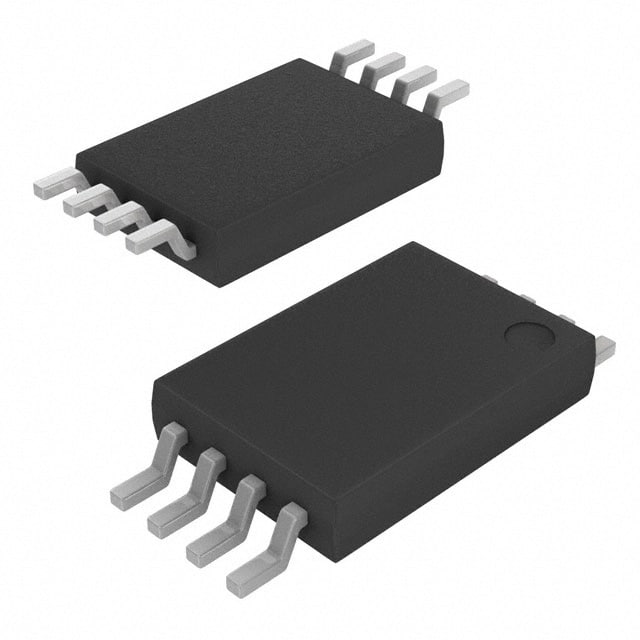
- Part No.:
- DS2781E+
- Manufacturer:
- Analog Devices Inc./Maxim Integrated
- Category:
- Battery Management
- Package:
- 8-TSSOP (0.173", 4.40mm Width)
- Datasheet:
-
 DS2781E+.pdf
- Description:
- IC BATT MON LI-ION 1-2CEL 8TSSOP
- Quantity:
- Payment:

- Shipping:

Inventory:1,288
Please send an inquiry. Send us your inquiry, and we will respond immediately.
Product details
Overview
DS2781E+ from Maxim Integrated is a standalone 1-cell or 2-cell Li-ion/Li-polymer fuel gauge IC that measures voltage (0–9.99 V, ±100 mV error), temperature (±3°C error, 0.125°C resolution), and current (±51.2 mV full-scale, ±1% gain error), and estimates remaining capacity in mAh and % using on-chip FuelPack™ algorithms with EEPROM-stored cell characterization. It operates directly from the battery pack (2.5–10 V) and supports embedded battery management in portable GPS and two-way radios.
For engineers reviewing the DS2781E+ datasheet, DS2781E+ pinout, DS2781E+ application, or DS2781E+ equivalent, key selection considerations include its 1-Wire® interface (standard/overdrive modes), dual power modes (ACTIVE/SLEEP), integrated 24-byte parameter + 16-byte user EEPROM, and TSSOP-8 package with verified pin mapping for direct integration into thin prismatic battery packs.
Technical Context
The DS2781E+ implements a dedicated fuel-gauging architecture with separate 15-bit+sign current ADC (18.6 kHz sampling), voltage ADC (9.76 mV LSB), and on-die temperature sensor, all synchronized to an internal timebase (±2% error). Its capacity estimation engine uses real-time inputs-voltage, temperature, accumulated current-and programmable piecewise-linear cell models (Full, Active Empty, Standby Empty) stored in EEPROM.
It features dual SLEEP entry triggers: bus-low detection (tSLEEP = 2 s nominal) and VIN under-voltage (selectable 2.45 V or 4.9 V threshold), both preserving ACR and register state. Communication occurs via Maxim's 1-Wire interface with factory-programmed 64-bit ID, supporting multidrop buses without additional addressing logic.
Key Specifications
| Parameter | Value and Actual Design Meaning |
|---|---|
| Supply Voltage Range | 2.5 V to 10 V - powers directly from 1–2 Li-ion cells without external regulator |
| Voltage Measurement Range | 0 V to 9.9902 V (9.76 mV LSB, ±100 mV error) - covers full stack voltage of up to two 4.2 V cells |
| Current Sense Range | ±51.2 mV full-scale (1.56 µV LSB) - supports sense resistors from 5 mΩ to 20 mΩ with calibrated gain |
| Temperature Accuracy | ±3°C over –20°C to +70°C (0.125°C resolution) - enables discharge-rate-compensated capacity estimation |
| Active Current Consumption | 70–95 µA (IVB = 0) - enables long-term operation in battery-powered handhelds without significant drain |
| SLEEP Current | 3–5 µA - reduces quiescent load during storage or system shutdown |
| 1-Wire Speed | Standard (16 kbps) or Overdrive (140 kbps) - selectable via OVD pin for host bandwidth optimization |
Pinout & Package
TSSOP-8 package (3 mm × 4.4 mm, 0.65 mm pitch) with exposed pad not present; pin 1 marked by dot; requires 0.1 µF VB bypass capacitor and direct VSS connection to battery negative terminal.
| Pin/Terminal | Circuit Role | Design Meaning |
|---|---|---|
| VB | Internal supply rail | Bypassed to VSS; powers internal regulators and analog blocks - must be decoupled with 0.1 µF ceramic capacitor |
| VSS | Ground reference | Direct connection point to battery stack negative; serves as return for SNS and VIN measurements |
| VIN | Battery pack voltage sense | Differential input referenced to VSS; monitors total pack voltage for under-voltage SLEEP and capacity modeling |
| VDD | Main power input | Connects to pack positive through decoupling network; supplies digital core and 1-Wire interface |
| DQ | 1-Wire bidirectional data | Open-drain I/O with weak internal pulldown; detects pack disconnection via tSLEEP timeout; supports multidrop |
| OVD | 1-Wire speed select | Logic-high enables overdrive mode (140 kbps); logic-low selects standard timing (16 kbps); must be consistent across bus |
| SNS | Current-sense resistor high-side | Connects to negative side of sense resistor; differential input with VSS defines current measurement path |
| PIO | Programmable I/O | Open-drain output or digital input; configurable for external circuit monitoring/control (e.g., thermal fault flag) |
Key Features
| Feature | Design Value |
|---|---|
| FuelPack™ capacity algorithm | Uses three programmable temperature-dependent curves (Full, Active Empty, Standby Empty) stored in EEPROM to deliver conservative, application-specific mAh/% estimates |
| Auto-backup ACR to EEPROM | Preserves accumulated charge value across power cycles - eliminates need for host-side coulomb counting persistence |
| Factory-calibrated RSGAIN & RSTC | Enables use of low-cost sense resistors; RSGAIN (11-bit) corrects for resistor tolerance, RSTC (8-bit) compensates for tempco up to 7782 ppm/°C |
| Current blanking & COB registers | Eliminates accumulation of sub-threshold currents (<100 µV charge, <25 µV discharge); COB allows static offset correction in 1.56 µV steps |
| Two SLEEP entry modes | Bus-low detection (for pack removal) and VIN under-voltage (to prevent deep discharge) - both retain ACR and status registers |
Applications
| Commercial Two-Way Radios | Digital Video Cameras |
|---|---|
Use Scenario: Battery-powered field radios operating in variable ambient temperatures with high-current transmit bursts and low-power receive/idle states. IC Role / Device Role / Timing Role: Standalone fuel gauge providing real-time mAh remaining and % state-of-charge to radio MCU via 1-Wire, enabling accurate low-battery warnings and runtime prediction. Use Value: Prevents unexpected shutdown during critical transmission by delivering conservative capacity estimates based on actual discharge rate and temperature - validated per DS2781E+'s Active Empty curve modeling. |
Use Scenario: Portable camcorders requiring precise battery life indication during video capture, playback, and standby. IC Role / Device Role / Timing Role: Measures stack voltage, temperature, and current at 440 ms (voltage/temp) and 3.5 s (current) intervals; reports RAAC and RARC to host processor. Use Value: Enables dynamic UI battery bars and "minutes remaining" display using on-chip FuelPack™ algorithm - no host-side modeling required due to embedded cell characterization EEPROM. |
| Industrial PDAs | Portable GPS Navigation Systems |
Use Scenario: Rugged handheld terminals used in logistics and warehousing, subject to wide temperature swings and intermittent high-current scanning loads. IC Role / Device Role / Timing Role: Monitors battery health and remaining capacity while interfacing with host over 1-Wire; stores usage statistics in 16-byte user EEPROM. Use Value: Extends field service life by triggering maintenance alerts when aging reduces available capacity below threshold - supported by DS2781E+'s aging estimator and EEPROM-backed ACR housekeeping. |
Use Scenario: Automotive-grade portable GPS units powered solely by internal Li-ion packs, requiring reliable low-battery signaling before navigation failure. IC Role / Device Role / Timing Role: Acts as primary fuel gauge; enters UVEN SLEEP when VIN drops below 2.45 V to minimize self-discharge; wakes on DQ toggle during charging. Use Value: Guarantees >95% capacity estimation accuracy across –20°C to +70°C via integrated temperature compensation and programmable breakpoints (TBP12/TBP23/TBP34). |
Equivalent & Alternatives
The following parts are listed as comparable options for similar fuel gauge applications.
| Alternative Part | Technical Difference | Application Difference | Selection Advice |
|---|---|---|---|
| BQ27426YZFT | TI single-cell gauge with I²C interface; lacks 1-Wire multidrop support; includes built-in chem ID and learning algorithms | Requires I²C host interface and external sense resistor calibration; no native support for custom FuelPack™ cell modeling | Preferred when host already uses I²C and chem ID auto-recognition is prioritized over 1-Wire simplicity |
| MAX17048G+T | Maxim 1-Wire fuel gauge with ModelGauge™ m3 algorithm; smaller 8-pin WLP package; lower active current (22 µA) | Supports only 1-cell Li-ion; no VIN under-voltage SLEEP trigger; uses different EEPROM structure and register map | Selected for ultra-thin wearables where board space is constrained and dual-cell operation is unnecessary |
Compared with DS2781E+, BQ27426YZFT shifts interface complexity to the host and removes programmable cell modeling flexibility, while MAX17048G+T trades dual-cell support and SLEEP versatility for lower power and smaller footprint - making DS2781E+ optimal for rugged, multi-cell industrial battery packs needing deterministic 1-Wire integration.
Availability
DS2781E+ is available at Aetrix Electronics and suitable for commercial two-way radios, portable GPS navigation systems, and industrial PDA designs requiring stable component supply, long-lifecycle support, and RoHS-compliant lead-free packaging.
Supply support for DS2781E+ includes scheduled delivery planning, volume procurement assistance, BOM continuity management, traceable sourcing, and lifecycle availability coordination for OEM customers, industrial embedded developers, connected-device designers, and electronics production programs.
Manufacturer
Maxim Integrated (now part of Analog Devices) designs precision analog, mixed-signal, and power management ICs for industrial, automotive, and computing applications - with emphasis on reliability, integration, and embedded intelligence.
The DS2781E+ belongs to Maxim's battery fuel gauge product line, engineered specifically for standalone, EEPROM-configurable capacity estimation in 1–2 cell Li-ion/Li-polymer battery packs used in portable professional electronics.
FAQ
What is the primary function of the DS2781E+ in a battery pack?
The DS2781E+ serves as a standalone fuel gauge IC that measures voltage, temperature, and current to estimate remaining capacity in milliamp-hours and percentage of full charge. It executes the FuelPack™ algorithm using on-chip EEPROM-stored cell parameters, eliminating the need for host-side gauging software. The DS2781E+ delivers this information via its 1-Wire interface and supports both 1-cell and 2-cell Li-ion/Li-polymer configurations.
Does the DS2781E+ require an external microcontroller to operate?
No, the DS2781E+ is a stand-alone fuel gauge IC and does not require an external microcontroller to perform voltage, temperature, and current measurements or execute its capacity estimation algorithm. It autonomously updates registers and preserves accumulated current (ACR) in EEPROM. However, a host system (e.g., radio MCU or GPS processor) is needed to read those registers via the 1-Wire interface - the DS2781E+ itself contains no embedded firmware execution unit.
How does the DS2781E+ handle battery pack disconnection detection?
The DS2781E+ detects pack disconnection via its DQ pin: if DQ remains low for tSLEEP (1.5–2.5 s, nominal 2 s), and the PMOD bit is enabled, it enters PMOD SLEEP mode - preserving ACR and register contents while reducing current draw to 3–5 µA. This behavior relies on the absence of the host pull-up voltage on DQ. The DS2781E+ exits SLEEP when DQ transitions high, such as upon reinsertion into a powered system.
Can the DS2781E+ be used with a 2-cell Li-ion battery pack?
Yes, the DS2781E+ explicitly supports both 1-cell and 2-cell Li-ion/Li-polymer battery stacks. Its VIN input accepts up to 9.99 V, covering the full range of a 2-cell pack (0–8.4 V). The device's FuelPack™ algorithm uses programmable cell model curves (Full, Active Empty, Standby Empty) stored in EEPROM to adapt capacity estimation to the specific number of cells and their characteristics - confirmed in the DS2781E+ datasheet Section "Operates in One-Cell or Two-Cell Applications".
What is the role of the OVD pin on the DS2781E+?
The OVD pin on the DS2781E+ selects the 1-Wire communication speed: logic-high enables overdrive mode (140 kbps), while logic-low selects standard timing (16 kbps). All devices on a multidrop 1-Wire bus must use the same speed, so OVD must be tied consistently across slaves. This pin does not affect internal measurement functions - it solely configures the physical layer timing of the 1-Wire interface used to access DS2781E+ registers and EEPROM.
DS2781E+ Specifications
- Product attributes
- Attribute value
- Manufacturer:
- Analog Devices Inc./Maxim Integrated
- Series:
- -
- Package/Case:
- 8-TSSOP (0.173", 4.40mm Width)
- Packaging:
- Tube
- Product Status:
- Active
- Function:
- Battery Monitor
- Battery Chemistry:
- Lithium Ion/Polymer
- Number of Cells:
- 1 ~ 2
- Fault Protection:
- -
- Interface:
- 1-Wire
- Operating Temperature:
- -20°C ~ 70°C (TA)
- Grade:
- -
- Qualification:
- -
- Mounting Type:
- Surface Mount
- Supplier Device Package:
- 8-TSSOP
DS2781E+ FAQ
1.How can I place an order for DS2781E+ through Aetrix?
Please submit a Request for Quotation (RFQ) for DS2781E+ on Aetrix. Our sales agent will provide a competitive quotation and guide you through the order confirmation once you accept the terms.
2.Are the price and stock information for DS2781E+ reliable?
The price and inventory of DS2781E+ are updated periodically and may fluctuate due to market conditions. Stock and pricing data are typically refreshed every 24 hours. Quotation validity for DS2781E+ is usually 5 days.
3.What payment methods are accepted for DS2781E+?
We accept Wire Transfer, PayPal, Credit Card, Western Union, MoneyGram, and Escrow for DS2781E+ transactions.
Note: Certain payment methods may incur a processing fee.
4.How is shipping managed for DS2781E+?
DS2781E+ orders can be shipped via leading logistics carriers, including DHL, UPS, FedEx, TNT, or Registered Mail.
Once your DS2781E+ order is processed, you will receive an email with the shipment details and tracking number.
Note: Tracking information may take up to 24 hours to appear. Express delivery typically takes 3–5 business days.
5.How can I obtain technical support or documentation for DS2781E+?
For technical support, including DS2781E+ datasheets, pinout diagrams, or application guidance, please contact our engineering support team. They can provide detailed documentation and assistance for your DS2781E+ requirements.
6.How does Aetrix verify that DS2781E+ is sourced from the original manufacturer or authorized distributors?
All DS2781E+ products on Aetrix are procured from qualified distributors and authorized channels. Our dedicated quality assurance team conducts strict verification, including traceability checks and, if necessary, third-party testing. This ensures that DS2781E+ meets industry standards.
7.What is the process for return or replacement of DS2781E+?
All DS2781E+ units undergo pre-shipment inspection (PSI). If there is an issue with DS2781E+, returns or replacements are accepted under the following conditions:
1.Quantity discrepancies, incorrect items, or visible external defects (such as breakage or corrosion), acknowledged by Aetrix.
2.The issue is reported within 90 days of delivery.
3.The DS2781E+ part is unused and in its original packaging.
Return procedure for DS2781E+:
1.Submit a request within 90 days.
2.Obtain a Return Material Authorization (RMA) from Aetrix.
DS2781E+ Tags
-
BQ29700DSER
Texas Instruments
-
S-8241ABKMC-GBKT2G
ABLIC Inc.
-
S-8241ABPMC-GBPT2G
ABLIC Inc.

-
BQ27427YZFR
Texas Instruments
-
BQ27426YZFR
Texas Instruments
-
STC3117IJT
STMicroelectronics
-
STC3115IJT
STMicroelectronics
-
BQ76925RGER
Texas Instruments
-
NPM1100-QDAA-R
Nordic Semiconductor ASA
-
BQ27441DRZR-G1A
Texas Instruments
-
STC3115AIQT
STMicroelectronics

-
S-8252AAL-M6T1U
ABLIC Inc.
Tech Hub

A practical engineering guide to 3.3V and 5V logic compatibility, input thresholds, resistor dividers, translator ICs, MOSFET level shifting, I2C pull-ups, timing limits and power-sequencing risks.

The 74HC595 uses push-pull logic outputs, while the TPIC6B595 uses 50 V open-drain DMOS sinks for higher-power loads. This guide compares timing, current limits, 3.3 V interfacing, load wiring, thermal…

The 74HC595 converts serial data into eight stable parallel outputs. This guide covers pin functions, shift and storage timing, OE and MR behavior, drive-current limits, cascading, voltage compatibilit…

A technical comparison of level-sensitive latches and edge-triggered flip-flops, covering timing windows, setup and hold limits, master–slave operation, time borrowing, race-through, HDL inference and…

A D latch stores one bit while Enable controls when data can pass. This reference covers gate-level operation, truth tables, transparency, setup and hold timing, LE versus OE, common ICs and practical …

An SR latch stores one bit through cross-coupled feedback. This engineering reference covers NOR and NAND implementations, truth tables, forbidden-state recovery, gated operation, switch debouncing, fa…

Latch circuits retain one bit through feedback. This technical reference covers SR and D latches, truth tables, transparency, timing limits, latch-versus-flip-flop behavior, applications and common log…

An engineering guide to LED driver operation, constant-current and constant-voltage outputs, linear and switching topologies, dimming, IC selection, calculations, replacement compatibility, and fault c…

Operational amplifier guide covering op amp basics, feedback, ideal vs real op amps, common configurations, buffer circuits, offset, bias current, gain-bandwidth, slew rate, rail-to-rail limits and sel…

Jumper cables guide covering safe connection order, red and black clamp placement, final ground connection, cable gauge, length, clamp quality, copper vs CCA cables, jump starter comparison and battery…


