
 My Inquiry
 My Account


Analog Devices Inc./Maxim Integrated DS28EC20Q+T
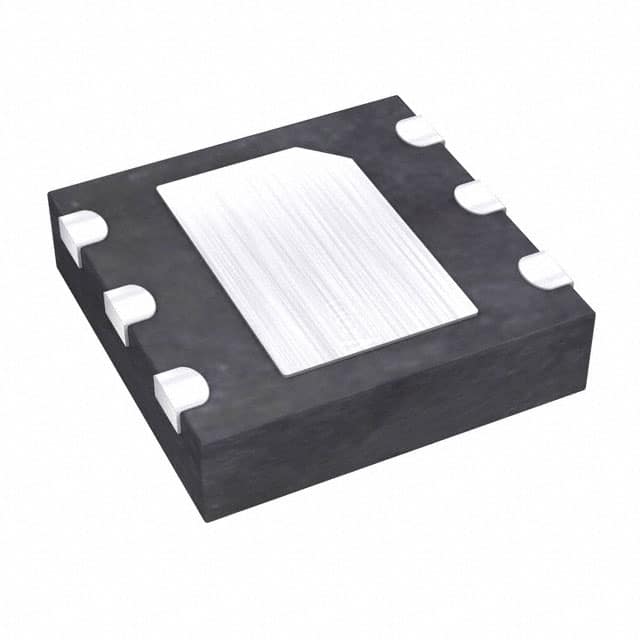
- Part No.:
- DS28EC20Q+T
- Manufacturer:
- Analog Devices Inc./Maxim Integrated
- Category:
- Memory
- Package:
- 6-WDFN Exposed Pad
- Datasheet:
-
 DS28EC20Q+T.pdf
- Description:
- IC EEPROM 20KBIT 1-WIRE 6TDFN
- Quantity:
- Payment:

- Shipping:

Inventory:2,239
Please send an inquiry. Send us your inquiry, and we will respond immediately.
Product details
Overview
The DS28EC20Q+T from Analog Devices is a 20480-bit, 1-Wire® EEPROM organized as 80 pages of 256 bits each, with an additional control page. It operates on a single-conductor bus, features a unique 64-bit ROM ID for multidrop addressing, and supports write protection and EPROM-emulation mode per 8-page block. It is used in ink/toner cartridge identification and medical sensor calibration.
For engineers reviewing the DS28EC20Q+T datasheet, DS28EC20Q+T pinout, DS28EC20Q+T application, or DS28EC20Q+T equivalent, this page delivers verified electrical specs, TO-92/TSOC/TDFN package mapping, 1-Wire timing compliance (15.4kbps/90kbps), 200k write/erase cycles at +25°C, and factory-programmed ROM identity - all critical for secure, low-pin-count memory integration in constrained embedded systems.
Technical Context
The DS28EC20Q+T implements a parasitic-power 1-Wire interface with strict protocol adherence to standard and overdrive speeds (tSLOT = 65µs / 11µs), requiring VPUP = 4V–5.25V for overdrive operation. Its memory architecture includes a 32-byte scratchpad for data verification prior to EEPROM commit and dedicated protection registers (0A00h–0A09h) enabling per-block write protection or OTP EPROM-emulation mode.
It integrates a CRC16 generator for ROM and data integrity, uses internal switchpoint hysteresis (VHY = 0.30–1.3V) and filtering for noise immunity, and draws programming current (IPROG = 0.9mA) directly from the I/O line during tPROG = 10ms EEPROM writes - all without external VCC.
Key Specifications
| Parameter | Value and Actual Design Meaning |
|---|---|
| Memory Size | 20480 bits (80 × 256-bit pages) + 1 control page - enables storage of calibration data, TEDS, or device IDs across multiple subsystems. |
| Interface | Single-conductor 1-Wire bus - eliminates need for dedicated power pins and simplifies wiring in distributed sensor networks. |
| Data Integrity | 256-bit scratchpad with read-back verification before EEPROM commit - prevents corrupted writes due to bus glitches or power loss. |
| Write Endurance | 200k write/erase cycles at +25°C - supports frequent recalibration or firmware patching in field-deployed medical sensors. |
| Data Retention | 40 years at +85°C - ensures long-term reliability in wireless base station environmental monitoring modules. |
| Operating Voltage | 4V–5.25V (full temp range); 3.135V–3.465V (0°C to +70°C) - compatible with both 5V legacy systems and 3.3V industrial logic rails. |
| ESD Protection | ±8kV contact / ±15kV air (IEC 1000-4-2 Level 4) - withstands handling and board-level ESD events in PCB identification applications. |
Pinout & Package
DS28EC20Q+T uses a 6-pin TDFN (Thin Dual Flat No-lead) package, RoHS-compliant and tape-and-reel supplied. Pin 1 is I/O, Pin 2 is GND, Pin 3 is N.C., Pins 4–6 are unused and internally disconnected.
| Pin/Terminal | Circuit Role | Design Meaning |
|---|---|---|
| I/O | 1-Wire bidirectional bus interface | Open-drain output with parasitic power harvesting - requires external pullup (300Ω–2.2kΩ); handles both data and power delivery. |
| GND | Ground reference | Return path for I/O sink current (max 20mA) and internal circuit bias - must be low-impedance to ensure noise-immune reset detection. |
| N.C. | No connection | Internally unconnected pad - no routing or soldering required; electrically isolated from die. |
Key Features
| Feature | Design Value |
|---|---|
| Per-block write protection | Eight 2048-bit blocks (8 pages each) can be permanently locked via 0A00h–0A09h registers - prevents unauthorized firmware or calibration overwrite in ink cartridges. |
| EPROM-emulation mode | Blocks configured with 0xAA retain only 1→0 bit transitions - enables one-time programmable behavior for security keys or manufacturing trim data. |
| Backward compatibility | Fully compatible with DS2433 command set except tPROG extended to 10ms - allows drop-in replacement in legacy 1-Wire systems with minimal firmware update. |
| Unique 64-bit ROM ID | Factory-programmed, unalterable serial number with CRC-8 - guarantees absolute device identity in multidrop networks with >1000 nodes. |
| Noise-immune interface | Hysteresis (VHY ≥ 0.30V) and input filtering - maintains reliable presence detection and data sampling in electrically noisy industrial enclosures. |
Applications
| Ink/Toner Cartridge Authentication | Medical Sensor Calibration Storage |
|---|---|
Use Scenario: Embedded in OEM printer cartridges to store ink level, model ID, and usage history. IC Role / Device Role / Timing Role: 1-Wire EEPROM storing encrypted TEDS-like metadata; accessed during cartridge insertion via host microcontroller. Use Value: Prevents third-party cartridge use via cryptographic challenge-response using factory ROM ID and write-protected calibration constants. |
Use Scenario: Mounted on disposable patient-sensor assemblies to retain factory calibration coefficients and lot traceability. IC Role / Device Role / Timing Role: Nonvolatile memory holding IEEE 1451.4 TEDS data; read at system boot to auto-configure ADC gain/offset. Use Value: Eliminates manual calibration steps and ensures accuracy drift compensation over 40-year data retention at body-temperature-equivalent ambient. |
| PCB Identification & Traceability | Wireless Base Station Module Tagging |
Use Scenario: Soldered onto high-reliability industrial PCBs to encode revision, build date, and test results. IC Role / Device Role / Timing Role: Permanent board ID storage; queried by test jig during functional testing via 1-Wire GPIO pin. Use Value: Enables full lifecycle traceability without adding connectors or UART interfaces - reduces BOM cost and board real estate. |
Use Scenario: Integrated into RF module subassemblies for remote radio head identification in 4G/5G infrastructure. IC Role / Device Role / Timing Role: Secure memory storing MAC address, firmware version, and thermal derating parameters; read during O-RAN initialization. Use Value: Supports zero-touch provisioning and field-upgrade validation using write-protected blocks that survive repeated hot-swap cycles. |
Equivalent & Alternatives
The following parts are listed as comparable options for similar 1-Wire EEPROM applications.
| Alternative Part | Technical Difference | Application Difference | Selection Advice |
|---|---|---|---|
| DS2433+T | 1024-bit capacity (4 pages), no EPROM-emulation mode, tPROG = 5ms, same 3-pin TO-92 option but lacks TDFN packaging. | Suitable only for basic ID storage; insufficient for multi-sensor TEDS or cartridge firmware tables. | Select DS2433+T only when memory demand is ≤1Kb and EPROM-mode security is unnecessary. |
| DS28EC20P+T | Identical memory, timing, and features but in 6-pin TSOC package (larger footprint, different thermal profile). | Better suited for through-hole assembly or higher-power dissipation scenarios where TDFN thermal limits are exceeded. | Choose DS28EC20P+T for legacy TSOC-compatible layouts or when board-level reflow constraints prohibit TDFN. |
Compared with DS2433+T, DS28EC20Q+T provides 20× more memory and OTP security modes essential for modern authentication; compared with DS28EC20P+T, it offers identical functionality in a smaller, surface-mount-optimized TDFN package - reducing PCB area by 42% and improving thermal response in dense RF modules.
Availability
DS28EC20Q+T is available at Aetrix Electronics and suitable for ink/toner cartridge authentication, medical sensor calibration storage, and PCB identification requiring stable component supply across automotive-grade temperature ranges (-40°C to +85°C).
Supply support for DS28EC20Q+T includes scheduled delivery planning, volume procurement assistance, BOM continuity management, traceable sourcing, and lifecycle availability coordination for OEM customers, industrial embedded developers, connected-device designers, and electronics production programs.
Manufacturer
Analog Devices, Inc. is a global semiconductor leader specializing in high-performance analog, mixed-signal, and digital signal processing technologies for precision measurement and connectivity.
The DS28EC20Q+T belongs to Analog Devices' secure 1-Wire memory product line, designed specifically for tamper-resistant device identification, calibration data storage, and lightweight authentication in resource-constrained edge nodes.
FAQ
What is the operating voltage range for DS28EC20Q+T?
The DS28EC20Q+T operates from 4V to 5.25V across its full -40°C to +85°C temperature range. At reduced temperatures (0°C to +70°C), it supports 3.135V to 3.465V operation. This dual-voltage capability allows seamless integration into both legacy 5V systems and modern 3.3V industrial controllers without level-shifting circuitry.
Does DS28EC20Q+T require an external power supply?
No, DS28EC20Q+T uses parasitic power harvested from the 1-Wire I/O line - no VCC pin is needed. During EEPROM programming, it draws up to 0.9mA from the I/O line, requiring a robust pullup resistor (300Ω–2.2kΩ) and sufficient bus capacitance management to maintain voltage above 4V throughout the 10ms tPROG interval.
How does DS28EC20Q+T implement write protection?
DS28EC20Q+T enables per-block (8-page) write protection via dedicated bytes at addresses 0A00h–0A09h in its register page. Writing 0x55 to any of these locations locks the corresponding 2048-bit block against modification while still permitting scratchpad copy operations - ideal for preserving calibration constants in medical sensors.
Is DS28EC20Q+T pin-compatible with other DS28EC20 variants?
DS28EC20Q+T uses a 6-pin TDFN package, differing physically from the 3-pin TO-92 (DS28EC20+T) and 6-pin TSOC (DS28EC20P+T) variants. While functionally identical, PCB layout must be redesigned for the TDFN footprint - no mechanical or solder-reflow compatibility exists between packages.
What is the data retention specification for DS28EC20Q+T?
DS28EC20Q+T guarantees 40 years of data retention at +85°C - the worst-case condition per specification. This is validated through accelerated life testing and applies to all 80 memory pages when operated within rated voltage and temperature limits, making it suitable for infrastructure equipment with multi-decade service lifespans.
DS28EC20Q+T Specifications
- Product attributes
- Attribute value
- Manufacturer:
- Analog Devices Inc./Maxim Integrated
- Series:
- -
- Package/Case:
- 6-WDFN Exposed Pad
- Packaging:
- Tape & Reel (TR)
- Product Status:
- Active
- Programmable:
- Not Verified
- Memory Type:
- Non-Volatile
- Memory Format:
- EEPROM
- Technology:
- EEPROM
- Memory Size:
- 20Kbit
- Memory Organization:
- 256 x 80
- Memory Interface:
- 1-Wire®
- Clock Frequency:
- -
- Write Cycle Time - Word, Page:
- -
- Access Time:
- -
- Voltage - Supply:
- -
- Operating Temperature:
- -40°C ~ 85°C (TA)
- Grade:
- -
- Qualification:
- -
- Mounting Type:
- Surface Mount
- Supplier Device Package:
- 6-TDFN (3x3)
DS28EC20Q+T FAQ
1.How can I place an order for DS28EC20Q+T through Aetrix?
Please submit a Request for Quotation (RFQ) for DS28EC20Q+T on Aetrix. Our sales agent will provide a competitive quotation and guide you through the order confirmation once you accept the terms.
2.Are the price and stock information for DS28EC20Q+T reliable?
The price and inventory of DS28EC20Q+T are updated periodically and may fluctuate due to market conditions. Stock and pricing data are typically refreshed every 24 hours. Quotation validity for DS28EC20Q+T is usually 5 days.
3.What payment methods are accepted for DS28EC20Q+T?
We accept Wire Transfer, PayPal, Credit Card, Western Union, MoneyGram, and Escrow for DS28EC20Q+T transactions.
Note: Certain payment methods may incur a processing fee.
4.How is shipping managed for DS28EC20Q+T?
DS28EC20Q+T orders can be shipped via leading logistics carriers, including DHL, UPS, FedEx, TNT, or Registered Mail.
Once your DS28EC20Q+T order is processed, you will receive an email with the shipment details and tracking number.
Note: Tracking information may take up to 24 hours to appear. Express delivery typically takes 3–5 business days.
5.How can I obtain technical support or documentation for DS28EC20Q+T?
For technical support, including DS28EC20Q+T datasheets, pinout diagrams, or application guidance, please contact our engineering support team. They can provide detailed documentation and assistance for your DS28EC20Q+T requirements.
6.How does Aetrix verify that DS28EC20Q+T is sourced from the original manufacturer or authorized distributors?
All DS28EC20Q+T products on Aetrix are procured from qualified distributors and authorized channels. Our dedicated quality assurance team conducts strict verification, including traceability checks and, if necessary, third-party testing. This ensures that DS28EC20Q+T meets industry standards.
7.What is the process for return or replacement of DS28EC20Q+T?
All DS28EC20Q+T units undergo pre-shipment inspection (PSI). If there is an issue with DS28EC20Q+T, returns or replacements are accepted under the following conditions:
1.Quantity discrepancies, incorrect items, or visible external defects (such as breakage or corrosion), acknowledged by Aetrix.
2.The issue is reported within 90 days of delivery.
3.The DS28EC20Q+T part is unused and in its original packaging.
Return procedure for DS28EC20Q+T:
1.Submit a request within 90 days.
2.Obtain a Return Material Authorization (RMA) from Aetrix.
DS28EC20Q+T Tags

-
M24C02-WMN6TP
STMicroelectronics
-
AT24C02C-XHM-T
Microchip Technology

-
AT21CS01-STUM10-T
Microchip Technology

-
AT24C02C-SSHM-T
Microchip Technology

-
24LC01BT-I/OT
Microchip Technology
-
M24C02-FMC6TG
STMicroelectronics
-
AT24CS02-SSHM-T
Microchip Technology

-
93LC46BT-I/OT
Microchip Technology
-
AT24C04C-SSHM-T
Microchip Technology

-
24LC01BT-I/SN
Microchip Technology
-
24AA02UIDT-I/OT
Microchip Technology
-
AT24C08C-STUM-T
Microchip Technology
Tech Hub

A practical engineering guide to 3.3V and 5V logic compatibility, input thresholds, resistor dividers, translator ICs, MOSFET level shifting, I2C pull-ups, timing limits and power-sequencing risks.

The 74HC595 uses push-pull logic outputs, while the TPIC6B595 uses 50 V open-drain DMOS sinks for higher-power loads. This guide compares timing, current limits, 3.3 V interfacing, load wiring, thermal…

The 74HC595 converts serial data into eight stable parallel outputs. This guide covers pin functions, shift and storage timing, OE and MR behavior, drive-current limits, cascading, voltage compatibilit…

A technical comparison of level-sensitive latches and edge-triggered flip-flops, covering timing windows, setup and hold limits, master–slave operation, time borrowing, race-through, HDL inference and…

A D latch stores one bit while Enable controls when data can pass. This reference covers gate-level operation, truth tables, transparency, setup and hold timing, LE versus OE, common ICs and practical …

An SR latch stores one bit through cross-coupled feedback. This engineering reference covers NOR and NAND implementations, truth tables, forbidden-state recovery, gated operation, switch debouncing, fa…

Latch circuits retain one bit through feedback. This technical reference covers SR and D latches, truth tables, transparency, timing limits, latch-versus-flip-flop behavior, applications and common log…

An engineering guide to LED driver operation, constant-current and constant-voltage outputs, linear and switching topologies, dimming, IC selection, calculations, replacement compatibility, and fault c…

Operational amplifier guide covering op amp basics, feedback, ideal vs real op amps, common configurations, buffer circuits, offset, bias current, gain-bandwidth, slew rate, rail-to-rail limits and sel…

Jumper cables guide covering safe connection order, red and black clamp placement, final ground connection, cable gauge, length, clamp quality, copper vs CCA cables, jump starter comparison and battery…


