
 My Inquiry
 My Account


Analog Devices Inc./Maxim Integrated DS33W41+
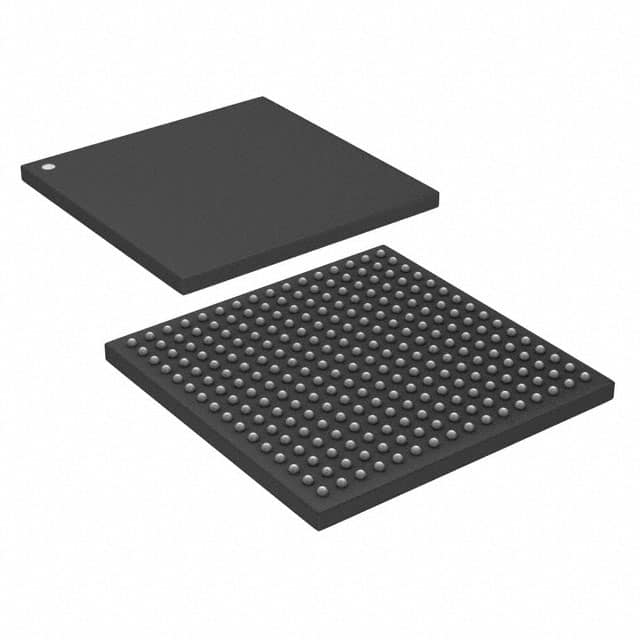
- Part No.:
- DS33W41+
- Manufacturer:
- Analog Devices Inc./Maxim Integrated
- Category:
- Specialized
- Package:
- 256-LBGA, CSBGA
- Datasheet:
-
 DS33W41+.pdf
- Description:
- IC INTFACE SPECIALIZED 256CSBGA
- Quantity:
- Payment:

- Shipping:

Inventory:3,717
Please send an inquiry. Send us your inquiry, and we will respond immediately.
Product details
Overview
DS33W41+ from Maxim Integrated is a single-port Ethernet-over-PDH mapping device with four TDM serial ports and one integrated voice port, supporting GFP-F/HDLC/X.86 encapsulation, VCAT/LCAS link aggregation, and IEEE 802.3 10/100/1000Mbps MAC interface (GMII/MII/RMII). It enables Ethernet delivery over T1/E1/J1, T3/E3, and xDSL infrastructure in carrier-grade access networks.
For engineers reviewing the DS33W41+ datasheet, DS33W41+ pinout, DS33W41+ application, or DS33W41+ equivalent, key selection criteria include its 4× TDM + 1× voice port configuration, 256-ball CSBGA package, support for differential delay up to 200ms, external DDR SDRAM buffering, and QoS features including VLAN, Q-in-Q, 802.1p, and DSCP.
Technical Context
The DS33W41+ implements store-and-forward frame processing with wire-speed bridging and traffic conditioning. Its dual-interface processor bus supports parallel 8-bit and SPI microcontroller connections, while the Ethernet MAC layer provides autonegotiation, flow control, and programmable classification/policing via CIR/CBS.
VCAT/LCAS functionality enables dynamic inverse multiplexing across up to 16 TDM links with LCAS hitless bandwidth adjustment. The voice port operates in μ-law/A-law PCM mode and interfaces directly with external codecs-distinctive to the W-series variants (DS33W41+/DS33W11+) within the family.
Key Specifications
| Parameter | Value and Actual Design Meaning |
|---|---|
| Ethernet Ports | 1 × 10/100/1000Mbps IEEE 802.3 MAC with GMII/MII/RMII support and autonegotiation |
| TDM Ports | 4 × synchronous serial ports supporting T1/E1/J1, T3/E3, V.35, or optical PDH framing |
| Voice Port | 1 × PCM voice interface compatible with μ-law/A-law codecs for integrated voice+data service |
| Encapsulation | GFP-F, HDLC, cHDLC, and X.86 (LAPS) for standards-compliant EoPDH transport |
| Link Aggregation | VCAT/LCAS support for up to 16 aggregated links with 200ms differential delay tolerance |
| Memory Interface | External 256Mb, 125MHz DDR SDRAM controller for frame buffering and traffic shaping |
| Power Supplies | 1.8V, 2.5V, and 3.3V independent supply domains for I/O, core, and analog blocks |
| Operating Temp | -40°C to +85°C industrial temperature range, RoHS-compliant 256-ball CSBGA package |
Pinout & Package
The DS33W41+ is housed in a 17mm × 17mm, 256-ball fine-pitch CSP (CSBGA) package with 0.8mm ball pitch, designed for high-density carrier-grade line card layouts and thermal reliability under continuous operation.
| Pin/Terminal | Circuit Role | Design Meaning |
|---|---|---|
| GMII_TXD[7:0] | Ethernet transmit data bus | 8-bit parallel output for GMII mode; used with GMII_TX_EN/GMII_TX_ER for full-speed 1000Mbps transmission |
| MII_RXD[3:0] | Ethernet receive data bus | 4-bit MII interface for 10/100Mbps operation; requires external PHY for physical layer signaling |
| TDM_TX[3:0] | TDM serial transmit outputs | Four independent synchronous serial outputs supporting T1/E1 line rates (1.544/2.048Mbps) or higher |
| VPCM_IN/VPCM_OUT | Voice PCM data I/O | Bidirectional 8-bit PCM interface synchronized to VCLK; supports μ-law/A-law companding per ITU-T G.711 |
| DDR_DQ[15:0] | DDR SDRAM data bus | 16-bit bidirectional data path for external 256Mb DDR memory used in frame buffering and QoS scheduling |
| JTAG_TCK/TMS/TDI/TDO | IEEE 1149.1 boundary scan | Supports production test, debug, and in-system programming without requiring dedicated debug hardware |
Key Features
| Feature | Design Value |
|---|---|
| Programmable Encapsulation Engine | Selects GFP-F, HDLC, cHDLC, or X.86 per-port to interoperate with diverse PDH network elements and service providers |
| VCAT/LCAS Link Management | Enables dynamic bandwidth scaling across multiple TDM links without service interruption-critical for SLA-governed eLINE/eLAN services |
| QoS Policy Enforcement | Hardware-accelerated policing (CIR/CBS), priority queuing, and VLAN tagging (802.1q, Q-in-Q, 802.1p, DSCP) applied at line rate |
| OAM Frame Handling | Dedicated OAM extraction/insertion via μP interface allows external processor to manage Ethernet service health and performance SLAs |
| Voice + Data Integration | On-chip voice port eliminates need for separate codec interface logic, reducing BOM count and PCB area in multi-service access gateways |
Applications
| Bonded Transparent LAN Service | LAN Extension Over T1/E1 |
|---|---|
Use Scenario: Carrier delivers point-to-point Layer 2 Ethernet connectivity between enterprise sites using bonded T1/E1 circuits. IC Role / Device Role / Timing Role: DS33W41+ maps Ethernet frames into GFP-F/HDLC containers and aggregates them across 4 TDM links with VCAT/LCAS. Use Value: Achieves up to 6.176Mbps (4×T1) or 8.192Mbps (4×E1) aggregate bandwidth with sub-200ms differential delay compensation. | Use Scenario: Remote office extends corporate LAN across legacy T1 infrastructure without deploying fiber or managed switches. IC Role / Device Role / Timing Role: DS33W41+ performs store-and-forward bridging and traffic shaping between GMII-connected switch and T1 framer. Use Value: Enables wire-speed forwarding with QoS enforcement (VLAN, DSCP) and OAM visibility for SLA monitoring. |
| Ethernet Delivery Over HDSL2/4 | Integrated Voice + Data Access Gateway |
Use Scenario: DSLAM vendor integrates EoPDH capability into HDSL2/4-based last-mile access cards for business broadband. IC Role / Device Role / Timing Role: DS33W41+ encapsulates Ethernet traffic for transport over HDSL2/4 physical layer using X.86 framing. Use Value: Supports standardized Ethernet over copper with interoperability against ITU-T Y.1302 and G.991.2 specifications. | Use Scenario: Multi-service access gateway delivers VoIP and data over same T1/E1 line to SMB customers. IC Role / Device Role / Timing Role: DS33W41+ terminates Ethernet LAN, maps it to TDM, and concurrently handles PCM voice on dedicated VPCM pins. Use Value: Eliminates discrete voice codec IC and reduces system latency by integrating voice/data path timing in single device. |
Equivalent & Alternatives
The following parts are listed as comparable options for similar Ethernet-over-PDH mapping applications.
| Alternative Part | Technical Difference | Application Difference | Selection Advice |
|---|---|---|---|
| DS33X41+ | No voice port; identical TDM (4×) and Ethernet (1×) count, same CSBGA package and pinout except voice-related pins repurposed as GPIO | Suitable only for data-only EoPDH deployments; cannot support integrated voice services | Select DS33X41+ when voice integration is unnecessary and cost reduction is prioritized |
| DS33W11+ | Single TDM port instead of four; otherwise identical voice port, encapsulation, and QoS capabilities | Targeted at low-port-count edge devices (e.g., single-line DSLAMs or residential gateways) | Choose DS33W11+ for compact designs requiring only one T1/E1 interface plus voice |
Compared with DS33X41+ and DS33W11+, the DS33W41+ uniquely balances 4× TDM capacity with integrated voice-making it optimal for mid-tier business access gateways where both bonded data and circuit-switched voice must coexist on shared TDM infrastructure.
Availability
DS33W41+ is available at Aetrix Electronics and suitable for bonded LAN service delivery, T1/E1-based LAN extension, and integrated voice+data access gateway applications requiring stable component supply across extended product lifecycles.
Supply support for DS33W41+ includes scheduled delivery planning, volume procurement assistance, BOM continuity management, traceable sourcing, and lifecycle availability coordination for OEM customers, industrial embedded developers, connected-device designers, and electronics production programs.
Manufacturer
Maxim Integrated (now part of Analog Devices) is a U.S.-based semiconductor company specializing in high-performance analog, mixed-signal, and power management ICs for communications, industrial, and automotive markets.
The DS33W41+ belongs to Maxim's Ethernet-over-PDH mapping product line, engineered specifically for carrier-class TDM-to-Ethernet transport in metro access and business service delivery platforms.
FAQ
What is the primary function of the DS33W41+ in an Ethernet-over-PDH system?
The DS33W41+ serves as a protocol mapper that converts IEEE 802.3 Ethernet frames into GFP-F, HDLC, cHDLC, or X.86 (LAPS) payloads for transport over synchronous TDM networks like T1/E1 or T3/E3. It also integrates a voice port for concurrent PCM voice handling, enabling combined data and voice service delivery on shared infrastructure. This makes DS33W41+ essential for eLINE and eLAN service provisioning in carrier access networks.
Does the DS33W41+ require an external PHY for Ethernet connectivity?
Yes, the DS33W41+ includes a MAC layer only (GMII/MII/RMII) and does not integrate a physical layer transceiver. An external 10/100/1000BASE-T PHY must be connected to the GMII/MII/RMII interface to drive copper or fiber media. The DS33W41+ manages frame encapsulation, QoS, bridging, and TDM mapping-but relies on external PHYs for signal-level compliance with IEEE 802.3 standards.
How does the DS33W41+ handle voice traffic alongside Ethernet data?
The DS33W41+ includes a dedicated 8-bit PCM voice port (VPCM_IN/VPCM_OUT) operating at standard ITU-T G.711 μ-law or A-law rates, synchronized to VCLK. It interfaces directly with external codecs-bypassing the Ethernet MAC and TDM encapsulation paths-allowing simultaneous real-time voice transport and packetized data over the same TDM infrastructure. This dual-path architecture is exclusive to the W-series (DS33W41+/DS33W11+) in the family.
What memory interface does the DS33W41+ support, and why is it required?
The DS33W41+ integrates a DDR SDRAM controller supporting 256Mb, 125MHz external DDR memory. This memory is mandatory for frame buffering, traffic shaping (CIR/CBS policing), and QoS queue management. Without it, the device cannot perform store-and-forward operations, maintain latency-sensitive voice buffers, or enforce bandwidth guarantees-rendering DS33W41+ nonfunctional in production systems.
Is the DS33W41+ pin-compatible with other devices in the DS33X/W series?
The DS33W41+ shares the same 256-ball CSBGA package and mechanical footprint with DS33X162+, DS33X161+, DS33X82+, DS33X81+, DS33X42+, and DS33X41+, but is not fully pin-compatible due to dedicated voice port signals (VPCM_IN/VPCM_OUT, VCLK, VFS) absent in X-series variants. These pins are NC or repurposed in non-W parts, requiring board-level redesign for substitution-even though package dimensions and most I/Os align.
DS33W41+ Specifications
- Product attributes
- Attribute value
- Manufacturer:
- Analog Devices Inc./Maxim Integrated
- Series:
- -
- Package/Case:
- 256-LBGA, CSBGA
- Packaging:
- Bulk
- Product Status:
- Obsolete
- Applications:
- Data Transport
- Interface:
- Parallel/Serial
- Voltage - Supply:
- 1.8V, 2.5V, 3.3V
- Supplier Device Package:
- 256-CSBGA (17x17)
- Grade:
- -
- Qualification:
- -
- Mounting Type:
- Surface Mount
DS33W41+ FAQ
1.How can I place an order for DS33W41+ through Aetrix?
Please submit a Request for Quotation (RFQ) for DS33W41+ on Aetrix. Our sales agent will provide a competitive quotation and guide you through the order confirmation once you accept the terms.
2.Are the price and stock information for DS33W41+ reliable?
The price and inventory of DS33W41+ are updated periodically and may fluctuate due to market conditions. Stock and pricing data are typically refreshed every 24 hours. Quotation validity for DS33W41+ is usually 5 days.
3.What payment methods are accepted for DS33W41+?
We accept Wire Transfer, PayPal, Credit Card, Western Union, MoneyGram, and Escrow for DS33W41+ transactions.
Note: Certain payment methods may incur a processing fee.
4.How is shipping managed for DS33W41+?
DS33W41+ orders can be shipped via leading logistics carriers, including DHL, UPS, FedEx, TNT, or Registered Mail.
Once your DS33W41+ order is processed, you will receive an email with the shipment details and tracking number.
Note: Tracking information may take up to 24 hours to appear. Express delivery typically takes 3–5 business days.
5.How can I obtain technical support or documentation for DS33W41+?
For technical support, including DS33W41+ datasheets, pinout diagrams, or application guidance, please contact our engineering support team. They can provide detailed documentation and assistance for your DS33W41+ requirements.
6.How does Aetrix verify that DS33W41+ is sourced from the original manufacturer or authorized distributors?
All DS33W41+ products on Aetrix are procured from qualified distributors and authorized channels. Our dedicated quality assurance team conducts strict verification, including traceability checks and, if necessary, third-party testing. This ensures that DS33W41+ meets industry standards.
7.What is the process for return or replacement of DS33W41+?
All DS33W41+ units undergo pre-shipment inspection (PSI). If there is an issue with DS33W41+, returns or replacements are accepted under the following conditions:
1.Quantity discrepancies, incorrect items, or visible external defects (such as breakage or corrosion), acknowledged by Aetrix.
2.The issue is reported within 90 days of delivery.
3.The DS33W41+ part is unused and in its original packaging.
Return procedure for DS33W41+:
1.Submit a request within 90 days.
2.Obtain a Return Material Authorization (RMA) from Aetrix.
DS33W41+ Tags
-
NVT4857UKAZ
NXP Semiconductors
-
TCA8418RTWR
Texas Instruments
-
PCA9546APWR
Texas Instruments
-
MD0100N8-G
Microchip Technology
-
PCA9548APW,118
NXP Semiconductors
-
PCA9540BDP,118
NXP Semiconductors
-
PCA9548APWR
Texas Instruments
-
PCA9546APW,118
NXP Semiconductors
-
PTN3360DBS,518
NXP Semiconductors
-
PCA9546ABS,118
NXP Semiconductors
-
PCA9518PWR
Texas Instruments
-
PCA9545APW,118
NXP Semiconductors
Tech Hub

A practical engineering guide to 3.3V and 5V logic compatibility, input thresholds, resistor dividers, translator ICs, MOSFET level shifting, I2C pull-ups, timing limits and power-sequencing risks.

The 74HC595 uses push-pull logic outputs, while the TPIC6B595 uses 50 V open-drain DMOS sinks for higher-power loads. This guide compares timing, current limits, 3.3 V interfacing, load wiring, thermal…

The 74HC595 converts serial data into eight stable parallel outputs. This guide covers pin functions, shift and storage timing, OE and MR behavior, drive-current limits, cascading, voltage compatibilit…

A technical comparison of level-sensitive latches and edge-triggered flip-flops, covering timing windows, setup and hold limits, master–slave operation, time borrowing, race-through, HDL inference and…

A D latch stores one bit while Enable controls when data can pass. This reference covers gate-level operation, truth tables, transparency, setup and hold timing, LE versus OE, common ICs and practical …

An SR latch stores one bit through cross-coupled feedback. This engineering reference covers NOR and NAND implementations, truth tables, forbidden-state recovery, gated operation, switch debouncing, fa…

Latch circuits retain one bit through feedback. This technical reference covers SR and D latches, truth tables, transparency, timing limits, latch-versus-flip-flop behavior, applications and common log…

An engineering guide to LED driver operation, constant-current and constant-voltage outputs, linear and switching topologies, dimming, IC selection, calculations, replacement compatibility, and fault c…

Operational amplifier guide covering op amp basics, feedback, ideal vs real op amps, common configurations, buffer circuits, offset, bias current, gain-bandwidth, slew rate, rail-to-rail limits and sel…

Jumper cables guide covering safe connection order, red and black clamp placement, final ground connection, cable gauge, length, clamp quality, copper vs CCA cables, jump starter comparison and battery…


