
 My Inquiry
 My Account


Analog Devices Inc./Maxim Integrated DS33Z44
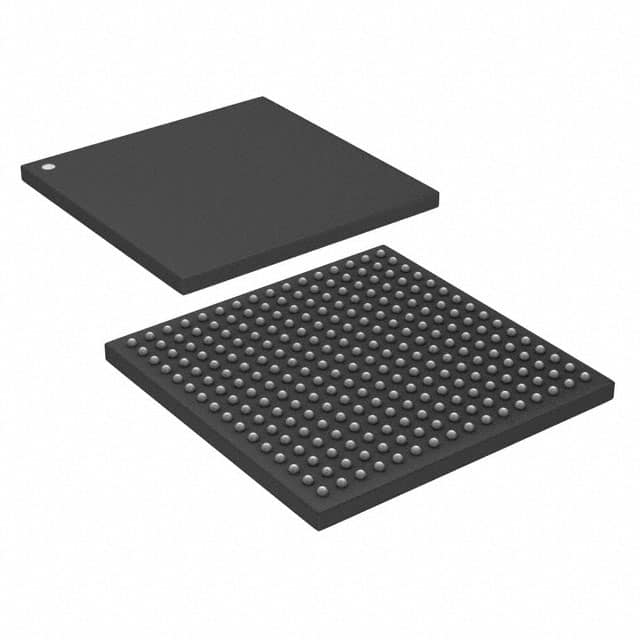
- Part No.:
- DS33Z44
- Manufacturer:
- Analog Devices Inc./Maxim Integrated
- Category:
- Specialized
- Package:
- 256-LBGA, CSBGA
- Datasheet:
-
 DS33Z44.pdf
- Description:
- IC INTFACE SPECIALIZED 256CSBGA
- Quantity:
- Payment:

- Shipping:

Inventory:3,194
Please send an inquiry. Send us your inquiry, and we will respond immediately.
Product details
Overview
DS33Z44 from Maxim Integrated is a quad Ethernet mapper IC that extends four 10/100BASE-T LAN segments over synchronous TDM/PDH networks via HDLC or X.86 (LAPS) encapsulation. It supports up to 52Mbps per serial port, provides CIR bandwidth control in 512kbps increments, and operates with 1.8V core voltage and 3.3V-tolerant I/O. It is used in transparent LAN service delivery across T1/E1/J1, T3/E3, and G.SHDSL infrastructure.
For engineers reviewing the DS33Z44 datasheet, DS33Z44 pinout, DS33Z44 application, or DS33Z44 equivalent, key selection criteria include its four independent MII/RMII Ethernet MAC interfaces, 256-ball CSBGA package, fractional CIR allocation capability, store-and-forward packet handling at wire speed, and support for stand-alone hardware-mode operation without host processor.
Technical Context
The DS33Z44 implements a full-duplex store-and-forward architecture with dedicated transmit/receive timing per serial port, enabling simultaneous bidirectional transport over xDSL, SONET/SDH tributaries, or V.35/optical links. Its HDLC/X.86 mapper handles frame alignment, programmable FCS, and interframe fill, while integrated CIR controllers enforce bandwidth limits per connection in precise 512kbps steps.
It integrates four IEEE 802.3-compliant 10/100 MACs with automatic flow control, external 100MHz SDRAM buffering, and dual interface options: parallel microprocessor bus (Intel/Motorola modes) and SPI master-only configuration. JTAG (IEEE 1149.1) enables boundary-scan testing and debug access.
Key Specifications
| Parameter | Value and Actual Design Meaning |
|---|---|
| Serial Port Count | Four independent 52Mbps synchronous TDM ports for WAN interconnect |
| Ethernet Interfaces | Four 10/100BASE-T MACs supporting both MII and RMII physical layer interfaces |
| CIR Granularity | Bandwidth allocation in exact 512kbps increments per channel for QoS-aware traffic shaping |
| Core Supply Voltage | 1.8V operation reduces power consumption while maintaining signal integrity |
| I/O Voltage Tolerance | 3.3V-tolerant digital I/O simplifies interfacing with legacy 3.3V peripherals and PHYs |
| Package Type | 256-ball CSBGA (17mm × 17mm) with fine-pitch ball grid for high-density telecom PCB layouts |
| Operating Temperature | -40°C to +85°C industrial range ensures reliability in carrier-grade network equipment |
Pinout & Package
DS33Z44 is housed in a 256-ball Chip-Scale Ball Grid Array (CSBGA) package measuring 17mm × 17mm with 0.8mm ball pitch. Pin functions are defined across four quadrants supporting Ethernet MAC, serial WAN, memory, configuration, clock, and test interfaces.
| Pin/Terminal | Circuit Role | Design Meaning |
|---|---|---|
| ETH0_TXD[3:0] | Ethernet MAC 0 Transmit Data | 4-bit MII transmit data path for first 10/100 Ethernet segment |
| WAN0_TXCLK | Serial Port 0 Transmit Clock | Source-synchronous clock for 52Mbps WAN output on port 0 |
| SDRAM_DQ[15:0] | SDRAM Data Bus | 16-bit bidirectional data interface to external 100MHz SDRAM buffer |
| MODEC[1:0] | Microprocessor Bus Mode Select | Configures parallel interface as Intel or Motorola bus timing protocol |
| TCK/TMS/TDI/TDO | JTAG Test Access Port | IEEE 1149.1 boundary scan for production test and debug visibility |
Key Features
| Feature | Design Value |
|---|---|
| Quad MII/RMII MAC Interface | Enables concurrent connection of four independent 10/100 Ethernet PHYs with auto-negotiation and flow control |
| HDLC/X.86 Encapsulation Engine | Performs standards-compliant framing, CRC-16/32 generation, and interframe fill insertion for TDM transport |
| Programmable BERT | On-chip Bit Error Rate Tester validates serial link integrity without external test equipment |
| Hardware-Only Operation Mode | Supports autonomous boot from SPI EEPROM-eliminates need for external host processor in fixed-function deployments |
| External SDRAM Buffering | 16MB capacity accommodates bursty Ethernet traffic and enables jitter-free store-and-forward at line rate |
Applications
| Transparent LAN Extension | Ethernet-over-T1/E1 Delivery |
|---|---|
|
Use Scenario: Extending enterprise LANs across metro-access networks using existing T1/E1 infrastructure. IC Role / Device Role / Timing Role: DS33Z44 acts as a protocol-transparent Ethernet-to-TDM mapper, performing HDLC encapsulation and CIR-based bandwidth enforcement. Use Value: Enables cost-effective reuse of legacy copper TDM lines for Layer 2 Ethernet services without requiring fiber upgrades. |
Use Scenario: Delivering managed Ethernet services to SMB customers over bonded T1 or E1 circuits. IC Role / Device Role / Timing Role: DS33Z44 maps each customer's Ethernet traffic onto a dedicated T1/E1 timeslot with guaranteed bandwidth via CIR controllers. Use Value: Provides deterministic latency and SLA-compliant throughput by enforcing 512kbps-granularity bandwidth allocation per subscriber. |
| G.SHDSL Backhaul | SONET/SDH Tributary Mapping |
|
Use Scenario: Aggregating multiple Ethernet LANs into a single G.SHDSL copper link for last-mile backhaul to central office. IC Role / Device Role / Timing Role: DS33Z44 serves as a multi-port Ethernet mapper with synchronized transmit/receive clocks for stable DSL PHY interfacing. Use Value: Achieves full-duplex 52Mbps operation over G.SHDSL while maintaining MAC frame integrity through HDLC framing. |
Use Scenario: Mapping Ethernet traffic into OC-1/EC-1 or SONET/SDH STS-1/VC-3 tributaries for optical metro networks. IC Role / Device Role / Timing Role: DS33Z44 performs X.86 (LAPS) encapsulation and byte-aligned synchronous transmission aligned to SONET line clock. Use Value: Ensures standards-compliant mapping into SDH virtual containers with precise timing recovery and payload transparency. |
Equivalent & Alternatives
The following parts are listed as comparable options for similar Ethernet-to-TDM mapping applications.
| Alternative Part | Technical Difference | Application Difference | Selection Advice |
|---|---|---|---|
| DS33Z11 | Single-port version with identical HDLC/X.86 engine and CIR granularity, but only one 52Mbps serial interface and one 10/100 MAC | Suitable for point-to-point Ethernet extension rather than multi-tenant aggregation | Select DS33Z11 when system requires only one WAN link and lower pin count; not scalable to quad-port use cases |
| DS33X11 | Legacy 10/100 Ethernet mapper with T1/E1 focus only; lacks G.SHDSL, SONET/SDH, and X.86 support; no SDRAM interface | Limited to basic T1/E1 framing without LAPS or advanced diagnostics like BERT | Choose DS33X11 only for brownfield TDM-only systems where feature set reduction is acceptable and upgrade path is constrained |
Compared with DS33Z11 and DS33X11, the DS33Z44 uniquely delivers quad-port scalability, X.86/LAPS compliance, integrated BERT, and external SDRAM buffering-making it the only option for high-density, multi-service, standards-compliant Ethernet-over-TDM deployments.
Availability
DS33Z44 is available at Aetrix Electronics and suitable for transparent LAN service, Ethernet-over-T1/E1/J1, and G.SHDSL backhaul applications requiring stable component supply and long-term lifecycle support.
Supply support for DS33Z44 includes scheduled delivery planning, volume procurement assistance, BOM continuity management, traceable sourcing, and lifecycle availability coordination for OEM customers, industrial embedded developers, connected-device designers, and electronics production programs.
Manufacturer
Maxim Integrated (now part of Analog Devices) designs high-performance analog and mixed-signal ICs for communications, computing, and industrial applications.
The DS33Z44 belongs to Maxim's Telecom Line Interface and Ethernet Mapping product line, engineered specifically for carrier-class Ethernet extension over legacy and next-generation TDM infrastructure.
FAQ
What is the primary function of the DS33Z44?
The DS33Z44 is a quad Ethernet mapper IC that encapsulates IEEE 802.3 MAC frames into HDLC or X.86 (LAPS) format for transport over four synchronous TDM serial links. It enables transparent LAN extension across PDH, xDSL, and SONET/SDH networks while enforcing bandwidth via CIR controllers. The DS33Z44 supports full wire-speed store-and-forward operation and integrates four 10/100 MACs with MII/RMII interfaces.
Does the DS33Z44 support both HDLC and X.86 (LAPS) encapsulation?
Yes, the DS33Z44 natively supports both HDLC and X.86 (LAPS) encapsulation modes per serial port. Each port can be independently configured for either protocol, with programmable FCS type (CRC-16 or CRC-32), interframe fill, and frame alignment. This dual-mode capability allows the DS33Z44 to interoperate with diverse TDM infrastructure including legacy HDLC networks and modern LAPS-based SONET/SDH systems.
What is the minimum bandwidth increment supported by the DS33Z44's CIR controllers?
The DS33Z44's Committed Information Rate (CIR) controllers allocate bandwidth in fixed 512kbps increments per connection. This granularity enables precise QoS provisioning for individual Ethernet flows mapped to TDM channels. The DS33Z44 applies CIR enforcement in the WAN transmit path, ensuring deterministic throughput without oversubscription-critical for SLA-backed Ethernet services delivered over T1/E1 or G.SHDSL.
Can the DS33Z44 operate without an external host processor?
Yes, the DS33Z44 supports hardware-only operation mode using SPI-configured boot from external EEPROM. In this mode, all initialization, port configuration, and CIR settings are loaded automatically at power-up-no external μC or firmware is required. This makes the DS33Z44 ideal for fixed-function, low-maintenance network edge devices where the DS33Z44 manages Ethernet-to-TDM mapping autonomously.
What package type and thermal specifications does the DS33Z44 use?
The DS33Z44 is packaged in a 256-ball CSBGA (17mm × 17mm) with 0.8mm ball pitch, optimized for high-density telecom PCBs. It operates across the industrial temperature range of -40°C to +85°C and features thermal characteristics validated for continuous operation under full load in enclosed carrier-grade enclosures. The DS33Z44's 1.8V core supply further minimizes thermal dissipation compared to 3.3V alternatives.
DS33Z44 Specifications
- Product attributes
- Attribute value
- Manufacturer:
- Analog Devices Inc./Maxim Integrated
- Series:
- -
- Package/Case:
- 256-LBGA, CSBGA
- Packaging:
- Tray
- Product Status:
- Obsolete
- Applications:
- Data Transport
- Interface:
- Serial
- Voltage - Supply:
- 1.8V, 2.5V, 3.3V
- Supplier Device Package:
- 256-CSBGA (17x17)
- Grade:
- -
- Qualification:
- -
- Mounting Type:
- Surface Mount
DS33Z44 FAQ
1.How can I place an order for DS33Z44 through Aetrix?
Please submit a Request for Quotation (RFQ) for DS33Z44 on Aetrix. Our sales agent will provide a competitive quotation and guide you through the order confirmation once you accept the terms.
2.Are the price and stock information for DS33Z44 reliable?
The price and inventory of DS33Z44 are updated periodically and may fluctuate due to market conditions. Stock and pricing data are typically refreshed every 24 hours. Quotation validity for DS33Z44 is usually 5 days.
3.What payment methods are accepted for DS33Z44?
We accept Wire Transfer, PayPal, Credit Card, Western Union, MoneyGram, and Escrow for DS33Z44 transactions.
Note: Certain payment methods may incur a processing fee.
4.How is shipping managed for DS33Z44?
DS33Z44 orders can be shipped via leading logistics carriers, including DHL, UPS, FedEx, TNT, or Registered Mail.
Once your DS33Z44 order is processed, you will receive an email with the shipment details and tracking number.
Note: Tracking information may take up to 24 hours to appear. Express delivery typically takes 3–5 business days.
5.How can I obtain technical support or documentation for DS33Z44?
For technical support, including DS33Z44 datasheets, pinout diagrams, or application guidance, please contact our engineering support team. They can provide detailed documentation and assistance for your DS33Z44 requirements.
6.How does Aetrix verify that DS33Z44 is sourced from the original manufacturer or authorized distributors?
All DS33Z44 products on Aetrix are procured from qualified distributors and authorized channels. Our dedicated quality assurance team conducts strict verification, including traceability checks and, if necessary, third-party testing. This ensures that DS33Z44 meets industry standards.
7.What is the process for return or replacement of DS33Z44?
All DS33Z44 units undergo pre-shipment inspection (PSI). If there is an issue with DS33Z44, returns or replacements are accepted under the following conditions:
1.Quantity discrepancies, incorrect items, or visible external defects (such as breakage or corrosion), acknowledged by Aetrix.
2.The issue is reported within 90 days of delivery.
3.The DS33Z44 part is unused and in its original packaging.
Return procedure for DS33Z44:
1.Submit a request within 90 days.
2.Obtain a Return Material Authorization (RMA) from Aetrix.
DS33Z44 Tags
-
NVT4857UKAZ
NXP Semiconductors
-
TCA8418RTWR
Texas Instruments
-
PCA9546APWR
Texas Instruments
-
MD0100N8-G
Microchip Technology
-
PCA9548APW,118
NXP Semiconductors
-
PCA9540BDP,118
NXP Semiconductors
-
PCA9548APWR
Texas Instruments
-
PCA9546APW,118
NXP Semiconductors
-
PTN3360DBS,518
NXP Semiconductors
-
PCA9546ABS,118
NXP Semiconductors
-
PCA9518PWR
Texas Instruments
-
PCA9545APW,118
NXP Semiconductors
Tech Hub

A practical engineering guide to 3.3V and 5V logic compatibility, input thresholds, resistor dividers, translator ICs, MOSFET level shifting, I2C pull-ups, timing limits and power-sequencing risks.

The 74HC595 uses push-pull logic outputs, while the TPIC6B595 uses 50 V open-drain DMOS sinks for higher-power loads. This guide compares timing, current limits, 3.3 V interfacing, load wiring, thermal…

The 74HC595 converts serial data into eight stable parallel outputs. This guide covers pin functions, shift and storage timing, OE and MR behavior, drive-current limits, cascading, voltage compatibilit…

A technical comparison of level-sensitive latches and edge-triggered flip-flops, covering timing windows, setup and hold limits, master–slave operation, time borrowing, race-through, HDL inference and…

A D latch stores one bit while Enable controls when data can pass. This reference covers gate-level operation, truth tables, transparency, setup and hold timing, LE versus OE, common ICs and practical …

An SR latch stores one bit through cross-coupled feedback. This engineering reference covers NOR and NAND implementations, truth tables, forbidden-state recovery, gated operation, switch debouncing, fa…

Latch circuits retain one bit through feedback. This technical reference covers SR and D latches, truth tables, transparency, timing limits, latch-versus-flip-flop behavior, applications and common log…

An engineering guide to LED driver operation, constant-current and constant-voltage outputs, linear and switching topologies, dimming, IC selection, calculations, replacement compatibility, and fault c…

Operational amplifier guide covering op amp basics, feedback, ideal vs real op amps, common configurations, buffer circuits, offset, bias current, gain-bandwidth, slew rate, rail-to-rail limits and sel…

Jumper cables guide covering safe connection order, red and black clamp placement, final ground connection, cable gauge, length, clamp quality, copper vs CCA cables, jump starter comparison and battery…


