
 My Inquiry
 My Account


Analog Devices Inc./Maxim Integrated DS34S132GN+
- Part No.:
- DS34S132GN+
- Manufacturer:
- Analog Devices Inc./Maxim Integrated
- Category:
- Telecom
- Package:
- -
- Datasheet:
-
 DS34S132GN+.pdf
- Description:
- IC TDM OVER PACKET 676-BGA
- Quantity:
- Payment:

- Shipping:

Inventory:3,871
Please send an inquiry. Send us your inquiry, and we will respond immediately.
Product details
Overview
DS34S132GN+ from Maxim Integrated is a 32-port TDM-over-Packet IC designed for circuit emulation in carrier-grade packet-switched networks. It supports T1/E1 and sub-E1 rates (64Kbps–2.048Mbps) across 32 independent TDM ports, maps time slots to up to 256 pseudowires (PWs), and complies with IETF PWE3 SAToP/CESoPSN/HDLC standards for L2TPv3/IP, UDP/IP, MPLS (MFA-8), and Metro Ethernet (MEF-8). It delivers ITU G.823/G.824/G.8261-compliant jitter and wander performance for public network deployment.
For engineers reviewing the DS34S132GN+ datasheet, DS34S132GN+ pinout, DS34S132GN+ application, or DS34S132GN+ equivalent, this device is selected for high-density TDM circuit emulation where deterministic timing recovery, per-port adaptive clocking, structured/unstructured HDLC encapsulation, and MII/GMII Ethernet interface integration are required in backhaul and multiservice edge platforms.
Technical Context
The DS34S132GN+ implements 32 independent clock recovery engines-one per TDM port-with configurable assignment of one as global reference. It supports adaptive, differential, and absolute timestamp-based clock recovery methods, enabling synchronous or asynchronous TDM port timing alignment to packet network timing constraints.
Each TDM port integrates a dedicated TSA (time-slot assignment) block for flexible mapping of DS0 time slots into individual pseudowires, plus dual-mode HDLC/CES engines-32 structured CES engines (256 total) with CAS support and 32 unstructured SAT/HDLC engines-operating at line rates from 64Kbps to 2.048Mbps.
Key Specifications
| Parameter | Value and Actual Design Meaning |
|---|---|
| TDM Ports | 32 independent serial interfaces supporting T1/E1 and sub-rate operation (64Kbps–2.048Mbps) |
| Pseudowires (PWs) | 256 total PWs (32 per TDM port), individually configurable for TDMoP or HDLC encapsulation |
| Packet Interface | 100/1000Mbps MII/GMII Ethernet MAC compliant with IEEE 802.3, supporting 0–2 VLAN tags (802.1Q) |
| Clock Recovery | One adaptive/differential clock recovery engine per TDM port; one assignable as global reference |
| Timing Compliance | Meets ITU-T G.823, G.824, and G.8261 jitter/wander requirements for public network interconnection |
| Memory Interface | DDR SDRAM interface supporting external buffering for jitter compensation and packet reordering |
| Power Supply | 1.8V core, 3.3V I/O, 2.5V SDRAM-enabling low-power operation in high-density telecom line cards |
Pinout & Package
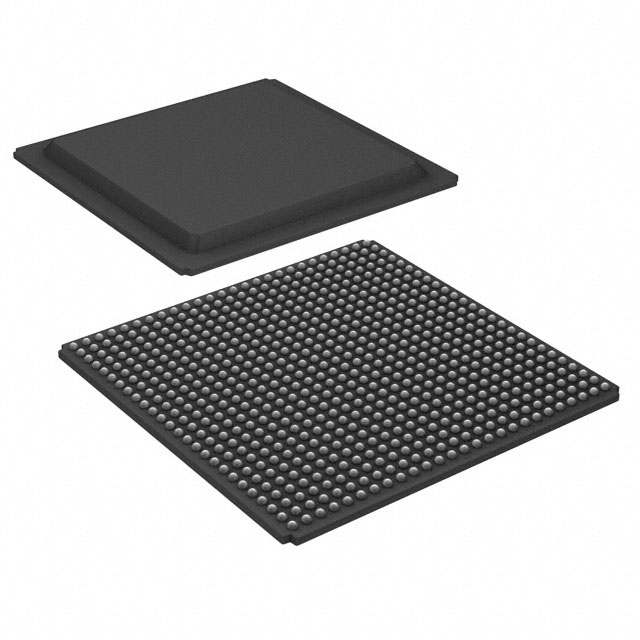
DS34S132GN+ is housed in a 676-ball fine-pitch BGA (ball pitch: 0.8mm) package with thermal pad, optimized for high-speed signal integrity and thermal dissipation in carrier-class line cards. Pin assignments follow Maxim's standardized ball map for TDMoP ICs, with dedicated banks for TDM serial I/O (32× data/clock/sync), MII/GMII Ethernet, DDR SDRAM, CPU bus (32-bit or 16-bit), and multiple clock inputs/outputs.
| Pin/Terminal | Circuit Role | Design Meaning |
|---|---|---|
| TDMn_DIN / TDMn_DOUT | TDM Port n Serial Data | Unidirectional or bidirectional TDM bitstream interface (64Kbps–2.048Mbps); supports T1/E1 framing and unframed modes |
| TDMn_CLKIN / TDMn_CLKOUT | TDM Port n Clock | Separate receive/transmit clock pairs per port; enables independent synchronous/asynchronous timing domains |
| TDMn_SYNC | TDM Port n Frame Sync | Frame alignment signal for structured T1/E1; used by TSA block to identify time slot boundaries |
| GMII_TXD[7:0] / GMII_RXD[7:0] | Ethernet Data Bus | 8-bit GMII interface operating at 125MHz for 1000Mbps mode; compatible with MII at 25MHz for 100Mbps |
| DDR_DQ[15:0] | DDR SDRAM Data | 16-bit bidirectional data bus for external DDR SDRAM used in jitter buffer and packet memory management |
| CPU_AD[31:0] | CPU Address/Data Bus | Multiplexed 32-bit address/data interface supporting 16-bit or 32-bit CPU access modes for register and memory control |
Key Features
| Feature | Design Value |
|---|---|
| Per-port clock recovery | 32 independent adaptive clock recovery engines enable precise TDM timing reconstruction without shared PLL bottlenecks |
| Time-slot assignment (TSA) | Hardware-accelerated TSA block per TDM port allows arbitrary grouping of DS0 time slots into distinct pseudowires |
| Dual-mode HDLC/CES engines | 32 structured CES engines (with CAS signaling) + 32 unstructured SAT/HDLC engines support mixed legacy service emulation |
| Multi-protocol packet encapsulation | Native support for L2TPv3, UDP/IP (IPv4/v6), MPLS (MFA-8), and Metro Ethernet (MEF-8) pseudowire transports |
| Integrated OAM processing | Hardware-accelerated MEF OAM, in-band VCCV, ARP, NDP/IPv6, and broadcast DA handling reduce CPU overhead |
Applications
| Cellular Backhaul | TDM Leased-Line Services Over PSN |
|---|---|
|
Use Scenario: Connecting legacy E1/T1 base station controllers (BSC/RNC) to IP/MPLS core via metro Ethernet or L2TPv3 tunnels. IC Role / Device Role / Timing Role: DS34S132GN+ acts as TDM circuit emulator, converting framed T1/E1 traffic into SAToP/CESoPSN pseudowires while maintaining G.823-compliant jitter performance. Use Value: Enables migration from TDM transport to packet infrastructure without service interruption or timing degradation for voice and sync-critical services. |
Use Scenario: Delivering point-to-point T1/E1 leased lines over shared ISP or carrier Ethernet networks using pseudowire encapsulation. IC Role / Device Role / Timing Role: DS34S132GN+ serves as edge demarcation device, performing TDM-to-packet interworking with per-PW QoS tagging and OAM visibility. Use Value: Provides carrier-grade SLA assurance via hardware-based timing recovery, jitter buffering, and MEF OAM compliance for business-critical circuits. |
| TDM Over GPON/EPON | HDLC-Encapsulated Data Over PSN |
|
Use Scenario: Aggregating multiple T1/E1 lines from business customers onto GPON/EPON fiber access networks using TDMoP tunneling. IC Role / Device Role / Timing Role: DS34S132GN+ functions as multiport TDM aggregation IC, mapping time slots to pseudowires with VLAN-aware Ethernet framing. Use Value: Reduces ONU/OLT complexity by offloading TDMoP processing to centralized line cards, enabling scalable GPON TDM service delivery. |
Use Scenario: Transporting legacy SCADA, telemetry, or industrial control HDLC frames across IP/MPLS or Metro Ethernet networks. IC Role / Device Role / Timing Role: DS34S132GN+ operates as HDLC-to-packet bridge, supporting unstructured HDLC payloads at variable rates (64Kbps–2.048Mbps). Use Value: Preserves existing HDLC protocol stacks while leveraging packet infrastructure for cost-efficient, secure, and manageable wide-area connectivity. |
Equivalent & Alternatives
The following parts are listed as comparable options for similar TDM-over-packet applications.
| Alternative Part | Technical Difference | Application Difference | Selection Advice |
|---|---|---|---|
| PMC-Sierra PM5352 | Single-chip TDMoP solution with 16 TDM ports, integrated SONET/SDH framer, no native MEF-8 support | Targeted at SONET/SDH-centric networks; lacks DS34S132GN+'s 32-port density and Metro Ethernet feature set | Select PM5352 when integrating with legacy SONET infrastructure and lower port count suffices |
| Intel (formerly PLX) TSI721 | PCIe-to-SRIO bridge with optional TDMoP firmware; not a dedicated ASIC-requires host CPU and external logic | Used in custom FPGA-based TDMoP systems; lacks DS34S132GN+'s integrated clock recovery, TSA, and hardware OAM acceleration | Select TSI721 only for highly customized designs where PCIe host control and flexibility outweigh integrated functionality |
Compared with PM5352 and TSI721, the DS34S132GN+ delivers higher port density (32 vs. 16), native Metro Ethernet (MEF-8) and MPLS (MFA-8) compliance, per-port adaptive clock recovery, and hardware TSA-making it optimal for carrier edge and high-scale cellular backhaul deployments requiring minimal external components and deterministic timing.
Availability
DS34S132GN+ is available at Aetrix Electronics and suitable for cellular backhaul, TDM leased-line emulation, and multiservice packet aggregation requiring stable component supply, long-lifecycle support, and RoHS-compliant packaging.
Supply support for DS34S132GN+ includes scheduled delivery planning, volume procurement assistance, BOM continuity management, traceable sourcing, and lifecycle availability coordination for OEM customers, industrial embedded developers, connected-device designers, and electronics production programs.
Manufacturer
Maxim Integrated (now part of Analog Devices) is a semiconductor company specializing in high-performance analog, mixed-signal, and power management ICs for communications, industrial, and automotive markets.
The DS34S132GN+ belongs to Maxim's TDM-over-Packet product line, engineered specifically for carrier-class circuit emulation in metro Ethernet, MPLS, and IP backhaul systems where timing fidelity, port density, and protocol flexibility are critical.
FAQ
What is the primary function of the DS34S132GN+ in TDM-over-Packet systems?
The DS34S132GN+ serves as a full-featured TDM circuit emulation IC that converts T1/E1 and sub-rate TDM streams into pseudowires for transport over packet networks. It performs SAToP/CESoPSN/HDLC encapsulation, adaptive clock recovery, time-slot assignment, and hardware-accelerated OAM processing-enabling seamless interoperability between legacy TDM infrastructure and modern IP/MPLS or Metro Ethernet networks. The DS34S132GN+ is essential for maintaining timing integrity and service continuity during network migration.
Does the DS34S132GN+ support both structured and unstructured TDM traffic?
Yes, the DS34S132GN+ supports both structured and unstructured TDM traffic. For structured T1/E1, it provides 32 CES engines (256 total) with CAS signaling and time-slot assignment. For unstructured data, it offers 32 SAT/HDLC engines supporting any line rate from 64Kbps to 2.048Mbps. This dual-mode capability allows the DS34S132GN+ to handle voice, data, and signaling simultaneously across heterogeneous legacy services.
What Ethernet interface standards does the DS34S132GN+ support?
The DS34S132GN+ integrates a 100/1000Mbps Ethernet MAC supporting both MII (for 100Mbps) and GMII (for 1000Mbps) interfaces. It complies with IEEE 802.3 and supports 0, 1, or 2 VLAN tags per frame (IEEE 802.1Q). The DS34S132GN+ is certified for Metro Ethernet Forum (MEF-8) pseudowire transport and interoperates with standard Ethernet switches and routers in carrier edge deployments.
How many pseudowires can the DS34S132GN+ manage, and how are they allocated?
The DS34S132GN+ supports up to 256 pseudowires, with a maximum of 32 pseudowires assignable per TDM port. Each pseudowire can be independently configured for TDMoP (SAToP/CESoPSN) or HDLC encapsulation, and mapped to specific time slots via the per-port TSA block. This allocation model enables granular service provisioning-for example, assigning DS0s from a single E1 port to separate PWs for voice, data, and signaling-within the DS34S132GN+'s unified hardware architecture.
What clock recovery methods does the DS34S132GN+ implement, and why does it matter?
The DS34S132GN+ implements adaptive clock recovery, differential clock recovery, and absolute/differential timestamping-each per TDM port-with one engine configurable as a global reference. These methods ensure precise TDM timing reconstruction from packetized streams, meeting stringent ITU G.823/G.824 jitter and wander limits required for public network interconnection. Because each DS34S132GN+ port recovers timing independently, network synchronization faults or packet loss on one pseudowire do not affect others-enhancing overall system resilience.
DS34S132GN+ Specifications
- Product attributes
- Attribute value
- Manufacturer:
- Analog Devices Inc./Maxim Integrated
- Series:
- *
- Package/Case:
- -
- Packaging:
- Product Status:
- Obsolete
- Function:
- -
- Interface:
- -
- Number of Circuits:
- -
- Voltage - Supply:
- -
- Current - Supply:
- -
- Power (Watts):
- -
- Operating Temperature:
- -
- Grade:
- -
- Qualification:
- -
- Mounting Type:
- -
- Supplier Device Package:
- -
DS34S132GN+ FAQ
1.How can I place an order for DS34S132GN+ through Aetrix?
Please submit a Request for Quotation (RFQ) for DS34S132GN+ on Aetrix. Our sales agent will provide a competitive quotation and guide you through the order confirmation once you accept the terms.
2.Are the price and stock information for DS34S132GN+ reliable?
The price and inventory of DS34S132GN+ are updated periodically and may fluctuate due to market conditions. Stock and pricing data are typically refreshed every 24 hours. Quotation validity for DS34S132GN+ is usually 5 days.
3.What payment methods are accepted for DS34S132GN+?
We accept Wire Transfer, PayPal, Credit Card, Western Union, MoneyGram, and Escrow for DS34S132GN+ transactions.
Note: Certain payment methods may incur a processing fee.
4.How is shipping managed for DS34S132GN+?
DS34S132GN+ orders can be shipped via leading logistics carriers, including DHL, UPS, FedEx, TNT, or Registered Mail.
Once your DS34S132GN+ order is processed, you will receive an email with the shipment details and tracking number.
Note: Tracking information may take up to 24 hours to appear. Express delivery typically takes 3–5 business days.
5.How can I obtain technical support or documentation for DS34S132GN+?
For technical support, including DS34S132GN+ datasheets, pinout diagrams, or application guidance, please contact our engineering support team. They can provide detailed documentation and assistance for your DS34S132GN+ requirements.
6.How does Aetrix verify that DS34S132GN+ is sourced from the original manufacturer or authorized distributors?
All DS34S132GN+ products on Aetrix are procured from qualified distributors and authorized channels. Our dedicated quality assurance team conducts strict verification, including traceability checks and, if necessary, third-party testing. This ensures that DS34S132GN+ meets industry standards.
7.What is the process for return or replacement of DS34S132GN+?
All DS34S132GN+ units undergo pre-shipment inspection (PSI). If there is an issue with DS34S132GN+, returns or replacements are accepted under the following conditions:
1.Quantity discrepancies, incorrect items, or visible external defects (such as breakage or corrosion), acknowledged by Aetrix.
2.The issue is reported within 90 days of delivery.
3.The DS34S132GN+ part is unused and in its original packaging.
Return procedure for DS34S132GN+:
1.Submit a request within 90 days.
2.Obtain a Return Material Authorization (RMA) from Aetrix.
DS34S132GN+ Tags

-
LMC567CMX/NOPB
Texas Instruments
-
LM567CMX/NOPB
Texas Instruments
-
LM567CM/NOPB
Texas Instruments
-
VSC8531XMW-02
Microchip Technology
-
VSC8531XMW-05
Microchip Technology

-
GPY115C0VI
MaxLinear, Inc.
-
SI32185-A-FMR
Skyworks Solutions Inc.
-
VSC8541XMV-05
Microchip Technology
-
SI32178-B-FM1R
Skyworks Solutions Inc.
-
GPY215C0VI
MaxLinear, Inc.
-
CPC7514ZTR
Littelfuse Inc.
-
VSC8502XML-03
Microchip Technology
Tech Hub

A practical engineering guide to 3.3V and 5V logic compatibility, input thresholds, resistor dividers, translator ICs, MOSFET level shifting, I2C pull-ups, timing limits and power-sequencing risks.

The 74HC595 uses push-pull logic outputs, while the TPIC6B595 uses 50 V open-drain DMOS sinks for higher-power loads. This guide compares timing, current limits, 3.3 V interfacing, load wiring, thermal…

The 74HC595 converts serial data into eight stable parallel outputs. This guide covers pin functions, shift and storage timing, OE and MR behavior, drive-current limits, cascading, voltage compatibilit…

A technical comparison of level-sensitive latches and edge-triggered flip-flops, covering timing windows, setup and hold limits, master–slave operation, time borrowing, race-through, HDL inference and…

A D latch stores one bit while Enable controls when data can pass. This reference covers gate-level operation, truth tables, transparency, setup and hold timing, LE versus OE, common ICs and practical …

An SR latch stores one bit through cross-coupled feedback. This engineering reference covers NOR and NAND implementations, truth tables, forbidden-state recovery, gated operation, switch debouncing, fa…

Latch circuits retain one bit through feedback. This technical reference covers SR and D latches, truth tables, transparency, timing limits, latch-versus-flip-flop behavior, applications and common log…

An engineering guide to LED driver operation, constant-current and constant-voltage outputs, linear and switching topologies, dimming, IC selection, calculations, replacement compatibility, and fault c…

Operational amplifier guide covering op amp basics, feedback, ideal vs real op amps, common configurations, buffer circuits, offset, bias current, gain-bandwidth, slew rate, rail-to-rail limits and sel…

Jumper cables guide covering safe connection order, red and black clamp placement, final ground connection, cable gauge, length, clamp quality, copper vs CCA cables, jump starter comparison and battery…


