
 My Inquiry
 My Account


Analog Devices Inc./Maxim Integrated DS3881E+
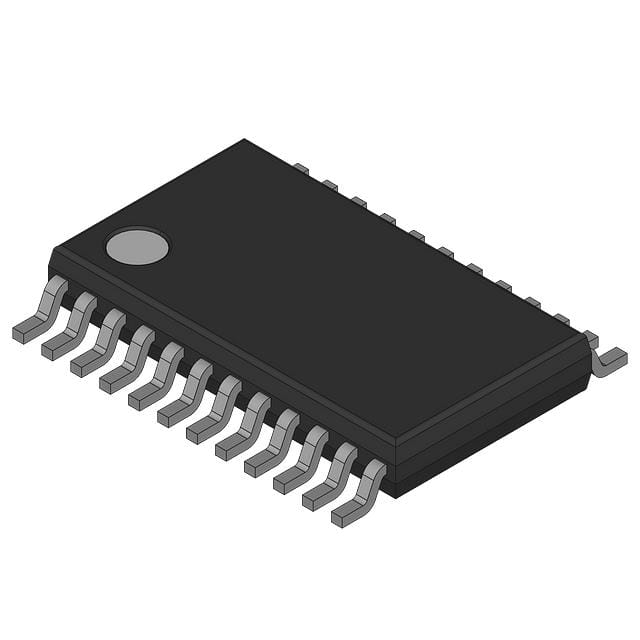
- Part No.:
- DS3881E+
- Manufacturer:
- Analog Devices Inc./Maxim Integrated
- Category:
- Lighting, Ballast Controllers
- Package:
- 24-TSSOP (0.173", 4.40mm Width)
- Datasheet:
-
 DS3881E+.pdf
- Description:
- FLUORESCENT LIGHT CONTROLLER, 10
- Quantity:
- Payment:

- Shipping:

Inventory:10,147
Please send an inquiry. Send us your inquiry, and we will respond immediately.
Product details
Overview
DS3881E+ from Maxim Integrated is a single-channel automotive cold-cathode fluorescent lamp (CCFL) controller supporting 40–100 kHz lamp frequency, ±5% oscillator accuracy, 300:1 digital-analog hybrid dimming, and I²C programmable control. It drives logic-level n-channel MOSFETs (GA1/GB1) to power CCFL backlights in instrument clusters and infotainment LCDs under -40°C to +105°C operation.
For engineers reviewing the DS3881E+ datasheet, DS3881E+ pinout, DS3881E+ application, or DS3881E+ equivalent, this page delivers verified technical context for automotive backlight design-including lamp current overdrive for cold-start, spread-spectrum EMI reduction, per-lamp fault monitoring (lamp-open, overcurrent, strike-failure), and cascaded multi-lamp synchronization via LSYNC/PSYNC.
Technical Context
The DS3881E+ implements a push-pull gate driver architecture driving two n-channel MOSFETs (GA1/GB1) to generate high-voltage AC (300–1000 VRMS) from 8–16 V DC input via center-tapped transformer. Lamp current regulation uses closed-loop feedback through LCM1 with 1.0 V nominal reference (VLRT), while OVD1 monitors lamp voltage via capacitive divider.
It integrates dual independent oscillators: one for lamp frequency (40–100 kHz, ±5%, resistor-set via LOSC) and one for DPWM burst dimming (22.5–440 Hz, ±5%, resistor- or clock-set via POSC). Both frequencies support external synchronization (LSYNC/PSYNC) and spread-spectrum modulation to suppress EMI spurs.
Key Specifications
| Parameter | Value and Actual Design Meaning |
|---|---|
| Lamp Frequency Range | 40 kHz to 100 kHz - sets AC drive frequency for CCFL brightness and efficiency; adjustable via LOSC resistor. |
| DPWM Dimming Frequency | 22.5 Hz to 440 Hz - controls burst-on/off timing for analog-digital hybrid dimming; set by POSC resistor or external clock. |
| Dimming Ratio | 300:1 - achieved by combining 128-step DPWM burst dimming and 5-bit analog current scaling (35–100% nominal). |
| Oscillator Accuracy | ±5% - guaranteed over -40°C to +105°C for both lamp and DPWM oscillators, enabling stable timing without calibration. |
| Fault Monitoring | Lamp-open, lamp-overcurrent, failure-to-strike, overvoltage - reported via FAULT pin and status register for system-level diagnostics. |
| Supply Voltage | 4.75 V to 5.25 V - single-rail operation compatible with automotive 5 V domains; includes UVLO (4.3 V rise / 3.7 V fall). |
| Operating Temperature | -40°C to +105°C - qualified for under-hood and dashboard mounting in automotive navigation and instrument cluster applications. |
| Package | 24-pin TSSOP (173 mil) - surface-mount package with exposed thermal pad; lead-free (RoHS-compliant) as indicated by '+' suffix. |
Pinout & Package
DS3881E+ is housed in a 24-pin thin shrink small-outline package (TSSOP) with 0.65 mm pitch and 173 mil body width. Pin 1 is marked by a dot; pins 13 and 21 are both VCC; pin 10 (GND_S) is dedicated I²C ground reference; pin 16 is no-connect (N.C.).
| Pin/Terminal | Circuit Role | Design Meaning |
|---|---|---|
| A0, A1 (Pins 1, 9) | I²C Slave Address Inputs | Set 3-bit I²C address (0x48–0x4F); enable up to 8 devices on same bus. |
| SDA, SCL (Pins 2, 3) | I²C Bidirectional Data/Clock | Fast-mode (400 kHz) interface for configuration, status readback, and real-time dimming control. |
| GA1, GB1 (Pins 22, 23) | MOSFET Gate Drivers | Direct-drive outputs for logic-level n-channel MOSFETs; 100 ns rise/fall time into 600 pF load. |
| LCM1 (Pin 14) | Lamp Current Monitor Input | Accepts voltage from series sense resistor; compared to 1.0 V VLRT reference for closed-loop current regulation. |
| OVD1 (Pin 15) | Overvoltage Detection Input | Monitors high-side lamp voltage via capacitive divider; triggers fault if >1.1 V above VDCB (1.1 V bias). |
| FAULT (Pin 24) | Open-Drain Fault Output | Active-low signal indicating lamp-open, overcurrent, strike failure, or overvoltage; requires external pull-up. |
| PDN (Pin 20) | Power-Down/Lamp Enable | Low = lamp on; high = lamp off + fault clear + power-down mode (1 mA ICC). |
| LCO (Pin 19) | Lamp Current Overdrive Enable | High = enables temporary current boost for rapid cold-weather lamp heating; configured via LCOC register. |
Key Features
| Feature | Design Value |
|---|---|
| Hybrid 300:1 Dimming | Combines 128-step DPWM burst dimming (22.5–440 Hz) with 5-bit analog current scaling (35–100%), eliminating visible steps at low brightness. |
| Programmable Soft-Start | 16-lamp-cycle ramp with 7 selectable duty-cycle steps (0–19%) via SSP registers-reduces audible transformer noise during burst initiation. |
| EMI Suppression | Spread-spectrum lamp clock + 1–4% lamp frequency stepping (via STEP pin or EMIC register) shifts EMI spurs out of critical bands. |
| Nonvolatile Configuration | Shadowed EEPROM stores default settings (soft-start profile, lamp/DPWM sources, fault thresholds); 8-byte user memory for serial numbers/date codes. |
| Cascadable Multi-Lamp Control | LSYNC and PSYNC pins allow master-slave synchronization across multiple DS3881E+ units-enables coherent dimming and flicker-free video backlighting. |
Applications
| Automotive Instrument Clusters | Infotainment Display Backlighting |
|---|---|
Use Scenario: Driving CCFLs behind TFT-LCD gauges and warning indicators in vehicle dashboards under wide temperature (-40°C to +105°C) and vibration conditions. IC Role / Device Role / Timing Role: Single-channel CCFL controller providing regulated lamp current, synchronized burst dimming, and cold-start overdrive for reliable gauge illumination at startup. Use Value: Ensures consistent brightness and lamp lifetime across temperature extremes; lamp-open and overvoltage fault reporting enables fail-safe cluster behavior. |
Use Scenario: Backlighting high-resolution navigation and media displays in center-stack consoles, requiring flicker-free dimming and EMI compliance in proximity to RF modules. IC Role / Device Role / Timing Role: CCFL driver with externally synchronized lamp/DPWM clocks (via LSYNC/PSYNC) to eliminate beat-frequency artifacts in video content. Use Value: Spread-spectrum modulation and frequency stepping reduce conducted/radiated EMI, meeting CISPR 25 Class 5 requirements for automotive electronics. |
| Marine Navigation Displays | Aviation Cockpit LCDs |
Use Scenario: Powering CCFL backlights in marine chartplotters and multifunction displays exposed to salt fog, humidity, and wide ambient temperature swings. IC Role / Device Role / Timing Role: Automotive-qualified CCFL controller delivering robust fault detection (lamp-open, overcurrent) and low-power standby (<1 mA) for battery-constrained vessels. Use Value: Nonvolatile memory retains custom calibration and fault thresholds across power cycles; UVLO ensures safe operation during brownout conditions. |
Use Scenario: Supporting certified cockpit LCDs where reliability, deterministic fault response, and traceable configuration are mandatory per DO-160/ED-14. IC Role / Device Role / Timing Role: CCFL controller with I²C-configurable soft-start, lamp current overdrive, and status register reporting for DO-254-compliant system monitoring. Use Value: On-board 8-byte NV user memory stores traceable manufacturing data (serial number, date code); ±5% oscillator tolerance supports deterministic timing analysis. |
Equivalent & Alternatives
The following parts are listed as comparable options for similar CCFL controller applications.
| Alternative Part | Technical Difference | Application Difference | Selection Advice |
|---|---|---|---|
| MAX16820ATL+ | Single-channel CCFL controller with 100–300 kHz lamp frequency, no integrated DPWM oscillator, requires external PWM source for dimming. | Lacks hybrid 300:1 dimming; supports only analog dimming and external PWM-less suitable for flicker-sensitive video applications. | Select when system already provides precise external DPWM clock and lamp frequency sync; lower BOM count but reduced dimming flexibility. |
| LM3481MM/NOPB | Current-mode DC-DC controller (not CCFL-specific); requires external gate drivers, transformer feedback, and discrete fault logic. | No built-in lamp monitoring, fault reporting, or EMI suppression features-designer must implement all CCFL-specific functions externally. | Select only for highly customized, cost-optimized designs where full control over every stage is required; significantly longer development cycle. |
Compared with MAX16820ATL+ and LM3481MM/NOPB, the DS3881E+ integrates lamp regulation, DPWM generation, fault detection, and EMI suppression in one AEC-Q100-qualified device-reducing component count, layout complexity, and qualification effort for automotive display backlighting.
Availability
DS3881E+ is available at Aetrix Electronics and suitable for automotive instrument clusters, infotainment displays, and marine navigation systems requiring stable component supply across extended temperature ranges and long production lifecycles.
Supply support for DS3881E+ includes scheduled delivery planning, volume procurement assistance, BOM continuity management, traceable sourcing, and lifecycle availability coordination for OEM customers, industrial embedded developers, connected-device designers, and electronics production programs.
Manufacturer
Maxim Integrated (now part of Analog Devices) is a semiconductor company specializing in precision analog, mixed-signal, and power management ICs for automotive, industrial, and communications markets.
The DS3881E+ belongs to Maxim's automotive backlight controller product line, designed specifically for robust, EMI-compliant CCFL driving in safety-critical display systems with demanding thermal and reliability requirements.
FAQ
What is the lamp frequency range supported by the DS3881E+?
The DS3881E+ supports a lamp frequency range of 40 kHz to 100 kHz, set by an external resistor on the LOSC pin. This range is guaranteed accurate to ±5% over the full operating temperature range (-40°C to +105°C), enabling stable CCFL operation without external calibration. The DS3881E+ can also synchronize to an external lamp clock via the LSYNC pin for multi-device coherence.
How does the DS3881E+ achieve 300:1 dimming?
The DS3881E+ achieves 300:1 dimming by combining two independent methods: 128-step digital pulse-width-modulated (DPWM) burst dimming (22.5–440 Hz) and 5-bit analog lamp current scaling (35–100% of nominal). These operate simultaneously-burst dimming sets coarse brightness levels, while analog scaling provides fine-grained adjustment between steps. This hybrid approach eliminates visible brightness jumps, especially at low intensities, and is fully implemented within the DS3881E+.
Does the DS3881E+ support cold-weather lamp starting?
Yes, the DS3881E+ supports cold-weather lamp starting via its lamp current overdrive (LCO) feature. When enabled (via LCO pin or LCOC register), it temporarily increases lamp current to accelerate cathode heating in sub-zero environments. The overdrive level is programmable, and the function automatically disables after lamp ignition-ensuring reliable startup down to -40°C without manual intervention or external circuitry.
Can multiple DS3881E+ controllers be synchronized in one system?
Yes, multiple DS3881E+ controllers can be synchronized using the LSYNC (lamp frequency) and PSYNC (DPWM) pins. One DS3881E+ acts as master (source), outputting synchronized clocks; others act as slaves (receivers), accepting those signals. This eliminates beat-frequency artifacts in multi-lamp displays and ensures uniform dimming response-critical for automotive infotainment and instrument cluster applications where visual consistency is essential.
What fault conditions does the DS3881E+ monitor and report?
The DS3881E+ monitors and reports four distinct fault conditions via its open-drain FAULT pin and internal status register: lamp-open (open-circuit), lamp-overcurrent (excess current detected at LCM1), failure-to-strike (no lamp ignition within timeout), and overvoltage (excess voltage detected at OVD1). Each condition is latched and readable over I²C, enabling system-level diagnostics and fail-safe response without additional external circuitry.
DS3881E+ Specifications
- Product attributes
- Attribute value
- Manufacturer:
- Analog Devices Inc./Maxim Integrated
- Series:
- -
- Package/Case:
- 24-TSSOP (0.173", 4.40mm Width)
- Packaging:
- Bulk
- Product Status:
- Active
- Type:
- CCFL Controller
- Frequency:
- 40kHz ~ 100kHz
- Voltage - Supply:
- 4.75V ~ 5.25V
- Current - Supply:
- 12 mA
- Current - Output Source/Sink:
- -
- Dimming:
- Yes
- Operating Temperature:
- -40°C ~ 105°C (TA)
- Grade:
- -
- Qualification:
- -
- Mounting Type:
- Surface Mount
- Supplier Device Package:
- 24-TSSOP
DS3881E+ FAQ
1.How can I place an order for DS3881E+ through Aetrix?
Please submit a Request for Quotation (RFQ) for DS3881E+ on Aetrix. Our sales agent will provide a competitive quotation and guide you through the order confirmation once you accept the terms.
2.Are the price and stock information for DS3881E+ reliable?
The price and inventory of DS3881E+ are updated periodically and may fluctuate due to market conditions. Stock and pricing data are typically refreshed every 24 hours. Quotation validity for DS3881E+ is usually 5 days.
3.What payment methods are accepted for DS3881E+?
We accept Wire Transfer, PayPal, Credit Card, Western Union, MoneyGram, and Escrow for DS3881E+ transactions.
Note: Certain payment methods may incur a processing fee.
4.How is shipping managed for DS3881E+?
DS3881E+ orders can be shipped via leading logistics carriers, including DHL, UPS, FedEx, TNT, or Registered Mail.
Once your DS3881E+ order is processed, you will receive an email with the shipment details and tracking number.
Note: Tracking information may take up to 24 hours to appear. Express delivery typically takes 3–5 business days.
5.How can I obtain technical support or documentation for DS3881E+?
For technical support, including DS3881E+ datasheets, pinout diagrams, or application guidance, please contact our engineering support team. They can provide detailed documentation and assistance for your DS3881E+ requirements.
6.How does Aetrix verify that DS3881E+ is sourced from the original manufacturer or authorized distributors?
All DS3881E+ products on Aetrix are procured from qualified distributors and authorized channels. Our dedicated quality assurance team conducts strict verification, including traceability checks and, if necessary, third-party testing. This ensures that DS3881E+ meets industry standards.
7.What is the process for return or replacement of DS3881E+?
All DS3881E+ units undergo pre-shipment inspection (PSI). If there is an issue with DS3881E+, returns or replacements are accepted under the following conditions:
1.Quantity discrepancies, incorrect items, or visible external defects (such as breakage or corrosion), acknowledged by Aetrix.
2.The issue is reported within 90 days of delivery.
3.The DS3881E+ part is unused and in its original packaging.
Return procedure for DS3881E+:
1.Submit a request within 90 days.
2.Obtain a Return Material Authorization (RMA) from Aetrix.
DS3881E+ Tags
-
HV833MG-G
Microchip Technology
-
HV857MG-G
Microchip Technology
-
MIC4826YMM-TR
Microchip Technology

-
HV823LG-G
Microchip Technology
-
IR2156STRPBF
Infineon Technologies
-
BTS712204ESAXUMA1
Infineon Technologies
-
UC3872DW
Texas Instruments
-
MAX14514ETD+
Analog Devices Inc./Maxim Integrated
-
MAX14521EETG+
Analog Devices Inc./Maxim Integrated
-
HV857LMG-G
Microchip Technology
-
HV860K7-G
Microchip Technology
-
MIC4832YMM
Microchip Technology
Tech Hub

A practical engineering guide to 3.3V and 5V logic compatibility, input thresholds, resistor dividers, translator ICs, MOSFET level shifting, I2C pull-ups, timing limits and power-sequencing risks.

The 74HC595 uses push-pull logic outputs, while the TPIC6B595 uses 50 V open-drain DMOS sinks for higher-power loads. This guide compares timing, current limits, 3.3 V interfacing, load wiring, thermal…

The 74HC595 converts serial data into eight stable parallel outputs. This guide covers pin functions, shift and storage timing, OE and MR behavior, drive-current limits, cascading, voltage compatibilit…

A technical comparison of level-sensitive latches and edge-triggered flip-flops, covering timing windows, setup and hold limits, master–slave operation, time borrowing, race-through, HDL inference and…

A D latch stores one bit while Enable controls when data can pass. This reference covers gate-level operation, truth tables, transparency, setup and hold timing, LE versus OE, common ICs and practical …

An SR latch stores one bit through cross-coupled feedback. This engineering reference covers NOR and NAND implementations, truth tables, forbidden-state recovery, gated operation, switch debouncing, fa…

Latch circuits retain one bit through feedback. This technical reference covers SR and D latches, truth tables, transparency, timing limits, latch-versus-flip-flop behavior, applications and common log…

An engineering guide to LED driver operation, constant-current and constant-voltage outputs, linear and switching topologies, dimming, IC selection, calculations, replacement compatibility, and fault c…

Operational amplifier guide covering op amp basics, feedback, ideal vs real op amps, common configurations, buffer circuits, offset, bias current, gain-bandwidth, slew rate, rail-to-rail limits and sel…

Jumper cables guide covering safe connection order, red and black clamp placement, final ground connection, cable gauge, length, clamp quality, copper vs CCA cables, jump starter comparison and battery…


