
 My Inquiry
 My Account


Texas Instruments DS38EP100SD/NOPB
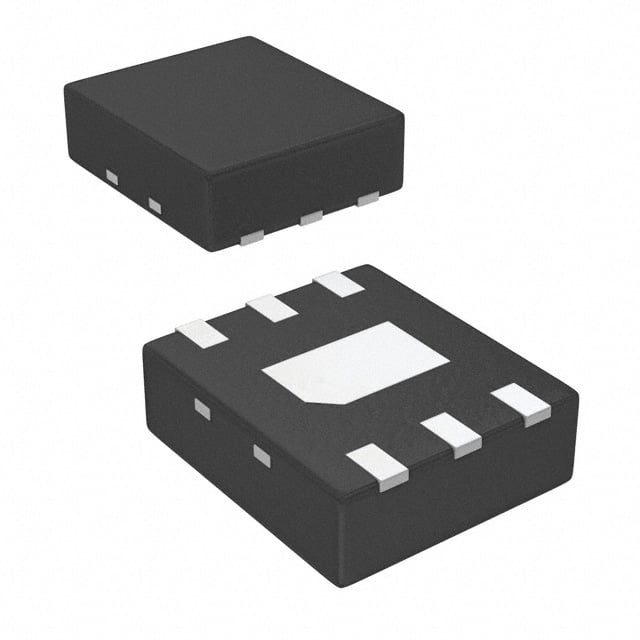
- Part No.:
- DS38EP100SD/NOPB
- Manufacturer:
- Texas Instruments
- Category:
- Specialized
- Package:
- 6-WDFN Exposed Pad
- Datasheet:
-
 DS38EP100SD/NOPB.pdf
- Description:
- IC INTERFACE SPECIALIZED 6WSON
- Quantity:
- Payment:

- Shipping:

Inventory:4,919
Please send an inquiry. Send us your inquiry, and we will respond immediately.
Product details
Overview
DS38EP100SD/NOPB from Texas Instruments is a passive 100Ω differential equalizer IC for high-speed serial links, delivering up to 7 dB boost at 2.5 GHz, operating from 1 to 5 Gbps without power or ground connections, and used in FR4 backplanes and copper cables to reduce deterministic jitter in PCIe Gen1/Gen2 and XAUI systems.
For engineers reviewing the DS38EP100SD/NOPB datasheet, DS38EP100SD/NOPB pinout, DS38EP100SD/NOPB application, or DS38EP100SD/NOPB equivalent, this page provides verified electrical parameters, symmetric bi-directional I/O behavior, WSON-6 package layout guidance, and real-world eye-height/jitter performance data across 2.5–5 Gbps FR4 and cable channels.
Technical Context
The DS38EP100SD/NOPB implements a passive bridged-T network using resistive, capacitive, and inductive elements to provide linear, frequency-dependent attenuation compensation - attenuating low frequencies while boosting mid-band (peaking near 2.5 GHz) to counteract channel loss roll-off.
Its symmetric I/O architecture enables placement anywhere in the signal path (Tx or Rx side), supports full-duplex operation, and maintains identical equalization whether data flows IOA↔IOB or IOB↔IOA, with no dependency on line coding (8b/10b or scrambled) or signaling type (CML/LVDS/LV-PECL).
Key Specifications
| Parameter | Value and Actual Design Meaning |
|---|---|
| Bit Rate Range | 1 to 5 Gbps - supports full PCIe Gen1 (2.5 Gbps) and Gen2 (5 Gbps), XAUI (3.125 Gbps), and HDMI/PCIe cable links without retuning. |
| Differential Impedance | 100 Ω - matches standard differential PCB traces and cable interfaces; requires controlled 100Ω routing on both input and output sides. |
| Equalization Boost | Up to 7 dB at 2.5 GHz - compensates typical 40-inch FR4 loss (~8–10 dB at 2.5 GHz), restoring eye height by >2× in stressed channels. |
| Residual DJ | 0.1 UIp-p at 2.5 Gbps (40″ FR4) - reduces deterministic jitter induced by inter-symbol interference, enabling reliable sampling at receiver CDR. |
| Operating Temp | −40°C to +85°C - qualified for industrial temperature range; no thermal derating required in typical line-card or switch-card environments. |
| Package | 2.2 mm × 2.5 mm WSON-6 - ultra-compact footprint enables placement directly adjacent to connectors or ASICs with minimal trace discontinuity. |
Pinout & Package
DS38EP100SD/NOPB uses a 6-pin leadless WSON (NGF) package with exposed thermal pad (DAP) left unconnected. Pin 2 and Pin 5 are NC; differential I/O pins must be routed as matched 100Ω pairs with strict symmetry to preserve common-mode rejection and return loss (>15 dB from 100 MHz–2.5 GHz).
| Pin/Terminal | Circuit Role | Design Meaning |
|---|---|---|
| IOA+ | Differential Input/Output | High-speed balanced terminal; forms 100Ω differential pair with IOA−; bidirectional - accepts or drives signals identically. |
| IOA− | Differential Input/Output | Complementary terminal to IOA+; symmetric impedance and delay ensures phase-matched equalization in either direction. |
| IOB+ | Differential Input/Output | Second independent differential port; electrically identical to IOA+; enables cross-point or inline placement between line and switch cards. |
| IOB− | Differential Input/Output | Complementary terminal to IOB+; completes second 100Ω differential path; no internal DC bias or termination. |
| Pins 2 & 5 | No Connect | Reserved; must remain floating - no connection to ground, power, or PCB copper to avoid parasitic coupling or impedance mismatch. |
| DAP | Exposed Pad | Thermal pad only; not electrically connected - must be left unconnected per TI AN-1187 to prevent ESD damage or return-path disruption. |
Key Features
| Feature | Design Value |
|---|---|
| No power or ground required | Enables insertion into any point of active signal path (e.g., between FPGA and connector) without modifying power delivery or adding decoupling. |
| Symmetric I/O structure | Eliminates orientation constraints - device functions identically whether placed on Tx side (ASIC→backplane) or Rx side (backplane→ASIC). |
| Code-independent equalization | Works with 8b/10b, 64b/66b, scrambled, or proprietary encoding - no protocol-aware logic or clock recovery needed. |
| 7 dB max boost at 2.5 GHz | Restores signal integrity degraded by skin effect and dielectric loss in long FR4 traces or thin-gauge cables (e.g., 5 m HDMI, 10 m PCIe). |
| Compatible with CML/LVDS/LV-PECL | Accepts industry-standard high-speed logic families without level-shifting or AC-coupling adjustments - simplifies integration with SerDes PHYs. |
Applications
| PCIe Gen1/Gen2 Backplane Interconnect | XAUI-Based Switch Fabric |
|---|---|
|
Use Scenario: 40-inch FR4 backplane connecting line cards to switch fabric in telecom chassis, suffering >9 dB loss at 2.5 GHz. IC Role / Device Role / Timing Role: Passive equalizer placed inline on each differential lane to restore eye opening before CDR sampling. Use Value: Increases eye height from 0.2 V to >0.6 V at 2.5 Gbps, reducing bit error rate below 1E-12 without redesigning stack-up or adding active repeaters. |
Use Scenario: 34-inch Tyco XAUI backplane in enterprise switch, exhibiting inter-symbol interference at 3.125 Gbps. IC Role / Device Role / Timing Role: Bidirectional equalizer embedded in XAUI daughterboard to compensate both upstream and downstream lanes simultaneously. Use Value: Lowers residual deterministic jitter from 0.35 UIp-p to 0.1 UIp-p, enabling robust lock acquisition in XAUI PHYs with tight setup/hold margins. |
| HDMI Cable Extension | PCIe Gen2 Cable Assembly |
|
Use Scenario: 10-meter 26 AWG HDMI cable carrying 2.25 Gbps video data, failing eye compliance at sink end. IC Role / Device Role / Timing Role: Passive equalizer integrated into source-side HDMI transmitter module to pre-compensate cable loss. Use Value: Recovers 30% eye height margin and eliminates jitter-induced pixel dropouts, meeting HDMI 1.4 spec without active redrivers. |
Use Scenario: 10-meter 24 AWG PCIe Gen2 cable assembly used in external GPU enclosures, showing BER degradation above 10−9. IC Role / Device Role / Timing Role: Inline equalizer mounted on host-side PCIe controller board to extend reach beyond standard 3-meter limit. Use Value: Enables stable 5 Gbps link over 10 m cable by reducing DJ-induced timing uncertainty, eliminating need for costly active retimers. |
Equivalent & Alternatives
The following parts are listed as comparable options for similar passive equalizer applications.
| Alternative Part | Technical Difference | Application Difference | Selection Advice |
|---|---|---|---|
| DS100BR111SD/NOPB | Active 1–10 Gbps equalizer with power supply (3.3 V), 12 dB boost, and adaptive tuning; requires biasing and layout isolation. | Used where higher boost or programmability is needed; unsuitable for zero-power or space-constrained placements. | Select DS38EP100SD/NOPB when simplicity, zero-power operation, and minimal BOM count are prioritized over dynamic adjustment. |
| MAX3801ETM+ | Passive 1–4 Gbps equalizer in 8-pin TDFN; 6 dB boost; requires external 100Ω terminations; no NC pins but larger footprint (3 mm × 3 mm). | Preferred in legacy designs using TDFN packages or where slightly lower bandwidth suffices (≤4 Gbps). | Choose DS38EP100SD/NOPB for tighter routing density, broader 5 Gbps support, and native WSON-6 compatibility with modern high-density layouts. |
Compared with DS100BR111SD/NOPB and MAX3801ETM+, the DS38EP100SD/NOPB uniquely combines zero-power operation, 5 Gbps capability, and 2.2 mm × 2.5 mm size - making it optimal for cost-sensitive, space-constrained, and thermally constrained backplane/cable links where fixed equalization suffices.
Availability
DS38EP100SD/NOPB is available at Aetrix Electronics and suitable for PCIe Gen2 backplanes, XAUI switch fabrics, HDMI cable extensions, and industrial Ethernet over copper requiring stable component supply with full RoHS compliance and TI production status.
Supply support for DS38EP100SD/NOPB includes scheduled delivery planning, volume procurement assistance, BOM continuity management, traceable sourcing, and lifecycle availability coordination for OEM customers, industrial embedded developers, connected-device designers, and electronics production programs.
Manufacturer
Texas Instruments is a global semiconductor leader specializing in analog, embedded processing, and high-speed interface solutions, with decades of expertise in signal integrity and timing products.
The DS38EP100SD/NOPB belongs to TI's Power-Saver equalizer family, designed specifically to extend reach in passive high-speed interconnects - targeting backplane, cable, and modular system designers needing simple, reliable, zero-power signal restoration.
FAQ
Does DS38EP100SD/NOPB require a power supply or ground connection?
No, DS38EP100SD/NOPB is a fully passive device requiring no power or ground connections. It operates solely via its internal resistive-capacitive-inductive network, enabling placement anywhere in the signal path without affecting power integrity or adding decoupling complexity. This makes DS38EP100SD/NOPB ideal for retrofitting into existing layouts or space-constrained modules where routing power is impractical.
What differential signaling standards does DS38EP100SD/NOPB support?
DS38EP100SD/NOPB supports CML, LVDS, and LV-PECL signaling standards without level shifting or AC coupling modifications. Its 100Ω differential impedance and symmetric I/O structure ensure compatibility across these families, and its code-independent operation means it works with 8b/10b, scrambled, or proprietary protocols - all confirmed in TI's SNLS278C datasheet for DS38EP100SD/NOPB.
Can DS38EP100SD/NOPB be used bidirectionally in the same design?
Yes, DS38EP100SD/NOPB features symmetric I/O structures (IOA+/IOA− and IOB+/IOB−), allowing identical equalization performance regardless of signal direction. Whether placed on the transmit side (ASIC → backplane) or receive side (backplane → ASIC), DS38EP100SD/NOPB delivers consistent 7 dB boost and jitter reduction - validated in TI's application diagrams and FR4/cable test reports.
What is the maximum trace length DS38EP100SD/NOPB can compensate at 5 Gbps?
DS38EP100SD/NOPB restores signal integrity up to 30 inches of 6-mil FR4 microstrip at 5 Gbps, reducing residual deterministic jitter to 0.1 UIp-p and recovering measurable eye height - as documented in Figure 21–23 of the SNLS278C datasheet. For longer runs or thinner traces, pairing DS38EP100SD/NOPB with optimized stack-up or pre-emphasis may be necessary.
How should the NC pins and DAP be handled in PCB layout for DS38EP100SD/NOPB?
Pins 2 and 5, plus the exposed DAP pad, must remain unconnected - no ties to ground, power, or copper pour. TI's AN-1187 explicitly warns that connecting these violates the device's RF design and degrades return loss and jitter performance. The landing pads for NC pins should be isolated, and the DAP must be left as a floating metal area to preserve 100Ω differential impedance and ESD robustness in DS38EP100SD/NOPB layouts.
DS38EP100SD/NOPB Specifications
- Product attributes
- Attribute value
- Manufacturer:
- Texas Instruments
- Series:
- -
- Package/Case:
- 6-WDFN Exposed Pad
- Packaging:
- Tape & Reel (TR)
- Product Status:
- Active
- Applications:
- Displays
- Interface:
- Coax Cable and Female Connector
- Voltage - Supply:
- -
- Supplier Device Package:
- 6-WSON (2.2x2.5)
- Grade:
- -
- Qualification:
- -
- Mounting Type:
- Surface Mount
DS38EP100SD/NOPB FAQ
1.How can I place an order for DS38EP100SD/NOPB through Aetrix?
Please submit a Request for Quotation (RFQ) for DS38EP100SD/NOPB on Aetrix. Our sales agent will provide a competitive quotation and guide you through the order confirmation once you accept the terms.
2.Are the price and stock information for DS38EP100SD/NOPB reliable?
The price and inventory of DS38EP100SD/NOPB are updated periodically and may fluctuate due to market conditions. Stock and pricing data are typically refreshed every 24 hours. Quotation validity for DS38EP100SD/NOPB is usually 5 days.
3.What payment methods are accepted for DS38EP100SD/NOPB?
We accept Wire Transfer, PayPal, Credit Card, Western Union, MoneyGram, and Escrow for DS38EP100SD/NOPB transactions.
Note: Certain payment methods may incur a processing fee.
4.How is shipping managed for DS38EP100SD/NOPB?
DS38EP100SD/NOPB orders can be shipped via leading logistics carriers, including DHL, UPS, FedEx, TNT, or Registered Mail.
Once your DS38EP100SD/NOPB order is processed, you will receive an email with the shipment details and tracking number.
Note: Tracking information may take up to 24 hours to appear. Express delivery typically takes 3–5 business days.
5.How can I obtain technical support or documentation for DS38EP100SD/NOPB?
For technical support, including DS38EP100SD/NOPB datasheets, pinout diagrams, or application guidance, please contact our engineering support team. They can provide detailed documentation and assistance for your DS38EP100SD/NOPB requirements.
6.How does Aetrix verify that DS38EP100SD/NOPB is sourced from the original manufacturer or authorized distributors?
All DS38EP100SD/NOPB products on Aetrix are procured from qualified distributors and authorized channels. Our dedicated quality assurance team conducts strict verification, including traceability checks and, if necessary, third-party testing. This ensures that DS38EP100SD/NOPB meets industry standards.
7.What is the process for return or replacement of DS38EP100SD/NOPB?
All DS38EP100SD/NOPB units undergo pre-shipment inspection (PSI). If there is an issue with DS38EP100SD/NOPB, returns or replacements are accepted under the following conditions:
1.Quantity discrepancies, incorrect items, or visible external defects (such as breakage or corrosion), acknowledged by Aetrix.
2.The issue is reported within 90 days of delivery.
3.The DS38EP100SD/NOPB part is unused and in its original packaging.
Return procedure for DS38EP100SD/NOPB:
1.Submit a request within 90 days.
2.Obtain a Return Material Authorization (RMA) from Aetrix.
DS38EP100SD/NOPB Tags
-
NVT4857UKAZ
NXP Semiconductors
-
TCA8418RTWR
Texas Instruments

-
PCA9546APWR
Texas Instruments

-
MD0100N8-G
Microchip Technology
-
PCA9548APW,118
NXP Semiconductors
-
PCA9540BDP,118
NXP Semiconductors
-
PCA9548APWR
Texas Instruments
-
PCA9546APW,118
NXP Semiconductors
-
PTN3360DBS,518
NXP Semiconductors
-
PCA9546ABS,118
NXP Semiconductors
-
PCA9518PWR
Texas Instruments
-
PCA9545APW,118
NXP Semiconductors
Tech Hub

A practical engineering guide to 3.3V and 5V logic compatibility, input thresholds, resistor dividers, translator ICs, MOSFET level shifting, I2C pull-ups, timing limits and power-sequencing risks.

The 74HC595 uses push-pull logic outputs, while the TPIC6B595 uses 50 V open-drain DMOS sinks for higher-power loads. This guide compares timing, current limits, 3.3 V interfacing, load wiring, thermal…

The 74HC595 converts serial data into eight stable parallel outputs. This guide covers pin functions, shift and storage timing, OE and MR behavior, drive-current limits, cascading, voltage compatibilit…

A technical comparison of level-sensitive latches and edge-triggered flip-flops, covering timing windows, setup and hold limits, master–slave operation, time borrowing, race-through, HDL inference and…

A D latch stores one bit while Enable controls when data can pass. This reference covers gate-level operation, truth tables, transparency, setup and hold timing, LE versus OE, common ICs and practical …

An SR latch stores one bit through cross-coupled feedback. This engineering reference covers NOR and NAND implementations, truth tables, forbidden-state recovery, gated operation, switch debouncing, fa…

Latch circuits retain one bit through feedback. This technical reference covers SR and D latches, truth tables, transparency, timing limits, latch-versus-flip-flop behavior, applications and common log…

An engineering guide to LED driver operation, constant-current and constant-voltage outputs, linear and switching topologies, dimming, IC selection, calculations, replacement compatibility, and fault c…

Operational amplifier guide covering op amp basics, feedback, ideal vs real op amps, common configurations, buffer circuits, offset, bias current, gain-bandwidth, slew rate, rail-to-rail limits and sel…

Jumper cables guide covering safe connection order, red and black clamp placement, final ground connection, cable gauge, length, clamp quality, copper vs CCA cables, jump starter comparison and battery…


