
 My Inquiry
 My Account


Analog Devices Inc./Maxim Integrated DS5001FP-16+
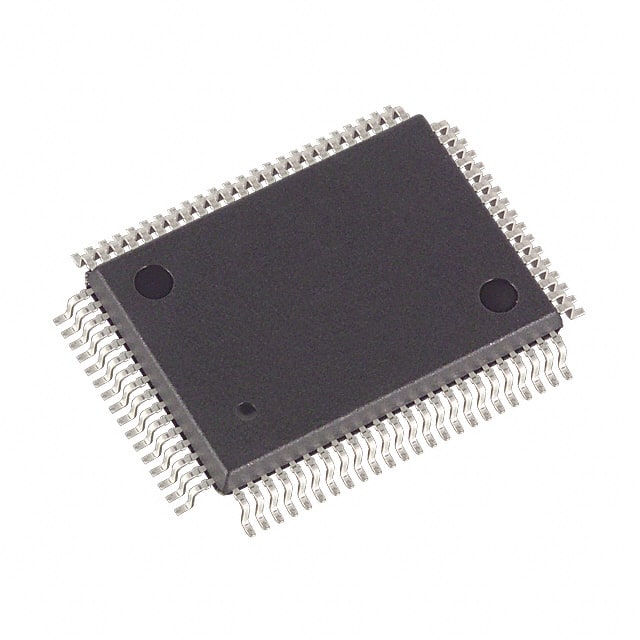
- Part No.:
- DS5001FP-16+
- Manufacturer:
- Analog Devices Inc./Maxim Integrated
- Category:
- Microcontrollers
- Package:
- 80-BQFP
- Datasheet:
-
 DS5001FP-16+.pdf
- Description:
- IC MCU 8BIT EXTRNL NVSRAM 80QFP
- Quantity:
- Payment:

- Shipping:

Inventory:4,565
Please send an inquiry. Send us your inquiry, and we will respond immediately.
Product details
Overview
DS5001FP-16+ from Maxim Integrated is an 8051-compatible nonvolatile SRAM-based microprocessor with 128kB NV RAM, 16MHz max clock, 32 I/O pins, on-chip serial bootstrap loader, and lithium-backed power-fail protection - designed for data-logging, adaptive firmware, and secure embedded systems requiring long-term memory retention without external EEPROM or Flash.
For engineers reviewing the DS5001FP-16+ datasheet, DS5001FP-16+ pinout, DS5001FP-16+ application, or DS5001FP-16+ equivalent, key selection considerations include byte-wide bus timing (tAVDV = 9tCLK − 105 ns @16MHz), VCCMIN = 4.00–4.25V reset threshold, lithium-backed CE1–CE4/PE1–PE2 enables, R/W-controlled NV RAM write-protection, and MSEL-driven 32kB vs. 128kB SRAM mode configuration.
Technical Context
The DS5001FP-16+ implements a full 8051 instruction set with two timer/counters, UART, and 32-bit parallel I/O while replacing ROM with battery-backed NV SRAM - enabling in-system reprogramming and self-modifying code execution. Its nonmultiplexed byte-wide bus (BA14–0 / BD7–0) decouples memory access from I/O port usage.
Power management integrates precision bandgap-based VPFW (4.25–4.50V) early-warning interrupt, VCCMIN-triggered reset, and seamless VCC-to-VLI switchover with VRST and PF status outputs. All chip enables (CE1–CE4, PE1–PE2) remain logic-high during backup, preserving peripheral state.
Key Specifications
| Parameter | Value and Actual Design Meaning |
|---|---|
| Core Architecture | 8051-compatible CPU with object-code compatibility for standard assemblers and compilers |
| Nonvolatile Memory | 128kB NV SRAM with lithium backup (>10 years retention at +25°C) |
| Max Clock Speed | 16MHz - supports tAVDV = 9tCLK − 105 ns read timing for high-speed SRAM interfacing |
| I/O Resources | 32 parallel GPIO pins (P0–P3), all usable for application logic due to dedicated byte-wide bus |
| Power Monitoring | VCCMIN = 4.00–4.25V (0°C to +70°C); VPFW = 4.25–4.50V for early-warning interrupt at 2Bh vector |
| Package | 80-pin MQFP (24.0 × 18.0 mm body, 0.8 mm pitch) |
| Operating Temp | 0°C to +70°C - validated DC/AC specs including IIDLE = 7.0 mA @12MHz idle current |
Pinout & Package
DS5001FP-16+ uses an 80-pin MQFP package (24.0 × 18.0 mm body, 0.8 mm pitch, 3.4 mm max height) with exposed thermal pad per Maxim package drawing 56-G4005-001. Pin functions are validated per official DS5001FP datasheet Rev 070605, pages 4–6.
| Pin/Terminal | Circuit Role | Design Meaning |
|---|---|---|
| P0.0–P0.7 | Open-drain I/O / Address-Data Bus (AD0–AD7) | Serves as multiplexed expanded bus in 8051 mode; open-drain requires external pullups unless used as AD bus |
| P1.0–P1.7 | General-purpose I/O | Full CMOS push-pull I/O; no alternate functions - reserved exclusively for application use |
| P2.0–P2.7 | I/O / High-order address (A8–A15) | Provides A8–A15 in expanded mode; also functions as general I/O when not addressing external memory |
| P3.0/RXD, P3.1/TXD | UART serial interface | On-chip serial port for bootstrap loading; requires level-shifting for direct PC COM port connection |
| RST | Active-high reset input | Internally pulled down; RC power-on reset not required or recommended |
| XTAL1/XTAL2 | Crystal oscillator inputs | Supports fundamental-mode crystals up to 16MHz; XTAL1 is inverter input, XTAL2 is output |
| BA0–BA14 | Byte-wide address bus | Direct connection to SRAM address lines; BA15 omitted - CE2/CE3 repurposed as A15/A16 in 128kB mode |
| BD0–BD7 | Byte-wide bidirectional data bus | Connects directly to SRAM data I/O; supports MOVX instructions without port multiplexing overhead |
| R/W | Read/write strobe | Controls SRAM WE#; automatically enforces write-protection on program-memory segments |
| CE1–CE4 | Lithium-backed chip enables | Remain logic-high during VCC dropout; enable up to four 32kB SRAM blocks or peripherals |
| PE1–PE4 | Peripheral enables (PE1–PE2 lithium-backed) | Access 16kB memory-mapped peripheral windows (0000h–FFFFh); PE1–PE2 retain state during backup |
| VCCO | Switched VCC output | Automatically routes VCC or VLI to SRAM VCC pin; drops ~0.45V under load - mandates low-IDD SRAM |
| VLI | Lithium voltage input | Accepts 2.5–4.0V lithium cell; powers VCCO, CE/PE outputs, and NV RAM retention when VCC < VLI |
| VRST | Power-fail reset indicator | Open-drain I/O driven low when VCC < VCCMIN; guaranteed active even at VCC = 0V |
| PF | Power-fail switchover flag | Drives low when VCC < VLI; used to isolate non-battery-backed circuitry during backup mode |
| MSEL | Memory size select | Hardwired to VCC (32kB mode) or GND (128kB mode); determines CE2/CE3 remapping to A16/A15 |
| PROG | Bootstrap loader trigger | Falling edge initiates serial loader; internally pulled up - debounced externally to prevent spurious entry |
Key Features
| Feature | Design Value |
|---|---|
| In-system programmability | On-chip serial bootstrap loader validates firmware before execution and becomes transparent - eliminates need for external programmers |
| Self-modifying code support | Application software can rewrite its own program or data memory in NV SRAM - enables field-upgradable logic and adaptive behavior |
| Dedicated byte-wide bus | BA14–0 + BD7–0 + R/W provides nonmultiplexed memory access - frees all 32 I/O pins for application use |
| Lithium-backed reliability | CE1–CE4, PE1–PE2, VRST, PF, and VCCO retain state during VCC dropout - ensures deterministic power-fail response and memory integrity |
| Dynamic memory partitioning | Special function registers allow runtime reconfiguration of 64kB program/data space - supports flexible memory mapping without hardware changes |
| CRC-16 memory validation | Hardware CRC-16 engine verifies NV RAM contents on boot - detects corruption from power loss or radiation events |
Applications
| Data Logger with Long-Term Retention | Adaptive Industrial Controller |
|---|---|
Use Scenario: Continuous environmental sensor sampling in remote substations with infrequent maintenance. IC Role / Device Role / Timing Role: DS5001FP-16+ acts as main controller and nonvolatile data store - logging timestamps, temperature, humidity, and fault events into its 128kB NV SRAM. Use Value: Eliminates external EEPROM/Flash and backup capacitors; lithium-backed memory retains >10 years of data without refresh or external power. |
Use Scenario: Field-deployed PLC updating control algorithms based on real-time process feedback. IC Role / Device Role / Timing Role: DS5001FP-16+ executes adaptive PID tuning routines and stores updated coefficients in NV SRAM - recompiling logic on-the-fly via serial interface. Use Value: Enables over-the-air firmware updates without hardware replacement; self-modifying code reduces downtime and service calls. |
| Secure Metering Module | RTC-Integrated Embedded System |
Use Scenario: Smart electricity meter requiring tamper-resistant firmware and audit-log storage. IC Role / Device Role / Timing Role: DS5001FP-16+ hosts encrypted metering firmware and logs billing cycles, outage events, and security violations in write-protected NV RAM segments. Use Value: Hardware-enforced write-protection on program memory prevents unauthorized code injection; CRC-16 ensures log integrity across power cycles. |
Use Scenario: Battery-powered IoT node synchronizing sensor reads with precise time stamps. IC Role / Device Role / Timing Role: DS5001FP-16+ interfaces with Dallas DS1283 RTC via PE1-enabled memory-mapped I/O - reading time/date and triggering timestamped data captures. Use Value: Byte-wide bus allows direct RTC register access without consuming GPIO; lithium backup maintains RTC and micro state simultaneously. |
Equivalent & Alternatives
The following parts are listed as comparable options for similar nonvolatile microprocessor applications.
| Alternative Part | Technical Difference | Application Difference | Selection Advice |
|---|---|---|---|
| DS5001FP-16N+ | Same core, but rated for -40°C to +85°C industrial temp range; VCCMIN = 3.85–4.25V; higher idle current (8.0 mA) | Required for outdoor, automotive, or factory-floor deployments where ambient exceeds +70°C | Select DS5001FP-16N+ only if extended temperature operation is mandatory - otherwise DS5001FP-16+ offers lower cost and identical functionality at commercial temp. |
| DS5002FP-16+ | Pin- and code-compatible with DS5001FP-16+, but adds hardware cryptographic engine, secure boot, and memory encryption | Required for applications needing FIPS-compliant firmware authentication or protected key storage (e.g., payment terminals, government devices) | Choose DS5002FP-16+ when firmware integrity and anti-tampering are critical - DS5001FP-16+ lacks secure boot and crypto acceleration. |
Compared with DS5001FP-16N+ and DS5002FP-16+, the DS5001FP-16+ delivers optimal cost-performance for commercial-temperature data-logging and adaptive control, trading extended temp range and hardware security for lower BOM cost and simpler certification.
Availability
DS5001FP-16+ is available at Aetrix Electronics and suitable for data-logging systems, adaptive industrial controllers, and secure metering applications requiring stable component supply, long-term memory retention, and in-system firmware updates.
Supply support for DS5001FP-16+ includes scheduled delivery planning, volume procurement assistance, BOM continuity management, traceable sourcing, and lifecycle availability coordination for OEM customers, industrial embedded developers, connected-device designers, and electronics production programs.
Manufacturer
Maxim Integrated (now part of Analog Devices) designs high-reliability analog and mixed-signal ICs for industrial, medical, and communications markets - emphasizing precision, power efficiency, and robustness.
The DS5001FP product line delivers 8051-compatible microprocessors built around nonvolatile SRAM technology - targeting applications demanding field-upgradable firmware, deterministic power-fail behavior, and decade-long data retention without external backup components.
FAQ
What is the maximum SRAM capacity supported by DS5001FP-16+?
The DS5001FP-16+ supports up to 128kB of nonvolatile SRAM when MSEL is grounded, using CE2 and CE3 as A16 and A15. In 32kB mode (MSEL = VCC), it accesses four independent 32kB blocks. With bank switching and peripheral enable mapping, total accessible data memory reaches 252kB - though only 128kB is nonvolatile and lithium-backed. The DS5001FP-16+ does not support external Flash or EEPROM as primary program memory.
How does DS5001FP-16+ handle power failure and ensure data integrity?
The DS5001FP-16+ uses a precision bandgap reference to monitor VCC, triggering a power-fail warning interrupt at VPFW (4.25–4.50V), then a hard reset at VCCMIN (4.00–4.25V). When VCC drops below VLI (2.5–4.0V), it switches to lithium power and drives VRST low while holding CE1–CE4/PE1–PE2 high - preserving SRAM contents and peripheral states for >10 years. CRC-16 validation runs on boot to detect corruption.
Can DS5001FP-16+ execute code directly from its NV SRAM?
Yes - the DS5001FP-16+ executes code directly from its 128kB NV SRAM using the byte-wide bus (BA14–0 / BD7–0). Program memory segments are write-protected by hardware when designated as "ROM" in the memory map, preventing accidental overwrites. Unlike traditional 8051s, no external ROM or Flash is needed; firmware resides entirely in battery-backed SRAM.
What are the key timing constraints for interfacing DS5001FP-16+ with 128kB SRAM?
At 16MHz, DS5001FP-16+ requires tAVDV ≤ 123 ns (9×62.5ns − 105ns) for valid data after address setup, tCEPW ≥ 169 ns (4×62.5ns − 35ns) for CE pulse width, and tRWLPW ≥ 358 ns (6×62.5ns − 20ns) for write strobe width. SRAM must meet these AC specs - fast 15ns or better CMOS SRAM is recommended. The DS5001FP-16+ does not support asynchronous SRAM with wait-state insertion.
Is DS5001FP-16+ pin-compatible with other devices in the DS5001 family?
Yes - DS5001FP-16+, DS5001FP-16N+, DS5001FP-12-44+, and DS5001FP-12-44 share identical pinouts within their respective packages (80-pin MQFP or 44-pin MQFP). The DS5001FP-16+ is fully interchangeable with DS5001FP-16N+ on the same 80-pin footprint, differing only in temperature rating and associated DC specs - no PCB redesign is needed for upgrade to industrial grade.
DS5001FP-16+ Specifications
- Product attributes
- Attribute value
- Manufacturer:
- Analog Devices Inc./Maxim Integrated
- Package/Case:
- 80-BQFP
- Series:
- DS500x
- Packaging:
- Tray
- Product Status:
- Obsolete
- Programmable:
- Not Verified
- Core Processor:
- 8051
- Core Size:
- 8-Bit
- Speed:
- 16MHz
- Connectivity:
- EBI/EMI, SIO, UART/USART
- Peripherals:
- Power-Fail Reset, WDT
- Number of I/O:
- 32
- Program Memory Size:
- External
- Program Memory Type:
- NVSRAM
- EEPROM Size:
- -
- RAM Size:
- -
- Voltage - Supply (Vcc/Vdd):
- 4.5V ~ 5.5V
- Data Converters:
- -
- Oscillator Type:
- External
- Operating Temperature:
- 0°C ~ 70°C (TA)
- Grade:
- -
- Qualification:
- -
- Mounting Type:
- Surface Mount
- Supplier Device Package:
DS5001FP-16+ FAQ
1.How can I place an order for DS5001FP-16+ through Aetrix?
Please submit a Request for Quotation (RFQ) for DS5001FP-16+ on Aetrix. Our sales agent will provide a competitive quotation and guide you through the order confirmation once you accept the terms.
2.Are the price and stock information for DS5001FP-16+ reliable?
The price and inventory of DS5001FP-16+ are updated periodically and may fluctuate due to market conditions. Stock and pricing data are typically refreshed every 24 hours. Quotation validity for DS5001FP-16+ is usually 5 days.
3.What payment methods are accepted for DS5001FP-16+?
We accept Wire Transfer, PayPal, Credit Card, Western Union, MoneyGram, and Escrow for DS5001FP-16+ transactions.
Note: Certain payment methods may incur a processing fee.
4.How is shipping managed for DS5001FP-16+?
DS5001FP-16+ orders can be shipped via leading logistics carriers, including DHL, UPS, FedEx, TNT, or Registered Mail.
Once your DS5001FP-16+ order is processed, you will receive an email with the shipment details and tracking number.
Note: Tracking information may take up to 24 hours to appear. Express delivery typically takes 3–5 business days.
5.How can I obtain technical support or documentation for DS5001FP-16+?
For technical support, including DS5001FP-16+ datasheets, pinout diagrams, or application guidance, please contact our engineering support team. They can provide detailed documentation and assistance for your DS5001FP-16+ requirements.
6.How does Aetrix verify that DS5001FP-16+ is sourced from the original manufacturer or authorized distributors?
All DS5001FP-16+ products on Aetrix are procured from qualified distributors and authorized channels. Our dedicated quality assurance team conducts strict verification, including traceability checks and, if necessary, third-party testing. This ensures that DS5001FP-16+ meets industry standards.
7.What is the process for return or replacement of DS5001FP-16+?
All DS5001FP-16+ units undergo pre-shipment inspection (PSI). If there is an issue with DS5001FP-16+, returns or replacements are accepted under the following conditions:
1.Quantity discrepancies, incorrect items, or visible external defects (such as breakage or corrosion), acknowledged by Aetrix.
2.The issue is reported within 90 days of delivery.
3.The DS5001FP-16+ part is unused and in its original packaging.
Return procedure for DS5001FP-16+:
1.Submit a request within 90 days.
2.Obtain a Return Material Authorization (RMA) from Aetrix.
DS5001FP-16+ Tags

-
ATTINY4-TSHR
Microchip Technology
-
ATTINY10-TSHR
Microchip Technology
-
ATTINY10-TS8R
Microchip Technology

-
ATTINY202-SSNR
Microchip Technology
-
ATTINY202-SSFR
Microchip Technology
-
ATTINY402-SSNR
Microchip Technology
-
PIC16F15213T-I/MF
Microchip Technology
-
PIC16F15213-E/MF
Microchip Technology

-
PIC10F200T-I/OT
Microchip Technology
-
ATTINY412-SSNR
Microchip Technology
-
PIC10F202T-I/OT
Microchip Technology
-
ATTINY404-SSNR
Microchip Technology
Tech Hub

A practical engineering guide to 3.3V and 5V logic compatibility, input thresholds, resistor dividers, translator ICs, MOSFET level shifting, I2C pull-ups, timing limits and power-sequencing risks.

The 74HC595 uses push-pull logic outputs, while the TPIC6B595 uses 50 V open-drain DMOS sinks for higher-power loads. This guide compares timing, current limits, 3.3 V interfacing, load wiring, thermal…

The 74HC595 converts serial data into eight stable parallel outputs. This guide covers pin functions, shift and storage timing, OE and MR behavior, drive-current limits, cascading, voltage compatibilit…

A technical comparison of level-sensitive latches and edge-triggered flip-flops, covering timing windows, setup and hold limits, master–slave operation, time borrowing, race-through, HDL inference and…

A D latch stores one bit while Enable controls when data can pass. This reference covers gate-level operation, truth tables, transparency, setup and hold timing, LE versus OE, common ICs and practical …

An SR latch stores one bit through cross-coupled feedback. This engineering reference covers NOR and NAND implementations, truth tables, forbidden-state recovery, gated operation, switch debouncing, fa…

Latch circuits retain one bit through feedback. This technical reference covers SR and D latches, truth tables, transparency, timing limits, latch-versus-flip-flop behavior, applications and common log…

An engineering guide to LED driver operation, constant-current and constant-voltage outputs, linear and switching topologies, dimming, IC selection, calculations, replacement compatibility, and fault c…

Operational amplifier guide covering op amp basics, feedback, ideal vs real op amps, common configurations, buffer circuits, offset, bias current, gain-bandwidth, slew rate, rail-to-rail limits and sel…

Jumper cables guide covering safe connection order, red and black clamp placement, final ground connection, cable gauge, length, clamp quality, copper vs CCA cables, jump starter comparison and battery…


