
 My Inquiry
 My Account


Analog Devices Inc./Maxim Integrated DS5002FMN-16
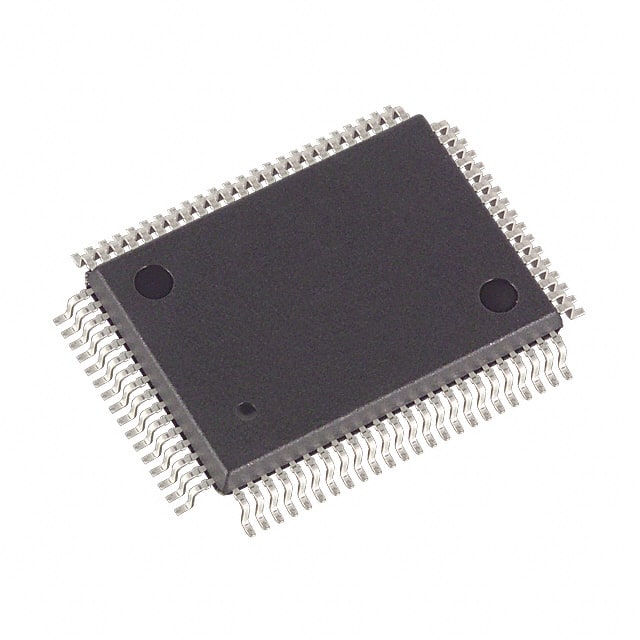
- Part No.:
- DS5002FMN-16
- Manufacturer:
- Analog Devices Inc./Maxim Integrated
- Category:
- Microcontrollers
- Package:
- 80-BQFP
- Datasheet:
-
 DS5002FMN-16.pdf
- Description:
- IC MCU 8BIT EXTRNL NVSRAM 80QFP
- Quantity:
- Payment:

- Shipping:

Inventory:4,395
Please send an inquiry. Send us your inquiry, and we will respond immediately.
Product details
Overview
DS5002FMN-16 from Maxim Integrated (now Analog Devices) is an 8051-compatible secure microprocessor with 128kB nonvolatile SRAM, lithium-backed power-fail protection, and hardware-based encryption using a 64-bit on-chip key. It features self-destruct input (SDI), true random key generation, and operates across –40°C to +85°C for industrial embedded security applications including secure timekeeping modules and tamper-resistant firmware storage.
For engineers reviewing the DS5002FMN-16 datasheet, DS5002FMN-16 pinout, DS5002FMN-16 application, or DS5002FMN-16 equivalent, this page delivers verified electrical specs (VCC = 5V ±10%, ICC = 36mA @16MHz), crash-proof operation (>10-year data retention), SDI pulse timing (tSPA ≥ 50µs at VBAT = 2.9V), and QFP-80 package compatibility - all critical for secure system design and BOM validation.
Technical Context
The DS5002FMN-16 implements real-time address and data encryption/decryption using a protected 64-bit key loaded by on-chip true random-number generation. Its byte-wide bus (BA14–BA0, BD7–BD0) interfaces directly with external SRAM while maintaining encrypted memory mapping during both bootstrap loading and runtime execution.
Security enforcement includes lithium-backed CE1–CE4 and PE1–PE2 enables, VRST and PF outputs for fail-safe reset and backup mode indication, and SDI-triggered erasure of Vector RAM and encryption keys - even with VCC = 0V. The device adheres fully to DS5001FP AC/DC specifications while adding mandatory, always-on encryption not present in predecessor DS5000FP.
Key Specifications
| Parameter | Value and Actual Design Meaning |
|---|---|
| Oscillator Frequency | 1.0–16 MHz - supports standard crystal or external clock drive; determines instruction throughput and timing margins for expanded bus cycles. |
| Operating Voltage | 5V ±10% (VCCMIN = 3.85V @ –40°C to +85°C) - defines minimum supply headroom before power-fail interrupt triggers. |
| Power-Fail Warning Voltage | VPFW = 4.1–4.6V - provides early warning interrupt before VCC drops below operational threshold, enabling graceful shutdown. |
| Idle Mode Current | 8.0 mA @ 12MHz, –40°C to +85°C - quantifies active-low-power consumption during controlled standby with clocks running. |
| Stop Mode Current | 80 µA - measures ultra-low quiescent draw when CPU halted and most peripherals disabled, preserving battery life. |
| Lithium-Backed Quiescent Current | 75–500 nA - specifies leakage current drawn from VLI during full VCC loss, enabling >10-year NV SRAM retention. |
| SDI Pulse Accept Time | tSPA ≥ 50 µs @ VBAT = 2.9V - sets minimum high-pulse width required to trigger irreversible self-destruct sequence. |
| Reset Trip Point (Stop Mode) | 4.4–4.65V @ BAT = 3.3V - defines voltage threshold at which VRST asserts low during brownout, ensuring deterministic reset behavior. |
Pinout & Package
DS5002FMN-16 is housed in an 80-pin Quad Flat Package (QFP) with 0.65mm pitch, RoHS-compliant, rated for –40°C to +85°C operation. Pin layout follows standard DS5002FP footprint, supporting drop-in replacement within same package family.
| Pin/Terminal | Circuit Role | Design Meaning |
|---|---|---|
| P0.0–P0.7 | Multiplexed Address/Data Bus / I/O Port 0 | Open-drain port requiring external pullups; serves as AD0–AD7 during multiplexed bus cycles; no pullups needed in expanded bus mode. |
| BA0–BA14 | Byte-Wide Address Bus (15-bit) | Nonmultiplexed MSB address lines for direct SRAM access; BA15 omitted - CE2/CE3 repurposed as A15/A16 for 128k configuration when MSEL = 0. |
| BD0–BD7 | Byte-Wide Data Bus (8-bit bidirectional) | Direct interface to SRAM data pins; supports encrypted read/write transfers synchronized with R/W, CE1–CE4, and ALE. |
| R/W, RD, WR | Memory Control Strobes | Active-low signals controlling SRAM read/write timing; R/W enables write protection for ROM-mapped blocks; RD/WR define MOVX cycle boundaries. |
| SDI | Self-Destruct Input | Level-sensitive input triggering immediate erasure of encryption key and Vector RAM; deglitched (tSPR = 4µs min); requires tSPA ≥ 50µs for guaranteed activation. |
| VLI, VCCO | Lithium Backup Interface | VLI accepts 2.5–4.0V lithium cell; VCCO switches between VCC and VLI to power SRAM - ensures continuous NV operation during main supply loss. |
| VRST, PF | Power-Fail Status Outputs | VRST goes low when VCC < VCCMIN, forcing reset even at VCC = 0V; PF goes low when VCC < VLI, enabling isolation of battery-backed circuitry. |
| CE1–CE4, PE1–PE4 | Lithium-Backed Chip Enables | CE1–CE4 and PE1–PE2 remain logic-high during VCC loss to retain SRAM/peripheral enable states; PE3–PE4 require external hold circuitry for battery-backed use. |
Key Features
| Feature | Design Value |
|---|---|
| Hardware Encryption Engine | Real-time address/data encryption/decryption using 64-bit key - zero-cycle overhead vs. DS5001FP; prevents memory content observation during bus transactions. |
| True Random Key Generator | On-chip entropy source loads encryption key - eliminates user exposure to key value; prevents deterministic key recovery attacks. |
| Self-Destruct Input (SDI) | Irreversible erasure of Vector RAM and encryption key upon valid high pulse - functional even with VCC = 0V; integrates with external tamper-detection circuits. |
| Crash-Proof Nonvolatile Retention | Guaranteed >10-year data retention in SRAM using lithium backup - no external capacitor or supercap required; VLI-powered VCCO sustains memory during main supply failure. |
| Power-Fail Early Warning | Dedicated VPFW threshold (4.1–4.6V) triggers interrupt before reset - enables firmware-controlled save operations and state preservation prior to brownout. |
| Secure Bootstrap Loader | On-chip ROM loader enforces security lock before execution - prevents unauthorized code injection; "Z" command required to clear lock and reprogram. |
Applications
| Secure Real-Time Clock Module | Industrial Firmware Protection |
|---|---|
|
Use Scenario: Integration into a DS2252T-style module combining DS5002FMN-16, lithium cell, RTC, and NV SRAM for tamper-resistant timekeeping in utility meters. IC Role / Device Role / Timing Role: Acts as secure host controller executing encrypted firmware, managing RTC registers via PE1/PE2, and backing up time/state to lithium-SRAM. Use Value: Prevents clock manipulation or firmware extraction via bus snooping; SDI ties to case-open sensors to erase time-critical keys on physical intrusion. |
Use Scenario: Embedded control unit in programmable logic controllers (PLCs) where OEM firmware must resist reverse engineering and unauthorized updates. IC Role / Device Role / Timing Role: Serves as secure boot processor loading encrypted application code from external SRAM; executes decrypted instructions transparently at 16MHz. Use Value: Eliminates need for external secure elements; encryption engine and 64-bit key prevent static analysis of memory dumps during debugging or field service. |
| Banking Smart Card Terminal | Medical Device Secure Boot |
|
Use Scenario: Secure transaction processing in EMV-compliant point-of-sale terminals requiring FIPS 140-2 Level 2 physical security. IC Role / Device Role / Timing Role: Hosts encrypted payment stack; uses SDI to detect probe attempts on PCB; leverages VRST/PF for fail-safe session termination. Use Value: Meets tamper-response requirements: SDI activation erases cryptographic keys within microseconds, rendering captured memory useless. |
Use Scenario: FDA-regulated infusion pump with locked bootloader preventing unapproved firmware modifications that could compromise dosing accuracy. IC Role / Device Role / Timing Role: Executes certified application firmware from encrypted NV SRAM; enforces secure update protocol via serial port with key-verified signature checks. Use Value: Ensures only signed, encrypted updates can be loaded - "L" command in bootstrap loader validates digital signature before decryption and storage. |
Equivalent & Alternatives
The following parts are listed as comparable options for similar secure microprocessor applications.
| Alternative Part | Technical Difference | Application Difference | Selection Advice |
|---|---|---|---|
| DS5002FPM-16 | Same die, commercial temp range (0°C to +70°C); identical encryption, pinout, and electrical specs. | Not qualified for extended industrial environments; unsuitable for outdoor metering or factory-floor control systems. | Select DS5002FPM-16 only for cost-sensitive commercial designs operating within 0°C–70°C ambient. |
| MAX32550 | ARM Cortex-M3 core, integrated AES-256, secure boot ROM, but no lithium-backed NV SRAM; requires external flash/backup. | Supports modern crypto protocols (TLS, PKI) but lacks built-in long-term nonvolatile memory retention without external components. | Choose MAX32550 when advanced cryptography and OS support are prioritized over autonomous 10-year battery-backed operation. |
Compared with DS5002FPM-16, DS5002FMN-16 adds industrial temperature qualification and extended reliability testing; compared with MAX32550, it delivers self-contained, lithium-powered nonvolatility without external memory management - critical for maintenance-free, sealed-system deployments.
Availability
DS5002FMN-16 is available at Aetrix Electronics and suitable for industrial automation, secure timekeeping, medical device boot security, and banking terminal firmware protection requiring stable component supply across extended temperature ranges and long product lifecycles.
Supply support for DS5002FMN-16 includes scheduled delivery planning, volume procurement assistance, BOM continuity management, traceable sourcing, and lifecycle availability coordination for OEM customers, industrial embedded developers, connected-device designers, and electronics production programs.
Manufacturer
Maxim Integrated (acquired by Analog Devices in 2021) designs precision analog, mixed-signal, and secure ICs for industrial, automotive, and communications markets.
The DS5002FMN-16 belongs to Maxim's secure microprocessor product line, engineered specifically for applications demanding physical tamper resistance, cryptographic key protection, and autonomous nonvolatile memory retention without external backup circuitry.
FAQ
What is the maximum operating frequency of the DS5002FMN-16?
The DS5002FMN-16 supports oscillator frequencies from 1.0 MHz to 16 MHz, with full AC/DC specification compliance across this range. At 16 MHz, it achieves peak instruction throughput while maintaining timing margins for expanded bus operations, including CE1–CE4 strobe widths ≥ (6tCLK – 100) ns and ALE pulse width ≥ (2tCLK – 40) ns per the datasheet.
How does the DS5002FMN-16 handle power failure events?
The DS5002FMN-16 detects power failure via its VPFW threshold (4.1–4.6V), generating an early-warning interrupt before VCC drops below VCCMIN (3.85–4.25V). When VCC falls below VLI (2.5–4.0V), VCCO switches to lithium backup, and PF asserts low. VRST guarantees reset assertion even at VCC = 0V, preserving SRAM integrity for >10 years.
Can the DS5002FMN-16 be reprogrammed after security lock is set?
Yes - the DS5002FMN-16 can be reprogrammed only after issuing the "Z" command in bootstrap loader mode to clear the security lock. This action irreversibly erases the 64-bit encryption key and Vector RAM contents. Reprogramming then proceeds via the "L" command, which loads new firmware in scrambled (encrypted) form through the on-chip serial port.
What is the function of the SDI pin on the DS5002FMN-16?
The SDI (Self-Destruct Input) pin on the DS5002FMN-16 triggers immediate, irreversible erasure of the encryption key and 48-byte Vector RAM when driven high for ≥50 µs (tSPA). It remains functional even with VCC = 0V due to lithium-backed circuitry, making it essential for integration with physical tamper-detection switches or voltage monitors in secure enclosures.
Does the DS5002FMN-16 require external pull-up resistors on Port 0?
Yes - Port 0 (P0.0–P0.7) is open-drain and requires external pull-up resistors when used as a general-purpose I/O port. However, during expanded bus operation (address/data multiplexing), external pull-ups are unnecessary because the internal bus drivers actively drive the lines. This dual-mode behavior is confirmed in the DS5002FP pin description table.
DS5002FMN-16 Specifications
- Product attributes
- Attribute value
- Manufacturer:
- Analog Devices Inc./Maxim Integrated
- Package/Case:
- 80-BQFP
- Series:
- DS500x
- Packaging:
- Tray
- Product Status:
- Obsolete
- Programmable:
- Not Verified
- Core Processor:
- 8051
- Core Size:
- 8-Bit
- Speed:
- 16MHz
- Connectivity:
- EBI/EMI, SIO, UART/USART
- Peripherals:
- Power-Fail Reset, WDT
- Number of I/O:
- 32
- Program Memory Size:
- External
- Program Memory Type:
- NVSRAM
- EEPROM Size:
- -
- RAM Size:
- -
- Voltage - Supply (Vcc/Vdd):
- 4.5V ~ 5.5V
- Data Converters:
- -
- Oscillator Type:
- External
- Operating Temperature:
- -40°C ~ 85°C (TA)
- Grade:
- -
- Qualification:
- -
- Mounting Type:
- Surface Mount
- Supplier Device Package:
DS5002FMN-16 FAQ
1.How can I place an order for DS5002FMN-16 through Aetrix?
Please submit a Request for Quotation (RFQ) for DS5002FMN-16 on Aetrix. Our sales agent will provide a competitive quotation and guide you through the order confirmation once you accept the terms.
2.Are the price and stock information for DS5002FMN-16 reliable?
The price and inventory of DS5002FMN-16 are updated periodically and may fluctuate due to market conditions. Stock and pricing data are typically refreshed every 24 hours. Quotation validity for DS5002FMN-16 is usually 5 days.
3.What payment methods are accepted for DS5002FMN-16?
We accept Wire Transfer, PayPal, Credit Card, Western Union, MoneyGram, and Escrow for DS5002FMN-16 transactions.
Note: Certain payment methods may incur a processing fee.
4.How is shipping managed for DS5002FMN-16?
DS5002FMN-16 orders can be shipped via leading logistics carriers, including DHL, UPS, FedEx, TNT, or Registered Mail.
Once your DS5002FMN-16 order is processed, you will receive an email with the shipment details and tracking number.
Note: Tracking information may take up to 24 hours to appear. Express delivery typically takes 3–5 business days.
5.How can I obtain technical support or documentation for DS5002FMN-16?
For technical support, including DS5002FMN-16 datasheets, pinout diagrams, or application guidance, please contact our engineering support team. They can provide detailed documentation and assistance for your DS5002FMN-16 requirements.
6.How does Aetrix verify that DS5002FMN-16 is sourced from the original manufacturer or authorized distributors?
All DS5002FMN-16 products on Aetrix are procured from qualified distributors and authorized channels. Our dedicated quality assurance team conducts strict verification, including traceability checks and, if necessary, third-party testing. This ensures that DS5002FMN-16 meets industry standards.
7.What is the process for return or replacement of DS5002FMN-16?
All DS5002FMN-16 units undergo pre-shipment inspection (PSI). If there is an issue with DS5002FMN-16, returns or replacements are accepted under the following conditions:
1.Quantity discrepancies, incorrect items, or visible external defects (such as breakage or corrosion), acknowledged by Aetrix.
2.The issue is reported within 90 days of delivery.
3.The DS5002FMN-16 part is unused and in its original packaging.
Return procedure for DS5002FMN-16:
1.Submit a request within 90 days.
2.Obtain a Return Material Authorization (RMA) from Aetrix.
DS5002FMN-16 Tags

-
ATTINY4-TSHR
Microchip Technology
-
ATTINY10-TSHR
Microchip Technology
-
ATTINY10-TS8R
Microchip Technology

-
ATTINY202-SSNR
Microchip Technology
-
ATTINY202-SSFR
Microchip Technology
-
ATTINY402-SSNR
Microchip Technology

-
PIC16F15213T-I/MF
Microchip Technology
-
PIC16F15213-E/MF
Microchip Technology

-
PIC10F200T-I/OT
Microchip Technology
-
ATTINY412-SSNR
Microchip Technology
-
PIC10F202T-I/OT
Microchip Technology

-
ATTINY404-SSNR
Microchip Technology
Tech Hub

A practical engineering guide to 3.3V and 5V logic compatibility, input thresholds, resistor dividers, translator ICs, MOSFET level shifting, I2C pull-ups, timing limits and power-sequencing risks.

The 74HC595 uses push-pull logic outputs, while the TPIC6B595 uses 50 V open-drain DMOS sinks for higher-power loads. This guide compares timing, current limits, 3.3 V interfacing, load wiring, thermal…

The 74HC595 converts serial data into eight stable parallel outputs. This guide covers pin functions, shift and storage timing, OE and MR behavior, drive-current limits, cascading, voltage compatibilit…

A technical comparison of level-sensitive latches and edge-triggered flip-flops, covering timing windows, setup and hold limits, master–slave operation, time borrowing, race-through, HDL inference and…

A D latch stores one bit while Enable controls when data can pass. This reference covers gate-level operation, truth tables, transparency, setup and hold timing, LE versus OE, common ICs and practical …

An SR latch stores one bit through cross-coupled feedback. This engineering reference covers NOR and NAND implementations, truth tables, forbidden-state recovery, gated operation, switch debouncing, fa…

Latch circuits retain one bit through feedback. This technical reference covers SR and D latches, truth tables, transparency, timing limits, latch-versus-flip-flop behavior, applications and common log…

An engineering guide to LED driver operation, constant-current and constant-voltage outputs, linear and switching topologies, dimming, IC selection, calculations, replacement compatibility, and fault c…

Operational amplifier guide covering op amp basics, feedback, ideal vs real op amps, common configurations, buffer circuits, offset, bias current, gain-bandwidth, slew rate, rail-to-rail limits and sel…

Jumper cables guide covering safe connection order, red and black clamp placement, final ground connection, cable gauge, length, clamp quality, copper vs CCA cables, jump starter comparison and battery…


