
 My Inquiry
 My Account


Analog Devices Inc./Maxim Integrated DS80C320-ECL
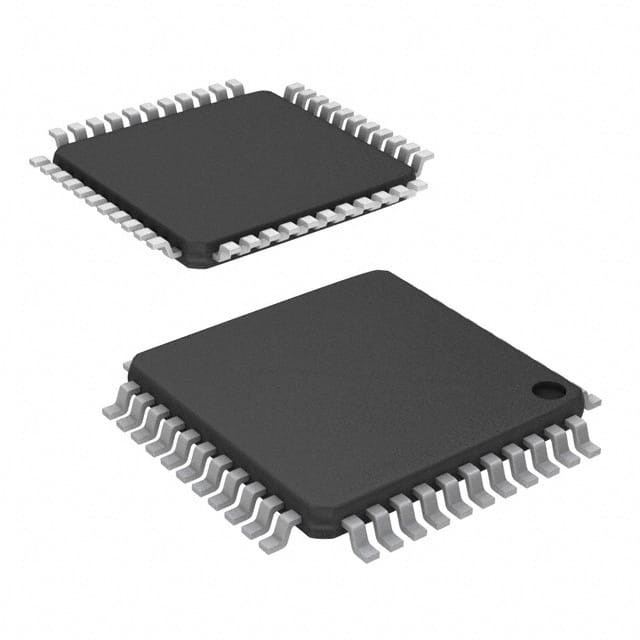
- Part No.:
- DS80C320-ECL
- Manufacturer:
- Analog Devices Inc./Maxim Integrated
- Category:
- Microcontrollers
- Package:
- 44-TQFP
- Datasheet:
-
 DS80C320-ECL.pdf
- Description:
- IC MCU 8BIT ROMLESS 44TQFP
- Quantity:
- Payment:

- Shipping:

Inventory:2,774
Please send an inquiry. Send us your inquiry, and we will respond immediately.
Product details
Overview
DS80C320-ECL from Maxim Integrated is a high-speed, 80C32-compatible 8-bit microcontroller with 4-clock-per-cycle architecture, 33MHz max crystal frequency, 256 bytes on-chip RAM, dual hardware serial ports, and programmable watchdog timer. It operates from 4.25V to 5.5V and targets legacy 8051 system upgrades requiring deterministic real-time control in industrial automation and embedded communications.
For engineers reviewing the DS80C320-ECL datasheet, DS80C320-ECL pinout, DS80C320-ECL application, or DS80C320-ECL equivalent, key selection considerations include its 40-pin DIP / 44-pin PLCC / 44-pin TQFP package options, variable MOVX memory access stretch (2–9 cycles), dual data pointer for accelerated block moves, and backward compatibility with 80C32 software while delivering ~2.5× average instruction speedup.
Technical Context
The DS80C320-ECL implements a redesigned 8051 core eliminating wasted clock and memory cycles, executing most instructions in 4 oscillator cycles versus the standard 80C32's 12. Its dual SFR-mapped serial ports (UART0 on P3.0/P3.1, UART1 on P1.2/P1.3) operate independently with configurable baud rates, and timers default to 12-cycle mode on reset for legacy timing compatibility but support 4-cycle operation via CKCON register bits.
Memory access uses multiplexed P0 (AD0–AD7) and P2 (A8–A15) buses with programmable MOVX cycle stretching (CKCON.2–0), enabling direct interface to both fast SRAM and slow peripherals like LCD controllers without glue logic. The device includes power-fail reset, early-warning power-fail interrupt, and a programmable watchdog timer-all accessible via dedicated SFRs without external components.
Key Specifications
| Parameter | Value and Actual Design Meaning |
|---|---|
| Core Architecture | 80C32-compatible 8-bit CPU with 4-clock-per-machine-cycle execution |
| Max Clock Frequency | 33MHz crystal input, enabling ~82.5MHz apparent instruction throughput |
| On-Chip RAM | 256 bytes scratchpad RAM; no on-chip ROM - requires external program memory |
| Serial Interfaces | Two independent full-duplex UARTs: UART0 (P3.0/RXD0, P3.1/TXD0) and UART1 (P1.2/RXD1, P1.3/TXD1) |
| Timer/Counter Resources | Three 16-bit timers/counters (T0, T1, T2); T2 supports capture/reload and baud rate generation |
| Memory Addressing | 64kB program space (ROM) and 64kB data space (RAM/peripherals) via external bus |
| Operating Voltage | 4.25V to 5.5V - compatible with standard 5V TTL/CMOS systems |
| I/O Ports | Four 8-bit bidirectional ports (P0–P3); P0 functions as multiplexed AD0–AD7 address/data bus |
Pinout & Package
DS80C320-ECL is supplied in a 44-pin Thin Quad Flat Package (TQFP) with 0.8mm lead pitch, thermally enhanced for industrial temperature operation (0°C to +70°C).
| Pin/Terminal | Circuit Role | Design Meaning |
|---|---|---|
| VCC (Pin 16, 17) | Power Supply | +5V main supply; dual VCC pins reduce IR drop and improve noise immunity |
| GND (Pin 4) | Digital Ground | Reference ground for digital I/O and core logic; separate from analog ground |
| RST (Pin 14) | Reset Input | Schmitt-triggered active-high input with internal pulldown; enables wired-OR reset sources without external RC |
| XTAL1 (Pin 15), XTAL2 (Pin 14) | Clock Input/Output | Supports parallel-resonant AT-cut crystals; XTAL1 accepts external clock source |
| P0.0–P0.7 (Pins 38–32) | Multiplexed Address/Data Bus | AD0–AD7; latched by ALE; no internal latch - requires external pullups for input use |
| P1.0–P1.7 (Pins 40–3, 1) | General-Purpose I/O | Includes alternate functions: T2/T2EX, RXD1/TXD1, INT2–INT5 - expands interrupt and serial capability |
| P2.0–P2.7 (Pins 18–25) | Upper Address Bus | A8–A15; automatically driven during external memory access; usable as I/O only in MOVX @Ri context |
| P3.0–P3.7 (Pins 5–13) | Multifunction I/O | Standard 8051 alternate functions: RXD0/TXD0, INT0/INT1, T0/T1, WR/RD - maintains full 80C32 compatibility |
| EA (Pin 29) | External Access Enable | Must be tied low to force all program fetches from external ROM - no internal code memory |
| ALE (Pin 14) | Address Latch Enable | Active-high pulse (1.5 XTAL1 cycles) to latch P0 address LSB into external 74LS373-type latch |
| PSEN (Pin 26) | Program Store Enable | Active-low output strobe for external ROM chip select; pulse width = 2.25 XTAL1 cycles |
Key Features
| Feature | Design Value |
|---|---|
| Dual Data Pointer (DPTR0/DPTR1) | Reduces 64-byte RAM-to-RAM block move from 1869 to 1097 machine cycles - eliminates address save/restore overhead |
| Variable MOVX Cycle Stretch (CKCON.2–0) | Configurable 2–9 machine-cycle data memory access - supports mixed-speed peripherals (e.g., SRAM + LCD) without glue logic |
| Second Hardware UART (UART1) | Full-duplex serial port on P1.2/P1.3 with independent SCON1/SBUF1 registers - enables simultaneous host/modem and sensor communication |
| Power-Fail Detection & Reset | Integrated comparator triggers early-warning interrupt before brownout and asserts hardware reset below 4.25V threshold |
| Programmable Watchdog Timer | Independent 16-bit counter with software-selectable timeout (16ms to 2.1s) - prevents firmware lockup in unattended systems |
| Timer Speed Select (CKCON.3–5) | Per-timer 4/12-clock mode selection - preserves legacy baud rates on reset while enabling faster timing when needed |
Applications
| Industrial PLC I/O Module | Legacy 8051 System Upgrade |
|---|---|
Use Scenario: Real-time monitoring of 16-channel discrete inputs and control of 8 relay outputs in factory floor equipment. IC Role / Device Role / Timing Role: DS80C320-ECL serves as the central controller, executing ladder logic scans at ≤10ms intervals using Timer 0 and servicing UART0 for HMI communication and UART1 for Modbus RTU slave interface. Use Value: 2.5× faster instruction execution reduces scan time vs. legacy 80C32, while dual UARTs eliminate external UART ICs and simplify PCB layout. | Use Scenario: Retrofitting aging medical infusion pump firmware running on obsolete 80C32 hardware with enhanced reliability and diagnostics. IC Role / Device Role / Timing Role: DS80C320-ECL replaces original microcontroller with identical pinout and instruction set, adding watchdog supervision, power-fail interrupt, and dual serial channels for service port + CAN bridge interface. Use Value: No PCB redesign required; existing assembly code runs unchanged except for watchdog initialization and power-fail handler - extends product lifecycle with zero BOM change. |
| Multi-Protocol Industrial Gateway | Smart Energy Meter Communication Hub |
Use Scenario: Aggregating data from RS-485 Modbus sensors and translating to Ethernet via external MAC/PHY, while logging events to SPI flash. IC Role / Device Role / Timing Role: DS80C320-ECL manages dual UARTs (Modbus RTU master on UART0, debug console on UART1), controls SPI flash via bit-banged GPIO, and executes protocol translation in real time. Use Value: Dual DPTR accelerates flash write buffering; MOVX stretch allows reliable interface to slow SPI flash without wait-state logic; 33MHz headroom supports future feature expansion. | Use Scenario: Enabling two-way AMI communication in electricity meters: DLMS/COSEM over PLC (via UART0) and GPRS telemetry (via UART1 connected to cellular module). IC Role / Device Role / Timing Role: DS80C320-ECL acts as protocol coordinator - parsing meter registers, managing secure key exchange, and scheduling transmission windows across both physical layers. Use Value: Power-fail interrupt captures last valid kWh reading before capacitor discharge; programmable watchdog ensures recovery from cellular module hang - meets IEC 62056 compliance requirements. |
Equivalent & Alternatives
The following parts are listed as comparable options for similar 8-bit microcontroller applications.
| Alternative Part | Technical Difference | Application Difference | Selection Advice |
|---|---|---|---|
| DS80C320-QCG+ | 44-pin PLCC package, same 33MHz speed and -40°C to +85°C temp range; different mechanical footprint and thermal profile | Preferred for through-hole prototyping or legacy PLCC socket reuse; less suitable for high-density SMT production | Select DS80C320-QCG+ only if PLCC socket infrastructure exists or thermal mass requirements favor ceramic package |
| DS80C320-MCL+ | 40-pin plastic DIP package, identical electrical specs and 33MHz rating; larger board footprint and lower pin density | Used in lab validation, educational kits, or field-serviceable modules where hand-soldering or socket replacement is required | Choose DS80C320-MCL+ for development boards or repair scenarios - avoid in volume production due to TQFP's superior thermal and EMI performance |
Compared with DS80C320-QCG+ and DS80C320-MCL+, the DS80C320-ECL offers optimal balance of industrial-grade reliability (0°C to +70°C), compact 44-pin TQFP packaging for high-density layouts, and native support for automated SMT assembly - making it the preferred choice for new industrial designs requiring long-term supply stability.
Availability
DS80C320-ECL is available at Aetrix Electronics and suitable for industrial automation, legacy system upgrades, and embedded communications requiring stable component supply, long-lifecycle support, and RoHS-compliant manufacturing.
Supply support for DS80C320-ECL includes scheduled delivery planning, volume procurement assistance, BOM continuity management, traceable sourcing, and lifecycle availability coordination for OEM customers, industrial embedded developers, connected-device designers, and electronics production programs.
Manufacturer
Maxim Integrated (now part of Analog Devices) is a U.S.-based semiconductor company specializing in precision analog, mixed-signal, and high-reliability microcontrollers for industrial, medical, and communications markets.
The DS80C320-ECL belongs to Maxim's high-speed 8051-compatible microcontroller family, designed specifically to extend the life of legacy 80C32-based systems while delivering measurable performance, integration, and power efficiency gains without software rewrite.
FAQ
What is the maximum crystal frequency supported by the DS80C320-ECL?
The DS80C320-ECL supports a maximum crystal frequency of 33MHz, enabling an effective instruction throughput of approximately 82.5MHz due to its 4-clock-per-cycle architecture. This specification is confirmed in the Ordering Information table for the DS80C320-ECL variant and applies under standard 0°C to +70°C operating conditions with 4.25V–5.5V supply voltage.
Does the DS80C320-ECL include on-chip program memory (ROM or Flash)?
No, the DS80C320-ECL does not contain any on-chip program memory. It is a ROMless microcontroller that requires external program memory accessed via the multiplexed P0 and P2 buses. The EA pin must be tied low to enable external ROM fetches, and the device supports up to 64kB of external program space - consistent with the original 80C32 architecture.
How does the dual data pointer (DPTR0/DPTR1) in the DS80C320-ECL improve memory operations?
The DS80C320-ECL's dual data pointer reduces 64-byte RAM-to-RAM block moves from 1869 to 1097 machine cycles by eliminating software address save/restore overhead. DPTR0 (SFR 82h/83h) and DPTR1 (SFR 84h/85h) are selected via DPS bit (SFR 86h), allowing single-instruction switching between source and destination addresses - a feature directly leveraged in the DS80C320-ECL's optimized memory copy routines.
Can the DS80C320-ECL operate with a 3.3V supply?
No, the DS80C320-ECL is specified for 4.25V to 5.5V operation only. For 3.3V compatibility, designers should consider the pin-compatible DS80C323 variant (e.g., DS80C323-ECD), which supports 2.7V to 5.5V operation while retaining identical peripheral features, instruction set, and package options - including 44-pin TQFP.
What is the function of the CKCON register in the DS80C320-ECL?
The CKCON register (SFR 8Eh) in the DS80C320-ECL controls three critical timing parameters: MOVX memory access stretch (CKCON.2–0), and per-timer clock division (CKCON.3 for T0, CKCON.4 for T1, CKCON.5 for T2). On reset, CKCON defaults to enable 3-cycle MOVX and 12-clock timer operation - ensuring backward compatibility with legacy 80C32 timing while allowing selective acceleration.
DS80C320-ECL Specifications
- Product attributes
- Attribute value
- Manufacturer:
- Analog Devices Inc./Maxim Integrated
- Package/Case:
- 44-TQFP
- Series:
- 80C
- Packaging:
- Tray
- Product Status:
- Obsolete
- Programmable:
- Not Verified
- Core Processor:
- 8051
- Core Size:
- 8-Bit
- Speed:
- 33MHz
- Connectivity:
- EBI/EMI, SIO, UART/USART
- Peripherals:
- Power-Fail Reset, WDT
- Number of I/O:
- 32
- Program Memory Size:
- -
- Program Memory Type:
- ROMless
- EEPROM Size:
- -
- RAM Size:
- 256 x 8
- Voltage - Supply (Vcc/Vdd):
- 4.5V ~ 5.5V
- Data Converters:
- -
- Oscillator Type:
- External
- Operating Temperature:
- 0°C ~ 70°C (TA)
- Grade:
- -
- Qualification:
- -
- Mounting Type:
- Surface Mount
- Supplier Device Package:
DS80C320-ECL FAQ
1.How can I place an order for DS80C320-ECL through Aetrix?
Please submit a Request for Quotation (RFQ) for DS80C320-ECL on Aetrix. Our sales agent will provide a competitive quotation and guide you through the order confirmation once you accept the terms.
2.Are the price and stock information for DS80C320-ECL reliable?
The price and inventory of DS80C320-ECL are updated periodically and may fluctuate due to market conditions. Stock and pricing data are typically refreshed every 24 hours. Quotation validity for DS80C320-ECL is usually 5 days.
3.What payment methods are accepted for DS80C320-ECL?
We accept Wire Transfer, PayPal, Credit Card, Western Union, MoneyGram, and Escrow for DS80C320-ECL transactions.
Note: Certain payment methods may incur a processing fee.
4.How is shipping managed for DS80C320-ECL?
DS80C320-ECL orders can be shipped via leading logistics carriers, including DHL, UPS, FedEx, TNT, or Registered Mail.
Once your DS80C320-ECL order is processed, you will receive an email with the shipment details and tracking number.
Note: Tracking information may take up to 24 hours to appear. Express delivery typically takes 3–5 business days.
5.How can I obtain technical support or documentation for DS80C320-ECL?
For technical support, including DS80C320-ECL datasheets, pinout diagrams, or application guidance, please contact our engineering support team. They can provide detailed documentation and assistance for your DS80C320-ECL requirements.
6.How does Aetrix verify that DS80C320-ECL is sourced from the original manufacturer or authorized distributors?
All DS80C320-ECL products on Aetrix are procured from qualified distributors and authorized channels. Our dedicated quality assurance team conducts strict verification, including traceability checks and, if necessary, third-party testing. This ensures that DS80C320-ECL meets industry standards.
7.What is the process for return or replacement of DS80C320-ECL?
All DS80C320-ECL units undergo pre-shipment inspection (PSI). If there is an issue with DS80C320-ECL, returns or replacements are accepted under the following conditions:
1.Quantity discrepancies, incorrect items, or visible external defects (such as breakage or corrosion), acknowledged by Aetrix.
2.The issue is reported within 90 days of delivery.
3.The DS80C320-ECL part is unused and in its original packaging.
Return procedure for DS80C320-ECL:
1.Submit a request within 90 days.
2.Obtain a Return Material Authorization (RMA) from Aetrix.
DS80C320-ECL Tags

-
ATTINY4-TSHR
Microchip Technology
-
ATTINY10-TSHR
Microchip Technology
-
ATTINY10-TS8R
Microchip Technology

-
ATTINY202-SSNR
Microchip Technology
-
ATTINY202-SSFR
Microchip Technology
-
ATTINY402-SSNR
Microchip Technology

-
PIC16F15213T-I/MF
Microchip Technology
-
PIC16F15213-E/MF
Microchip Technology

-
PIC10F200T-I/OT
Microchip Technology
-
ATTINY412-SSNR
Microchip Technology
-
PIC10F202T-I/OT
Microchip Technology

-
ATTINY404-SSNR
Microchip Technology
Tech Hub

A practical engineering guide to 3.3V and 5V logic compatibility, input thresholds, resistor dividers, translator ICs, MOSFET level shifting, I2C pull-ups, timing limits and power-sequencing risks.

The 74HC595 uses push-pull logic outputs, while the TPIC6B595 uses 50 V open-drain DMOS sinks for higher-power loads. This guide compares timing, current limits, 3.3 V interfacing, load wiring, thermal…

The 74HC595 converts serial data into eight stable parallel outputs. This guide covers pin functions, shift and storage timing, OE and MR behavior, drive-current limits, cascading, voltage compatibilit…

A technical comparison of level-sensitive latches and edge-triggered flip-flops, covering timing windows, setup and hold limits, master–slave operation, time borrowing, race-through, HDL inference and…

A D latch stores one bit while Enable controls when data can pass. This reference covers gate-level operation, truth tables, transparency, setup and hold timing, LE versus OE, common ICs and practical …

An SR latch stores one bit through cross-coupled feedback. This engineering reference covers NOR and NAND implementations, truth tables, forbidden-state recovery, gated operation, switch debouncing, fa…

Latch circuits retain one bit through feedback. This technical reference covers SR and D latches, truth tables, transparency, timing limits, latch-versus-flip-flop behavior, applications and common log…

An engineering guide to LED driver operation, constant-current and constant-voltage outputs, linear and switching topologies, dimming, IC selection, calculations, replacement compatibility, and fault c…

Operational amplifier guide covering op amp basics, feedback, ideal vs real op amps, common configurations, buffer circuits, offset, bias current, gain-bandwidth, slew rate, rail-to-rail limits and sel…

Jumper cables guide covering safe connection order, red and black clamp placement, final ground connection, cable gauge, length, clamp quality, copper vs CCA cables, jump starter comparison and battery…


