
 My Inquiry
 My Account


Analog Devices Inc./Maxim Integrated DS80C410-FNY+
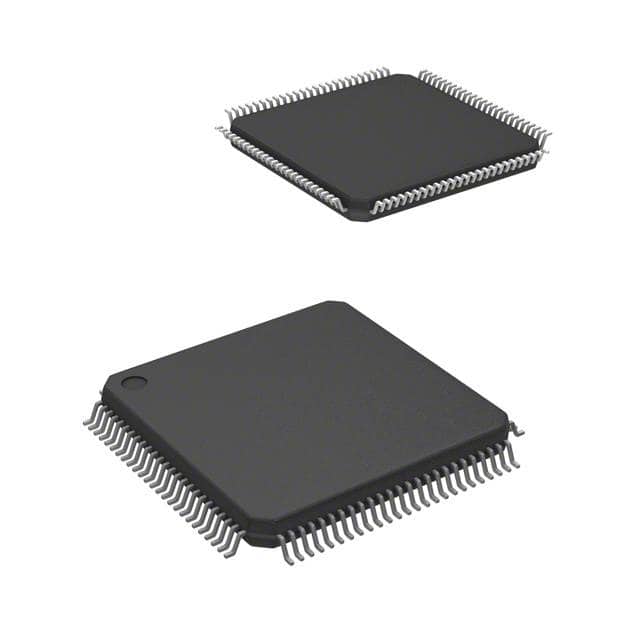
- Part No.:
- DS80C410-FNY+
- Manufacturer:
- Analog Devices Inc./Maxim Integrated
- Category:
- Microcontrollers
- Package:
- 100-LQFP
- Datasheet:
-
 DS80C410-FNY+.pdf
- Description:
- IC MCU 8BIT 64KB ROM 100LQFP
- Quantity:
- Payment:

- Shipping:

Inventory:3,379
Please send an inquiry. Send us your inquiry, and we will respond immediately.
Product details
Overview
DS80C410-FNY+ from Maxim Integrated is a high-performance 8051-based network microcontroller integrating a 10/100 Ethernet MAC, optional CAN 2.0B controller, 1-Wire Master, three hardware serial ports, and 64 I/O pins. It features 64KB on-chip SRAM, a full ROM-resident TCP/IP stack (IPv4/IPv6), and executes instructions in 54ns at 75MHz - enabling real-time industrial Ethernet gateway and sensor node applications.
For engineers reviewing the DS80C410-FNY+ datasheet, DS80C410-FNY+ pinout, DS80C410-FNY+ application, or DS80C410-FNY+ equivalent, key selection considerations include its dual-supply operation (VCC3 = 3.0–3.6V, VCC1 = 1.62–1.98V), 100-pin LQFP package, integrated network stack support for up to 32 TCP connections, and hardware math accelerator for 16/32-bit multiply/divide operations.
Technical Context
The DS80C410-FNY+ implements a flat 24-bit address space supporting up to 16MB contiguous memory with four auto-increment/decrement data pointers to accelerate memory transfers. Its Ethernet MAC supports IEEE 802.3 MII and ENDEC interfaces, configurable for half- or full-duplex operation with multicast/broadcast filtering and VLAN support.
Network boot capability over Ethernet via DHCP/TFTP, preemptive priority-based task scheduling, and Magic Packet® wake-up in ultra-low-power sleep mode are enabled by ROM firmware. The device includes dedicated hardware for 1-Wire timing control and supports CAN 2.0B protocol when enabled - though CAN functionality requires external transceiver and configuration.
Key Specifications
| Parameter | Value and Actual Design Meaning |
|---|---|
| Core Architecture | Enhanced 8051 with single-cycle instruction execution (54ns @ 75MHz) |
| Max System Clock | 75MHz - enables minimum instruction cycle time and deterministic real-time response |
| Ethernet Interface | 10/100Mbps MAC with MII/ENDEC support - requires external PHY for physical layer connectivity |
| Memory Resources | 64KB internal SRAM - sufficient for user application code and full TCP/IP stack storage |
| Supply Voltages | VCC3 = 3.0–3.6V (I/O/core); VCC1 = 1.62–1.98V (digital logic) - dual-rail operation for power optimization |
| Operating Temperature | -40°C to +85°C - qualified for industrial automation and remote monitoring environments |
| I/O Count | 64 digital I/O pins across eight bidirectional 8-bit ports - supports flexible peripheral interfacing and expansion |
Pinout & Package
DS80C410-FNY+ is housed in a 100-pin LQFP package (14mm × 14mm, 0.5mm pitch) with exposed thermal pad. Pin functions are defined per the official Maxim DS80C410 datasheet Rev 5, page 102 (Pin Configuration).
| Pin/Terminal | Circuit Role | Design Meaning |
|---|---|---|
| XTAL1 / XTAL2 | Crystal oscillator input/output | Supports 4–40MHz crystal or external clock source for system timing generation |
| RST | Active-low reset input | Asynchronous reset with internal pull-down (50–200kΩ); initiates cold boot or recovery sequence |
| MDC / MDIO | PHY management interface | IEEE 802.3-compliant serial interface to configure external Ethernet PHY registers |
| TXD[3:0] / RXD[3:0] | MII data bus | 4-bit transmit/receive data path for 100Mbps operation; 1-bit for 10Mbps ENDEC mode |
| OW / OWSTP | 1-Wire master interface | Dedicated hardware-controlled 1-Wire bus with programmable timing for standard/overdrive modes |
| P0–P7 | General-purpose I/O ports | Eight 8-bit bidirectional ports; Port 0 supports multiplexed address/data bus in external memory mode |
Key Features
| Feature | Design Value |
|---|---|
| Integrated TCP/IP Stack | Fully application-accessible IPv4/IPv6 stack in ROM - eliminates external host processor for basic networking tasks |
| Hardware Math Accelerator | Optimizes 16/32-bit multiply and divide operations - reduces CPU load in control and signal processing routines |
| Four Auto-Increment Data Pointers | Enables zero-overhead block memory moves - critical for high-throughput Ethernet packet buffering and DMA-like transfers |
| Ultra-Low-Power Sleep Mode | Supports Magic Packet® and wake-up frame detection - allows remote network-initiated wake from µA-level standby current |
| Flexible Memory Interface | Configurable multiplexed/nonmultiplexed bus with programmable stretch cycles (CST) - accommodates diverse external memory timing requirements |
Applications
| Industrial Ethernet Gateway | Smart Sensor Node |
|---|---|
Use Scenario: Protocol translation between Modbus RTU field devices and Ethernet-based SCADA systems. IC Role / Device Role / Timing Role: Primary network controller executing real-time packet forwarding, TCP session management, and serial-to-Ethernet bridging. Use Value: Eliminates need for external Linux SBC or FPGA-based gateway - reduces BOM cost and board area while maintaining deterministic latency. | Use Scenario: Environmental monitoring unit with temperature/humidity sensors, 1-Wire bus, and remote Ethernet reporting. IC Role / Device Role / Timing Role: Central sensor aggregator with integrated 1-Wire master, Ethernet MAC, and low-power sleep/wake scheduling. Use Value: Enables battery-powered operation with wake-on-event and scheduled Ethernet uploads - extends field deployment life. |
| CAN-to-Ethernet Bridge | Remote Data Acquisition Terminal |
Use Scenario: Retrofitting legacy CAN bus equipment (e.g., automotive test rigs) with Ethernet connectivity for cloud telemetry. IC Role / Device Role / Timing Role: Dual-interface bridge managing CAN message framing, Ethernet encapsulation, and buffer management. Use Value: Leverages built-in CAN 2.0B controller and TCP/IP stack - avoids custom firmware development for transport layer handling. | Use Scenario: Vending machine controller transmitting sales logs, inventory status, and fault alerts over corporate LAN. IC Role / Device Role / Timing Role: Embedded application host running lightweight OS scheduler and network stack with secure HTTP/HTTPS client support. Use Value: Supports up to 32 concurrent TCP connections - enables simultaneous reporting, remote diagnostics, and OTA update sessions. |
Equivalent & Alternatives
The following parts are listed as comparable options for similar network microcontroller applications.
| Alternative Part | Technical Difference | Application Difference | Selection Advice |
|---|---|---|---|
| DS80C411-FNY+ | Same architecture and peripherals, but lacks CAN 2.0B controller - otherwise identical pinout and firmware compatibility | Suitable where CAN interface is unnecessary; lower gate count and reduced routing complexity | Select DS80C411-FNY+ only if CAN functionality is excluded from design requirements |
| LPC1769FBD100 | ARM Cortex-M3 core, no integrated TCP/IP stack - requires external RTOS and stack porting; different memory map and peripheral register layout | Offers higher raw compute performance and richer peripheral set (USB, SPI, I²C), but demands full software stack integration effort | Choose LPC1769FBD100 when application requires ARM ecosystem tools, USB host/device, or advanced interrupt nesting not available in 8051 architecture |
Compared with DS80C410-FNY+, DS80C411-FNY+ removes CAN capability while retaining identical Ethernet, 1-Wire, and memory features - making it a streamlined alternative for non-CAN networks; LPC1769FBD100 provides greater processing headroom and modern toolchain support but shifts TCP/IP implementation burden to firmware development.
Availability
DS80C410-FNY+ is available at Aetrix Electronics and suitable for industrial automation, remote data-collection equipment, and home/office automation requiring stable component supply and long-term lifecycle support.
Supply support for DS80C410-FNY+ includes scheduled delivery planning, volume procurement assistance, BOM continuity management, traceable sourcing, and lifecycle availability coordination for OEM customers, industrial embedded developers, connected-device designers, and electronics production programs.
Manufacturer
Maxim Integrated (now part of Analog Devices) designs precision analog, mixed-signal, and embedded processing solutions for industrial, medical, and communications markets.
The DS80C410-FNY+ belongs to Maxim's high-speed network microcontroller product line, engineered to integrate Ethernet, CAN, and 1-Wire connectivity into compact, deterministic 8051-based systems for edge-node networking.
FAQ
What is the maximum Ethernet throughput achievable with the DS80C410-FNY+?
The DS80C410-FNY+ Ethernet MAC supports data transfer rates up to 5Mbps through the integrated network stack under typical conditions. This throughput reflects application-layer payload capacity after TCP/IP overhead, buffer management, and CPU scheduling - not raw PHY bandwidth. Real-world performance depends on stack configuration, external PHY selection, and host application efficiency. DS80C410-FNY+ does not guarantee line-rate 100Mbps forwarding due to 8051 core limitations and shared memory bus architecture.
Does the DS80C410-FNY+ include an integrated Ethernet PHY?
No, the DS80C410-FNY+ contains only a Media Access Controller (MAC) - not a physical layer transceiver. It requires an external IEEE 802.3-compliant PHY chip connected via MII or ENDEC interface. The DS80C410-FNY+ provides MDC/MDIO signals for PHY register configuration and supports both 10Mbps (ENDEC) and 100Mbps (MII) modes depending on external component selection.
Is CAN functionality enabled by default on the DS80C410-FNY+?
CAN 2.0B controller functionality is present in silicon but must be explicitly enabled via configuration registers and supported by external CAN transceiver hardware. The DS80C410-FNY+ datasheet confirms optional CAN support - meaning the peripheral is integrated but inactive until initialized in firmware and coupled with appropriate level-shifting transceiver (e.g., MAX3051). No CAN pins are bonded out separately; they share multiplexed port resources.
What power supply configurations does the DS80C410-FNY+ require?
The DS80C410-FNY+ requires two independent supplies: VCC3 (3.0–3.6V) for I/O and core logic, and VCC1 (1.62–1.98V) for internal digital circuitry. Power-fail warning thresholds are specified at VPFW3 = 2.85–3.15V and VPFW1 = 1.52–1.68V, with corresponding reset thresholds. Both rails must be stable during reset assertion and maintained within tolerance during active operation to ensure reliable DS80C410-FNY+ behavior.
Can the DS80C410-FNY+ boot directly from Ethernet without external flash memory?
Yes, the DS80C410-FNY+ supports network boot over Ethernet using DHCP and TFTP protocols - loading application firmware directly from a configured server. This capability relies on ROM-resident boot loader and requires proper network infrastructure (DHCP server, TFTP server, and reachable IP configuration). The DS80C410-FNY+ does not require external nonvolatile memory for initial boot, though local SRAM or optional external flash may be used for runtime storage or fail-safe fallback.
DS80C410-FNY+ Specifications
- Product attributes
- Attribute value
- Manufacturer:
- Analog Devices Inc./Maxim Integrated
- Package/Case:
- 100-LQFP
- Series:
- 80C
- Packaging:
- Tray
- Product Status:
- Obsolete
- Programmable:
- Not Verified
- Core Processor:
- 8051
- Core Size:
- 8-Bit
- Speed:
- 75MHz
- Connectivity:
- 1-Wire®, CANbus, EBI/EMI, Ethernet, SIO, UART/USART
- Peripherals:
- Power-Fail Reset, WDT
- Number of I/O:
- 64
- Program Memory Size:
- 64KB (64K x 8)
- Program Memory Type:
- ROM
- EEPROM Size:
- -
- RAM Size:
- 64K x 8
- Voltage - Supply (Vcc/Vdd):
- 1.62V ~ 3.6V
- Data Converters:
- -
- Oscillator Type:
- External
- Operating Temperature:
- -40°C ~ 85°C (TA)
- Grade:
- -
- Qualification:
- -
- Mounting Type:
- Surface Mount
- Supplier Device Package:
DS80C410-FNY+ FAQ
1.How can I place an order for DS80C410-FNY+ through Aetrix?
Please submit a Request for Quotation (RFQ) for DS80C410-FNY+ on Aetrix. Our sales agent will provide a competitive quotation and guide you through the order confirmation once you accept the terms.
2.Are the price and stock information for DS80C410-FNY+ reliable?
The price and inventory of DS80C410-FNY+ are updated periodically and may fluctuate due to market conditions. Stock and pricing data are typically refreshed every 24 hours. Quotation validity for DS80C410-FNY+ is usually 5 days.
3.What payment methods are accepted for DS80C410-FNY+?
We accept Wire Transfer, PayPal, Credit Card, Western Union, MoneyGram, and Escrow for DS80C410-FNY+ transactions.
Note: Certain payment methods may incur a processing fee.
4.How is shipping managed for DS80C410-FNY+?
DS80C410-FNY+ orders can be shipped via leading logistics carriers, including DHL, UPS, FedEx, TNT, or Registered Mail.
Once your DS80C410-FNY+ order is processed, you will receive an email with the shipment details and tracking number.
Note: Tracking information may take up to 24 hours to appear. Express delivery typically takes 3–5 business days.
5.How can I obtain technical support or documentation for DS80C410-FNY+?
For technical support, including DS80C410-FNY+ datasheets, pinout diagrams, or application guidance, please contact our engineering support team. They can provide detailed documentation and assistance for your DS80C410-FNY+ requirements.
6.How does Aetrix verify that DS80C410-FNY+ is sourced from the original manufacturer or authorized distributors?
All DS80C410-FNY+ products on Aetrix are procured from qualified distributors and authorized channels. Our dedicated quality assurance team conducts strict verification, including traceability checks and, if necessary, third-party testing. This ensures that DS80C410-FNY+ meets industry standards.
7.What is the process for return or replacement of DS80C410-FNY+?
All DS80C410-FNY+ units undergo pre-shipment inspection (PSI). If there is an issue with DS80C410-FNY+, returns or replacements are accepted under the following conditions:
1.Quantity discrepancies, incorrect items, or visible external defects (such as breakage or corrosion), acknowledged by Aetrix.
2.The issue is reported within 90 days of delivery.
3.The DS80C410-FNY+ part is unused and in its original packaging.
Return procedure for DS80C410-FNY+:
1.Submit a request within 90 days.
2.Obtain a Return Material Authorization (RMA) from Aetrix.
DS80C410-FNY+ Tags

-
ATTINY4-TSHR
Microchip Technology
-
ATTINY10-TSHR
Microchip Technology
-
ATTINY10-TS8R
Microchip Technology

-
ATTINY202-SSNR
Microchip Technology
-
ATTINY202-SSFR
Microchip Technology
-
ATTINY402-SSNR
Microchip Technology
-
PIC16F15213T-I/MF
Microchip Technology
-
PIC16F15213-E/MF
Microchip Technology

-
PIC10F200T-I/OT
Microchip Technology
-
ATTINY412-SSNR
Microchip Technology
-
PIC10F202T-I/OT
Microchip Technology
-
ATTINY404-SSNR
Microchip Technology
Tech Hub

A practical engineering guide to 3.3V and 5V logic compatibility, input thresholds, resistor dividers, translator ICs, MOSFET level shifting, I2C pull-ups, timing limits and power-sequencing risks.

The 74HC595 uses push-pull logic outputs, while the TPIC6B595 uses 50 V open-drain DMOS sinks for higher-power loads. This guide compares timing, current limits, 3.3 V interfacing, load wiring, thermal…

The 74HC595 converts serial data into eight stable parallel outputs. This guide covers pin functions, shift and storage timing, OE and MR behavior, drive-current limits, cascading, voltage compatibilit…

A technical comparison of level-sensitive latches and edge-triggered flip-flops, covering timing windows, setup and hold limits, master–slave operation, time borrowing, race-through, HDL inference and…

A D latch stores one bit while Enable controls when data can pass. This reference covers gate-level operation, truth tables, transparency, setup and hold timing, LE versus OE, common ICs and practical …

An SR latch stores one bit through cross-coupled feedback. This engineering reference covers NOR and NAND implementations, truth tables, forbidden-state recovery, gated operation, switch debouncing, fa…

Latch circuits retain one bit through feedback. This technical reference covers SR and D latches, truth tables, transparency, timing limits, latch-versus-flip-flop behavior, applications and common log…

An engineering guide to LED driver operation, constant-current and constant-voltage outputs, linear and switching topologies, dimming, IC selection, calculations, replacement compatibility, and fault c…

Operational amplifier guide covering op amp basics, feedback, ideal vs real op amps, common configurations, buffer circuits, offset, bias current, gain-bandwidth, slew rate, rail-to-rail limits and sel…

Jumper cables guide covering safe connection order, red and black clamp placement, final ground connection, cable gauge, length, clamp quality, copper vs CCA cables, jump starter comparison and battery…


