
 My Inquiry
 My Account


Texas Instruments DS80EP100SD/NOPB
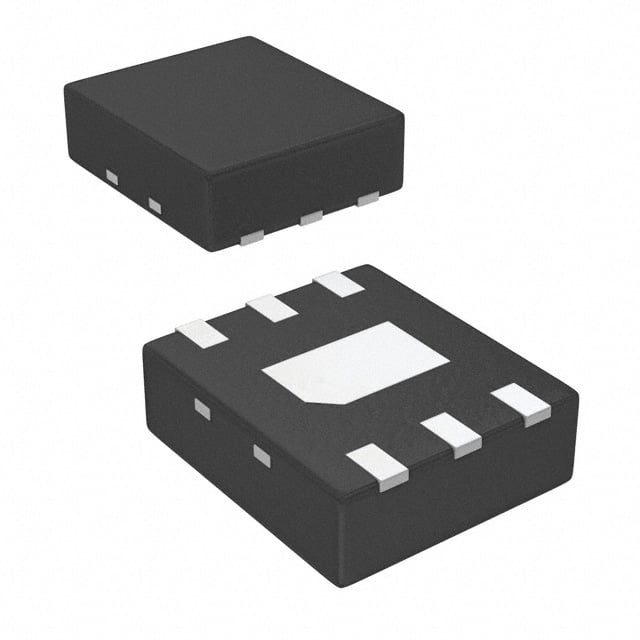
- Part No.:
- DS80EP100SD/NOPB
- Manufacturer:
- Texas Instruments
- Category:
- Specialized
- Package:
- 6-WDFN Exposed Pad
- Datasheet:
-
 DS80EP100SD/NOPB.pdf
- Description:
- IC INTERFACE SPECIALIZED 6WSON
- Quantity:
- Payment:

- Shipping:

Inventory:1,359
Please send an inquiry. Send us your inquiry, and we will respond immediately.
Product details
Overview
DS80EP100SD/NOPB from Texas Instruments is a passive, power-free 5–12.5 Gbps differential equalizer for FR4 backplanes and twin-axial cables, featuring 100 Ω differential I/O impedance, 7 dB maximum boost, and symmetric bidirectional operation. It compensates transmission loss in high-speed serial links without requiring power or ground connections, and is deployed in line cards and switch cards for PCIe Gen1/Gen2 and XAUI systems.
For engineers reviewing the DS80EP100SD/NOPB datasheet, DS80EP100SD/NOPB pinout, DS80EP100SD/NOPB application, or DS80EP100SD/NOPB equivalent, key selection criteria include passive operation, 100 Ω differential impedance matching, placement flexibility in the data path, deterministic jitter reduction below 0.20 UIp-p, and compatibility with CML/LV-PECL/LVDS signaling.
Technical Context
The DS80EP100SD/NOPB implements a passive bridged-T network using resistive, capacitive, and inductive elements to provide linear, frequency-dependent attenuation and peaking-acting as a bandpass filter centered near 6.25 GHz. Its response is protocol-agnostic and independent of 8b/10b encoding or scrambling.
It supports full-duplex operation via symmetric I/O structures (IOA+/IOA− and IOB+/IOB−), enabling signal flow in either direction with identical equalization performance. No DC biasing or termination resistors are required beyond the standard 100 Ω differential load.
Key Specifications
| Parameter | Value and Actual Design Meaning |
|---|---|
| Bit Rate Range | 5 to 12.5 Gbps - Supports full-speed operation across PCIe Gen1 (2.5 GT/s), Gen2 (5 GT/s), and XAUI (3.125 GT/s) without retiming or active amplification. |
| Differential Impedance | 100 Ω - Matches standard high-speed differential interconnects (FR4 traces, twin-ax cables), eliminating need for external termination. |
| Equalization Boost | Up to 7 dB at 6.25 GHz - Compensates up to ~20 inches of 6-mil FR4 microstrip or 5 m of 26 AWG twin-ax cable at 10 Gbps. |
| Residual DJ | ≤0.20 UIp-p at 12.5 Gbps - Reduces deterministic jitter induced by channel loss, preserving eye height and timing margin. |
| Supply Requirement | No power or ground required - Enables placement anywhere in the signal path (e.g., mid-channel, on flex, or near connector) without PCB routing constraints. |
| Signal Compatibility | CML, LV-PECL, LVDS - Interoperable with common high-speed logic families without level-shifting or AC-coupling adjustments. |
| Operating Temperature | −40°C to +85°C - Qualified for industrial-grade line card and switch card environments. |
Pinout & Package
DS80EP100SD/NOPB is housed in a 2.2 mm × 2.5 mm, 6-pin WSON (NGF) package with exposed thermal pad (DAP) left unconnected. Pins 2 and 5 are NC; DAP is not electrically connected and must remain floating.
| Pin/Terminal | Circuit Role | Design Meaning |
|---|---|---|
| IOA+ | Differential input/output | High-speed positive terminal of first differential port; interchangeable with IOB+ due to symmetric passive topology. |
| IOA− | Differential input/output | High-speed negative terminal of first differential port; forms 100 Ω differential pair with IOA+. |
| IOB+ | Differential input/output | High-speed positive terminal of second differential port; functionally identical to IOA+ for bidirectional use. |
| IOB− | Differential input/output | High-speed negative terminal of second differential port; forms 100 Ω differential pair with IOB−. |
| Pins 2 & 5 | No connect | Reserved; landing pads must be isolated from all planes-no routing, stitching, or thermal connection permitted. |
Key Features
| Feature | Design Value |
|---|---|
| Passive equalization | Zero-power operation eliminates supply noise coupling, simplifies layout, and removes thermal drift concerns in dense line cards. |
| Symmetric I/O architecture | Enables identical equalization whether placed on Tx side (line card → switch) or Rx side (switch → line card), reducing BOM variants. |
| Protocol-transparent compensation | Works identically with scrambled or 8b/10b-encoded data-no configuration or training required for PCIe, XAUI, or custom protocols. |
| Linear bandpass response | Peaks near 6.25 GHz to counteract FR4 roll-off while preserving low-frequency common-mode integrity and minimizing overshoot. |
| Small-footprint WSON package | 2.2 mm × 2.5 mm footprint allows placement directly adjacent to connectors or ASIC packages without sacrificing routing space. |
Applications
| PCIe Gen2 Backplane Link | XAUI-Based Switch Fabric |
|---|---|
|
Use Scenario: Extending 5 Gbps PCIe Gen2 signals over 20-inch FR4 backplane traces with >15 dB loss at 2.5 GHz. IC Role / Device Role / Timing Role: Passive channel equalizer placed mid-backplane to restore signal integrity before receiver CDR. Use Value: Increases eye height from 0.2 V to >0.7 V and reduces deterministic jitter from 0.45 UIp-p to ≤0.15 UIp-p, enabling reliable link training. |
Use Scenario: Enabling 3.125 Gbps XAUI lanes across 5-meter twin-axial cable assemblies in modular switch chassis. IC Role / Device Role / Timing Role: Bidirectional equalizer mounted on cable adapter board to compensate both transmit and receive paths. Use Value: Restores 80% eye opening at 100% stress test conditions, eliminating need for active repeaters or retimers in cost-sensitive designs. |
| LVDS-Based High-Speed ADC Interface | Multi-Protocol Line Card Aggregation |
|
Use Scenario: Connecting 10 Gbps LVDS outputs from high-resolution ADCs to FPGA receivers over 12-inch FR4 interposer. IC Role / Device Role / Timing Role: Passive equalizer placed between ADC output and FPGA input to offset trace loss-induced intersymbol interference. Use Value: Maintains <10−12 BER under worst-case process/voltage/temperature corners without adding latency or power consumption. |
Use Scenario: Supporting mixed-rate interfaces (PCIe Gen1/Gen2, SATA, XAUI) on a single carrier board with shared backplane routing. IC Role / Device Role / Timing Role: Universal equalizer used across multiple protocols due to coding-agnostic, frequency-selective response. Use Value: Reduces design complexity by eliminating protocol-specific equalizer variants-single part qualifies for all 5–12.5 Gbps applications. |
Equivalent & Alternatives
The following parts are listed as comparable options for similar passive equalizer applications.
| Alternative Part | Technical Difference | Application Difference | Selection Advice |
|---|---|---|---|
| DS80EQ100SD/NOPB | Same 6-pin WSON package but includes integrated 100 Ω termination resistors; requires no external termination. | Better suited for point-to-point links where source/load termination is impractical; adds 0.5 mm in height due to resistor integration. | Select DS80EQ100SD/NOPB when board space permits slightly taller profile and termination simplicity outweighs minimal insertion loss trade-off. |
| MAX3801ETE+ | Active equalizer with programmable gain (0–12 dB); requires ±3.3 V supply and consumes 120 mW. | Supports longer channels (>30 in FR4) and adaptive tuning; introduces power noise, latency, and temperature drift. | Choose MAX3801ETE+ only when passive boost is insufficient and system-level power budget and noise tolerance allow active intervention. |
Compared with DS80EQ100SD/NOPB, DS80EP100SD/NOPB offers lower insertion loss and zero power dependency but requires external 100 Ω termination; versus MAX3801ETE+, it avoids supply noise and latency but lacks programmability for marginal channels.
Availability
DS80EP100SD/NOPB is available at Aetrix Electronics and suitable for PCIe Gen2 backplanes, XAUI switch fabrics, high-speed ADC interfaces, and multi-protocol line cards requiring stable component supply across industrial temperature ranges and long production lifecycles.
Supply support for DS80EP100SD/NOPB includes scheduled delivery planning, volume procurement assistance, BOM continuity management, traceable sourcing, and lifecycle availability coordination for OEM customers, industrial embedded developers, connected-device designers, and electronics production programs.
Manufacturer
Texas Instruments is a global semiconductor leader specializing in analog, embedded processing, and high-speed interface solutions, with decades of expertise in signal integrity and interconnect optimization.
The DS80EP100SD/NOPB belongs to TI's Power-Saver Equalizer family-designed specifically for passive, zero-power compensation of lossy backplane and cable channels in telecom, datacom, and test equipment.
FAQ
Does DS80EP100SD/NOPB require any power supply or biasing?
No, DS80EP100SD/NOPB is a fully passive device composed of resistive, capacitive, and inductive elements. It operates without power, ground, or DC bias-making it ideal for placement anywhere in the signal path, including on unpowered daughterboards or flex cables. The DS80EP100SD/NOPB draws zero quiescent current and introduces no supply noise.
Can DS80EP100SD/NOPB be used bidirectionally in the same design?
Yes, DS80EP100SD/NOPB features symmetric I/O structures (IOA+/IOA− and IOB+/IOB−), allowing identical equalization performance regardless of signal direction. In a line card ↔ switch card link, the same DS80EP100SD/NOPB can equalize both Tx and Rx paths without modification-reducing inventory and layout complexity.
What is the maximum supported trace length for DS80EP100SD/NOPB at 10 Gbps?
At 10 Gbps, DS80EP100SD/NOPB extends usable reach to 30 inches of 6-mil FR4 microstrip (per Figure 8), restoring eye height above 0.5 V and limiting residual deterministic jitter to ≤0.20 UIp-p. Performance is validated with PRBS-7 patterns and assumes proper 100 Ω differential impedance control and minimal via usage-critical for maintaining DS80EP100SD/NOPB effectiveness.
Is DS80EP100SD/NOPB compatible with LVDS signaling?
Yes, DS80EP100SD/NOPB explicitly supports LVDS, CML, and LV-PECL signaling per its datasheet. Its 100 Ω differential input/output impedance matches standard LVDS drivers and receivers, and its linear, frequency-selective response preserves LVDS common-mode stability while boosting high-frequency content lost in interconnects.
How does DS80EP100SD/NOPB differ from active equalizers like DS80EQ100SD/NOPB?
DS80EP100SD/NOPB is passive and requires no power, whereas DS80EQ100SD/NOPB integrates 100 Ω termination resistors and delivers identical equalization with simplified layout. DS80EP100SD/NOPB has lower insertion loss and zero power dependency; DS80EQ100SD/NOPB eliminates external termination but adds slight height and fixed resistive loading-both are drop-in compatible in WSON NGF packages.
DS80EP100SD/NOPB Specifications
- Product attributes
- Attribute value
- Manufacturer:
- Texas Instruments
- Series:
- -
- Package/Case:
- 6-WDFN Exposed Pad
- Packaging:
- Tape & Reel (TR)
- Product Status:
- Active
- Applications:
- Displays
- Interface:
- Coax Cable and Female Connector
- Voltage - Supply:
- -
- Supplier Device Package:
- 6-WSON (2.2x2.5)
- Grade:
- -
- Qualification:
- -
- Mounting Type:
- Surface Mount
DS80EP100SD/NOPB FAQ
1.How can I place an order for DS80EP100SD/NOPB through Aetrix?
Please submit a Request for Quotation (RFQ) for DS80EP100SD/NOPB on Aetrix. Our sales agent will provide a competitive quotation and guide you through the order confirmation once you accept the terms.
2.Are the price and stock information for DS80EP100SD/NOPB reliable?
The price and inventory of DS80EP100SD/NOPB are updated periodically and may fluctuate due to market conditions. Stock and pricing data are typically refreshed every 24 hours. Quotation validity for DS80EP100SD/NOPB is usually 5 days.
3.What payment methods are accepted for DS80EP100SD/NOPB?
We accept Wire Transfer, PayPal, Credit Card, Western Union, MoneyGram, and Escrow for DS80EP100SD/NOPB transactions.
Note: Certain payment methods may incur a processing fee.
4.How is shipping managed for DS80EP100SD/NOPB?
DS80EP100SD/NOPB orders can be shipped via leading logistics carriers, including DHL, UPS, FedEx, TNT, or Registered Mail.
Once your DS80EP100SD/NOPB order is processed, you will receive an email with the shipment details and tracking number.
Note: Tracking information may take up to 24 hours to appear. Express delivery typically takes 3–5 business days.
5.How can I obtain technical support or documentation for DS80EP100SD/NOPB?
For technical support, including DS80EP100SD/NOPB datasheets, pinout diagrams, or application guidance, please contact our engineering support team. They can provide detailed documentation and assistance for your DS80EP100SD/NOPB requirements.
6.How does Aetrix verify that DS80EP100SD/NOPB is sourced from the original manufacturer or authorized distributors?
All DS80EP100SD/NOPB products on Aetrix are procured from qualified distributors and authorized channels. Our dedicated quality assurance team conducts strict verification, including traceability checks and, if necessary, third-party testing. This ensures that DS80EP100SD/NOPB meets industry standards.
7.What is the process for return or replacement of DS80EP100SD/NOPB?
All DS80EP100SD/NOPB units undergo pre-shipment inspection (PSI). If there is an issue with DS80EP100SD/NOPB, returns or replacements are accepted under the following conditions:
1.Quantity discrepancies, incorrect items, or visible external defects (such as breakage or corrosion), acknowledged by Aetrix.
2.The issue is reported within 90 days of delivery.
3.The DS80EP100SD/NOPB part is unused and in its original packaging.
Return procedure for DS80EP100SD/NOPB:
1.Submit a request within 90 days.
2.Obtain a Return Material Authorization (RMA) from Aetrix.
DS80EP100SD/NOPB Tags
-
NVT4857UKAZ
NXP Semiconductors
-
TCA8418RTWR
Texas Instruments

-
PCA9546APWR
Texas Instruments

-
MD0100N8-G
Microchip Technology
-
PCA9548APW,118
NXP Semiconductors
-
PCA9540BDP,118
NXP Semiconductors
-
PCA9548APWR
Texas Instruments
-
PCA9546APW,118
NXP Semiconductors
-
PTN3360DBS,518
NXP Semiconductors
-
PCA9546ABS,118
NXP Semiconductors
-
PCA9518PWR
Texas Instruments
-
PCA9545APW,118
NXP Semiconductors
Tech Hub

A practical engineering guide to 3.3V and 5V logic compatibility, input thresholds, resistor dividers, translator ICs, MOSFET level shifting, I2C pull-ups, timing limits and power-sequencing risks.

The 74HC595 uses push-pull logic outputs, while the TPIC6B595 uses 50 V open-drain DMOS sinks for higher-power loads. This guide compares timing, current limits, 3.3 V interfacing, load wiring, thermal…

The 74HC595 converts serial data into eight stable parallel outputs. This guide covers pin functions, shift and storage timing, OE and MR behavior, drive-current limits, cascading, voltage compatibilit…

A technical comparison of level-sensitive latches and edge-triggered flip-flops, covering timing windows, setup and hold limits, master–slave operation, time borrowing, race-through, HDL inference and…

A D latch stores one bit while Enable controls when data can pass. This reference covers gate-level operation, truth tables, transparency, setup and hold timing, LE versus OE, common ICs and practical …

An SR latch stores one bit through cross-coupled feedback. This engineering reference covers NOR and NAND implementations, truth tables, forbidden-state recovery, gated operation, switch debouncing, fa…

Latch circuits retain one bit through feedback. This technical reference covers SR and D latches, truth tables, transparency, timing limits, latch-versus-flip-flop behavior, applications and common log…

An engineering guide to LED driver operation, constant-current and constant-voltage outputs, linear and switching topologies, dimming, IC selection, calculations, replacement compatibility, and fault c…

Operational amplifier guide covering op amp basics, feedback, ideal vs real op amps, common configurations, buffer circuits, offset, bias current, gain-bandwidth, slew rate, rail-to-rail limits and sel…

Jumper cables guide covering safe connection order, red and black clamp placement, final ground connection, cable gauge, length, clamp quality, copper vs CCA cables, jump starter comparison and battery…


