
 My Inquiry
 My Account


Analog Devices Inc./Maxim Integrated DS87C530-KCL
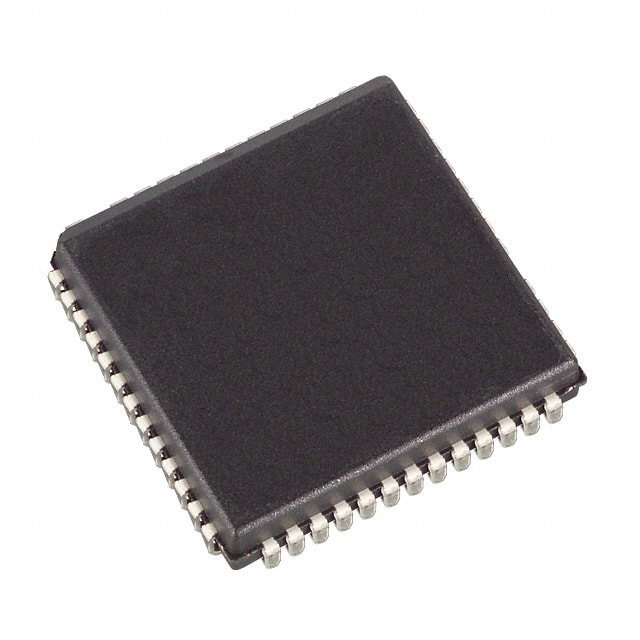
- Part No.:
- DS87C530-KCL
- Manufacturer:
- Analog Devices Inc./Maxim Integrated
- Category:
- Microcontrollers
- Package:
- 52-CLCC, Window (J Lead)
- Datasheet:
-
 DS87C530-KCL.pdf
- Description:
- IC MCU 8BIT 16KB EPROM/UV 52CLCC
- Quantity:
- Payment:

- Shipping:

Inventory:1,885
Please send an inquiry. Send us your inquiry, and we will respond immediately.
Product details
Overview
DS87C530-KCL from Maxim Integrated (formerly Dallas Semiconductor) is an 8051-compatible high-speed microcontroller with integrated real-time clock (RTC), 16kB OTP EPROM, 1kB battery-backed SRAM, and dual hardware serial ports. It executes instructions in 4 clocks/machine cycle (vs. 12 for standard 8051), supports 33MHz operation, and features programmable power management mode for portable instrumentation and data-logging systems.
For engineers reviewing the DS87C530-KCL datasheet, DS87C530-KCL pinout, DS87C530-KCL application, or DS87C530-KCL equivalent, key selection considerations include its windowed ceramic LCC-52 package, RTC alarm interrupt capability, ROMSIZE register for dynamic external memory mapping, and dual data pointer support for efficient MOVX operations.
Technical Context
The DS87C530-KCL implements a static CMOS 8051-compatible core with 4-clock-per-instruction-cycle architecture, enabling single-cycle execution in 121ns at 33MHz. Its RTC subsystem uses dedicated RTCX1/RTCX2 pins for 32.768kHz crystal input and maintains time to ±2 minutes/month accuracy at 25°C with nonvolatile alarm registers.
It integrates two independent full-duplex serial ports (UART0 and UART1), three 16-bit timer/counters (with Timer 2 on Port 1), and Power Management Mode (PMM) that reduces CPU clock to crystal/64 or crystal/1024 via PMR register - enabling low-power operation while retaining RTC and SRAM backup functionality via VBAT.
Key Specifications
| Parameter | Value and Actual Design Meaning |
|---|---|
| Core Architecture | 8051-compatible, 4-clock-per-machine-cycle design enabling 3× faster instruction execution vs. standard 8051 at same crystal frequency |
| Max Clock Speed | 33MHz - delivers peak performance of 8.25 MIPS with 121ns instruction cycle time |
| On-Chip Memory | 16kB OTP EPROM (programmable via UV erasure through window) + 1kB MOVX-accessible SRAM + 256B direct RAM |
| Real-Time Clock | Integrated RTC with alarm interrupt, calendar registers (seconds/minutes/hours/day/date), and ±2 min/month accuracy at 25°C |
| Power Management | Software-selectable PMM modes (crystal/64 or crystal/1024) with automatic hardware/software exit - reduces active current without disabling RTC or SRAM |
| Package | 52-pin Windowed Ceramic Leadless Chip Carrier (CLCC) - UV-erasable EPROM requires exposed quartz window for reprogramming |
| Operating Temp | 0°C to +70°C - validated for commercial-grade embedded instrumentation and industrial control applications |
Pinout & Package
DS87C530-KCL is housed in a 52-pin Windowed Ceramic LCC (CLCC) package with 0.025" pitch, designed for UV erasure of its OTP EPROM. The package provides hermetic sealing and thermal stability suitable for long-life embedded deployments requiring field-reprogrammability.
| Pin/Terminal | Circuit Role | Design Meaning |
|---|---|---|
| VCC / GND | Digital supply / ground | VCC powers core logic; GND is digital reference - separate VCC2/GND2 pins isolate RTC circuitry from digital noise |
| RTCX1 / RTCX2 | RTC crystal interface | Accepts 32.768kHz crystal (6pF or 12.5pF load); must be guard-ringed with GND2 to prevent noise coupling into timekeeping circuit |
| P0.0–P0.7 (AD0–AD7) | Multiplexed address/data bus | Open-drain I/O port used for external memory access; ALE-controlled latching enables 8-bit address/data multiplexing on external bus |
| P1.0–P1.7 | General-purpose I/O with alternate functions | Supports Timer 2 I/O (P1.0/P1.1), Serial Port 1 (P1.2/P1.3), and five external interrupts (INT2–INT5) - expands interrupt handling beyond standard 8051 |
| VBAT | Battery backup input | Connects to 3V lithium cell or supercap to maintain RTC and 1kB SRAM during main power loss - internal switching ensures seamless transition |
| EA | External access control | Low = external ROM only; High = internal ROM enabled - overrides ROMSIZE register settings for boot configuration flexibility |
Key Features
| Feature | Design Value |
|---|---|
| ROMSIZE Register | Software-configurable on-chip ROM size (0–16kB) enables dynamic external memory mapping - critical for boot-loading from external Flash without hardware changes |
| Dual Data Pointer | Separate DPTR and DPTR1 registers eliminate redundant pointer reloads during block memory transfers - improves MOVX efficiency by up to 40% in data-intensive firmware |
| EMI Reduction Mode | Writing ALEOFF=1 disables ALE output during non-memory cycles - reduces radiated emissions without affecting timing-critical memory accesses |
| Power-Fail Detection | Integrated early-warning power-fail interrupt triggers before brownout - allows safe SRAM save and RTC state preservation prior to VCC collapse |
| Watchdog Timer | Programmable watchdog with independent reset and interrupt outputs - prevents system lockup in unattended remote monitoring applications |
Applications
| Portable Data Logger | Industrial Control Panel |
|---|---|
Use Scenario: Battery-powered environmental sensor node logging temperature, humidity, and timestamped events over weeks between uploads. IC Role / Device Role / Timing Role: DS87C530-KCL serves as main controller and timekeeper - executing acquisition firmware, managing SD card writes, and maintaining accurate UTC timestamps via integrated RTC. Use Value: On-chip 1kB battery-backed SRAM stores recent logs during power loss; RTC alarm wakes CPU every 10 minutes for scheduled sampling - eliminating external RTC IC and reducing BOM count by 2 components. | Use Scenario: Front-panel HMI in factory automation system requiring local display updates, button response, and serial communication with PLCs. IC Role / Device Role / Timing Role: DS87C530-KCL acts as display controller and protocol bridge - driving 4-digit LED display via Port 2, scanning keypad inputs on Port 1, and handling Modbus RTU via UART1. Use Value: Dual serial ports enable simultaneous host communication (UART0) and fieldbus interface (UART1); ROMSIZE register allows future firmware updates via external SPI Flash without changing PCB layout. |
| Medical Diagnostic Handheld | Energy Meter Firmware Host |
Use Scenario: Handheld blood glucose meter requiring FDA-compliant audit trail, user authentication, and tamper-proof time-stamped test records. IC Role / Device Role / Timing Role: DS87C530-KCL functions as secure data logger and RTC anchor - storing encrypted test results with precise timestamps and triggering alarm interrupts on expired calibration intervals. Use Value: Nonvolatile RTC and SRAM retain audit logs across battery swaps; programmable watchdog ensures deterministic recovery from ESD-induced faults - meeting IEC 62304 Class B requirements. | Use Scenario: Smart electricity meter needing lifetime energy accumulation, tariff scheduling, and secure firmware updates over powerline communication. IC Role / Device Role / Timing Role: DS87C530-KCL operates as metering co-processor - calculating kWh totals, updating TOU rates at midnight via RTC alarm, and verifying signed firmware images in external Flash. Use Value: RTC calendar registers provide day-of-week awareness for tariff switching; 16kB OTP EPROM stores certified metering algorithms - eliminating external code storage and simplifying regulatory certification. |
Equivalent & Alternatives
The following parts are listed as comparable options for similar microcontroller applications.
| Alternative Part | Technical Difference | Application Difference | Selection Advice |
|---|---|---|---|
| DS87C530-QCL | Same die, but in 52-pin PLCC package with UV-transparent window - identical electrical specs and OTP EPROM functionality | PLCC allows socket-based prototyping and easier rework; CLCC (DS87C530-KCL) offers superior thermal performance and smaller footprint | Select DS87C530-KCL for production volume where board space and thermal reliability are critical; choose QCL for lab validation and iterative firmware development |
| DS83C530-QCL | Mask ROM version - replaces 16kB EPROM with factory-programmed ROM; otherwise pin- and code-compatible | Eliminates UV erasure requirement and reduces unit cost for high-volume fixed-function deployments | Choose DS83C530-QCL when firmware is finalized and field updates are unnecessary; DS87C530-KCL remains preferred when post-deployment EPROM reprogramming is required |
Compared with DS87C530-QCL and DS83C530-QCL, the DS87C530-KCL uniquely combines UV-erasable OTP EPROM in a thermally robust ceramic package - making it optimal for applications demanding both field-upgradable firmware and long-term operational stability under temperature cycling.
Availability
DS87C530-KCL is available at Aetrix Electronics and suitable for portable instrumentation, industrial HMI panels, medical diagnostic devices, and smart energy metering requiring stable component supply, long-lifecycle support, and field-reprogrammable firmware.
Supply support for DS87C530-KCL includes scheduled delivery planning, volume procurement assistance, BOM continuity management, traceable sourcing, and lifecycle availability coordination for OEM customers, industrial embedded developers, connected-device designers, and electronics production programs.
Manufacturer
Maxim Integrated (acquired by Analog Devices in 2021) designs precision analog, mixed-signal, and high-reliability microcontrollers for industrial, medical, and automotive applications.
The DS87C530-KCL belongs to Maxim's legacy Dallas Semiconductor high-speed 8051 microcontroller family, engineered specifically for embedded systems requiring integrated RTC, nonvolatile memory, and deterministic real-time control in resource-constrained environments.
FAQ
What is the primary function of the DS87C530-KCL in embedded systems?
The DS87C530-KCL serves as a high-speed, 8051-compatible microcontroller with integrated real-time clock and nonvolatile SRAM. Its primary function is to execute deterministic control firmware while maintaining accurate timekeeping and preserving critical data during power loss - making it ideal for portable data loggers, industrial HMIs, and medical devices where timestamp integrity and field-upgradable code are essential. The DS87C530-KCL achieves this using its 16kB OTP EPROM, dual serial ports, and battery-backed 1kB SRAM.
How does the ROMSIZE feature of the DS87C530-KCL support external memory expansion?
The ROMSIZE register (SFR address C2h) in the DS87C530-KCL allows software to dynamically configure the effective size of on-chip ROM from 0kB to 16kB. This enables seamless access to external memory - such as Flash or EEPROM - by masking portions of the internal address space. For example, setting ROMSIZE to 4kB frees addresses 1000h–FFFFh for external mapping, allowing boot code to reside externally while keeping critical routines in OTP EPROM. This capability eliminates hardware changes when upgrading firmware storage in the DS87C530-KCL.
Can the DS87C530-KCL operate without an external crystal for the RTC?
No, the DS87C530-KCL requires an external 32.768kHz crystal connected between RTCX1 and RTCX2 pins to operate the real-time clock. The device does not include an internal RTC oscillator - the crystal provides the precise timebase needed for calendar functions and alarm interrupts. While the main CPU clock can use either a crystal (XTAL1/XTAL2) or external clock source, the RTC subsystem is strictly dependent on the 32.768kHz crystal. Omitting it disables all RTC functionality in the DS87C530-KCL, including time-of-day tracking and alarm-triggered interrupts.
What is the significance of the windowed ceramic LCC package for the DS87C530-KCL?
The windowed ceramic LCC package of the DS87C530-KCL enables UV erasure of its 16kB OTP EPROM, allowing field reprogramming of firmware without replacing the IC. The quartz window permits exposure to UV light (~253.7nm, 20–30 minutes), resetting EPROM bits to enable new code programming. This is critical for applications requiring post-deployment updates - such as calibration adjustments in test equipment or regulatory compliance patches in medical devices - where soldered-in microcontrollers must remain upgradeable. The ceramic body also provides superior thermal stability versus plastic packages, ensuring reliable DS87C530-KCL operation across temperature extremes.
How does the DS87C530-KCL manage power during main supply failure?
The DS87C530-KCL manages power failure through dedicated VBAT input and internal switching circuitry. When VCC drops below VBAT (typically 3V lithium cell or supercap), the device automatically switches SRAM and RTC power to VBAT within microseconds - preserving timekeeping and 1kB data without interruption. It also generates an early-warning power-fail interrupt (via PFI flag in WDCON register) to trigger last-minute save operations before brownout. This dual-path power architecture ensures continuous RTC operation and nonvolatile SRAM retention even during complete VCC loss - a core capability distinguishing the DS87C530-KCL from standard 8051 derivatives.
DS87C530-KCL Specifications
- Product attributes
- Attribute value
- Manufacturer:
- Analog Devices Inc./Maxim Integrated
- Package/Case:
- 52-CLCC, Window (J Lead)
- Series:
- 87C
- Packaging:
- Tube
- Product Status:
- Obsolete
- Programmable:
- Not Verified
- Core Processor:
- 8051
- Core Size:
- 8-Bit
- Speed:
- 33MHz
- Connectivity:
- EBI/EMI, SIO, UART/USART
- Peripherals:
- Power-Fail Reset, WDT
- Number of I/O:
- 32
- Program Memory Size:
- 16KB (16K x 8)
- Program Memory Type:
- EPROM, UV
- EEPROM Size:
- -
- RAM Size:
- 1K x 8
- Voltage - Supply (Vcc/Vdd):
- 4.5V ~ 5.5V
- Data Converters:
- -
- Oscillator Type:
- External
- Operating Temperature:
- 0°C ~ 70°C (TA)
- Grade:
- -
- Qualification:
- -
- Mounting Type:
- Surface Mount
- Supplier Device Package:
DS87C530-KCL FAQ
1.How can I place an order for DS87C530-KCL through Aetrix?
Please submit a Request for Quotation (RFQ) for DS87C530-KCL on Aetrix. Our sales agent will provide a competitive quotation and guide you through the order confirmation once you accept the terms.
2.Are the price and stock information for DS87C530-KCL reliable?
The price and inventory of DS87C530-KCL are updated periodically and may fluctuate due to market conditions. Stock and pricing data are typically refreshed every 24 hours. Quotation validity for DS87C530-KCL is usually 5 days.
3.What payment methods are accepted for DS87C530-KCL?
We accept Wire Transfer, PayPal, Credit Card, Western Union, MoneyGram, and Escrow for DS87C530-KCL transactions.
Note: Certain payment methods may incur a processing fee.
4.How is shipping managed for DS87C530-KCL?
DS87C530-KCL orders can be shipped via leading logistics carriers, including DHL, UPS, FedEx, TNT, or Registered Mail.
Once your DS87C530-KCL order is processed, you will receive an email with the shipment details and tracking number.
Note: Tracking information may take up to 24 hours to appear. Express delivery typically takes 3–5 business days.
5.How can I obtain technical support or documentation for DS87C530-KCL?
For technical support, including DS87C530-KCL datasheets, pinout diagrams, or application guidance, please contact our engineering support team. They can provide detailed documentation and assistance for your DS87C530-KCL requirements.
6.How does Aetrix verify that DS87C530-KCL is sourced from the original manufacturer or authorized distributors?
All DS87C530-KCL products on Aetrix are procured from qualified distributors and authorized channels. Our dedicated quality assurance team conducts strict verification, including traceability checks and, if necessary, third-party testing. This ensures that DS87C530-KCL meets industry standards.
7.What is the process for return or replacement of DS87C530-KCL?
All DS87C530-KCL units undergo pre-shipment inspection (PSI). If there is an issue with DS87C530-KCL, returns or replacements are accepted under the following conditions:
1.Quantity discrepancies, incorrect items, or visible external defects (such as breakage or corrosion), acknowledged by Aetrix.
2.The issue is reported within 90 days of delivery.
3.The DS87C530-KCL part is unused and in its original packaging.
Return procedure for DS87C530-KCL:
1.Submit a request within 90 days.
2.Obtain a Return Material Authorization (RMA) from Aetrix.
DS87C530-KCL Tags

-
ATTINY4-TSHR
Microchip Technology
-
ATTINY10-TSHR
Microchip Technology
-
ATTINY10-TS8R
Microchip Technology

-
ATTINY202-SSNR
Microchip Technology
-
ATTINY202-SSFR
Microchip Technology
-
ATTINY402-SSNR
Microchip Technology

-
PIC16F15213T-I/MF
Microchip Technology
-
PIC16F15213-E/MF
Microchip Technology

-
PIC10F200T-I/OT
Microchip Technology
-
ATTINY412-SSNR
Microchip Technology
-
PIC10F202T-I/OT
Microchip Technology

-
ATTINY404-SSNR
Microchip Technology
Tech Hub

A practical engineering guide to 3.3V and 5V logic compatibility, input thresholds, resistor dividers, translator ICs, MOSFET level shifting, I2C pull-ups, timing limits and power-sequencing risks.

The 74HC595 uses push-pull logic outputs, while the TPIC6B595 uses 50 V open-drain DMOS sinks for higher-power loads. This guide compares timing, current limits, 3.3 V interfacing, load wiring, thermal…

The 74HC595 converts serial data into eight stable parallel outputs. This guide covers pin functions, shift and storage timing, OE and MR behavior, drive-current limits, cascading, voltage compatibilit…

A technical comparison of level-sensitive latches and edge-triggered flip-flops, covering timing windows, setup and hold limits, master–slave operation, time borrowing, race-through, HDL inference and…

A D latch stores one bit while Enable controls when data can pass. This reference covers gate-level operation, truth tables, transparency, setup and hold timing, LE versus OE, common ICs and practical …

An SR latch stores one bit through cross-coupled feedback. This engineering reference covers NOR and NAND implementations, truth tables, forbidden-state recovery, gated operation, switch debouncing, fa…

Latch circuits retain one bit through feedback. This technical reference covers SR and D latches, truth tables, transparency, timing limits, latch-versus-flip-flop behavior, applications and common log…

An engineering guide to LED driver operation, constant-current and constant-voltage outputs, linear and switching topologies, dimming, IC selection, calculations, replacement compatibility, and fault c…

Operational amplifier guide covering op amp basics, feedback, ideal vs real op amps, common configurations, buffer circuits, offset, bias current, gain-bandwidth, slew rate, rail-to-rail limits and sel…

Jumper cables guide covering safe connection order, red and black clamp placement, final ground connection, cable gauge, length, clamp quality, copper vs CCA cables, jump starter comparison and battery…


